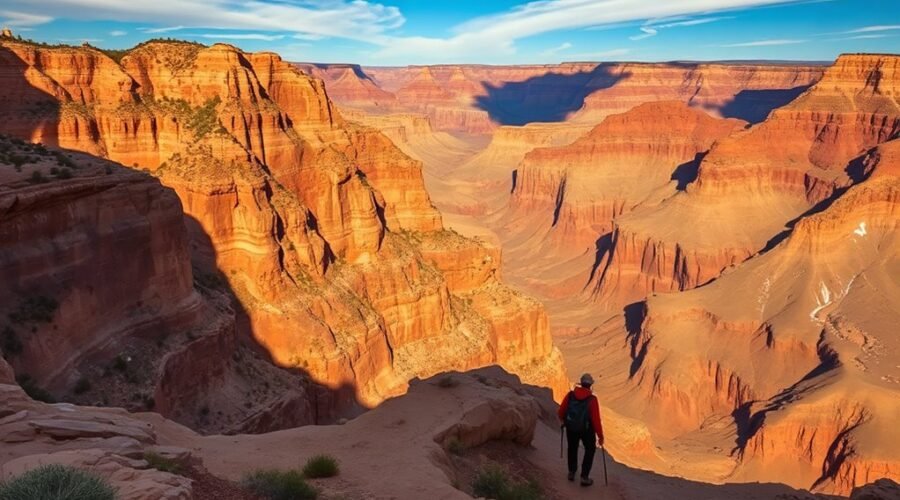
Timing your Grand Canyon visit correctly makes all the difference between a memorable trip and a miserable one. You’ll face scorching heat, dangerous trail conditions, and massive crowds if you show up at the wrong time of year. But get it right, and you’ll enjoy comfortable temperatures, stunning scenery, and trails you can actually navigate safely. Each season brings its own tradeoffs, and knowing what to expect before you book could change everything.
Spring at the Grand Canyon: Mild Temps, Wildflowers & Rising Crowds
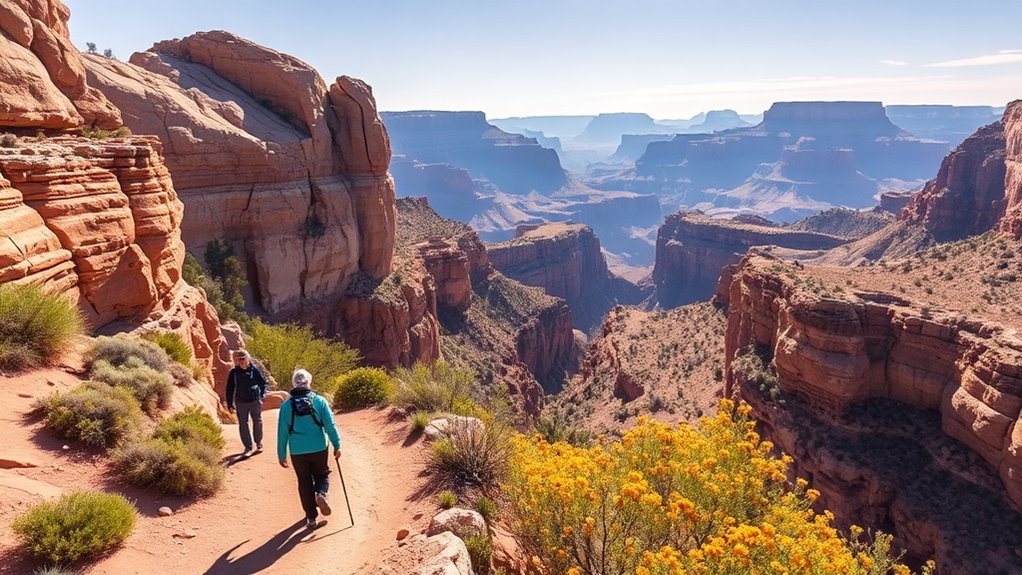
Spring breathes new life into the Grand Canyon, transforming its rugged terrain into a vivid tapestry of color as wildflowers carpet the South Rim from March through May.
Temperatures range from 40°F to 70°F, making wildflower hikes along the Rim Trail and Bright Angel Trail genuinely comfortable before summer’s punishing heat arrives.
Spring temperatures hovering between 40°F and 70°F make canyon trail hiking blissfully comfortable before brutal summer heat settles in.
You’ll find this season ideal for spring activities like photography, birdwatching, and inner canyon exploration. However, crowds begin building by April, so you should secure permits and reservations early if you’re planning overnight trips.
Afternoon thunderstorms occasionally roll through in May, so pack layers and a rain shell.
Trail conditions vary greatly — lower elevations warm quickly while upper trails may still carry ice patches through early March.
Spring rewards the bold traveler who plans ahead. Strike that balance between comfortable weather and manageable crowds, and you’ll experience the canyon at its most breathtaking.
Summer at the Grand Canyon: Extreme Heat, Monsoons & What to Expect
Summer transforms the Grand Canyon into one of North America’s most demanding environments, with South Rim temperatures regularly climbing into the 80s°F and inner canyon floors scorching past 110°F by July.
Heat safety isn’t optional here — it’s survival. You’ll want to hike before 10 a.m., retreat during peak afternoon hours, and never underestimate how fast conditions deteriorate below the rim.
Hydration tips from rangers are blunt: drink one liter per hour while hiking, and supplement with salty snacks to prevent hyponatremia.
July and August bring monsoon storms that cool temperatures dramatically but create dangerous flash floods within minutes.
Wildlife encounters increase during early mornings, when mule deer, California condors, and ringtail cats are most active.
Summer activities like ranger programs, rim-to-rim mule rides, and stargazing remain outstanding — provided you plan strategically and respect the canyon’s raw, unforgiving power.
Fall at the Grand Canyon: Why It’s the Sweet Spot for Most Visitors
Fall transforms the Grand Canyon into the most balanced version of itself, with South Rim temperatures dropping to comfortable highs in the 60s and 70s°F, making hiking far more manageable than the brutal summer heat.
As Labor Day passes, the crowds thin noticeably, so you’ll find shorter shuttle lines, easier permit access, and a quieter rim experience overall.
Trail conditions also improve greatly—the monsoon-soaked paths of summer dry out, giving you firmer footing and safer descents into the canyon.
Fall Temperature Sweet Spot
Many visitors consider fall the Grand Canyon’s sweet spot, and it’s easy to see why. September through November delivers rim temperatures between 50°F and 70°F, making hiking genuinely comfortable rather than survivable.
You’ll escape summer’s brutal heat without facing winter’s unpredictable snow closures. The inner canyon cools dramatically too, dropping from summer’s punishing 100°F+ to a manageable 70°F–80°F range. You can push deeper into trails without rationing every sip of water.
Fall foliage transforms the canyon’s edges with golden aspens and russet oaks, creating extraordinary contrast against red sandstone walls.
For photography tips, shoot during golden hour — sunrise paints the canyon amber while sunset deepens shadows into dramatic purple hues. Fall light is simply unmatched for capturing the canyon’s true scale.
Thinning Summer Crowds
Beyond the cooler temperatures and stunning light, fall hands you something summer simply can’t — breathing room. By September, summer crowds thin dramatically, freeing you to hike iconic trails without bottlenecking behind tour groups.
| Month | Crowd Level | Hiking Tips |
|---|---|---|
| July | Peak | Start before 5 AM, carry extra water |
| September | Moderate | Flexible start times, fewer permits needed |
| November | Low | Near-solitude conditions, layer up |
Smart crowd management means choosing September through early November to reclaim the canyon on your terms. You’ll secure trailhead parking effortlessly, photograph viewpoints without negotiating space, and move at your own pace. Fall doesn’t just offer comfort — it offers freedom that summer visitors rarely experience.
Trail Conditions Improve
As temperatures drop in fall, the Grand Canyon’s trails shift from dangerously punishing to genuinely hikeable. The scorching heat that makes summer descents reckless retreats, leaving firmer, more stable footing across popular routes like Bright Angel and South Kaibab.
Park crews complete trail maintenance during this shoulder season, patching eroded sections and clearing debris left behind by monsoon rains.
You’ll also encounter fewer seasonal closures affecting inner canyon access, giving you greater freedom to plan ambitious routes without bureaucratic interruptions. The cooler air lets you push deeper into the canyon, reaching viewpoints and campsites that summer hikers simply can’t safely access.
Fall fundamentally reveals the canyon’s full vertical range, handing you an experience that heat and crowds otherwise deny you.
Winter at the Grand Canyon: Quiet Trails, Snow & Surprising Views
Winter transforms the Grand Canyon into a quieter, more intimate experience, with far fewer crowds on the trails and a stark, dramatic beauty that other seasons can’t match.
You’ll find the South Rim open year-round, though some inner canyon trails become icy and require microspikes or crampons for safe navigation.
When snow blankets the canyon’s red and orange layers, you’re rewarded with one of the most striking visual contrasts in nature.
Winter Trail Accessibility
The South Rim’s trails remain open year-round, but winter transforms them into an entirely different experience. Ice and snow coat the Bright Angel and South Kaibab trails, turning casual hikes into serious undertakings. You’ll need microspikes or crampons—don’t underestimate this requirement.
Trail safety becomes your highest priority when frozen surfaces can send you sliding toward dangerous drop-offs.
The North Rim closes mid-October through mid-May, so you’ll want to plan your winter activities exclusively around the South Rim. Rangers recommend avoiding inner canyon trails during winter storms entirely.
However, rim-level walks offer breathtaking snow-dusted panoramas with far fewer crowds than peak season delivers. If you’re prepared with proper gear and respect the conditions, winter hiking rewards you with a raw, untamed Grand Canyon experience most visitors never witness.
Snow-Covered Canyon Views
Few sights rival the Grand Canyon blanketed in snow—a transformation that strips the landscape of its familiar warmth and replaces it with something almost otherworldly. Red rock walls draped in white create extraordinary winter photography opportunities you simply can’t capture any other season.
| Snow Activity | Best Location |
|---|---|
| Photography | Mather Point |
| Snowshoeing | Rim Trail |
| Cross-country skiing | North Rim Road |
| Wildlife spotting | Desert View |
| Stargazing | Yaki Point |
You’ll find the South Rim’s viewpoints dramatically transformed after snowfall, offering raw, unfiltered perspectives. Embrace snow activities like snowshoeing along quieter trails where solitude replaces summer’s crowds. The canyon doesn’t shrink in winter—it expands into something bolder, demanding you meet it on its own terms.
South Rim vs. North Rim: Which Should You Visit and When?
When planning your Grand Canyon trip, one of the most important decisions you’ll make is choosing between the South Rim and the North Rim — and timing plays a crucial role in that choice.
The South Rim stays open year-round, offering reliable South Rim Amenities like lodges, restaurants, visitor centers, and multiple trailheads.
The South Rim welcomes visitors year-round, with lodges, restaurants, and trailheads always ready when you are.
It’s your most flexible option, welcoming visitors in every season.
The North Rim operates differently. North Rim Accessibility is strictly seasonal — the area typically opens mid-May and closes mid-October due to heavy snowfall blocking Highway 67.
If you’re craving solitude and raw, elevated perspectives reaching 8,000 feet, the North Rim rewards you generously during its short window.
Choose the South Rim if you value convenience, year-round access, and established infrastructure.
Choose the North Rim if you’re chasing fewer crowds, lush forests, and a more untamed experience — but you’ll need to plan your timing precisely.
Grand Canyon Trail Conditions by Season: Heat, Ice & Flash Flood Risks
Understanding Grand Canyon trail conditions by season isn’t just helpful — it’s essential for your safety. Each season delivers its own distinct hazards, and knowing them puts you in control of your experience.
Summer brings brutal heat safety challenges — inner canyon temperatures regularly exceed 110°F. Hike before 10 a.m., carry extra water, and turn back when you planned to.
Fall offers ideal conditions, though flood preparation remains critical. Late-season monsoons can trigger dangerous flash floods with zero warning, even under clear skies above you.
Winter demands attention to trail maintenance realities — icy surfaces on North and South Rim trails make traction devices non-negotiable seasonal gear.
Many inner canyon trails remain surprisingly accessible but require careful footing.
Spring balances pleasant temperatures with lingering snow melt and unpredictable storms. Pack layered seasonal gear regardless of forecasts.
Your freedom on these trails depends entirely on your preparation — not luck.
Best Times of Day at the Grand Canyon for Sunrise & Photography
Timing your Grand Canyon visit around light transforms an ordinary trip into something extraordinary. Golden hour—the 30-60 minutes after sunrise and before sunset—bathes the canyon’s layered rock in warm amber and crimson tones that midday light simply can’t replicate.
Time your visit around the light. Golden hour transforms the canyon’s layered rock into something extraordinary.
For landscape photography, Mather Point and Yavapai Observation Station face east, making them ideal sunrise locations. Hopi Point delivers unobstructed western views perfect for sunset compositions. Desert View Watchtower rewards photographers willing to drive 25 miles east for dramatic, crowd-free angles.
You’ll want to arrive 20 minutes before official sunrise to claim your position. South Rim sees its most intense crowds between 10 a.m. and 4 p.m., so early mornings also give you solitude alongside superior light.
Winter mornings occasionally layer fog into the canyon below, creating ethereal, once-in-a-lifetime shots.
Don’t underestimate what patience and precise timing can reveal here.
When to Book Grand Canyon Permits, Lodging & Tours
Capturing that perfect sunrise shot is only half the battle—getting there requires planning well in advance. The Grand Canyon’s most coveted experiences fill up fast, and waiting until the last minute will cost you.
For rim-to-rim hikes and overnight backcountry stays, submit your permit application through the National Park Service’s lottery system four months before your intended trip.
Phantom Ranch reservations operate through a separate lottery, opening 15 months ahead—set your calendar reminder now.
South Rim lodging books out six to twelve months in advance, especially for summer and spring.
Don’t underestimate shoulder seasons; October weekends disappear just as quickly.
For guided experiences, start your tour booking at least three to six months early.
Helicopter tours and mule rides are notoriously limited. The earlier you lock things in, the more freedom you’ll actually have out there.
Frequently Asked Questions
Can You See the Grand Canyon From an Airplane Window?
Yes, you can spot the Grand Canyon from an airplane window! You’ll catch stunning airplane views if your route crosses northern Arizona. For the ultimate experience, you’ll want to book scenic flights that soar directly over this breathtaking natural wonder.
Are There Age Restrictions for Grand Canyon Mule Rides?
Yes, mule ride restrictions include age requirements — you’ve got to be at least 7 years old to ride. You’ll also need to meet weight and height limits, so check the official Grand Canyon mule ride guidelines before booking.
Is the Grand Canyon Accessible for Visitors With Mobility Limitations?
You’ll find wheelchair access along the South Rim’s paved Rim Trail, you’ll discover guided tours tailored to your needs, and you’ll experience the canyon’s grandeur without barriers holding you back.
What Wildlife Might I Encounter During a Grand Canyon Visit?
You’ll encounter diverse wildlife sightings, including California condors, mule deer, elk, and ravens. Observe animal behavior respectfully by keeping your distance—you’re free to witness nature’s raw, unfiltered existence thriving boldly throughout the canyon’s magnificent, layered depths.
Does the Grand Canyon Charge an Entrance Fee for All Visitors?
Why pay more than you need to? Yes, the Grand Canyon charges an entrance fee, but you’ll save with visitor passes like the America the Beautiful Pass, granting you unlimited access to reclaim your freedom outdoors.
Conclusion
Whether you’re watching golden light spill across ancient canyon walls in October or catching spring wildflowers brightening dusty trails, you’ll find your perfect Grand Canyon moment by timing your visit wisely. Fall’s crisp air and thinning crowds make it the standout choice, but every season reveals something breathtaking. Plan ahead, secure your permits early, and you’ll experience one of Earth’s most awe-inspiring landscapes exactly the way it deserves to be seen.