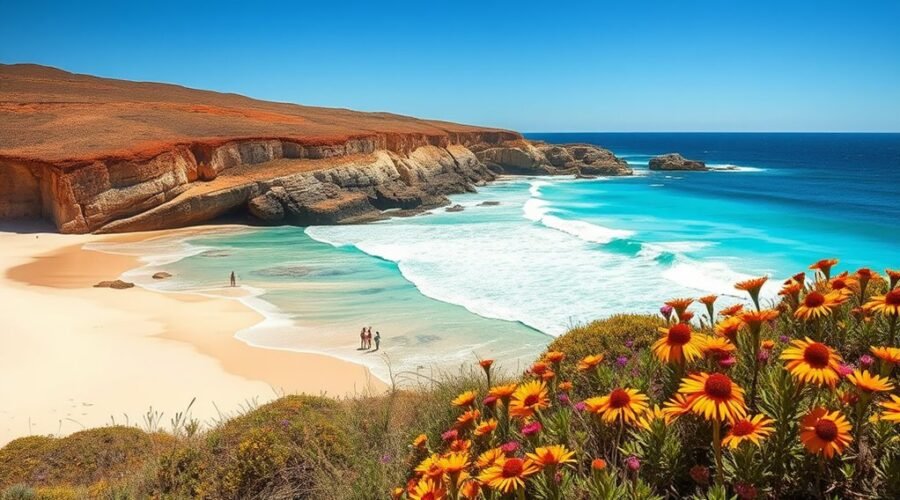
There is no single best month for every Western Australia trip because the state stretches from the tropical Kimberley to the cooler south coast. For Perth, the Southwest and wildflowers, September and October are excellent choices. For the Kimberley, the reliable dry-season window is usually May to October. Ningaloo wildlife follows its own calendar, with whale sharks most commonly seen from March into winter. Match your dates to the region and activities you care about most rather than relying on one statewide season.
Quick Answer
For a first trip focused on Perth, the Southwest and wildflowers, September–October offers one of the best balances of mild weather and seasonal colour. Visit the Kimberley mainly from May–October, Ningaloo for whale sharks from March–August, and Albany for whale watching during the cooler winter-to-spring migration period.
Key Takeaways
Key Takeaways
- September–October: a strong all-round choice for Perth, the Southwest, walking and southern wildflowers.
- May–October: the main dry-season travel window for the Kimberley, although individual roads and parks open according to conditions.
- March–August: the main Ningaloo whale-shark season; manta rays can be seen around Coral Bay year-round.
- Winter and spring: important whale-watching months around Albany and other parts of the southern coast.
- Summer: excellent for southern beaches but can bring extreme heat and higher bushfire risk; tropical northern WA is in its wet/cyclone season.
- Prices depend on region: the Kimberley can be busiest during the cooler dry season, so “winter equals cheaper” does not apply across WA.
Quick Guide: Best Months in Western Australia by Travel Priority
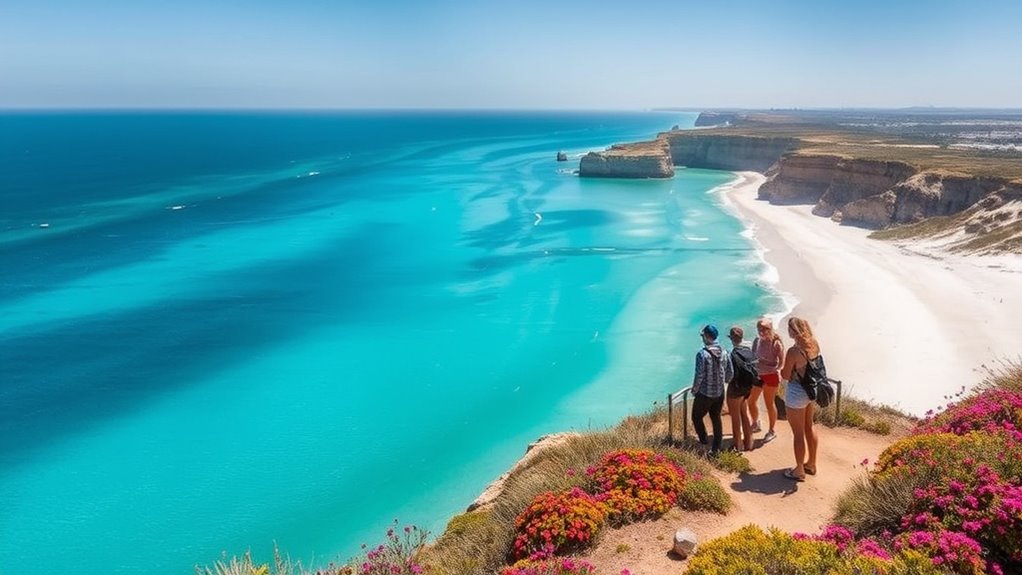
If you’re planning a trip to Western Australia, start with your main priority. Wildflowers, whale sharks, remote-road access, beaches and whale watching all follow different calendars.
| Travel priority | Best general window | Why |
| Perth sightseeing and walking | Mar–Apr or Sep–Nov | Milder conditions than midsummer, with spring especially good for gardens and wildflowers. |
| WA wildflowers | Jun–Nov, depending on region | Flowering generally progresses from northern areas toward Perth and the south later in the season. |
| Kimberley road trip | May–Oct | Dry-season conditions give the most dependable access to parks, gorges and unsealed routes. |
| Ningaloo whale sharks | Mar–Aug | This is the established seasonal aggregation period, although wildlife sightings are never guaranteed. |
| Coral Bay manta rays | Year-round | Coral Bay supports a resident manta-ray population. |
| Albany whale watching | Late May/Jun–Oct | Humpback and southern right whales are commonly observed during the winter-to-spring migration period. |
| Bremer Bay orcas | Jan–Apr | This is the main period for offshore orca expeditions to the Bremer Canyon area. |
For wildlife photography, plan around the species rather than a broad season. For cultural experiences, check current local calendars for Aboriginal-led tours, festivals and community events because dates vary from year to year.
Western Australia’s best travel season changes with latitude: spring may be ideal in Perth while the tropical north is approaching its wet season.
Best Months by Western Australia Region
| Region | Strong travel window | Main trade-off |
|---|---|---|
| Perth | Mar–Apr, Sep–Nov | Winter is wetter; midsummer can be very hot. |
| Margaret River & Southwest | Mar–May, Sep–Nov | Winter is cooler and wetter but atmospheric; summer is popular for beaches. |
| Great Southern & Albany | Sep–Nov for wildflowers; winter–spring for whales | Winter can be cold, wet and windy. |
| Ningaloo & Coral Coast | Mar–Aug for whale sharks; other wildlife varies | Wildlife seasons overlap but are not identical. |
| Pilbara | Apr/May–Sep | Heat increases sharply toward summer. |
| Kimberley | May–Oct | Wet-season rain, flooding and cyclones can restrict access. |
Pro Tip: If you want to combine Perth, wildflowers and the Kimberley in one trip, September is a useful compromise. The north is still in the dry season, while spring colour is building around Perth and southern WA. Expect hotter temperatures in the far north than you would get in June or July.
Perth & Southwest: Best Months and Seasonal Highlights
Perth and the Southwest have a very different seasonal rhythm from tropical northern WA. Perth summers are hot and dry, while winters are cooler and much wetter. Long-term Bureau of Meteorology figures for Perth Airport show average maximum temperatures around 32°C in January and February, compared with about 18°C in July.
Spring (September–November) brings mild days and some of the best wildflower opportunities around Perth and the Southwest. It is a strong season for walking, gardens, coastlines, wineries and outdoor sightseeing.
Summer (December–February) is hot, dry and popular for beaches. Plan exposed walks early in the morning, carry plenty of water and be prepared for extreme-heat or bushfire warnings.
Autumn (March–May) brings gradually cooler temperatures, warm coastal conditions early in the season and comfortable days for food, wine and hiking itineraries.
Winter (June–August) is Perth’s wettest period. The Southwest becomes greener, forests can feel misty and dramatic, and visitor experiences remain available, but pack for rain and cooler evenings.
Three classic seasonal scenes include:
- A sunrise walk at Cottesloe Beach before the day warms up.
- A spring wildflower walk through Kings Park or a nearby reserve.
- A long lunch in the Southwest with enough time for a coastal or forest walk afterward.
Kimberley & Pilbara: Best Months for Access and Weather
Access and weather change dramatically across the Kimberley and Pilbara. For the Kimberley, the main dry season is generally May to October. Roads, parks and tours that close during the wet season progressively reopen according to rainfall, flooding and track conditions, so the exact start of the season can vary.
Early dry season can retain greener scenery and stronger waterfalls after the wet. July and August usually bring cooler nights and very high demand. September and October remain dry-season months but become progressively hotter.
The tropical wet season generally runs from November to April. Heavy rain, flooding and tropical cyclones can cause temporary road closures, close parks and reduce the availability of tours or services. Some attractions remain accessible, so it is more accurate to treat the wet season as less predictable rather than universally inaccessible.
| Period | Typical travel conditions |
|---|---|
| Apr–Jun | Transition into the dry season; roads and parks reopen as conditions allow, with greener post-wet scenery. |
| Jul–Aug | Peak dry-season travel, cooler nights and strong demand for popular routes and accommodation. |
| Sep–Oct | Usually dry with good access, but daytime heat builds. |
| Nov–Mar | Wet/cyclone season with greater heat, humidity and risk of road or park closures. |
Warning: Never assume a remote WA road is open because it was open yesterday. Rain can change road conditions rapidly. Check current park alerts, Main Roads information and local road reports before leaving, and never drive through floodwater or around a road-closed sign.
Best Time in WA for Snorkeling, Diving and Whale Watching
Western Australia’s marine calendar changes by species and location. Instead of choosing one generic “reef season,” decide what you most want to see.
- Ningaloo whale sharks — March to August: whale sharks aggregate along the Ningaloo Coast during this broad seasonal window. Licensed interaction tours operate during the season, but wildlife sightings are never guaranteed.
- Coral Bay manta rays — year-round: Coral Bay has a resident manta-ray population, making it one of WA’s most dependable places for manta encounters throughout the year.
- Ningaloo humpback whales — roughly June to November: humpbacks migrate along the coast after the whale-shark season begins, creating useful overlap for travellers interested in several types of megafauna.
- Albany — late autumn through spring: humpback and southern right whales are commonly seen around Albany during the winter-to-spring migration period.
- Bremer Bay orcas — January to April: this is a separate offshore wildlife experience from the southern-right and humpback migration season.
Water clarity can change with swell, wind, tides and local weather, so avoid choosing dates solely because a generic guide promises “perfect visibility.” Ask local operators about recent conditions when snorkeling or diving is the main purpose of your trip.
Choose licensed or established wildlife operators that explain interaction rules and minimise disturbance to animals. At Ningaloo, regulated whale-shark interactions limit swimmer numbers and control how closely boats and swimmers can approach the animals.
Weather Trade-Offs: Hiking, Wildflowers and Outback Driving in WA
Spring is one of the strongest seasons for hiking and wildflowers across southern WA, but the state’s wildflower season is broader than September alone. Flowering can begin in northern regions around June and progress south, with many southern displays continuing into spring.
Summer works well for southern beach holidays and early-morning activities, but long exposed hikes can become unsafe during extreme heat. Hot, dry and windy weather can also increase bushfire danger, particularly around bushland and forest areas.
Autumn often provides comfortable hiking conditions in Perth and southern WA. In the north, however, early autumn may still be hot or affected by the tropical wet season.
Winter brings cool walking weather to much of the south but also the greatest rainfall around Perth and the Southwest. In the tropical north, the same months fall inside the popular dry season and can be among the busiest times of year.
For outback driving, road condition matters more than the calendar printed on your itinerary. Carry extra water, understand fuel distances, check closures and make sure your rental agreement permits the roads you intend to use.
Month-by-Month Western Australia Travel Calendar
| Month | Good for | Watch for |
|---|---|---|
| January | Southern beaches, Bremer Bay orcas | Extreme heat, bushfires, Kimberley wet season |
| February | Beach trips, Bremer Bay wildlife | Hot weather and tropical wet-season disruption |
| March | Ningaloo whale-shark season begins, Perth autumn trips | Northern heat and lingering wet-season conditions |
| April | Ningaloo, Perth, Southwest walking | Easter/school-holiday demand; northern roads may still be reopening |
| May | Kimberley season, Ningaloo, comfortable southern travel | Check remote-road reopening dates |
| June | Kimberley, Ningaloo wildlife, early wildflowers, southern whales | Cool and wet conditions in southern WA |
| July | Kimberley, Pilbara, whale watching, northern wildflowers | Peak demand in northern WA and school holidays |
| August | Kimberley, whales, wildflowers, Ningaloo | Popular accommodation and tours can fill early |
| September | Perth wildflowers, southern hiking, Kimberley road trips | School-holiday demand and rising northern heat |
| October | Southwest spring travel, wildflowers, southern coast | Hotter conditions returning to the north |
| November | Late southern spring, beaches before Christmas peak | Kimberley wet season, tropical cyclones and marine-stinger risk |
| December | Southern beaches and summer events | Holiday crowds, heat and bushfire risk |
When Crowds Peak: Prices, Bookings and How to Avoid Them
Crowds do not peak at the same time everywhere. Perth, the Southwest and popular southern campgrounds can become extremely busy around summer, Easter, public holidays and school breaks. The Kimberley sees its strongest visitor demand during the cooler dry season rather than midsummer.
That means the cheapest month in Perth may not be cheap in Broome, and a quiet winter weekend in the Southwest may coincide with peak-season demand farther north.
Peak Season Timing
School holidays, long weekends, festivals and major regional events can quickly reduce availability. Perth, Margaret River, Broome, Exmouth, Coral Bay and the Kimberley all experience periods when accommodation, campsites, rental vehicles or popular tours become difficult to secure.
Check the Western Australian school calendar for your travel year because break dates change. Also check local event calendars before assuming a shoulder month will be quiet.
- Southern beaches and campgrounds can fill with families during summer and school holidays.
- Wineries, restaurants and accommodation in the Southwest can become busy on holiday weekends and during major events.
- Whale-shark, whale-watching and remote-region tours have limited capacity even outside conventional “peak summer.”
Booking and Price Hacks
Book the hardest-to-replace parts of the trip first: remote accommodation, limited-capacity wildlife tours, campsites and suitable rental vehicles.
Some WA park campsites can be reserved as far as 180 days ahead. For popular school-holiday or dry-season dates, booking as soon as your itinerary is firm gives you more choice.
Use refundable accommodation or flexible fares when the price difference is reasonable, especially for itineraries affected by seasonal roads or weather. Compare weekday and weekend rates, check direct operator offers and use loyalty benefits or points only when they genuinely reduce the total cost.
Do not rely on a universal “book flights mid-week” rule. Airfares change dynamically, so compare several dates and set price alerts where available.
Practical Planning: Bookings, Packing and Shoulder-Month Alternatives
Start with the least flexible parts of the itinerary, then build the rest around them. Remote lodges, seasonal wildlife tours, national-park campsites and 4WD rentals can be harder to replace than a city hotel.
Pack for regional variation. A WA trip can involve hot inland days, cool coastal evenings, strong sun, sudden rain and long drives with limited services.
Booking Timelines
There is no single booking deadline that guarantees the best price. For high-demand trips, reserve limited-capacity experiences once your dates are firm and check cancellation conditions before paying.
Confirm visa requirements well before departure. Except for Australian and eligible New Zealand passport holders, international travellers generally need the appropriate Australian visa before travel. The correct visa depends on nationality and purpose of travel.
Confirm travel-insurance dates, emergency contacts and any park permits required for your itinerary. Treat nonrefundable bookings cautiously when your plans depend on remote roads or seasonal weather.
A useful planning checklist is:
- Vehicle: reserve a vehicle permitted on every road you plan to drive.
- Remote accommodation: secure limited-capacity stays before filling city nights.
- Tours and permits: confirm wildlife tours, campsite reservations and access requirements.
Smart Packing Essentials
Bring breathable clothing for warm weather, a warm layer for cool evenings and a waterproof shell when travelling through the Southwest or southern coast during wetter months.
Pack sturdy walking shoes, sandals or water shoes where appropriate, a broad-brim hat and high-SPF sunscreen. A reusable water bottle, compact first-aid kit, charging cables, power bank and lightweight daypack are useful across most WA itineraries.
Remote driving requires more preparation than a city break. Carry adequate drinking water, know where fuel is available and keep offline or printed navigation as a backup.
Keep digital and offline copies of travel-insurance information and important bookings. Australia uses Australian dollars; cards are widely used in populated areas, but a modest amount of cash can be useful in remote locations or where electronic systems are unavailable.
Shoulder-Month Options
March–April and September–October can be excellent shoulder periods around Perth and parts of southern WA because temperatures are usually milder than midsummer. They should not, however, be treated as statewide low-season months.
September can work particularly well for travellers combining southern wildflowers with a late-dry-season northern trip. March and April can suit Perth, the Southwest and Ningaloo, but the tropical north may still be hot, humid or affected by wet-season conditions.
- Early autumn: warm coastlines, cooler evenings and comfortable Perth-area sightseeing.
- Spring: southern wildflowers, mild walking conditions and longer outdoor days.
- Flexible budgeting: compare individual destinations rather than assuming every shoulder month has lower rates.
Road, Rental and Remote-Travel Checks
A standard rental car is not automatically banned from every unsealed road, but many rental agreements restrict gravel, beach, remote or 4WD-only routes. Check the contract before booking and get written clarification if your intended road is not clearly covered.
Even a 4WD does not make a closed or flooded road safe. Road closures override your itinerary, and insurance may not cover prohibited use.
Mobile reception can also be limited or absent in remote parks. Do not assume you will always be able to call for help. For serious remote travel, consider an appropriate satellite communicator or personal locator beacon and leave your route with someone who is not travelling with you.
Note: Bushfires can occur throughout the year, although risk rises during hot, dry and windy conditions. Check current Fire Danger Ratings, Emergency WA information, park alerts and road conditions before remote drives or long hikes.
Frequently Asked Questions
Are there specific health risks such as jellyfish or heatstroke by season?
Yes. Extreme heat is an important summer and inland risk across WA. In tropical northern waters around Broome and the Dampier Peninsula, potentially dangerous Irukandji and box jellyfish are more commonly reported from roughly November to June, although cases can occur outside that period. Follow beach closures and local warning signs, stay hydrated and avoid strenuous activity during extreme heat.
What visa or entry requirements should visitors check?
Visa requirements depend on your passport and the purpose of your trip. Most foreign passport holders need the correct Australian visa before travelling, while Australian citizens and eligible New Zealand passport holders follow different entry rules. Check current Australian Department of Home Affairs requirements before booking nonrefundable travel.
Can I drive a standard rental car on unsealed outback roads?
Sometimes, but never assume it is allowed. Rental companies set their own restrictions for gravel, unsealed, beach and remote roads. Check your rental agreement and make sure the vehicle is suitable for the route. Roads signed as 4WD-only require an appropriate vehicle, and closed roads must not be entered regardless of what you are driving.
Are there eco-friendly tour operators, and how should I choose one?
Look for licensed operators that explain wildlife-interaction rules, minimise disturbance, support conservation and employ local or Traditional Owner guides where appropriate. For protected wildlife experiences such as Ningaloo whale-shark interactions, use authorised operators and follow their distance and behaviour rules.
Do mobile phone and internet services work reliably in remote Western Australia?
No. Coverage can be limited or absent in remote parks, highways and wilderness areas. Download maps before leaving populated areas, tell someone your route and expected arrival time, and consider satellite communication or a personal locator beacon for serious remote travel.
What is the best single month for a first trip to Western Australia?
September is one of the best compromises if you want Perth, southern wildflowers and a possible Kimberley component. It is not perfect for every activity, though. Whale-shark travellers may prefer autumn or early winter, while Bremer Bay orca trips are primarily a summer-to-early-autumn experience.
Is winter the cheapest time to visit Western Australia?
Not statewide. Winter may offer quieter periods in some southern destinations, but June–August falls inside the popular dry season in the Kimberley and northern WA. Compare prices for the specific region, school-holiday dates and events instead of relying on a statewide low-season rule.
Conclusion
The best time to visit Western Australia depends on where you are going. Choose September–October for a strong mix of Perth sightseeing, mild southern weather and wildflowers; May–October for the Kimberley dry season; and March–August if Ningaloo whale sharks are a priority. Winter-to-spring months suit Albany whale watching, while Bremer Bay’s famous orca trips run mainly from summer into early autumn. Check current road, park, fire and weather alerts before remote travel, book limited-capacity experiences early, and build your itinerary around regional conditions instead of one statewide season.
Sources
- Tourism Western Australia — WA Weather — regional climate patterns and wet/dry season guidance.
- Department of Biodiversity, Conservation and Attractions / Explore Parks WA — When to Go and Kimberley — seasonal wildlife, wildflowers, park access and Kimberley travel conditions.
- Bureau of Meteorology — Perth climate statistics — long-term Perth temperature and rainfall averages.
- Tourism Western Australia and DBCA — Ningaloo Marine Park — whale-shark, humpback and manta-ray seasonality.
- WA Department of Health and DBCA — extreme-heat, marine-stinger and natural-area safety guidance.
- Australian Department of Home Affairs — Australian visitor visa and entry requirements.