Large survival blades still draw attention in 2027, and the Ka-Bar Becker BK9 and BK39 remain near the top of that conversation. Both promise toughness, reach, and dependable field use, yet they serve slightly different needs. The details that separate a true chopper from a merely large knife are not always obvious. Blade steel, grind, handle feel, and sheath design all shape the final choice.
Ka-Bar Becker BK9 Combat Bowie Fixed Blade Knife, Black
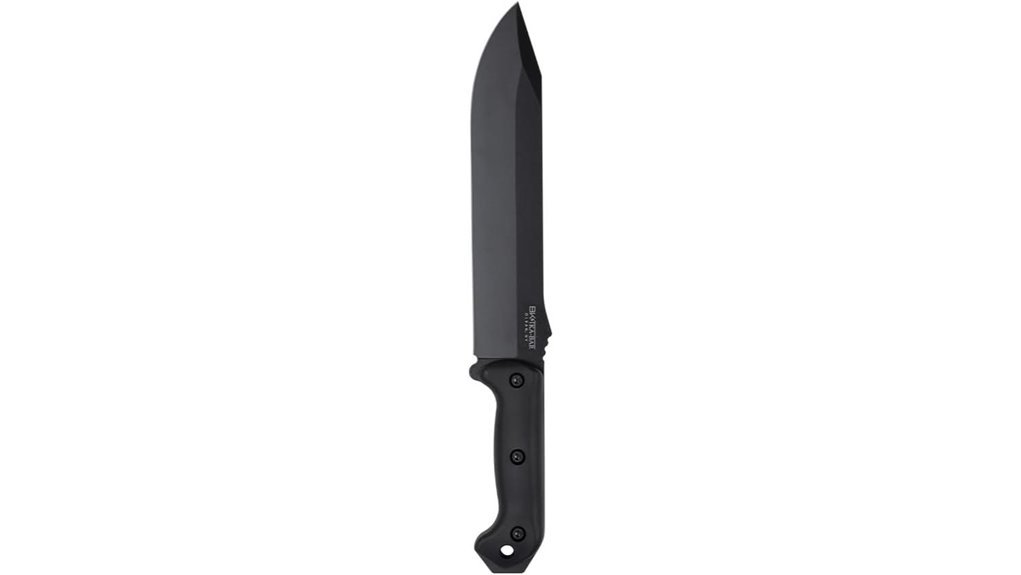
The Ka-Bar Becker BK9 Combat Bowie Fixed Blade Knife is best suited for users who need a tough, no-nonsense chopper with military-grade reliability. Made in the USA, it uses 1095 Cro-Van carbon steel in a 9.25-inch Bowie-style clip point blade with a flat saber grind. A black epoxy powder coat helps resist corrosion. The full-tang build adds strength, while the Grivory handle offers a secure, fatigue-reducing grip. Trusted by military personnel and survivalists, it ships with a heavy-duty nylon sheath, internal Kydex stiffener, and front pouch for gear.
Best For: Users who want a rugged, military-grade fixed blade chopper for heavy-duty outdoor, survival, or tactical use.
Pros:
- Durable 1095 Cro-Van carbon steel blade with corrosion-resistant black epoxy powder coat
- Full-tang construction and ergonomic Grivory handle provide strength and a secure grip
- Includes a heavy-duty nylon sheath with internal Kydex stiffener and gear pouch
Cons:
- Large 9.25-inch blade may be bulky for everyday carry
- Carbon steel requires more maintenance than stainless steel to prevent rust
- Best suited for heavy chopping tasks, so it may be less versatile for fine cutting tasks
Ka-Bar BK39 Becker Clear Coat Combat Bowie Knife, Black

Built for hard-use field work, the Ka-Bar BK39 Becker Clear Coat Combat Bowie Knife suits adult users needing a serious chopper. Its 9.25-inch 1095 cro-van steel blade uses a clip point profile and clear powder coat finish for rugged performance. At 14.75 inches overall and 1.1 pounds, it offers substantial reach without becoming unwieldy. The ergonomic handle helps reduce fatigue during extended use, while the heavy-duty polyester sheath supports carry and storage. Made in the USA, this modern American Bowie is designed for combat and field tasks, and it requires hand washing only for care.
Best For: Adult users who need a rugged, USA-made Bowie knife for serious field work, combat-style tasks, and heavy chopping.
Pros:
- Durable 1095 cro-van steel blade with a clear powder coat finish for hard-use performance
- Ergonomic handle helps reduce fatigue during extended use
- Includes a heavy-duty polyester sheath for carry and storage
Cons:
- Requires hand washing only, which makes maintenance less convenient
- 1.1-pound weight may feel heavy for users seeking a lighter knife
- Designed for demanding tasks, so it may be more knife than casual users need
Factors to Consider When Choosing Chopper Knives 2026: 3 Large Survival Blades Reviewed
Choosing a chopper knife in 2026 starts with the basics: blade steel choice, blade length, weight and balance, handle ergonomics, and the grind and edge profile all shape performance in the field. A tougher steel and well-judged blade length can improve durability and cutting power, while proper balance and a secure handle reduce fatigue during heavy use. The grind and edge determine how efficiently the knife chops, slices, and sharpens, making them key factors in any review of large survival blades.
Blade Steel Choice
Steel selection shapes a chopper knife’s performance more than almost any other feature, influencing durability, edge retention, and corrosion resistance in equal measure. High-carbon steels such as 1095 Cro-Van are favored for their toughness and straightforward sharpening, making them practical for hard field use. Hardness, measured on the Rockwell scale, also matters: steels in the 55 to 65 HRC range generally hold an edge longer, though they may require more effort to resharpen. Alloying elements can improve toughness, wear resistance, and corrosion resistance, which is valuable in survival conditions. A flat saber grind preserves strength while supporting efficient chopping. Protective finishes, including epoxy powder coat or clear coat, add another layer of defense against moisture and wear, helping extend service life.
Blade Length
Blade length is one of the most important factors in a chopper knife’s overall versatility, since longer blades generally deliver more cutting power and reach for chopping tasks. For survival use, a blade around 9 to 10 inches often provides a practical middle ground, offering enough edge for heavy work while remaining manageable in tighter conditions. This size can support batoning through wood, clearing brush, and other outdoor cutting duties without becoming unwieldy. Longer blades may also require a more secure sheath to protect the user during transport and storage. When evaluating chopper knives, blade length should be matched to the intended tasks, since extra reach can improve utility, but excessive length may reduce ease of carry and overall day-to-day convenience.
Weight and Balance
Weight and balance often determine how effective a chopper knife feels in real use. Heavier blades carry more momentum, helping them bite through dense wood and other tough materials with fewer strokes, while lighter models are easier to maneuver and less tiring during long use. The most practical chopper knives usually fall between 1 and 1.5 pounds, a range that blends cutting power with control. Balance matters just as much as raw mass; when weight is distributed well, the knife tracks more smoothly, improves accuracy, and reduces hand strain. Full-tang construction often supports this steadiness by spreading weight evenly through the knife. A well-designed grip can also soften the feel of extra weight, but that effect belongs to comfort rather than balance itself.
Handle Ergonomics
Handle ergonomics can make the difference between a chopper knife that feels controlled and one that quickly causes fatigue during extended use. A well-shaped handle supports secure, comfortable grip over long cutting sessions, helping the user maintain steadier control. Full-tang construction often improves balance and strength, and it also helps the handle feel firmly integrated with the blade during demanding work. Materials such as Grivory or alloy steel can add durability and a confident hold in harsh conditions. Textured or contoured surfaces matter as well, since they increase traction when hands are wet or slippery. The handle’s weight and shape should match the blade length and style, so the knife remains manageable rather than cumbersome in the hand.
Grind and Edge
The grind and edge profile play a major role in how a chopper knife performs, affecting cutting efficiency, edge retention, and how easy the blade is to sharpen. A flat saber grind is common on survival blades because it balances durability with strong slicing ability, while still supporting hard chopping work. Hollow grinds can cut aggressively, but they are generally less suited to heavy impact use. Edge shape also matters: a straight edge is versatile for general use, while a clip point adds control for more precise tasks. Materials such as 1095 Cro-Van carbon steel often complement these designs by providing hardness and reliable edge holding, though corrosion care is needed. Matching grind and edge to expected tasks improves overall survival utility.
Sheath and Carry
After grind and edge shape determine how a chopper cuts and holds up, sheath and carry choices decide how well it travels and protects the blade in the field. Sheath material matters first: heavy-duty nylon or polyester can better resist wear, moisture, and rough handling during transport and storage. Added features may improve field use, with a Kydex stiffener helping retention and structure, and a front pouch keeping small gear within reach. Weight and bulk should stay modest, since a lighter, more compact sheath supports easier packing and less fatigue. Secure fastening is essential to prevent slips or accidental drops. Compatibility with belt loops or MOLLE systems broadens attachment options, letting the sheath adapt to different packs, belts, and survival setups without sacrificing protection or convenience.
Full-Tang Strength
Full-tang construction is a major strength to look for in a chopper knife because the blade extends through the entire handle, giving the knife greater durability than partial-tang designs. This design improves overall balance, which helps users maintain control when chopping, slicing, or batoning wood. By spreading stress evenly through the handle, it lowers the chance of failure under hard use. For military personnel and survival experts, that reliability matters in demanding conditions where equipment must perform without hesitation. A full-tang knife also tends to last longer, since its robust build withstands repeated impact and heavy workload. For outdoor users seeking a dependable tool, this construction often represents a practical long-term investment.
Frequently Asked Questions
How Do I Sharpen a Chopper Knife Safely?
They should secure the blade, keep fingers clear, and sharpen with a stable stone or guided sharpener at a consistent angle. Slow strokes, light pressure, and a honing rod help maintain control and reduce injury risk.
What Steel Holds the Edge Longest in Survival Blades?
Crucible particle steels typically hold edges longest in survival blades. CPM S110V and MagnaCut resist wear well, though sharpening becomes harder; toughness still matters, because a brittle edge is useless in hard use.
Are Chopper Knives Legal for Camping Everywhere?
No, chopper knives are not legal for camping everywhere; laws vary by country, state, park, and carry method. A camper should check local regulations, campsite rules, and transport restrictions before bringing one.
How Should I Carry a Large Fixed Blade Securely?
A large fixed blade should be carried in a rigid sheath with a firm retention strap, secured to a belt, pack, or thigh rig. He should guarantee the edge is covered, motion is limited, and local laws are followed.
What Sheath Materials Work Best for Heavy Chopper Knives?
For heavy chopper knives, Kydex and molded Boltaron usually perform best, offering rigid retention, wet resistance, and easy cleaning. Thick leather provides comfort and traditional appeal, while reinforced nylon excels for lighter, budget-conscious carry.
Conclusion
In the end, the theory that the biggest survival blade is always the best does not fully hold up. The Ka-Bar Becker BK9 and BK39 prove that size matters, but only when matched with the task. A longer, heavier chopper can dominate camp chores, yet a more versatile design may handle finer work better. For 2027, the smartest choice is not the largest knife, but the one that balances power, control, and reliability.