Planning a trip to Sazova Park in Eskişehir, Turkey? The season you choose can make a big difference to your visit. The best time to visit Sazova Park depends on whether you prefer comfortable weather, colorful scenery, shorter queues, or a quieter walk around its famous fairy-tale castle.
Quick Answer
The best time to visit Sazova Park is April–May or September–October. Choose May for spring greenery or September for warmer, generally drier weather. A nonholiday weekday usually offers the best chance of shorter queues. July and August are hotter and busier, while winter is quieter but requires warm clothing.
Last checked: October 23, 2026. Dates and figures were verified against official sources.
Best Time to Visit Sazova Park by Month
April, May, September, and October offer the most balanced conditions for exploring Sazova Park. However, the weather can differ quite a bit between these months. September is warmer and generally drier than April, while May offers comfortable daytime temperatures and fresh spring scenery.
Eskişehir has a continental climate, with warm to hot summers and cold winters. The following table uses the Turkish State Meteorological Service’s Eskişehir climate statistics for the 1991–2025 observation period.
The figures are monthly averages for Eskişehir, not forecasts for a particular day at the park. Daytime highs and nighttime lows help you understand what to expect when planning your trip.
| Month | Average High / Low | Average Rainy Days | Visiting Conditions |
|---|---|---|---|
| January | 4.4°C / -3.7°C | 7.9 | Cold walks and winter scenery |
| February | 7.2°C / -3.4°C | 7.6 | Cold, with a focus on indoor visits |
| March | 12.1°C / -0.8°C | 7.8 | Cool and changeable early spring |
| April | 17.3°C / 3.2°C | 7.4 | Good for sightseeing with layers |
| May | 22.3°C / 7.3°C | 6.4 | Excellent for walking and spring scenery |
| June | 26.8°C / 11.3°C | 4.3 | Warm, sunny early summer |
| July | 30.0°C / 13.8°C | 2.2 | Hot and dry; plan outdoor walks early |
| August | 30.3°C / 13.8°C | 1.9 | Hottest average daytime conditions |
| September | 26.1°C / 9.3°C | 2.9 | Excellent for warm, mostly dry walks |
| October | 20.3°C / 5.0°C | 5.6 | Comfortable sightseeing and autumn colors |
| November | 12.9°C / 0.3°C | 6.0 | Cool, with shorter comfortable walking periods |
| December | 6.6°C / -1.6°C | 8.3 | Cold winter sightseeing |
The climate data makes one difference especially clear: September has fewer average rainy days than April or May. That makes it a strong choice if you want plenty of outdoor walking without the peak summer heat.
What Is Each Season Like at Sazova Park?
Every season offers a different experience at Sazova Park. Spring and autumn are generally the easiest for full-day sightseeing, summer brings bright sunshine, and winter can offer a peaceful atmosphere. Your preferred activities should help determine which season suits you best.
Spring: March to May
Spring is one of the most attractive times to explore the park’s green spaces, walk around the lake, and photograph the fairy-tale castle. Temperatures rise steadily through the season, although mornings and evenings can still feel chilly.
March is the least predictable spring month for outdoor comfort. The average daytime high is 12.1°C, while average nighttime temperatures remain slightly below freezing.
April and May offer the best spring conditions. April is cooler and can be rainy, while May has an average daytime high of 22.3°C. Both months work well for walking between the park’s attractions.
Spring also brings public holidays that may increase local visits. In 2027, National Sovereignty and Children’s Day falls on April 23, while Eid al-Adha (Kurban Bayramı) takes place from May 16 to 19.
Best for: Families, spring photography, outdoor sightseeing, and visitors who prefer mild weather.
Summer: June to August
Summer is the warmest season in Eskişehir. It suits visitors who enjoy long sunny days, but midday temperatures can make walking across the park tiring, particularly in July and August.
June is a good compromise. Its average daytime high is 26.8°C, noticeably cooler than the roughly 30°C averages of July and August.
July and August are popular summer vacation months, especially with families. Weekends and public holidays can bring more visitors to the castle, science attractions, and zoo.
If you visit during the hottest weeks, start with the outdoor areas in the morning. Save indoor activities for the warmest part of the day, and allow time for water and rest breaks.
Türkiye’s 2026–2027 school year ends on June 25, 2027, so the following summer vacation period is worth considering when estimating family crowds.
Best for: Sunshine lovers, summer family outings, and travelers who can handle warm weather.
Autumn: September to November
Autumn is another excellent season to visit Sazova Park. Temperatures cool after summer, and the trees gradually change color. The atmosphere is especially appealing for relaxed walks and castle photography.
September is one of the strongest months overall. The average daytime high is 26.1°C, with just 2.9 rainy days on average. You get warm conditions without the strongest summer heat.
October is cooler, with an average high of 20.3°C. It is a good choice for spending more time outside, although you should bring an extra layer for the evening.
By November, the average daytime high falls to 12.9°C. The park can still be pleasant for shorter walks, but indoor attractions become more useful when the weather turns cold.
Keep in mind that Republic Day on October 29 is a public holiday in Türkiye. In 2026, the holiday period begins on the afternoon of October 28. November school breaks may also increase family visits.
Best for: Comfortable sightseeing, photographers, couples, and visitors hoping to avoid the peak summer atmosphere.
Winter: December to February
Winter can be quiet and scenic at Sazova Park, but cold weather is the main challenge. Eskişehir often experiences freezing nights, and snow is possible during the winter months.
January has an average daytime high of only 4.4°C and an average nighttime low of -3.7°C. December and February are also cold, so long outdoor walks may feel uncomfortable without proper clothing.
A snowy visit can make the castle look especially striking. However, snow is not guaranteed, and icy or wet paths may make walking more difficult.
Winter is most suitable if you want to combine a short outdoor visit with indoor attractions such as Bilim Deney Merkezi and Sabancı Uzay Evi.
January and February are not always crowd-free. The 2026–2027 midyear school holiday runs from January 25 to February 5, 2027, making family attractions potentially busier during that period.
Best for: Cold-weather photography, shorter park walks, and indoor educational activities.
Navigating Sazova Park Crowds
Weekends, school vacations, and national holidays are the main periods to consider when trying to avoid crowds. A quiet weekday can feel much more relaxed than a busy summer Saturday, even when the weather is similar.
Which Days of the Week Are Least Crowded?
Tuesday, Wednesday, and Thursday are generally good choices for a quieter visit outside holiday periods. Families and local visitors are more likely to gather during weekends, particularly when the weather is pleasant.
Arriving earlier in the day also gives you more space for photographs around the castle and central park areas.
However, quieter grounds do not always mean every attraction will be available. Some museums and science facilities follow separate schedules, including Monday closures or organized session times.
If indoor attractions are a major part of your visit, a regular midweek day is usually a better choice than assuming every facility operates daily.
Turkish School Holidays and National Holidays
School and public holidays can noticeably change the park’s atmosphere. Families often use these breaks for visits to places such as the science center, castle, and zoo.
According to the Turkish Ministry of National Education’s 2026–2027 calendar, important school vacation periods include:
- November 16–20, 2026: First-term midsemester break.
- January 25–February 5, 2027: Midyear school holiday.
- March 8–12, 2027: Second-term midsemester break.
- From June 25, 2027: The school year ends, followed by the summer vacation period.
Public holidays are another reason to expect greater demand. Türkiye’s 2026 official holiday calendar confirms Republic Day on October 29, with a half-day holiday on October 28.
For 2027, the Presidency of Religious Affairs’ religious calendar lists Ramadan Bayramı (Eid al-Fitr) on March 9–11 and Kurban Bayramı (Eid al-Adha) on May 16–19.
The March holiday overlaps the school break, making March 2027 less attractive for visitors whose main goal is avoiding family crowds.
Summer Weekends and Popular Attractions
July and August are the months when summer vacations, warm weather, and weekend outings overlap. The park may feel especially busy around popular family attractions and photo spots.
The castle exterior is a major draw, so its immediate surroundings can feel crowded even when other parts of the park are relatively peaceful.
For a more relaxed visit, explore the quieter walking paths first or leave the most popular attractions until the initial morning rush has passed.
Cost Considerations for Your Sazova Park Visit

Sazova Park itself is generally free to enter, so you can enjoy the open grounds without buying a general admission ticket. However, several attractions inside the park charge separate fees.
This is an important distinction if you are traveling with children or planning to visit more than one attraction.
How Much Does It Cost to Visit Sazova Park?
The municipality’s published admission tariffs provide a useful starting point for budgeting. The following prices are listed on the official Eskişehir Metropolitan Municipality tariff page, checked in October 2026.
| Attraction | Full Admission | Student Admission |
|---|---|---|
| Masal Şatosu (castle visit without a storytelling session) | 70 TL | 50 TL |
| Masal Şatosu storytelling session | 100 TL | 70 TL |
| Bilim Deney Merkezi (Science Experiment Center) | 90 TL | 60 TL |
| Sabancı Uzay Evi (Space House) | 110 TL | 80 TL |
| Museum Ship (Kalyon Gemisi) | 60 TL | 40 TL |
| Eskişehir Zoo (Hayvanat Bahçesi) | 270 TL | 130 TL |
These are the published full and student admission categories. Eligibility for other discounts and exemptions depends on the attraction’s rules. Prices can change, and special programs or workshops may have different charges.
The Japanese Garden is located within the zoo complex, so do not assume that every garden or attraction within the wider park belongs to the free public grounds.
Accommodation and Travel During Peak and Off-Peak Periods
If you are staying in Eskişehir, your hotel and transport expenses may be greater than your park admission costs. Accommodation and intercity tickets can become more expensive during popular weekends and public holidays, although rates vary by property and travel date.
Spring and early autumn can offer a good balance of comfortable weather and manageable travel costs. Winter may offer cheaper accommodation on some dates, but savings are not guaranteed during school vacations or special events.
The best budget strategy is to separate your expenses into accommodation, transport, meals, and paid attractions. You can then decide how much of the park you want to explore without tickets.
Can You Enjoy Sazova Park on a Small Budget?
Yes. A budget-friendly visit can focus on the open park grounds, the castle’s exterior, walking paths, and the lake scenery.
You do not need to buy admission to every indoor attraction to enjoy the atmosphere of the park.
If you want one paid activity, choose the attraction that best matches your interests. Families with children may prefer the science center or a castle storytelling session, while visitors interested in astronomy may prefer Sabancı Uzay Evi.
Weather-Specific Planning for Sazova Park

Weather affects how much of Sazova Park you can comfortably explore. The large outdoor grounds are best enjoyed in mild conditions, while colder or rainy days are better suited to a shorter walk combined with indoor attractions.
What Should You Wear at Sazova Park?
Your clothing should match the season, but comfortable walking shoes are useful throughout the year. The park covers a large area, so expect to spend time on your feet.
- Spring: Bring a light jacket, comfortable shoes, and an umbrella or waterproof layer. April mornings can feel chilly.
- Summer: Wear light, breathable clothes. Bring sunscreen, a hat, sunglasses, and drinking water to handle strong sunshine and heat.
- Autumn: Wear layers that you can remove as the day warms up. A light jacket is especially helpful in October and November.
- Winter: Pack a warm coat, thermal layers, gloves, a hat, and waterproof footwear when snow or icy conditions are possible.
Indoor Versus Outdoor Attractions
The best activity plan changes with the weather. Outdoor areas are particularly enjoyable during the mild shoulder seasons, while indoor exhibits provide useful alternatives during heat, rain, or winter cold.
For outdoor sightseeing, prioritize:
- Masal Şatosu, the fairy-tale castle and surrounding photo areas.
- The park’s open lawns and walking paths.
- The lake and landscaped grounds.
- The outdoor setting around the pirate-style ship.
- Seasonal trees, gardens, and other green spaces.
For indoor experiences, consider:
- Bilim Deney Merkezi: Interactive exhibits and organized science activities.
- Sabancı Uzay Evi: Space-themed presentations and educational experiences.
- Masal Şatosu: Indoor storytelling activities when sessions are available.
- Eti Sualtı Dünyası: The aquarium attraction within the zoo complex.
Bilim Deney Merkezi and Sabancı Uzay Evi are separate facilities, rather than one attraction called the Sabancı Espark Science Center.
Indoor facilities may operate on specific session schedules, and some close on Mondays. It is sensible to build your visit around the attractions you most want to experience rather than assuming every activity is available throughout the day.
What if It Rains During Your Visit?
Rain does not necessarily ruin a Sazova Park trip. Light rain may still allow a comfortable outdoor visit with suitable clothing, while heavier showers make indoor attractions more appealing.
If the forecast is uncertain, start with your highest-priority outdoor attraction when conditions are favorable. Keep an indoor activity as a backup.
Pay special attention to spring and autumn forecasts. April averages about 7.4 rainy days, compared with just 2.9 in September, but individual days can differ considerably from the monthly averages.
Activities and Events at Sazova Park
| Factors | Best Time to Visit |
|---|---|
| Weather | April–May and September–October for comfortable outdoor sightseeing |
| Crowds | Nonholiday weekdays, particularly Tuesday to Thursday, with an early arrival |
| Costs | Free park grounds; separate fees for selected attractions. Accommodation costs vary by travel date. |
Sazova Park offers more than pleasant weather and walking paths. Its themed attractions, educational facilities, and occasional cultural activities can influence when you choose to visit.
Which Attractions Are Worth Prioritizing?
If you have limited time, start with the attraction that interests you most. Families with younger children may prefer the castle or zoo, while older children and adults interested in science may enjoy the experimental exhibits and astronomy presentations.
The municipality’s official Sazova Park description identifies Masal Şatosu, Kalyon Gemisi, Bilim Deney Merkezi, Sabancı Uzay Evi, the zoo, and Eti Sualtı Dünyası among its major attractions.
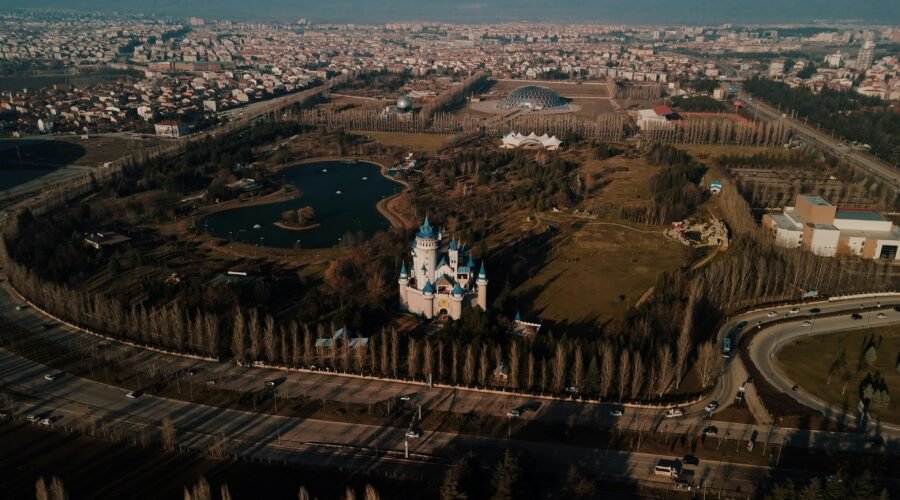
The park covers approximately 400,000 square meters and includes a lake, green areas, and themed buildings. That makes it large enough to justify more than a quick stop if you want to visit several attractions.
For a simple outdoor visit, focus on the castle and nearby grounds. For a family day involving multiple paid attractions, allow considerably more time for admissions, sessions, walking, and breaks.
Seasonal Decorations and Atmosphere
The park’s appearance changes with the seasons, and each period offers a different backdrop for photographs.
- Spring: Fresh green spaces and seasonal flowers create a colorful setting around the castle.
- Summer: Bright sunshine and green lawns create a lively atmosphere, especially during family outings.
- Autumn: Changing foliage adds warm colors to the paths, gardens, and lakeside scenery.
- Winter: Bare trees, colder weather, and possible snowfall create a quieter, more dramatic setting.
If your main reason for visiting is photography, consider what kind of scenery you want. Spring offers fresh color, while autumn gives the castle and trees a different visual character.
Festivals and Special Events
Special events can make a visit more interesting, but they can also bring larger crowds. Eskişehir Metropolitan Municipality organizes cultural, educational, and family activities at its facilities throughout the year.
Schedules vary, and not every event repeats on the same dates or at the same location.
A useful example is BilimFest 2026 Eskişehir. The festival was originally scheduled for Sazova Park on October 15–17, 2026, but the municipality moved the event to Eskişehir Fuar Kongre Merkezi because of expected heavy rain.
This shows why a special event should not be treated as guaranteed park programming until its final venue and schedule are confirmed. Weather can affect large outdoor gatherings as well as ordinary sightseeing.
Visiting Bilim Deney Merkezi and Sabancı Uzay Evi
The science center and Space House are strong reasons to visit Sazova Park with children, especially when outdoor weather is uncomfortable. They also help make the park appealing outside spring and autumn.
Bilim Deney Merkezi focuses on hands-on science education and experiments. Sabancı Uzay Evi offers astronomy-related learning and presentations.
These are particularly popular types of activities during school breaks. However, organized tours, demonstrations, and presentations may be tied to specific sessions rather than unrestricted entry.
If one of these is your main reason for visiting, choose a day with a suitable public session and leave enough time to reach the facility.
How Much Time Should You Allow for Sazova Park?
The time you need depends on whether you simply want to see the park or plan to enter several attractions. You can enjoy a relaxed outdoor walk and take castle photographs without committing to a full-day schedule.
However, combining the castle, science facilities, and zoo can turn the visit into a much longer outing. Walking between attractions and waiting for scheduled activities also takes time.
A practical order is to enjoy the outdoor scenery first in comfortable weather, then spend the rest of your visit at your chosen indoor attractions. This reduces unnecessary backtracking across the park.
Overall, April–May and September–October offer the strongest balance of weather and sightseeing comfort. Choose May for spring greenery, September for warm and relatively dry conditions, or October for cooler walks and autumn scenery. Your ideal day will also depend on holidays, attraction schedules, and whether you prefer a lively family atmosphere or a quieter visit.
Frequently Asked Questions
What is the best time to visit Sazova Park in Eskişehir?
The best time to visit Sazova Park is April–May or September–October. These months generally offer comfortable sightseeing conditions without the strongest summer heat. September is a particularly good choice for warmer, relatively dry weather, while May is ideal for spring scenery.
What is the weather like at Sazova Park throughout the year?
Sazova Park experiences Eskişehir’s continental climate, with warm to hot summers and cold winters. Average daytime highs reach about 30°C in July and August, while January averages only 4.4°C. Spring and autumn offer more moderate conditions for walking and outdoor attractions.
When is Sazova Park busiest?
Sazova Park is generally busier on weekends, public holidays, and during school vacations. July and August can attract many families, while special events may create additional crowds. For a quieter experience, choose a nonholiday weekday and arrive earlier in the day.
Is Sazova Park free to visit?
Sazova Park’s general grounds are free to visit, but selected attractions charge admission. Published October 2026 full ticket prices include 70 TL for a castle visit without a storytelling session, 90 TL for Bilim Deney Merkezi, and 110 TL for Sabancı Uzay Evi. Student rates are also listed.
Are there annual events or festivals at Sazova Park?
Sazova Park can host cultural activities, family programs, and special events, but schedules vary each year. Events may also change location because of weather. BilimFest 2026, for example, was moved from the park to Eskişehir Fuar Kongre Merkezi because of expected heavy rain.
Can you visit Sazova Park on Mondays?
You can generally enjoy the open grounds of Sazova Park on Mondays, but some individual attractions have separate operating days. Bilim Deney Merkezi and Sabancı Uzay Evi normally close on Mondays. If indoor attractions are important to your trip, plan around their scheduled opening days and sessions.
How long should you spend at Sazova Park?
You can enjoy the castle exterior and nearby scenery during a shorter visit, but exploring several attractions can take much longer. Families planning to visit the zoo, science center, and castle should allow plenty of time for walking, tickets, and scheduled activities.
Does it snow at Sazova Park in winter?
Snow is possible at Sazova Park during winter because Eskişehir experiences cold temperatures and freezing nights. January has an average nighttime low of -3.7°C. Snowfall is not guaranteed on any particular visit, so warm clothing and suitable footwear are important.
Sources
- Turkish State Meteorological Service (Meteoroloji Genel Müdürlüğü): Eskişehir monthly temperature averages and rainy-day statistics for 1991–2025.
- Eskişehir Metropolitan Municipality: Official Sazova Science, Culture and Art Park information, facilities, and park description.
- Turkish Ministry of National Education: Official 2026–2027 school calendar and vacation dates.
- Presidency of Religious Affairs (Diyanet İşleri Başkanlığı): Türkiye’s 2026 public holiday calendar.
- Presidency of Religious Affairs (Diyanet İşleri Başkanlığı): Official 2027 religious holiday dates.
- Eskişehir Metropolitan Municipality: Published admission tariffs for the castle, science center, Space House, museum ship, and zoo.
- Eskişehir Metropolitan Municipality: Official announcement confirming the relocation of BilimFest 2026 from Sazova Park because of expected heavy rain.