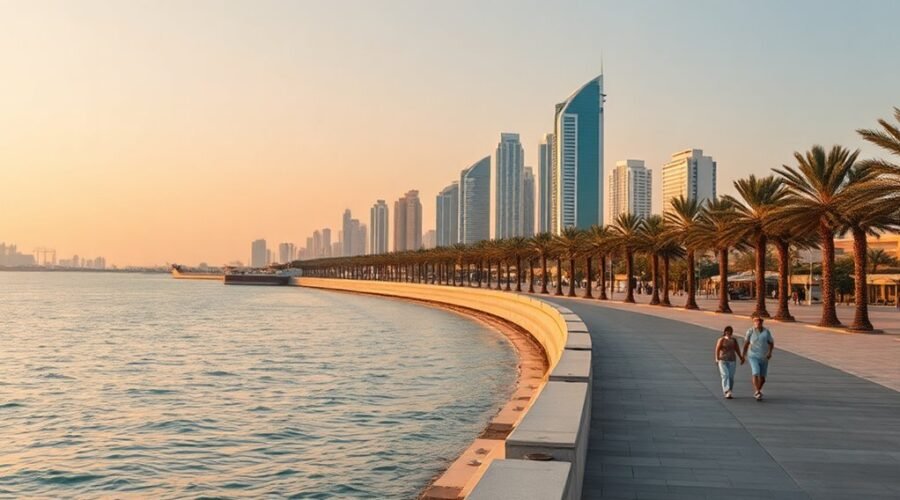
The best time to visit Abu Dhabi depends on what you want from your trip. The city offers beaches, desert adventures, cultural landmarks, and indoor attractions throughout the year. However, weather, hotel demand, and major events can change your experience considerably. Choosing the right month helps you balance comfort, costs, and crowds.
Quick Answer
For comfortable outdoor sightseeing, choose November through March, with December to February offering the mildest conditions. October and April are warmer transition months. June to September is best for travelers prioritising hotel savings and indoor attractions, but daytime heat and humidity make long outdoor itineraries difficult.
Last checked: November 18, 2026. Event dates and entry guidance were checked against official sources. Climate figures use 1991–2020 NOAA observations.
Key Takeaways
- November through March offers the best conditions for outdoor activities, with December to February providing the most comfortable temperatures.
- January has an average high of 24.5°C, while August reaches approximately 43.3°C at Zayed International Airport.
- April and October offer transitional travel opportunities, although afternoon temperatures can still exceed 34°C.
- June through September brings lower hotel demand, fewer queues, and potential savings of up to 40% at qualifying five-star hotels.
- Formula 1, National Day, Frieze Abu Dhabi, and the Liwa International Festival create important winter travel dates.
Abu Dhabi Weather by Month: Temperatures, Humidity, and What It Means for Tourists
)
Abu Dhabi has a hot desert climate with long, extremely hot summers and mild winters. November through March is the most practical period for outdoor sightseeing, while late spring and summer bring much higher temperatures.
From June through September, average daytime highs at Zayed International Airport range from approximately 40.8°C to 43.3°C. The official Abu Dhabi weather guide also reports summer temperatures of 45°C or higher, with humidity reaching 80–90%.
May marks the beginning of the hotter period. October brings some relief, but afternoon temperatures can remain uncomfortable for extended outdoor activities.
Abu Dhabi’s winter offers the easiest conditions for exploring outdoors, while summer rewards travelers who plan around indoor attractions and cooler evenings.
The following table uses monthly climate averages from NOAA Global Summary of the Day observations at Zayed International Airport for 1991–2020. These are long-term averages, not daily forecasts.
| Month | Average High / Low |
|---|---|
| January | 24.5°C / 14.0°C |
| February | 26.4°C / 15.2°C |
| March | 29.7°C / 17.7°C |
| April | 34.9°C / 21.2°C |
| May | 39.6°C / 24.8°C |
| June | 41.3°C / 27.2°C |
| July | 42.4°C / 29.8°C |
| August | 43.3°C / 30.4°C |
| September | 40.8°C / 27.6°C |
| October | 36.6°C / 23.8°C |
| November | 31.0°C / 19.7°C |
| December | 26.5°C / 15.8°C |
These figures show why December, January, and February are especially attractive for sightseeing. Their daytime temperatures are much lower than those of the summer months, and evenings are comfortable for outdoor dining and walking.
You can review the underlying NOAA-based climate normals for Zayed International Airport to understand the long-term temperature patterns.
The Best Time to Visit Abu Dhabi for Pleasant Weather
November through March is the best overall period for pleasant weather in Abu Dhabi. During these months, you can enjoy beaches, desert excursions, waterfront walks, and cultural landmarks without dealing with the extreme summer heat.
The official Abu Dhabi tourism authority identifies November through March as the city’s main winter travel season. Daytime temperatures generally sit around 24°C to 30°C, with cooler evenings.
Winter also brings outdoor festivals, seasonal entertainment, and more opportunities to explore the emirate beyond its air-conditioned attractions.
Peak Comfortable Weather Months
December through February offers the most comfortable conditions for most outdoor activities. January is generally the coolest month, while December combines pleasant daytime weather with comfortable conditions for evening activities.
November and March are also good choices if you prefer warmer afternoons. However, their temperatures can feel noticeably higher than those in January and February.
During this period, you can comfortably plan activities such as:
- Walking along the Abu Dhabi Corniche and visiting its beaches.
- Exploring Sheikh Zayed Grand Mosque and other cultural landmarks.
- Taking desert safaris and enjoying evening activities in the dunes.
- Kayaking through Abu Dhabi’s mangroves.
- Enjoying outdoor dining and beach clubs.
The official Abu Dhabi winter travel guide also highlights this period as the emirate’s main outdoor season.
Ideal Temperature Ranges
For most visitors, daytime temperatures in the mid-20s°C offer the best balance between warmth and comfort. This is why December, January, and February are particularly suitable for full-day sightseeing.
Evenings can feel considerably cooler than afternoons. January’s average low is around 14°C, while February’s is approximately 15.2°C. Pack a light jacket if you plan to spend time outdoors after sunset.
March is warmer, with an average high of 29.7°C. You can still enjoy outdoor activities, although early mornings and late afternoons are better for longer excursions.
Peak Season in Abu Dhabi: When Crowds and Hotel Prices Surge
Abu Dhabi’s peak tourist season runs from November through March. Cooler weather, outdoor festivals, school holidays, and major international events attract more visitors during this period.
December deserves particular attention because several major events and holiday periods fall close together. Hotels, popular restaurants, and attractions can experience higher demand.
The 2026–2027 winter event calendar includes several important dates:
- Frieze Abu Dhabi: November 19–22, 2026. This major art event adds to the city’s cultural calendar.
- UAE National Day: December 2–3, 2026. The public holiday brings national celebrations and additional visitor activity.
- Formula 1 Abu Dhabi Grand Prix: December 4–6, 2026, at Yas Marina Circuit. Practice, qualifying, and the Grand Prix take place across the weekend.
- Liwa International Festival: December 11, 2026, through January 2, 2027, in Al Dhafra. The festival features desert motorsport, cultural activities, entertainment, and family events.
You can find the dates on the official Abu Dhabi events calendar, the Formula 1 2026 timetable, and the Liwa International Festival schedule.
The UAE’s National Day is an official public holiday on December 2 and 3. Other religious holidays, including Eid, follow the Islamic lunar calendar and depend on moon sightings. You can find the official dates and rules in the UAE government public holiday calendar.
Expect to pay 30–50% more for hotels compared with off-peak months, although actual rates vary by property and travel dates. If you are planning to attend a major event, booking at least three months ahead can help you secure your preferred accommodation.
If you prefer fewer crowds, consider early November or late March. Both periods offer more manageable conditions than the busiest winter holiday dates, although temperatures can be warmer.
Shoulder Season: Lower Prices Without the Summer Extremes
April and October are useful transition months for travelers who want to avoid the busiest winter period. They can offer better accommodation value and fewer crowds, but they are not as consistently comfortable as the winter months.
Average daytime highs reach approximately 34.9°C in April and 36.6°C in October. This means outdoor sightseeing is best scheduled for the morning or evening rather than the hottest part of the day.
The shoulder season offers a middle ground between winter crowds and summer heat, but you should still plan around warm afternoons.
Hotel rates can be 20–30% lower than peak winter prices, depending on the property and booking dates. This makes shoulder-season travel attractive if you want to balance accommodation costs with reasonable sightseeing opportunities.
April is particularly useful for beach activities and pool visits. The sea is warmer than during the winter, although daytime temperatures rise quickly.
October marks the gradual return of the outdoor season. Evening walks, waterfront dining, and selected outdoor excursions become more appealing as the summer heat begins to ease.
Both months can also work well for cultural visits, shopping, and indoor entertainment. You can avoid some of the larger winter crowds without committing to a full summer itinerary.
Visiting Abu Dhabi in Summer: How Much Can You Actually Save?
Summer travel can offer substantial savings in Abu Dhabi, particularly if your plans focus on hotels, museums, shopping, and indoor attractions. However, the extreme heat is a serious trade-off for anyone hoping to spend most of the day outdoors.
The hottest period generally runs from June through September, with July and August recording the highest average temperatures. August’s average daytime high reaches approximately 43.3°C at Zayed International Airport.
Humidity can also make the heat feel more uncomfortable. The official Abu Dhabi weather guide reports summer humidity levels of around 80–90%.
The good news is that hotels and flights tend to become cheaper during the quieter summer period. The official summer campaign reports that qualifying five-star hotels on Saadiyat Island and Yas Island can offer discounts of up to 40% between June and September.
You can also expect shorter queues and easier restaurant reservations. Museums, shopping malls, indoor theme parks, and other air-conditioned attractions remain useful options.
For example, a trip that costs $3,000 in winter could run $1,500–$2,000 in July, depending on flights, hotel choices, and activities. Treat this as an illustrative budget comparison rather than a guaranteed saving.
If you visit during summer, plan your day around the climate:
- Visit museums and indoor attractions during the hottest daytime hours.
- Choose early mornings for necessary outdoor activities.
- Schedule beach visits and waterfront activities for suitable cooler periods.
- Use air-conditioned transport and accommodation to limit prolonged heat exposure.
- Carry drinking water and wear light, breathable clothing.
Popular indoor choices include Louvre Abu Dhabi, Ferrari World, Warner Bros. World, and SeaWorld Abu Dhabi. After sunset, you can consider waterfront dining and other outdoor experiences.
The official Abu Dhabi summer travel guide provides additional ideas for indoor attractions, summer activities, and seasonal hotel offers.
Which Month Should You Book Based on Your Priorities?
Your ideal travel month depends on whether you value comfortable weather, lower accommodation costs, or fewer crowds. December through February works best for most first-time visitors, while summer suits travelers who prioritize indoor activities and hotel savings.
October and April provide another option if you want a compromise between winter demand and summer conditions. However, their warm afternoons require a more flexible itinerary.
Budget-Conscious Travel Months
June through September is generally the best period to look for lower hotel rates in Abu Dhabi. July and August are particularly hot, which reduces demand for outdoor experiences and encourages hotels to offer seasonal deals.
Here is what budget-conscious travelers can expect:
- June: Summer heat becomes intense, while hotel demand starts to ease.
- July: Very high temperatures and potentially attractive hotel offers make this month suitable for indoor-focused trips.
- August: Usually one of the hottest months, with fewer visitors seeking outdoor activities.
- September: Temperatures remain high, but conditions gradually begin improving toward October.
April and May can also offer good value. The official tourism authority identifies April and May as potentially cheaper months compared with the main winter period.
For the best value, compare the total cost of flights, hotels, and attraction tickets. A low hotel rate does not automatically make a trip cheaper if your itinerary requires additional indoor activities or transport.
Beating Peak Season Crowds
If you dislike crowded attractions, avoid the busiest winter holiday and event dates. December through February attracts large numbers of international visitors, especially around major festivals and school holidays.
April and October can offer more breathing room at popular locations such as Sheikh Zayed Grand Mosque and Louvre Abu Dhabi. You may also find it easier to arrange restaurant reservations and certain guided experiences.
Summer is another option for avoiding crowds. Hotels, shopping centres, and cultural attractions can feel quieter than during the winter rush, although major indoor attractions may still become busy during special events and promotions.
Consider visiting Al Ain’s archaeological sites and Qasr Al Muwaiji if you want to explore beyond Abu Dhabi’s main tourist districts. These locations also offer a different perspective on the emirate’s history and heritage.
Whatever month you choose, major event dates can change the normal crowd pattern. A quiet summer weekend and a major winter festival weekend are very different travel experiences.
Ideal Weather Window
Abu Dhabi’s weather changes gradually throughout the year. Understanding these transitions helps you choose a month that matches your preferred activities.
- October: Temperatures begin easing after summer, but average highs remain around 36.6°C. Early mornings and evenings are better for outdoor exploration.
- November–March: The main outdoor season offers comfortable conditions for beaches, desert excursions, kayaking, and sightseeing. December through February is especially pleasant.
- April–May: Temperatures rise quickly, with average highs reaching 34.9°C in April and 39.6°C in May. Choose pools, beaches, and shorter outdoor activities.
- June–September: Extreme heat dominates, with average highs exceeding 40°C. Indoor attractions and air-conditioned activities become the practical choices.
For a classic Abu Dhabi holiday, choose the winter period. If you are comfortable with warmer conditions and want better hotel offers, consider the shoulder or summer months instead.
Frequently Asked Questions
Does Abu Dhabi require a visa for most international tourists?
Visa requirements depend on your passport nationality. GCC citizens do not need a visa, while some other nationalities qualify for visa on arrival and others must apply before traveling. Check the UAE government’s eligibility guidance before departure. Passports should generally remain valid for at least six months from the date of entry.
What cultural dress codes should visitors follow in Abu Dhabi?
Modest clothing is a respectful choice when visiting public places, traditional markets, and cultural attractions. Sheikh Zayed Grand Mosque has stricter requirements. Women need loose clothing covering their ankles and wrists, along with a head covering. Men should wear long trousers and avoid sleeveless tops.
Are there specific holidays that could disrupt travel plans in Abu Dhabi?
Yes. Ramadan, Eid al-Fitr, Eid al-Adha, and UAE National Day can affect opening hours, traffic, and visitor demand. Most tourist attractions remain open during Ramadan, but some restaurants adjust their schedules. Evenings become particularly busy around iftar, so allow extra time for transport.
How far in advance should flights to Abu Dhabi be booked?
Booking flights around two to three months ahead is a useful starting point for ordinary travel planning. During major winter events, school holidays, and the Formula 1 weekend, demand can rise. Booking earlier gives you more flexibility when choosing flight times and accommodation.
Is Abu Dhabi safe for solo female travelers throughout the year?
Abu Dhabi is generally considered a safe destination for solo female travelers. However, normal travel precautions still apply. Keep your belongings secure, use reliable transport, avoid isolated areas late at night, and follow local laws and cultural expectations. Summer visitors should also take extra care with prolonged outdoor heat exposure.
What is the cheapest month to visit Abu Dhabi?
July and August are usually strong months to look for lower hotel prices because of the extreme summer heat. June and September can also offer seasonal deals. April and May may provide a better balance if you want lower costs without committing to the hottest part of summer.
Is Abu Dhabi worth visiting during summer?
Yes, if you enjoy indoor attractions, shopping, museums, and resort activities. Summer hotel offers can make the trip more affordable, but daytime temperatures can reach 45°C or higher. Plan outdoor activities for cooler periods and avoid building your itinerary around prolonged midday sightseeing.
Conclusion
For the most comfortable Abu Dhabi holiday, plan your visit between November and March, especially December through February. If hotel savings matter more than outdoor sightseeing, consider June through September and build your itinerary around indoor attractions. Choose your dates carefully, particularly around major winter events, and you can enjoy a much better-balanced trip.
Sources
- NOAA GSOD climate normals for Zayed International Airport: Monthly average highs and lows for 1991–2020.
- Experience Abu Dhabi: Weather in Abu Dhabi: Seasonal temperatures, summer heat, and humidity.
- Experience Abu Dhabi: Winter in Abu Dhabi: Winter travel season, temperatures, outdoor activities, and peak-season demand.
- Experience Abu Dhabi: Events Calendar: Frieze Abu Dhabi and major seasonal events.
- Formula 1: Abu Dhabi Grand Prix 2026: Official race weekend schedule and session dates.
- Experience Abu Dhabi: Liwa International Festival: Festival dates, location, and seasonal activities.
- UAE Government: Public Holidays: National Day and religious holiday rules.
- Experience Abu Dhabi: Ramadan Guide: Ramadan customs, visitor etiquette, and changes to daily schedules.
- UAE Government: Visa Requirements: Visa-on-arrival eligibility, entry permits, and passport validity.
- Sheikh Zayed Grand Mosque Centre: Mosque Manners: Visitor dress code and conduct requirements.
- Experience Abu Dhabi: Summer in Abu Dhabi: Summer travel savings, hotel offers, and indoor activities.