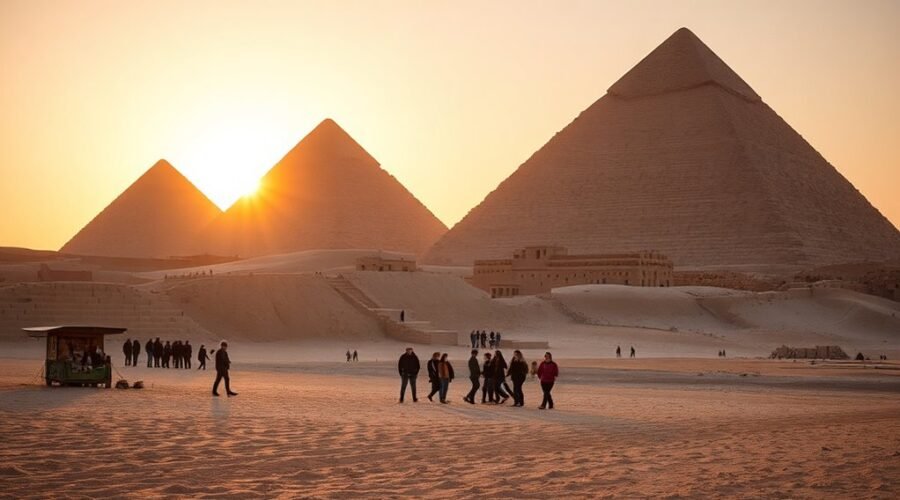
The best time to visit Egypt depends on where you plan to go. The cool season suits Cairo, Giza, Luxor and Aswan, while the Mediterranean and Red Sea coasts follow different weather patterns. Understanding these differences helps you balance comfortable sightseeing, manageable crowds and travel costs.
Quick Answer
For most first-time trips, the best time to visit Egypt is November through February, when Cairo, Giza, Luxor and Aswan are easiest to explore. October and March offer a useful shoulder-season balance. Choose spring or autumn for Red Sea trips, and summer for Mediterranean beaches rather than inland sightseeing.
Also compare: Malazgirt, Muş.
Key Takeaways
- November to February offers the most comfortable weather for Nile Valley sightseeing, but it is also the busiest and most expensive period.
- October, March and early April offer a useful balance of weather, crowds and accommodation costs.
- June to August often brings lower travel prices, but average daytime highs in Luxor and Aswan exceed 41°C.
- The Mediterranean coast suits summer beach trips better than inland sightseeing. Red Sea resorts remain attractive year-round but get very hot in summer.
Egypt’s Weather by Season: What Travelers Actually Experience
)
Egypt has a predominantly dry desert climate, but temperatures vary considerably between its regions. Cairo experiences cooler winters, while Luxor and Aswan face much hotter summers. Alexandria and the Red Sea resorts have different coastal conditions.
For travel planning, divide the year into four seasons:
- Winter (December–February): Mild daytime weather, cooler evenings and excellent conditions for exploring ancient sites.
- Spring (March–May): Temperatures rise quickly, especially in Upper Egypt. Dusty winds can also affect outdoor activities.
- Summer (June–August): Extremely hot inland conditions, although the Mediterranean coast offers more comfortable beach weather.
- Autumn (September–November): Temperatures gradually fall, making October and November increasingly attractive for sightseeing.
The seasonal differences are significant. October can still bring daytime highs above 35°C in Luxor and Aswan. April also becomes hot in southern Egypt.
Spring can bring khamsin winds, which are hot, dry and dust-laden winds. They occur between February and June and are most frequent in March and April, according to the Royal Meteorological Society’s explanation of local winds.
Coastal conditions are different. Alexandria experiences milder summer temperatures than Hurghada, while Red Sea resorts remain hot even when inland sightseeing becomes difficult.
The Best Time to Visit Egypt for Weather and Comfort
November through February is the most reliable window for exploring Cairo, Giza, Luxor and Aswan. Days are generally warm rather than scorching, but early mornings and evenings can feel cold. October and March are strong alternatives if you accept warmer afternoons.
- November–February: The most comfortable period for the Pyramids, Karnak Temple, Abu Simbel and the Valley of the Kings.
- October: Temperatures begin to improve, particularly toward the end of the month. It is a good choice for travelers seeking fewer winter crowds.
- March: Pleasant conditions across much of the country, although southern Egypt starts getting hot.
- April: Still suitable for sightseeing with careful planning, but Luxor and Aswan can experience daytime temperatures around 35°C.
- Red Sea coast: Spring and autumn offer a good balance for beach activities, snorkeling and diving.
- Mediterranean coast: June through September suits travelers who want summer beach weather around Alexandria.
Winter also brings cooler nights in the desert. Pack a light jacket or warm layer if you plan early-morning excursions or overnight desert trips.
For diving, the Red Sea is accessible throughout the year. Your preferred season depends on how much heat you tolerate and whether you prefer cooler or warmer water.
When Egypt Gets Crowded (And Which Sites Suffer Most)
Egypt’s main archaeological attractions generally experience their highest tourist demand during the cooler winter months, particularly December and January. Popular destinations include the Pyramids of Giza, Karnak Temple, the Valley of the Kings and major Nile cruise routes.
The Pyramids of Giza can become crowded as tour groups arrive throughout the morning. At Luxor, the Valley of the Kings also attracts substantial winter demand. Visit major outdoor attractions near opening time to make better use of cooler hours.
Abu Simbel deserves special attention. Its temples experience a remarkable solar alignment twice a year, on February 22 and October 22. Sunlight enters the Great Temple and illuminates statues inside the sanctuary. These dates attract additional visitors, so plan around the event if you prefer quieter conditions. The Egyptian Ministry of Tourism and Antiquities’ Abu Simbel guide explains the phenomenon.
Egypt also celebrates Coptic Christmas on January 7, an official public holiday. The date is confirmed in the Cairo Governorate announcement.
Ramadan creates another seasonal difference. Its dates change every year according to the Islamic lunar calendar. Many shops and restaurants adjust their opening hours, while evenings become more active after sunset. However, you should not assume that every restaurant closes during daylight hours.
Respect local customs during Ramadan. Eating, drinking or smoking in public during daylight hours can be culturally insensitive. Restaurant schedules and museum hours may also change.
The Grand Egyptian Museum is now open to visitors, so older descriptions suggesting that it is still expanding are outdated. Its galleries currently operate on the following schedule:
- Sunday, Monday, Tuesday, Thursday and Friday: 9 AM–6 PM.
- Wednesday and Saturday: 9 AM–9 PM.
Last entry is one hour before the galleries close. The complex itself has longer opening hours. You can find the schedule and tickets on the Grand Egyptian Museum’s official ticketing website.
The Cheapest Time to Visit Egypt Without Sacrificing Experience
June through August is generally the cheapest period for visiting Egypt, particularly for travelers focusing on Cairo, Luxor and Aswan. Hotels and tour operators often reduce prices when international sightseeing demand falls. However, the extreme heat makes this a trade-off rather than an ideal season for everyone.
May and September can also offer better value than the winter peak. However, temperatures in southern Egypt remain high during these transition months.
Budget-Friendly Travel Periods
You can save money by choosing periods with lower tourist demand. The best option depends on whether you prioritize lower prices or comfortable sightseeing.
- May: Tourist demand generally eases, but Luxor and Aswan become very hot. Northern cities and coastal destinations are better choices.
- June–August: Usually the strongest low-season option for accommodation and tour deals. Expect intense heat inland.
- September: Prices can remain attractive as summer demand fades, although southern Egypt is still extremely hot.
- October–November: Shoulder-season months offering a better balance between comfortable weather and tourist demand.
- March–April: Often attractive for travelers who want pleasant sightseeing conditions without the full winter peak.
- Ramadan: Offers a different cultural experience, but discounts are not guaranteed. Business hours and dining arrangements can change.
Flexible travel dates, locally owned guesthouses and independent sightseeing can help control your budget. Popular winter Nile cruises and hotels are worth arranging ahead of time.
Affordable Experiences Worth Trying
You do not need expensive organized excursions for every part of an Egyptian holiday. Local food, markets and independent exploration can add variety to your trip.
- Explore Khan el-Khalili: Browse Cairo’s traditional market and discover local crafts, souvenirs and everyday Egyptian shopping.
- Try local street food: Koshari and ta’ameya are popular Egyptian dishes worth sampling at local eateries.
- Explore local neighborhoods: Independent walks through historic areas offer a different perspective from organized sightseeing tours.
- Take a Nile felucca ride: A traditional sailing boat offers a different view of the river. Compare prices and agree on the trip duration beforehand.
- Visit local craft shops: Buying directly from artisans can help you understand traditional Egyptian crafts and their production.
- Compare guided excursions: For desert trips and major archaeological sites, compare the itinerary, transport and services included before choosing an operator.
These experiences let you enjoy Egyptian culture without spending your entire budget on packaged tours.
How Costs and Crowds Combine to Shape the Best Time to Visit Egypt
Weather, tourist demand and travel prices are closely connected in Egypt. Winter offers the best conditions for sightseeing but attracts more visitors. Summer brings lower prices but makes outdoor activities in Upper Egypt much harder.
Choosing the right month means deciding which trade-off matters most to you.
Peak Season Cost Surge
December through February is the main high-demand period for many Egyptian sightseeing itineraries. Comfortable temperatures attract international visitors, increasing demand for hotels, guides and Nile cruise cabins.
Christmas and New Year can create additional pressure on popular accommodation and cruise itineraries.
Consider these practical planning points:
- Arrange popular Nile cruise cabins before the winter travel rush.
- Compare accommodation prices across several dates rather than assuming every winter week costs the same.
- Consider October, November or March if you want comfortable weather with potentially lower demand.
- Allow flexibility around major religious holidays and the Abu Simbel solar alignment dates.
You do not need to avoid winter altogether. You simply need to plan around its higher demand.
Crowds Affect Travel Value
Large crowds can reduce the amount of time you spend enjoying individual attractions. Even a well-priced trip may feel less rewarding if every major stop is busy.
At the Pyramids of Giza, Karnak Temple and the Valley of the Kings, starting near opening time gives you a better chance of enjoying the sites before the busiest visitor periods.
You can also spread your sightseeing across several days instead of visiting every famous attraction in one crowded afternoon. This gives you more time to explore each location at a comfortable pace.
Budget-Friendly Off-Peak Periods
Summer is the main low season for many inland sightseeing trips. Lower demand can make accommodation and excursions more affordable, but the weather requires careful planning.
- June: Heat becomes severe across the Nile Valley, but budget opportunities improve.
- July: Luxor and Aswan experience some of their highest average temperatures. Outdoor sightseeing becomes challenging.
- August: Inland tourist demand remains relatively low, while Mediterranean beach destinations attract Egyptian holidaymakers.
Summer does not mean every Egyptian destination is quiet. Popular coastal resorts can become busy with domestic holiday travelers, especially during school vacations.
For a more balanced trip, consider visiting during October, November or March. These months generally offer better conditions for exploring several regions without paying the highest winter-season prices.
Best Time to Visit Egypt Month by Month
Each month offers a different combination of temperatures, crowds and travel costs. The following comparison uses long-term climate averages to show how conditions change across Cairo, Luxor and Aswan.
The temperatures are average daily highs from 1991–2020 NOAA Global Summary of the Day observations, reproduced by NOTAMET. The figures represent airport-station averages, not forecasts. The source stations are Cairo International Airport, Luxor International Airport and Aswan International Airport.
Coastal temperatures also differ. The average daily high at Alexandria International Airport reaches 30.6°C in July, while Hurghada International Airport reaches 37.5°C in August.
| Month | Cairo average high | Luxor average high | Aswan average high | Crowds and travel conditions |
|---|---|---|---|---|
| January | 19.0°C | 22.8°C | 23.1°C | High winter demand. Coptic Christmas falls on January 7. |
| February | 20.6°C | 25.3°C | 25.6°C | High winter demand. Abu Simbel’s solar alignment takes place on February 22. |
| March | 23.9°C | 29.7°C | 30.2°C | Shoulder season with warming afternoons. Khamsin winds are possible. |
| April | 28.1°C | 35.0°C | 35.2°C | Warm shoulder season. Southern sightseeing becomes more demanding. |
| May | 32.3°C | 39.1°C | 39.5°C | Lower tourist demand, but intense heat in the south. |
| June | 34.7°C | 41.3°C | 41.7°C | Low season inland. Lower prices but severe outdoor heat. |
| July | 35.1°C | 41.5°C | 41.9°C | Very hot inland. Mediterranean beach destinations attract summer visitors. |
| August | 35.0°C | 41.2°C | 41.9°C | Extreme southern heat. Coastal resorts can be busy with domestic holidaymakers. |
| September | 33.5°C | 39.3°C | 40.0°C | Heat begins easing, but Upper Egypt remains very hot. Potential value period. |
| October | 30.1°C | 35.5°C | 36.2°C | Shoulder season. Abu Simbel’s second solar alignment occurs on October 22. |
| November | 25.0°C | 29.1°C | 29.7°C | One of the best overall months. Demand increases toward the end of the month. |
| December | 20.6°C | 24.2°C | 24.4°C | High winter demand, especially around Christmas and New Year. |
Use these figures to compare typical conditions, not to predict the weather on your exact travel dates. Individual days can be significantly hotter or cooler than the monthly averages.
Frequently Asked Questions
What Travel Documents and Visas Do I Need to Visit Egypt?
You need a passport and the entry permission required for your nationality. Egypt’s e-Visa is available only to nationalities on the official eligibility list, and the official Egypt e-Visa portal says your passport must be valid for at least six months from arrival. Do not assume you can get a visa on arrival; confirm the process for your passport before booking.
Is Egypt Safe for Solo Female Travelers Visiting Historical Sites?
Women do travel independently in Egypt, but no source can promise that every trip will be safe. The UK Foreign Office travel advice reports harassment and advises women travelling alone to take extra care, particularly at night and in taxis. Use reputable tour and transport providers, share trip details, and read current regional advice.
Which Egyptian Airlines Offer the Best International Flight Connections?
EgyptAir is a useful starting point because it is a Star Alliance member, giving eligible itineraries access to partner connections. It is not automatically the best choice from every country. Compare the full route, total travel time, baggage rules and connection length from your departure airport. You can review EgyptAir’s Star Alliance information for details.
What Vaccinations or Health Precautions Should I Take Before Visiting?
The CDC recommends that travelers review routine vaccines and consider destination-specific protection, including hepatitis A, hepatitis B and typhoid. It also advises a pre-travel health visit at least a month before departure. Use safe food and water practices and insect repellent; a clinician can tailor advice to your itinerary. See the CDC’s Egypt traveler guidance for recommendations.
Note: Vaccine needs depend on your health, age, previous doses and route. Speak with a travel-health professional before departure rather than treating this list as personal medical advice.
How Many Days Should I Budget for a Complete Egypt Itinerary?
Allow about 10–14 days if you want to combine Cairo and Giza with Luxor, Aswan and an Abu Simbel trip. That gives you time for the main archaeological sites and a Nile journey without rushing every transfer. With fewer days, focus on Cairo plus one Nile Valley base.
Conclusion
The best time to visit Egypt depends on your priorities. Choose November through February for comfortable sightseeing, October or March for a useful balance of weather and crowds, and June through August for lower prices if you can handle the heat.
Before booking, match your travel dates to the regions you want to explore. A well-timed trip lets you enjoy Egypt’s ancient sites, Nile scenery and coastal destinations at a pace that suits you.
Sources
- Cairo International Airport climate normals: NOAA GSOD monthly temperature averages for 1991–2020.
- Luxor International Airport climate normals: NOAA GSOD monthly temperature averages for 1991–2020.
- Aswan International Airport climate normals: NOAA GSOD monthly temperature averages for 1991–2020.
- Alexandria International Airport climate normals: NOAA GSOD monthly temperature averages for 1991–2020.
- Hurghada International Airport climate normals: NOAA GSOD monthly temperature averages for 1991–2020.
- Royal Meteorological Society, MetLink: Khamsin wind characteristics and seasonal occurrence.
- Egyptian Ministry of Tourism and Antiquities: Abu Simbel solar alignment dates.
- Cairo Governorate: Coptic Christmas date and public holiday information.
- UK Foreign, Commonwealth and Development Office: Egypt safety, solo female travel and Ramadan guidance.
- Grand Egyptian Museum: Official visitor schedule and ticketing information.
- Egypt Ministry of Interior: Official e-Visa eligibility and passport requirements.
- EGYPTAIR: Star Alliance membership and partner airline information.
- US Centers for Disease Control and Prevention: Egypt vaccination and travel-health recommendations.