

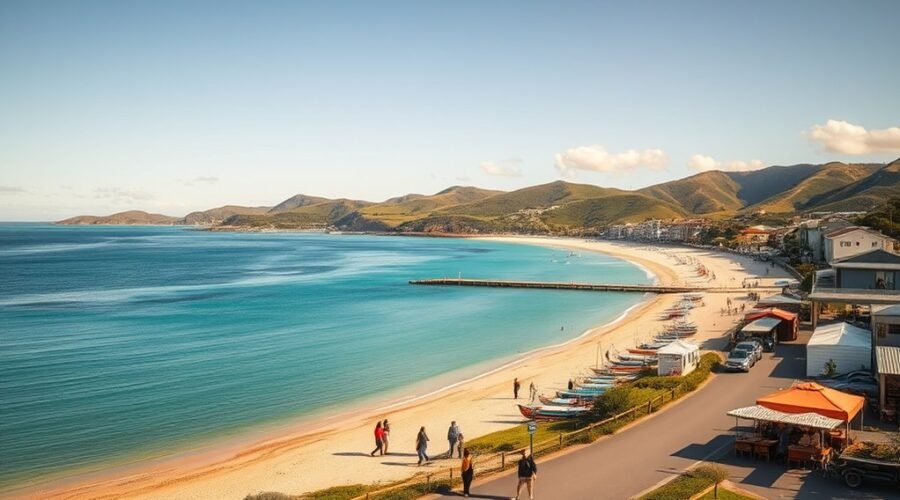
About 60% of visitors to Apollo Bay arrive in summer, which drives prices and crowds up sharply. You’ll find warm beach days then, but also packed car parks and higher rates—so the best windows are often the quieter shoulder seasons. If you want mild weather, better light for photos, and lower costs, keep going to see how each season shapes activities, crowds, and what to pack.
Compare our seasonal guides to Victoria, Australia and Portsea, Victoria when choosing other stops in Victoria.
Key Takeaways
- Visit in shoulder seasons (Mar–May, Sep–Nov) for mild weather, thin crowds, and lower accommodation costs.
- Summer (Dec–Feb) offers warm beach days and long light but brings peak crowds and higher prices.
- Winter (Jun–Aug) provides solitude, storm‑watching, cheaper stays, and improved wildlife viewing despite cool, wet conditions.
- Hikers and photographers prefer April–May or September for clear trails, golden light, and fewer people.
- Save money by booking midweek in shoulder seasons, using regional transport, and contacting local hosts directly.
When Is the Best Time to Visit Apollo Bay? (Short Answer)
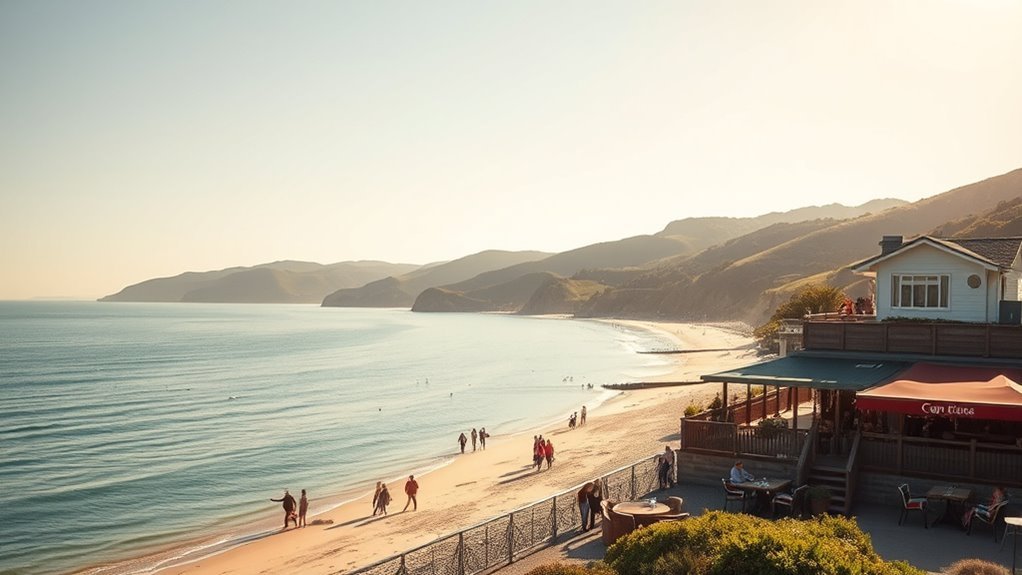
When should you go? Aim for shoulder seasons—autumn (Mar–May) and spring (Sep–Nov)—when weather is mild, crowds thin, and costs drop. You’ll find golden light for wild photography without peak-season congestion; trails and beaches feel like they’re yours to reclaim.
Spring brings blooming coastal vegetation and active birdlife, while autumn gives crisp air and dramatic skies that liberate your frame and mood.
If you want festivals and community energy, time a trip for local festivals in spring or early summer; they’re lively but don’t overwhelm the town like mid-summer tourist surges. Winter suits solitude seekers who want storm-watching and lower prices, though conditions can be cool and wet.
Choose the season that matches your desire: vibrant connection and color in spring, mellow clarity in autumn, introspective quiet in winter, or full social buzz in summer. Each offers freedom to craft your ideal Apollo Bay experience.
Apollo Bay in Summer (Dec–Feb): Weather, Crowds, Costs
If you prefer sun-soaked days and a lively atmosphere, summer in Apollo Bay (Dec–Feb) delivers warm temperatures, busy beaches, and higher prices. You’ll find long daylight hours perfect for chasing freedom along the shoreline, joining local festivals that celebrate coastal music and food, and mingling with a vibrant surf culture. Expect peak crowds on weekends; book ahead if you want choice accommodation without compromise.
Weather is generally warm and pleasant, though coastal winds can shift quickly—pack layers and plan flexible days. You’ll spot local wildlife like seabirds and occasional dolphins from the headland; respect habitats and keep distance. Water feels inviting, but adhere to beach safety signs and lifeguard advice—rips and changing conditions are real. Costs rise with demand: expect premium rates for stays and activities, but you can still find affordable eats and public beaches. Summer rewards the bold: embrace movement, stay alert, and savor the open coast.
Apollo Bay in Autumn (Mar–May): Weather, Crowds, Costs
As temperatures ease from summer’s heat, autumn (Mar–May) brings mild days, crisp mornings and a noticeable drop in crowds—so you can enjoy quieter beaches and easier bookings.
As summer cools, autumn (Mar–May) offers mild days, crisp mornings and much quieter beaches for easier bookings.
You’ll find daytime highs around 15–20°C, perfect for coastal walks, while mornings and evenings hold a brisk bite that invites layered clothing. Rain becomes more frequent than summer, but showers are often short-lived.
Crowds thin noticeably: you’ll move through cafes, trails and viewpoints with freedom, and accommodation rates typically fall from peak-season highs, so you can stretch your budget toward longer stays.
Local festivals pop up—celebratory markets and art events—that let you connect with community spirit without the crush. Culinary tours continue but at a gentler pace, offering seasonal seafood and farm-to-table fare with intimate tastings.
If you crave calm, sensory experiences and lower costs, autumn in Apollo Bay frees you to explore at your own rhythm.
Apollo Bay in Winter (Jun–Aug): Weather, Crowds, Costs
Move from autumn’s crisp calm into winter and you’ll find Apollo Bay taking on a quieter, starker beauty. You’ll face cool, brisk days and often blustery seas; daytime highs sit around 10–14°C and nights drop close to freezing. Rain becomes more frequent, so pack waterproof layers and sturdy boots to stay mobile and free.
Crowds thin dramatically — you’ll have beaches, trails, and viewpoints to yourself, making it easier to breathe and roam without schedules.
Winter wildlife becomes more visible: shorebirds, seals on rocky outcrops, and migrating whales offshore on calmer windows. Local festivals are smaller and intimate, offering cozy markets, community events, and low-key music nights that let you connect with locals and shed routine.
Costs drop for accommodation and tours, so you can choose quality stays and longer stays for less. If you crave solitude, resilient landscapes, and clear-headed exploration, winter delivers.
Apollo Bay in Spring (Sep–Nov): Weather, Crowds, Costs
When spring arrives, Apollo Bay wakes up with milder days, frequent sunny spells and cool mornings—daytime highs usually reach 14–18°C while nights hover around 6–9°C, and you’ll still get a fair share of showery fronts that call for a light waterproof and layers.
Spring loosens the hold of winter; you can breathe easier, chase open horizons and still find crisp mornings.
Crowds rise gradually as visitors pursue coastal freedom, but it’s never as busy as summer—book ahead for weekends and any local festivals that draw regional crowds.
Costs sit between low winter rates and summer peaks: accommodation and car hire tick up in October–November, yet bargains remain if you plan.
Nature perks up—wildlife sightings increase with migrating birds and newborn marsupials along quieter tracks, rewarding early risers.
Pack adaptable clothing, expect variable weather, and embrace the season’s promise of renewal without sacrificing your sense of escape.
Activities & Sample Itineraries by Season (Apollo Bay)
Plan your days around the season to get the most from Apollo Bay: in summer you can take sun-soaked day trips to nearby beaches and waterfalls.
In autumn, follow coastal walking routes for crisp air, dramatic skies and quieter viewpoints.
Come winter, head into the rainforest for misty hikes and sheltered trails that showcase the region’s fern-filled valleys.
Summer Day Trips
Although summer brings crowds, it also delivers long, sunlit days that make Apollo Bay ideal for quick coastal escapes and full‑day adventures. You’ll rise with the tide, grab picnic provisions from local markets, and chase secluded coves or lighthouse views before noon. Foodicultural festivals and beachside cuisine pop up, letting you taste liberated flavors between swims. Plan a mix of active and restful: surf lessons, harbor cruises, or a relaxed seafood lunch.
- Morning: paddle, short coastal hike, or surf lesson to energize your day.
- Midday: sample beachside cuisine, visit pop‑up foodultural festivals, enjoy a harbor picnic.
- Afternoon: scenic drive along the Great Ocean Road, stop for sunset photos and a quiet beach wind‑down.
Autumn Coastal Walks
As the summer crowds thin and the air turns crisp, autumn is ideal for coastal walks around Apollo Bay—you’ll find dramatic light, stirring surf, and quieter trails that make every viewpoint feel personal.
You can follow the coastal track toward Marengo or take shorter loops near the pier; both reveal sculpted cliffs, hidden coves, and wind‑swept grasses that invite slow, deliberate movement.
Bring a camera for coastal photography—golden‑hour skies and low‑angle sun sharpen textures and silhouettes.
Check tide charts before exploring rock platforms; tide pooling reveals starfish, anemones, and tiny ecosystems at low tide.
Dress in layers, pack a thermos, and move at your own pace: these walks are about unclenching, noticing detail, and claiming a stretch of wild coastline as yours.
Winter Rainforest Hikes
When winter brings steady rain to Apollo Bay, you’ll find the nearby rainforest trails at their most atmospheric—moss deepens to velvet, ferns unfurl, and waterfalls gain volume, turning familiar gullies into misty, rushing corridors of green.
You’ll move slowly, breathing damp air, noticing rainforest flora reclaiming every surface. Trails like those in Great Otway National Park reward patience: slick boardwalks, dripping trunks, and the roar of misty waterfalls erase routine, offering a sense of liberation.
- Lace up waterproof boots, pack a warm layer, and embrace slippery roots.
- Follow short loop trails to witness cascades without committing to long treks.
- Time hikes for late morning when light cuts through canopy mist.
Respect the environment; leave no trace and stay safe on wet terrain.
Save Money & Skip Crowds (Accommodation & Local Transport)
If you want to save money and avoid peak crowds in Apollo Bay, plan your stay outside school holidays and book accommodation early — weekdays and shoulder seasons (late autumn and early spring) offer lower rates and quieter streets.
You’ll find discount lodging in guesthouses, hostels, and family‑run motels if you search local booking sites and contact owners directly.
Aim for midweek check‑ins and shorter stays that align with owners’ calendar gaps to reveal better deals.
For getting around, choose budget transport options: regional buses, community shuttles, and shared rides reduce costs and shrink your footprint.
Rent a bike for short hops along the coast to feel free and move on your own schedule.
If you do hire a car, compare week‑long rates and fuel costs; sometimes two shorter rentals beat one long hire.
Pack light, pick flexible reservations, and embrace off‑peak rhythms — you’ll spend less, skip crowds, and reclaim time for spontaneous discovery.
Pick Dates by Travel Style: Families, Surfers, Hikers, Quiet Getaways
Because each travel style brings different priorities, choose your dates around what matters most to you: families should aim for school breaks with calm weather and kid‑friendly services, surfers chase consistent swells in late autumn and spring, hikers prefer the drier, cooler months for clear tracks, and quiet getaway seekers target weekdays in shoulder seasons to avoid crowds and higher prices.
You’ll plan differently if you want Family friendly festivals, Surf‑school packages, or solitude.
Pick dates that match energy levels, weather tolerance, and budget freedom so you control your experience.
- Families: book summer school breaks or festival weekends for Family friendly festivals, kid services, and playground access; expect higher costs but richer memories.
- Surfers: aim for late autumn and spring when swells are steady; book Surf‑school packages early to secure lessons and gear.
- Hikers & quiet seekers: choose April–May or September weekdays for crisp trails, fewer people, and lower rates so you can roam freely.
Frequently Asked Questions
Are There Reliable Public Transport Options to Apollo Bay From Melbourne?
Yes — you can get there by coach from Melbourne; train transport goes partway, then regional buses complete the trip. You’ll check ticket pricing online, plan connections, and travel confidently with flexible, budget-friendly options.
Is Apollo Bay Dog-Friendly for Beach and Trail Access?
Yes — you’ll find Apollo Bay mostly dog friendly for beach and trail access, though leash policies vary; keep dogs leashed in town and some reserves, enjoy dog friendly trails and check local signs for freedom-friendly spots.
What Emergency Medical Facilities Exist in Apollo Bay?
Ironically, you’ll find basic care here: a local medical clinic handles urgent needs and GPs, while ambulance service covers emergencies—so you’re not alone; you can confidently seek help and reclaim safety when needed.
Are Campfires or Beach Barbecues Allowed Locally?
Yes — you can enjoy beach grilling in designated spots, but you’ll need to follow fire regulations permits and local bans; get a permit where required, use approved pits, respect restrictions, and reclaim freedom responsibly.
Do Mobile Phone and Internet Services Work Reliably in Apollo Bay?
Want reliable connection? You’ll find mobile coverage in Apollo Bay is patchy—town centre’s fine but coastal and remote spots drop out—data speed varies by provider, so pick one with strong regional service and plan offline.
Conclusion
Choose shoulder seasons—autumn or spring—for mild weather, fewer crowds, and lower costs; you’ll get golden mornings for photos in autumn and blooming coastal plants in spring. Summer’s lively scene suits swimmers and festival-goers, while winter offers solitude and storm-watching. Tailor dates to your interests—families, surfers, and hikers each have ideal windows. Plan accommodation and transport early to save money, and visit like a local to enjoy Apollo Bay’s calm charm, like a well-loved postcard.



[…] Apollo Bay, Victoria […]
[…] Apollo Bay, Victoria […]
[…] can take a V/Line coach from Southern Cross to Lorne via Colac or Apollo Bay; trains run to Colac on standard regional routes, then buses connect. Check train routes and ticket […]
[…] our seasonal guides to Victoria, Australia and Apollo Bay, Victoria when choosing other stops in […]
[…] Apollo Bay, Victoria […]