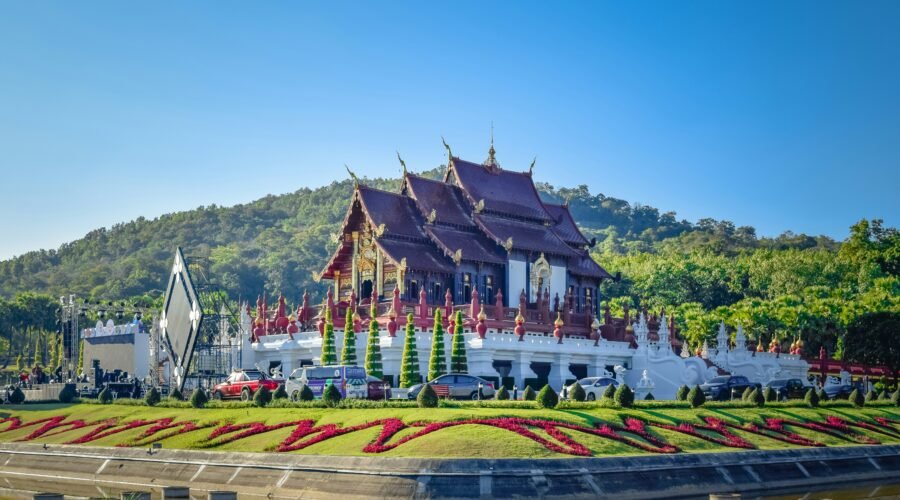
Mae Hong Son is at its easiest to explore during the cooler, drier months, but the right time depends on whether you care most about clear mountain views, waterfalls, flowers, lower prices, festivals, or quiet roads. For most travelers, November through February offers the best overall balance of comfortable weather and outdoor conditions. Late October and early March can also work, but they are more transitional.
Quick Answer
The best time to visit Mae Hong Son is generally November through February, when rainfall is low and mornings are cooler. Choose November or January for strong all-around conditions, visit in the green season for lush scenery and waterfalls, and be cautious about PM2.5 haze during late February through April.
Key Takeaways
- Best overall weather: November through February is the main cool, relatively dry period.
- Best for flowers: Doi Mae U Kho’s Bua Tong fields usually bloom from roughly mid-October to mid-December, with November often a strong choice.
- Best for lush scenery: The northern green season runs roughly from May to October, when hills turn green and waterfalls strengthen.
- Biggest seasonal concern: PM2.5 and regional haze can become serious during late February, March and April, so check current air-quality readings before strenuous outdoor activities.
- Transport warning: Air service at Mae Hong Son Airport can change. Verify live schedules for your exact dates rather than assuming a direct flight will operate.
Mae Hong Son can mean both the provincial capital and the wider mountainous province. This guide uses province-wide examples, including Mae Hong Son town, Pai, Khun Yuam, Mae Sariang, Doi Mae U Kho and the Mae Hong Son Loop.
Mae Hong Son Seasons at a Glance
Northern Thailand has three broad travel seasons: a cool season, a hot season and a rainy or green season. The boundaries are gradual rather than exact. May, for example, is still hot but rainfall rises sharply, while late February can remain pleasant even as haze risk begins to increase.
The Cool Season (November to February)
This is the most popular period for travelers who want drier roads, cooler mornings and better conditions for viewpoints, temples, hiking and road trips.
Weather During the Cool Season
Thai Meteorological Department 1991–2020 climate normals show that Mae Hong Son still has warm afternoons even in winter. Average daily maximum temperatures are about 31.0°C (87.8°F) in November, 28.8°C (83.8°F) in December, 29.8°C (85.6°F) in January and 33.3°C (91.9°F) in February. Average minimums during those months range from about 14.5°C to 19.4°C (58.1°F to 66.9°F).
That means you should expect pleasant mornings and evenings rather than cold weather all day. Mountain locations can feel considerably cooler than Mae Hong Son town, especially around sunrise. A light jacket or warm layer is useful for early starts.
Rainfall is generally low from November through February, making this the most dependable period for long drives, sightseeing and outdoor plans. See the Thai Meteorological Department’s 1991–2020 climate normals for the official station data.
Crowds During the Cool Season
Winter is the main visitor season, particularly in Pai, around popular mist viewpoints, and during Thai long weekends and the Christmas-New Year period. Mae Hong Son rarely feels like Thailand’s busiest beach resorts, but popular accommodations and attractions can fill more quickly than they do during the hot or rainy months.
The Tourism Authority of Thailand specifically recommends advance accommodation planning for Pai during winter long holidays. If you have a particular guesthouse, mountain-view room or resort in mind, book earlier rather than relying on same-day availability.
Costs During the Cool Season
Accommodation prices can rise when winter demand is strongest, particularly around weekends and holiday periods. There is no dependable province-wide percentage increase, so compare rates for your actual dates instead of assuming a fixed seasonal markup.
Food and basic local services are generally less affected by tourism season than accommodation. Transport prices and availability can also depend on the route and operator rather than simply the month.
Pro Tip: If you want cool-season weather without the strongest New Year demand, consider November after the main rains have eased or January after the holiday rush. Always check the current forecast because mountain weather can change quickly.
The Hot Season (March to May)
March and April are normally the hottest part of the year. May remains hot but is also a transition month, with rainfall increasing sharply as northern Thailand moves into its green season.
Weather During the Hot Season
Mae Hong Son can become extremely hot before the main rains arrive. Thai Meteorological Department normals list average daily maximums of about 36.9°C (98.4°F) in March, 38.9°C (102.0°F) in April and 36.3°C (97.3°F) in May. Historical extremes have been higher.
The more important travel issue during parts of this period is regional smoke and PM2.5. Agricultural burning, forest fires and stagnant atmospheric conditions can contribute to severe haze across northern Thailand. Visibility may fall, mountain views can disappear, and outdoor exertion may be uncomfortable or unhealthy.
Warning: Do not treat northern Thailand’s March-April haze as only a photography problem. Thailand’s Pollution Control Department recorded health-impacting PM2.5 levels in parts of Mae Hong Son during the 2026 smoke season. Check current readings through Air4Thai before hiking, motorcycling or spending long periods outdoors, especially if you are sensitive to air pollution.
May can feel different from March and April. Rainfall increases substantially, humidity rises and the landscape begins turning green. It is better viewed as a hot-to-rainy transition than as a uniformly dry summer month.
Crowds During the Hot Season
General sightseeing demand is lower than in winter, but there can be localized spikes around Songkran, Poy Sang Long ceremonies, school holidays and special events. You may find temples, roads and viewpoints much quieter on ordinary weekdays.
Costs During the Hot Season
Lower accommodation rates are often easier to find outside major holidays, but discounts vary widely by property and location. Do not plan your budget around a fixed percentage reduction.
Some small tourism businesses may shorten hours during very quiet periods, so confirm anything that is essential to your itinerary before making a long detour.
The Rainy or Green Season (May to October)
The rainy season is also northern Thailand’s green season. It brings more frequent rain, higher humidity, fuller waterfalls, misty mountain scenery and much greener landscapes.
Weather During the Rainy Season
Rain does not automatically mean continuous downpours from morning to night. Tropical showers often arrive in bursts, but prolonged rain is possible, particularly during active monsoon periods. Build flexibility into outdoor plans instead of assuming every shower will end within a set number of hours.
Thai Meteorological Department normals show a clear increase in rainfall beginning in May. August is historically one of Mae Hong Son’s wettest months, while rain normally starts easing through October before the drier winter pattern becomes established.
Temperatures are generally lower than the April peak, but humidity is high. The combination of rain, cloud and mist can produce some of Mae Hong Son’s most atmospheric scenery.
Note: National parks and individual attractions can use seasonal closures for trail recovery, safety or conservation. Some Mae Hong Son waterfalls, campgrounds and park areas have historically closed during parts of the rainy season. Check the latest park status before traveling specifically for one attraction.
Crowds During the Rainy Season
Visitor numbers are generally lower than during winter, giving you more flexibility with accommodation and a quieter atmosphere at many attractions. Thai public holidays and special events can still create short-term demand spikes.
Costs During the Rainy Season
Accommodation can offer better value than during the winter peak, although rates vary by property. The bigger trade-off is not price but flexibility: rain can affect road travel, trekking conditions, viewpoints and access to individual natural attractions.
If waterfalls, vivid green rice fields, mist and photography are priorities, the green season can be highly rewarding. If your itinerary depends on dry mountain roads, long motorcycle days or specific hiking trails, the cool season is usually easier to plan.
Festivals and Events to Consider
Mae Hong Son’s calendar includes Thai national festivals as well as distinctive Shan or Tai Yai traditions. Exact dates can change from year to year because some events follow lunar calendars or schedules set by individual temples and communities.
Loi Krathong and Loi Krathong Sawan (Usually November)
Loi Krathong is celebrated throughout Thailand around the full moon of the twelfth lunar month, usually in November. Mae Hong Son has its own distinctive traditions rather than simply reproducing Chiang Mai’s best-known Yi Peng program.
One notable local celebration is Loi Krathong Sawan at Wat Phra That Doi Kong Mu. The Tourism Authority of Thailand has highlighted this Mae Hong Son tradition in previous annual festival calendars. Check the current year’s official program before choosing travel dates because schedules can change.
Poy Sang Long Festival (March/April)
Poy Sang Long, also written Poi Sang Long, is a traditional Shan or Tai Yai novice ordination ceremony. Young participants wear elaborate ceremonial clothing and take part in processions and religious activities before entering the monastery as novice monks.
The Tourism Authority of Thailand places the tradition mainly in late March and early April. Individual temples and communities may hold ceremonies on different days, so there is no single province-wide date that works every year.
This is one of Mae Hong Son’s most culturally significant annual traditions, but it also falls during the hottest and often smokiest part of the year. If the ceremony is your reason for traveling, plan around both heat and current PM2.5 conditions.
Bua Tong Blossom Season (Mid-October to Mid-December)
The Bua Tong, or Mexican sunflower, fields at Doi Mae U Kho in Khun Yuam district turn large sections of the hillsides yellow during their seasonal bloom. Tourism Authority of Thailand material generally places the flowering period from around mid-October to mid-December, with November and early December commonly highlighted.
Flowering conditions vary with weather, so the exact peak cannot be guaranteed far in advance. If the fields are a major reason for your trip, check current local updates shortly before traveling.
Activities by Season

Your preferred activities may matter more than the calendar itself. A month that is poor for long motorcycle days could still be excellent for mist photography or cultural travel.
Cool Season Activities
- Trekking and Hiking: Cooler mornings and lower rainfall make this the easiest period for many walks, nature trails and mountain outings. Confirm current park and trail status before departure.
- Motorbike Touring: The Mae Hong Son Loop is generally easier when roads are dry and visibility is good.
- Sightseeing: Temples, caves, villages and viewpoints are more comfortable to explore without peak April heat.
- Sunrise and Mist Viewpoints: Cool mornings are excellent for places known for mountain mist, including areas around Pang Ung and other highland viewpoints.
Hot Season Activities
- Pool and Resort Time: Midday heat can be intense, so accommodation with shaded outdoor space or a pool can make the trip more comfortable.
- Early-Morning and Late-Afternoon Exploration: Do demanding outdoor activities outside the hottest part of the day.
- Temples, Cafes and Markets: Use shaded or indoor stops during the afternoon.
- Cultural Events: March and April can coincide with Poy Sang Long and Songkran, although festival dates and locations should be checked each year.
Rainy Season Activities
- Waterfalls: Water flow is generally stronger during the green season, but access can occasionally be restricted for safety or conservation.
- Photography: Green mountains, low clouds, rice fields and morning mist can create dramatic conditions.
- Cultural Visits: Temples, markets, craft communities and food-focused activities can be easier to fit around showers than rigid all-day outdoor plans.
- Nature Appreciation: The landscape is at its greenest, but expect mud, wet paths and rapidly changing mountain weather.
Getting There and Around

Transport deserves extra planning in Mae Hong Son because distances can be slow despite looking short on a map. Mountain roads are winding, and air schedules have changed repeatedly over time.
Flying to Mae Hong Son
Mae Hong Son Airport (HGN) serves the provincial capital, but you should not assume that a particular direct route operates year-round. Air services and frequencies have changed several times, including proposed services that did not become dependable long-term options.
Before booking accommodation around a flight, check the Thailand Department of Airports live flight information and then confirm the itinerary directly with the operating airline.
If no suitable HGN flight is available, many travelers reach the province by road from Chiang Mai, either through Pai on Highway 1095 or via the southern approach through Mae Sariang.
Driving or Motorbiking the Mae Hong Son Loop
The roads connecting Chiang Mai, Pai, Mae Hong Son and Mae Sariang are famous for constant curves and mountain driving. The well-known “1,864 curves” figure is closely associated with the winding Chiang Mai–Mae Hong Son journey and is even referenced by the Tourism Authority of Thailand.
Do not interpret the number as a reason to rush or treat the Loop like a riding challenge. Travel times can be long, and weather, construction, traffic and viewpoints all affect the pace.
Warning: Only ride a motorcycle if you are properly licensed, insured and comfortable with steep, winding mountain roads. Wear an appropriate helmet and protective gear, reduce speed in rain, avoid riding beyond your visibility, and do not assume a dry road around one bend means the next section is dry.
Best Time for the Loop
November through February is generally the easiest period for the Loop because rainfall is lower and daytime heat is less intense than in March and April. Early mornings can still be cool, so riders should carry an extra layer.
Hot Season on the Loop
March and April can combine high temperatures with haze. Heat increases dehydration risk while PM2.5 can make long hours of open-air riding unpleasant. Check both the weather forecast and air-quality readings before committing to a long day.
Rainy Season on the Loop
The Loop remains possible during the green season, but wet pavement, standing water, cloud, fog and heavy showers can reduce grip and visibility. Slow down and give yourself more time than a dry-season itinerary would require.
Some side roads, natural attractions or trails may also become difficult or temporarily close after heavy rain. Check conditions locally rather than relying only on an itinerary written months earlier.
Public Transport and Motion Sickness
Road-based public transport is an alternative if you do not want to drive. Services and departure times can change, so verify schedules shortly before traveling. The roads between Chiang Mai, Pai and Mae Hong Son contain long sequences of bends, and the Tourism Authority of Thailand specifically warns travelers who are prone to motion sickness to prepare for the winding journey.
If winding roads make you ill, choose a seat where movement is easier to tolerate, avoid an overly heavy meal before departure and bring any motion-sickness medication that you normally use safely.
Final Thoughts
The table below is a practical planning guide rather than a guarantee. Weather can shift from year to year, and “cost” refers mainly to relative accommodation demand rather than a fixed province-wide price.
| Month | Typical Pattern | Crowds | Accommodation Demand |
|---|---|---|---|
| January | Cool mornings, dry, warm afternoons | High | High |
| February | Dry and warmer; haze risk may rise late in the month | Medium-High | Medium-High |
| March | Hot, mainly dry, increasing smoke/haze risk | Medium | Low-Medium |
| April | Very hot; smoke/haze can be severe; Songkran period | Medium with festival spikes | Low-Medium |
| May | Hot, humid and increasingly wet | Low | Low |
| June | Warm and wet; green-season scenery | Low | Low |
| July | Warm, humid and wet | Low | Low |
| August | One of the wetter months; very green | Low | Low |
| September | Wet and lush; flexible itineraries helpful | Low | Low |
| October | Rain gradually easing; green-to-cool transition | Medium | Low-Medium |
| November | Cooler, much drier; Bua Tong season | High | Medium-High |
| December | Cool mornings and low rainfall | High | High |
Ultimately, the best time depends on your priorities.
- For comfortable weather, drier roads and outdoor activities: Choose November through February.
- For a balance of weather and slightly less peak-season pressure: Consider November or January outside major holiday weekends.
- For Bua Tong flowers: Aim for the mid-October to mid-December bloom period and verify current flowering conditions before making a special trip.
- For Poy Sang Long: Look for confirmed late-March or early-April community schedules, but prepare for intense heat and possible PM2.5.
- For lush landscapes, waterfalls and mist: Consider the May-to-October green season and keep your itinerary flexible around rain and seasonal closures.
- For budget-focused travel: Hot and rainy months can offer lower accommodation demand, but the trade-offs are heat, air quality or rain rather than simply fewer tourists.
For most first-time visitors, November through February remains the safest all-around recommendation. Mae Hong Son’s mountains, Shan cultural traditions and winding roads can be rewarding in every season, but the experience changes dramatically with rainfall, heat and air quality. Check the weather, PM2.5, attraction status and transport schedule shortly before departure instead of relying only on the calendar.
Frequently Asked Questions
What is the best time to visit Mae Hong Son, Thailand?
November through February is generally the best period for first-time visitors because rainfall is low, mornings are cooler and mountain roads are usually easier to plan around. December and January feel coolest, while February becomes warmer and may see increasing haze risk later in the month.
What is the weather like in Mae Hong Son throughout the year?
Mae Hong Son has a cooler, drier period from roughly November to February, a very hot period centered on March and April, and a rainy or green season beginning around May and continuing into October. The changes are gradual, so May is both hot and increasingly wet, while October is a transition back toward drier weather.
When is the peak tourist season in Mae Hong Son?
The main visitor season is during the cooler months, especially November through January and around long weekends and New Year. Pai and popular mountain viewpoints can be noticeably busier during these periods, so advance accommodation booking is sensible.
When is the off-peak season in Mae Hong Son?
Much of March through October has lower general tourism demand than winter, although festivals and Thai holidays can create temporary spikes. March-April brings heat and haze risk, while May-October brings more rain and greener scenery.
How does the cost of visiting Mae Hong Son vary throughout the year?
Accommodation demand is generally highest during the cool season and holiday periods, while better room deals may be available during hotter or wetter months. There is no reliable province-wide percentage difference, so compare prices for your exact dates and preferred town.
Is March or April a good time to visit Mae Hong Son?
It can be worthwhile for travelers specifically interested in events such as Poy Sang Long, but March and April are normally very hot and can experience serious PM2.5 pollution. Check Air4Thai shortly before traveling and reconsider strenuous outdoor plans if air quality is poor.
Is Mae Hong Son worth visiting during the rainy season?
Yes, especially if you want green mountains, waterfalls, mist and fewer visitors. The trade-off is less predictable outdoor access. Keep extra time in your itinerary and check for temporary trail, campground, waterfall or road restrictions after heavy rain.
Can I fly directly to Mae Hong Son?
Mae Hong Son has an airport, but routes and frequencies can change. Do not assume a Chiang Mai or Bangkok flight will operate on your dates. Check the Thailand Department of Airports’ live information and confirm directly with the airline before building the rest of your itinerary around a flight.
Sources
- Thai Meteorological Department — Climatological Data of Thailand, 1991–2020 — Mae Hong Son temperature, rainfall and climate normals.
- Tourism Authority of Thailand — Mae Hong Son — official destination information and winter travel guidance.
- Tourism Authority of Thailand — 5 Must Do in Mae Hong Son — Poy Sang Long and local Loi Krathong traditions.
- Tourism Authority of Thailand Newsroom — The Magic of Mae Hong Son — Bua Tong bloom period and seasonal cultural information.
- Thailand Pollution Control Department — Northern Thailand PM2.5 notice, April 2026 — Mae Hong Son smoke-season air-quality risk.
- Thailand Department of Airports — Mae Hong Son Airport Flight Information — current airport and flight-status checking.