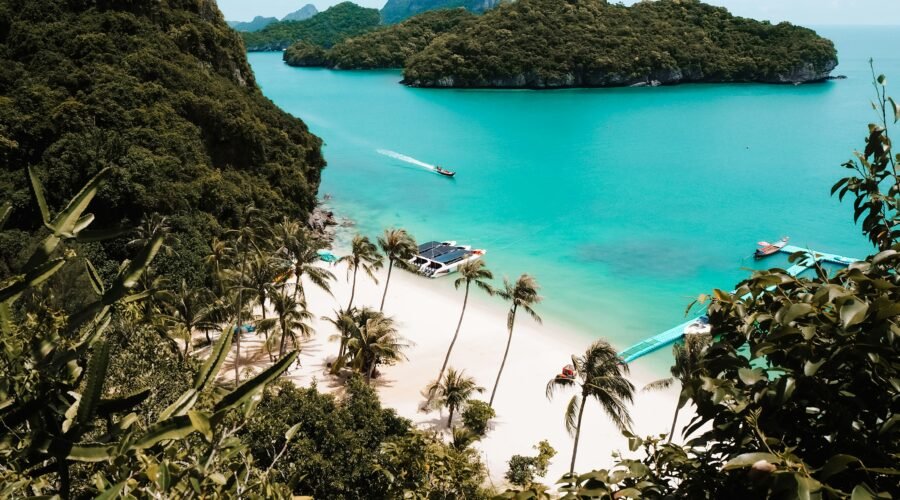
Choosing the best time to visit Ang Thong National Marine Park is a little different from planning a trip to many other Thai islands. The park sits in the Gulf of Thailand, where the wettest period comes later in the year. For the strongest combination of lower rainfall, workable sea conditions, and full park access, February through April is generally the safest target. December 16 through January can also work well, while May through September can offer fewer crowds and decent value if you accept a higher chance of showers.
Quick Answer
The best time to visit Ang Thong National Marine Park is usually February to April, when Ko Samui climate data shows relatively low rainfall and the park is normally open. Avoid planning a park visit from November 1 to December 15 because Ang Thong normally closes for its annual monsoon-season safety and recovery period.
Key Takeaways
- Best overall weather window: February to April, with February especially dry in long-term Ko Samui climate records.
- Annual closure: Mu Ko Ang Thong normally closes to tourism and overnight stays from November 1 through December 15.
- Good value option: May through September can still be workable because the Gulf’s heaviest rain usually arrives later, although showers and changing sea conditions remain possible.
- Wettest period: October and November are much wetter than July and August in official Ko Samui climate normals.
- Weather always wins: Boat trips can be cancelled temporarily for strong wind, waves, or thunderstorms even during an otherwise favorable month.
Warning: Do not book an Ang Thong park tour for the normal November 1-December 15 closure period without first confirming that the park has officially reopened. Annual dates and temporary weather closures should always be checked with the park or your licensed tour operator before departure.
When Is the Best Time to Visit Ang Thong National Marine Park?
If your priority is good weather and a lower chance of a cancelled boat day, February, March, and April are the strongest choices. They fall inside the normal visitor season and are among the drier months in the nearby Ko Samui climate record.
The Thai Meteorological Department’s 1991-2020 climate normals for Ko Samui show mean rainfall of about 64.3 mm in February, 115.8 mm in March, and 82.9 mm in April. By comparison, October averages about 294.9 mm and November about 444.6 mm.
Ko Samui’s long-term climate record shows why Ang Thong should not be planned around Thailand’s generic “May-to-October rainy season” rule: the Gulf’s sharpest rainfall increase comes in October and November.
February to April: Best Overall Conditions
This is the period I would target first if your trip is built around viewpoints, kayaking, beaches, and a full-day boat excursion.
- Weather: Rainfall is generally lower than during the late-year monsoon period. April is hotter, so midday hiking can feel strenuous.
- Sea conditions: Seasonal averages are favorable, but day-to-day wind and wave conditions still matter.
- Crowds: Popular stops such as Ko Wua Ta Lap and Ko Mae Ko can be busy when several tour boats arrive around the same time.
- Costs: Accommodation around Ko Samui can be expensive during popular holiday periods, so compare dates instead of assuming one fixed “peak-season” rate.
December 16 to January: Good After the Park Reopens
Ang Thong normally reopens after its annual closure in mid-December. The second half of December and January can be enjoyable, but they are not as consistently dry as February.
Ko Samui’s climate normals show about 263.1 mm of mean rainfall in December and 126.8 mm in January. That means a late-December trip can be very good, but you should not assume that reopening immediately equals perfectly dry weather.
May to September: Fewer Crowds With More Weather Risk
May through September is much more useful than the original “height of the rainy season” label suggested. Rain is possible throughout this period, and humidity is high, but the Gulf’s heaviest long-term rainfall generally arrives later.
- May: Hot, humid, and wetter than April.
- June: Showers are common, although many trips still operate when marine conditions are suitable.
- July: Warm and changeable rather than automatically a washout.
- August: Similar to July, with showers possible but substantially lower long-term rainfall than October or November.
- September: Rain risk remains, with the wetter late-year period approaching.
This period can suit travelers who value lower demand more than perfectly predictable weather. Just keep some flexibility in your itinerary.
October: Increasing Rain and Boat-Trip Risk
October deserves more caution than the original article gave it. The Ko Samui normal rises to about 294.9 mm of rainfall across roughly 19 rainy days.
The park is normally still open during October, but heavy rain, wind, waves, or thunderstorms can make individual boat trips uncomfortable or unsafe. Tour operators may alter or cancel itineraries when marine conditions deteriorate.
November 1 to December 15: Normal Annual Closure
This is the most important planning detail in the article. Mu Ko Ang Thong National Park normally closes tourism and overnight-stay areas from November 1 through December 15.
An official Thai government notice confirmed the same closure period for 2025. The closure supports visitor safety during rougher monsoon conditions and gives natural areas time to recover. See the Thai Government Contact Center closure announcement.
Note: Climate normals describe long-term patterns, not the conditions on your exact travel date. Check the marine forecast and your operator’s departure status shortly before your trip, even in February or March.
Navigating the Crowds: When to Go for More Space
If your priority is enjoying Ang Thong’s natural scenery with fewer tour groups around you, you need to balance crowd levels against weather reliability.
Best Balance: Late April to June
Late April through June can provide a useful compromise. The busiest dry-season demand begins to ease, yet you are still well before the much wetter October-November period.
Rain becomes more common from May onward, so this is a trade-off rather than a guaranteed quiet-weather window.
July to September: Lower-Demand Alternative
July through September can also work for travelers willing to accept showers and a little more uncertainty. You may find less pressure at popular viewpoints and beaches than during the main dry-season holiday periods.
Do not choose these months solely because an article promises an empty park. Visitor numbers change with school holidays, international travel patterns, weekends, weather, and individual tour schedules.
December to April: Expect More Tour Activity
Once the park reopens in mid-December, demand usually builds. February through April offers some of the most appealing weather statistics, which naturally makes these months attractive to other travelers as well.
If you want the famous viewpoints with fewer people around you, ask operators about their route order and departure time. Different boats do not necessarily reach every stop at exactly the same time.
Pro Tip: When comparing tours, look beyond the boat price. Ask which islands are included, whether kayaking is included, whether the national park fee is included, how many passengers the boat carries, and what happens if weather cancels the trip.
If you enjoy comparing how destination timing changes between very different climates, the site’s existing guide to the best time to visit Ballica Cave in Tokat uses the same weather, crowd, and cost framework for an inland destination.
Budgeting Your Ang Thong Adventure: What Changes by Season?

Your travel dates can affect the total cost, but there is no universal rule saying flights, hotels, or tours are always cheapest in one particular month. Prices depend on demand, holidays, availability, booking lead time, room category, departure point, and boat type.
National Park Entrance Fees
Unlike hotel and airfare prices, the national park entrance fee is a defined cost. Mu Ko Ang Thong is listed in the Department of National Parks’ fee system, while Ko Wua Ta Lap and Ko Mae Ko are designated special visitor areas for foreign travelers.
- Foreign adult: 300 baht
- Foreign child: 150 baht
- Thai adult: 40 baht
- Thai child: 20 baht
The Tourism Authority of Thailand’s publication of the DNP special-fee announcement lists the 300/150-baht foreign visitor fee for Ko Wua Ta Lap and Ko Mae Ko. The Department of National Parks fee schedule lists the Thai 40/20-baht rate for Mu Ko Ang Thong.
Fees and collection procedures can change, so confirm the amount and whether it is already included in your tour before paying.
What a Tour Price May Include
Most visitors experience Ang Thong as a day trip from Ko Samui. Depending on the operator and boat, a package may include some combination of:
- hotel pickup and return transfer;
- boat transport;
- guide services;
- lunch and drinking water;
- life jackets;
- snorkeling equipment;
- kayaking;
- insurance provided by the operator.
Do not assume the national park entrance fee is included. Some operators bundle it into the advertised price, while others collect it separately.
Peak-Period Costs
Popular dry-season dates and major holidays can increase accommodation demand on Ko Samui and Ko Pha Ngan. Booking earlier gives you a better choice of rooms and boat departures, but it does not guarantee the lowest possible airfare.
May to September Savings
You may find promotions during less weather-reliable months, particularly for accommodation, but compare the complete trip cost. A cheaper room is less valuable if your schedule gives you only one possible day for Ang Thong and that boat day is cancelled.
October and the Closure Period
Lower advertised prices in wetter weather should not be the only reason to choose October. Marine disruption becomes more likely. During the normal November 1-December 15 closure, you should plan another activity rather than budgeting for a standard Ang Thong park visit.
Activities and Their Ideal Conditions

Ang Thong’s main activities are available during the park’s open season, but the best conditions depend heavily on wind, waves, visibility, rainfall, and the individual day’s operating decision.
Hiking to Viewpoints
Ko Wua Ta Lap is famous for its elevated panorama across the limestone islands. The climb is a major highlight, but it should not be treated like a casual flat beach walk.
- Best conditions: Drier days, especially from February through April.
- Main challenge: Heat, steep sections, uneven ground, and slippery surfaces after rain.
- Bring: Shoes or secure sandals with grip, drinking water, sun protection, and enough time to descend carefully.
Start slowly in hot weather. April can be particularly warm even though rainfall is relatively low.
Kayaking
Kayaking lets you explore sheltered sections of the limestone coastline, but safe conditions depend more on that day’s wind and sea state than on the month printed on your calendar.
Follow the guide’s route, wear the provided life jacket, and do not continue into exposed water if the operator or park staff changes the itinerary.
Snorkeling
Snorkeling conditions vary around the park. Calm water can make the experience more comfortable, while wind, waves, rain, runoff, and suspended sediment can reduce visibility.
Do not treat perfectly clear water as guaranteed even during the drier months. Ang Thong is a natural marine environment, not a controlled swimming pool.
Beaches and Swimming
Beach stops are enjoyable whenever the park is open and conditions are safe. February through April offers a good statistical chance of drier weather, while May through September can provide quieter-feeling visits at the cost of greater weather uncertainty.
Follow designated swimming areas and any instructions from rangers or boat crews.
Warning: An “open” month does not guarantee an operating boat trip. Strong wind and rough Gulf conditions can cause temporary park or tour closures at short notice. Never pressure an operator to sail when a departure has been cancelled for safety.
If you’re comparing the same weather-versus-crowds decision with a colder destination, the site’s existing Watson Lake, Yukon timing guide provides another seasonal-planning example.
Ang Thong Month-by-Month Planner
The weather figures below use long-term Ko Samui climate normals from the Thai Meteorological Department as the closest practical climate reference. They are averages, not forecasts for a specific day.
| Month | Mean Rainfall | Park Status | Planning Outlook |
|---|---|---|---|
| January | 126.8 mm | Normally open | Good option; drier than late year, though showers remain possible. |
| February | 64.3 mm | Normally open | Excellent overall choice; driest month in the Ko Samui 1991-2020 normals. |
| March | 115.8 mm | Normally open | Very good for boat trips and viewpoints; warm weather. |
| April | 82.9 mm | Normally open | Good weather statistics but hot; holiday demand can be high. |
| May | 131.6 mm | Normally open | Hot, humid, and more changeable; useful value compromise. |
| June | 133.6 mm | Normally open | Showers common; keep some scheduling flexibility. |
| July | 117.0 mm | Normally open | Not the year’s wettest month; workable when marine conditions cooperate. |
| August | 102.2 mm | Normally open | Can offer a useful weather/value compromise. |
| September | 117.5 mm | Normally open | Still workable, with the wetter late-year period approaching. |
| October | 294.9 mm | Normally open through Oct. 31 | High rain risk and greater chance of marine disruption. |
| November | 444.6 mm | Normally closed | Wettest month in the Ko Samui normals; standard park trips should not be planned. |
| December | 263.1 mm | Normally closed Dec. 1-15; reopens after closure | Conditions improve after the monsoon period, but rain remains more common than in February-April. |
Practical Tips for Any Time of Year
A good Ang Thong trip depends on more than choosing a month. Boat type, daily weather, tour inclusions, footwear, and your schedule flexibility can make a major difference.
Book Important Dates in Advance
If you are traveling during Christmas/New Year, February-April, Songkran, or another busy holiday period, reserve accommodation and your preferred tour early enough to have alternatives.
Do not make an inflexible non-refundable plan around a single boat day if Ang Thong is one of the main reasons for your trip.
Choose a Reputable Tour Operator
- Check the itinerary: Confirm which islands and activities are scheduled.
- Ask about the park fee: Find out whether it is included or collected separately.
- Check kayaking: Some packages include it; others charge extra.
- Confirm transfers: Hotel pickup may be limited to specified areas.
- Read the weather policy: Understand what happens if the operator or authorities cancel the trip.
- Ask about passenger capacity: A lower advertised price may come with a much larger group.
Check Weather Again Before Departure
Monthly rainfall tables help you choose a season. They cannot tell you whether the Gulf will be safe for your particular boat tomorrow morning.
Check the latest forecast from the Thai Meteorological Department, then follow the final decision of park staff and your tour operator.
Pack for Sun, Rain, and a Wet Boat
- Water-resistant sunscreen: Reapply after swimming and sweating.
- Hat and sunglasses: Shade is limited during exposed sections of the trip.
- Lightweight clothing: Choose breathable fabrics that dry quickly.
- Swimwear: Wear it under your clothes if your itinerary includes several water stops.
- Secure footwear: Shoes or sandals with grip are much better than loose flip-flops for viewpoint trails.
- Dry bag or waterproof phone case: Boat spray can soak belongings even without rain.
- Drinking water: Stay hydrated, especially before climbing viewpoints.
- Personal medication: Carry anything you may need during a full day away from your hotel.
Protect the Marine Park
Ang Thong is a protected natural area. Do not remove shells, coral, plants, or wildlife. Avoid standing on coral, do not feed wild animals, keep rubbish with you until it can be disposed of properly, and follow ranger instructions.
The Department of National Parks continues marine-conservation and waste-removal work in Mu Ko Ang Thong, reinforcing why visitor behavior matters in this sensitive environment. You can follow current Ang Thong updates through the Department of National Parks news archive.
Which Month Should You Choose?
- Choose February if your main goal is the lowest long-term rainfall.
- Choose March or April for a strong combination of drier weather and normal park access, while preparing for heat.
- Choose late December or January if those dates fit your wider Thailand trip and you can tolerate a little more rainfall uncertainty.
- Choose May through September if you prefer a potentially quieter, better-value period and can keep your boat day flexible.
- Think carefully about October because rainfall increases sharply.
- Do not plan a standard Ang Thong park visit from November 1 through December 15 unless an official notice confirms different opening arrangements for your specific year.
Frequently Asked Questions
What is the best time to visit Ang Thong National Marine Park?
February through April is generally the strongest overall window. The park is normally open, and Ko Samui’s long-term climate data shows relatively low rainfall compared with October through December. February has the lowest mean monthly rainfall in the 1991-2020 Ko Samui normals.
When is Ang Thong National Marine Park closed?
Mu Ko Ang Thong normally closes to tourism and overnight stays from November 1 through December 15 for the monsoon-season safety and recovery period. Confirm the official notice for your travel year because operating dates can be affected by conditions.
Is July or August a bad time to visit Ang Thong?
Not necessarily. Rain and thunderstorms are possible, but Ko Samui’s long-term rainfall is substantially lower in July and August than in October and November. Keep your itinerary flexible because daily wind and sea conditions can still affect boat departures.
What is the rainiest time around Ang Thong?
The nearby Ko Samui 1991-2020 climate normals show a major increase in rainfall in October and November. November averages about 444.6 mm, making it the wettest month in that dataset. This late-year pattern is one reason generic Thailand rainy-season advice can be misleading for the Gulf islands.
How much is the Ang Thong National Marine Park entrance fee?
The published rates for the main Ang Thong visitor areas are 300 baht for foreign adults and 150 baht for foreign children. Thai visitors pay 40 baht for adults and 20 baht for children. Confirm the current rate and whether your operator includes the fee in its tour price.
Can an Ang Thong tour be cancelled even in the dry season?
Yes. Strong wind, rough seas, thunderstorms, or official marine warnings can cause temporary cancellations at any time of year. A favorable month improves your odds but never guarantees a boat departure.
What activities can you do at Ang Thong?
Typical visits can include hiking to viewpoints, visiting Ko Mae Ko and its lagoon viewpoint, kayaking, snorkeling, swimming, and relaxing on beaches. The exact activities depend on your tour itinerary, park restrictions, and the day’s weather and sea conditions.
Should I book Ang Thong before arriving in Ko Samui?
Booking ahead is sensible during popular holiday periods or when you want a specific operator or boat type. During less busy periods you may have more flexibility, but always check the cancellation policy in case marine conditions stop the trip.
Sources
- Thai Meteorological Department — Climatological Data of Thailand, 1991-2020 — Ko Samui monthly rainfall, temperature, humidity, wind, and rainy-day normals.
- Thai Government Contact Center — Mu Ko Ang Thong seasonal closure announcement — confirms the November 1-December 15 tourism and overnight-stay closure period.
- Department of National Parks — National park entrance-fee schedule — identifies Mu Ko Ang Thong’s base fee group and Thai visitor rates.
- Tourism Authority of Thailand — DNP special visitor-area fees — confirms the foreign visitor fee for Ko Wua Ta Lap and Ko Mae Ko.
- Department of National Parks — Mu Ko Ang Thong news archive — current conservation, visitor-management, and park updates.