When you plan long-distance overland travel, reliable water storage is one of the decisions that determines comfort, safety, and how far you can push your route. You need containers that resist UV and abrasion, seal without leaking, fit efficiently in your vehicle, and, where needed, treat or dispense water without fuss.
This guide helps you pick the right solution for different needs so you can spend less time managing supplies and more time focused on the journey.
Top Picks
|
Category |
Product |
Score |
|---|---|---|
|
🏆 Best Purifier |
95/100 |
|
|
🔰 Best Stackable |
90/100 |
|
|
🚀 Best Dispensing Add-On |
88/100 |
|
|
💼 Best Military-Grade Jug |
80/100 |
Selection Criteria
You want containers that survive real overland conditions, so we prioritized durability, sealing, and materials that resist UV and bacterial growth. Capacity and form factor matter because you must balance how much water you carry against space and weight in your vehicle. Dispensing and compatibility are key for day-to-day convenience, so we evaluated spigots, venting, and how easily systems integrate with racks and taps.
Purification options are a separate axis: if you expect to refill from natural sources, filtration performance and maintenance requirements become critical. Finally, value and user experience influence the score, including assembly, likelihood of leaks, and how simple each system is to clean and store.
Wavian 5G Jug
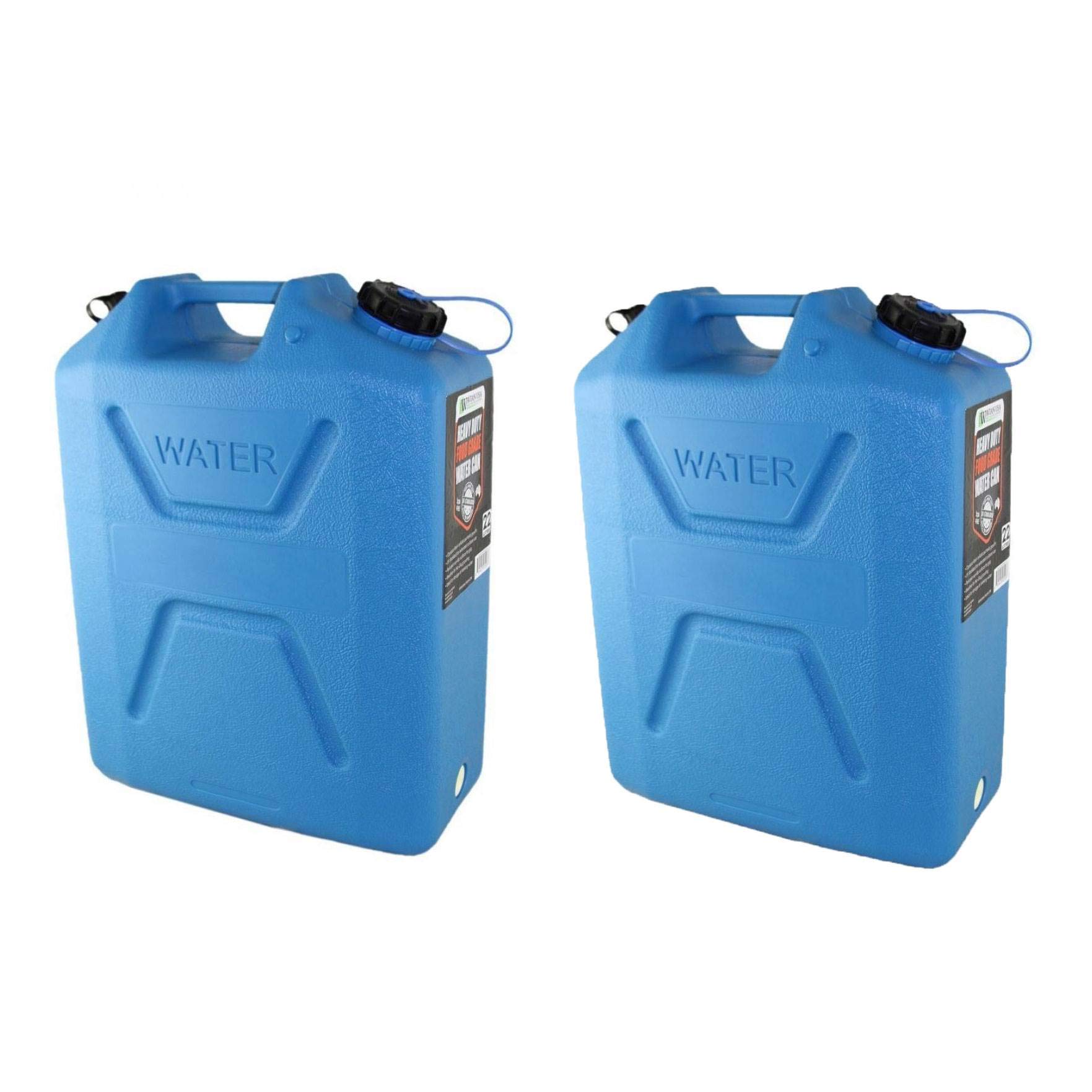
You get a rugged, military-style plastic jug built for extended outdoor use. The Wavian 5G jug feels substantial in hand, with a textured grip and UV-stabilized resin meant to resist sun degradation and bacterial growth. It stores a useful 5 gallons each, nests easily for transport, and the breather vent makes pouring smoother when you need a steady flow.
In everyday trips you can stash one in a truck bed or garage as emergency water, and on longer overland runs the color coding for drinking water keeps things organized. If you want a straightforward, heavy-duty container for bulk storage and occasional dispensing, this is a sensible, practical choice as long as you plan for a bit of maintenance around the spigot and fill gasket.
What People Say
Customers often praise the jugs for feeling tough and built to last, and they appreciate the blue color for marking potable water. People like the textured grip and the no-glug breather for easier pouring. Common complaints focus on the spigot and fill gasket, with several users reporting leaks or fiddly installation when they tried to add the nozzle.
Overall Sentiment: Neutral

Long-Term Cost Benefits
Because these jugs are built from UV-stabilized, food-grade plastic you can expect fewer replacements compared with cheaper, thin containers. If you look after seals and swap worn gaskets or spigots before they fail, the system pays back in reduced downtime and fewer emergency water runs.
Return on Investment
You earn reliability rather than convenience. If you prioritize rugged storage and plan periodic maintenance of the spigot and plugs, the jugs will serve many seasons and reduce the total cost per stored gallon over time.
If you need effortless, leak-free dispensing without tinkering, budget for an aftermarket spigot or a different dispensing system.
Situational Benefits
|
Situation |
How It Helps |
|---|---|
|
Overland Vehicle Stowage |
You can secure one or two jugs in a truck bed or roof rack for long runs, using the textured body to keep them from sliding and the blue color to identify drinking water at a glance. |
|
Basecamp & Camping |
At camp you can leave a jug accessible for group use; the breather vent helps when you pour into pots or bottles and the durable shell survives repeated handling. |
|
Emergency Home Supply |
These jugs work well as part of a household reserve because they stack and store neatly, and the food-grade material reduces concerns about taste and contamination when stored properly. |
Versatility
The Wavian jug is primarily a bulk storage solution that doubles as a transport container and occasional dispenser once fitted with the right nozzle. You can use it for vehicle trips, home reserves, or short-term basecamp needs, though it is less convenient if you need frequent, hands-free dispensing without modification.
Safety Features
Made from BPA-free, food-grade plastic with opaque, UV-stabilized resin to limit light exposure, and designed to inhibit bacterial growth. Color designation for potable water also helps avoid cross-contamination when you store multiple liquids.
Durability
Built to a military-influenced spec, the jug resists impacts and sun exposure better than generic consumer containers. The main durability caveat relates to the spigot and fill plug: those parts can be failure points if not checked or upgraded.
Sealing
The manufacturer markets the jugs as leak-proof, and many users find them tight when upright. Reports of leakage from the fill and breather under certain conditions mean you should test seals and consider replacing or reinforcing gaskets before relying on them for long trips.
Usability
You can use the jugs indoors for emergency reserves or outdoors on overland trips. The non-slip surface and convenient capacity make them easy to carry short distances, but the cylindrical shape and lack of a molded spigot bay mean you may need creativity to mount or secure them for continuous dispensing.
Key Benefits
- Durable, UV-stabilized plastic designed for extended outdoor use
- BPA-free, food-grade material and opaque resin to reduce light-driven bacterial growth
- Textured, non-slip surface and built-in breather for smoother pouring
- Two-pack gives you modular bulk capacity for vehicle or home storage
Rating: 4.1 (total: 23+)
WaterBrick Spigot

You get a compact, purpose-built spigot that makes WaterBrick containers far easier to use day to day. It twists into the brick in place of the lid and gives you controlled dispensing without adding a permanent vent, which is handy if you want to repurpose a brick for food storage later. Installation is straightforward and the flow is solid for the first portion of the brick, though you may need to tip the brick or mount it on a slight angle to empty it fully.
For quick fills of cups, bowls, or cookware while you travel, this accessory removes a lot of the hassle of pouring from raw containers and keeps your setup tidy.
What People Say
Users commonly note how much easier the spigot makes dispensing from WaterBricks, especially for refilling bottles, cups, or dog bowls on the trail. Most reports praise the fit and lack of leaks when installed correctly, while a minority mention limited flow toward the end of a brick and the need to tip or angle the container. People also appreciate the ventless option for keeping a brick food-safe when it isn’t used for water.
Overall Sentiment: Positive

Long-Term Cost Benefits
This is a small, low-maintenance part that extends the usefulness of WaterBricks and reduces the time you spend handling water in camp. Avoiding spills and wasted water saves you trips to refill sources, and replacing a single spigot is cheaper and simpler than swapping entire containers.
Return on Investment
You get a high payoff for a modest investment because the spigot turns a passive container into a usable dispenser. If you frequently stop for short breaks or need to fill multiple small containers, the time saved and reduced water loss quickly justify adding one to your kit.
Situational Benefits
|
Situation |
How It Helps |
|---|---|
|
4×4 Desert Runs |
You can hand a water bowl or bottle to a passenger without awkward pouring, and the secure fit reduces the chance of spills on rough trails. |
|
Camp Cooking |
Mount or tip bricks to create a small gravity-fed station for rinsing pots and filling pans, keeping camp chores faster and cleaner. |
|
Emergency Storage |
The ventless option keeps stored supplies versatile, so a brick can switch from water to dry food storage without cross-contamination concerns. |
Versatility
Works with both WaterBrick sizes and can be removed when you need the original lid. The ventless design adds flexibility so a single brick can serve multiple roles in your kit.
Safety Features
Because it replaces the lid without adding a permanent vent, the spigot helps you avoid contamination risk when you repurpose a brick for food. The threaded connection forms a reliable seal when properly tightened.
Durability
Made from durable polyethylene, the spigot holds up under regular use and outdoor conditions. Users report long-lived performance with minimal wear when treated reasonably.
Sealing
Most users find the spigot watertight when correctly installed, though good practice is to test each unit before a trip and keep the factory cap for storage to prevent accidental leaks.
Usability
You can fit this on bricks at home or in the field. It makes quick tasks like filling a glass or a pet bowl easier and keeps your vehicle or camp cleaner than pouring directly from the container.
Key Benefits
- Simple twist-on installation that replaces the standard lid
- Ventless design lets you use the same brick for food or water
- Reliable flow for routine dispensing and short stops
- Compact, lightweight accessory that’s easy to carry
Rating: 4.5 (total: 450+)
WaterBrick 3.5G
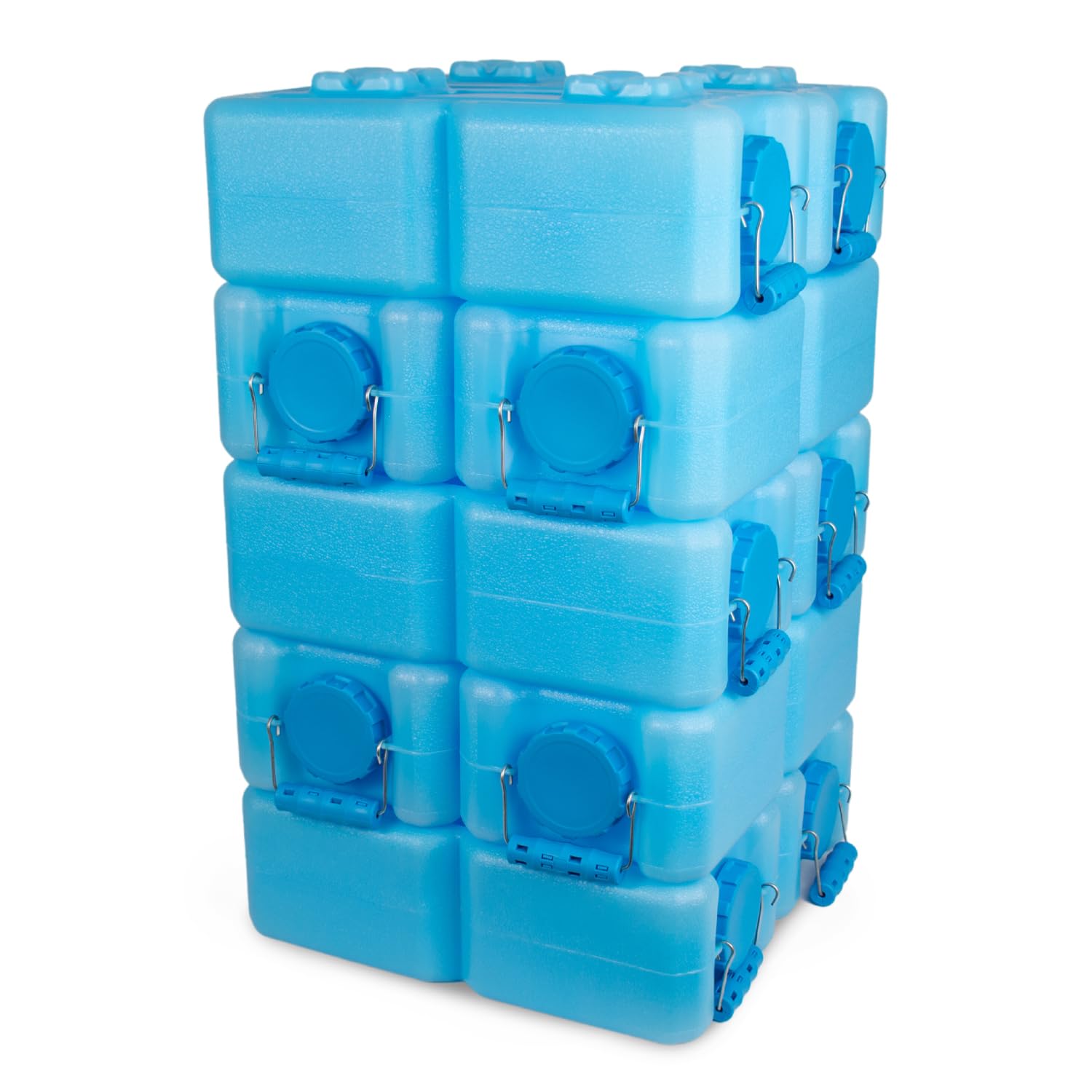
You get a modular set of 3.5 gallon bricks that solve the classic space-versus-capacity problem. The bricks lock together, stack neatly in an RV, truck bed, or garage, and the molded handles make moving full units far easier than awkward jugs. They work well as a long-term household reserve, a mobile overland supply, or a tidy basecamp stack, and they’re straightforward to clean and store when not in use.
If you want water storage that organizes itself and scales by the brick, this pack is one of the most practical choices for travel and emergency prep, though you should test caps and threading before relying on them on a trip.
What People Say
People consistently praise the bricks for how well they stack and stay put in RVs and truck beds, and many highlight the handy built-in handles. Common notes point to secure seals once caps are fully threaded, while a minority mention cap cross-threading or difficulty with the final tightening. Overall, users appreciate the simple, space-saving design for both emergency storage and regular travel use.
Overall Sentiment: Positive

Long-Term Cost Benefits
Because these bricks are durable and reusable, you avoid frequent replacements that come with flimsy bottles. The modular system also reduces wasted trips to refill and lowers spoilage risk when stored correctly, which translates into savings over time.
Return on Investment
You gain organization and reduced hassle for a modest investment in durable containers. If you value compact storage, fewer refill trips, and the ability to rotate stock, the bricks pay back through convenience and lower replacement frequency.
Situational Benefits
|
Situation |
How It Helps |
|---|---|
|
RV & Truck Storage |
Bricks lock together and resist shifting, making them easy to stack in confined vehicle spaces and reduce movement on rough roads. |
|
Emergency Home Reserve |
They store neatly in a garage or closet and allow you to rotate water easily, keeping a reliable supply without bulky bottles taking up floor space. |
|
Basecamp Use |
You can set up a small bank of bricks near camp for cooking and cleaning, and the handles simplify swapping full and empty units. |
Versatility
The bricks work for water, and the design allows a single brick to be repurposed for dry storage when empty. They fit in multiple vehicle types and stack into compact arrays for different trip profiles.
Safety Features
Made from food-grade HDPE and labeled for potable water, the bricks minimize taste and contamination concerns. Properly tightened caps form secure seals to protect contents during storage.
Durability
Constructed from sturdy polyethylene, the bricks endure repeated handling and stacking. The main wear points are the caps and threads, so inspect them periodically and replace any worn seals.
Sealing
When caps are correctly threaded, users report secure, watertight seals. A few buyers note cross-threading risks, so test and practice threading the caps before you load them for travel.
Usability
You can use these both indoors and outdoors: they fit in a pantry or garage as emergency reserves and hold up well in vehicle bays and camp setups. The rectangular shape makes them easier to pack than round jugs.
Key Benefits
- Stackable design maximizes cargo space and stability
- Food-grade HDPE and BPA-free materials for safe storage
- Integrated handles for easier transport
- Modular capacity lets you scale and position as needed
Rating: 4.5 (total: 666+)
LifeSaver Jerrycan

You get a heavy-duty, self-contained purifier that turns natural sources into safe drinking water without electricity. The LifeSaver Jerrycan holds about 18.5 liters, uses a manual pump and activated carbon alongside mechanical filtration, and is built to withstand rough handling on long trips. It’s ideal when you want to travel light on potable water and rely on reliable treatment at camp, and the design suits extended overland runs, beach or river resupplies, and emergency preps. Plan to learn a few handling quirks — like storing it partly full and positioning the spigot for best flow — and it will significantly reduce the water you have to carry.
What People Say
Many users highlight the unit’s reliability and the freedom of not hauling every liter of drinking water. People appreciate the solid build and effective filtration, while common caveats revolve around maintenance habits like keeping the filter wet and orienting the jerrycan correctly to get the best flow.
Overall feedback favors its performance on longer trips and in emergency setups.
Overall Sentiment: Positive

Long-Term Cost Benefits
By treating water on site you avoid repeated purchases of bottled water and lower the weight you carry, which saves fuel and wear on your vehicle over time. Filter replacements and routine care are ongoing costs, but they are typically cheaper than constantly hauling large volumes of potable water.
Return on Investment
The main return is operational freedom: you can source water in the field and cut down on transported volume. If you travel regularly in remote areas or prioritize emergency readiness, the reduced logistical burden and extended service life of the unit justify the investment despite periodic filter maintenance.
Situational Benefits
|
Situation |
How It Helps |
|---|---|
|
Extended Overland Trips |
You can refill from rivers or springs and rely on the jerrycan to provide safe drinking water, letting you carry less bottled water and stop less often for resupply. |
|
Basecamp Water Supply |
Set it up as a central dispenser for cooking and drinking, and everyone in camp can draw treated water without hauling individual containers. |
|
Emergency Preparedness |
The unit serves as a robust backup so you can purify stored or found water after disruptions, keeping a household supplied when infrastructure is down. |
Versatility
The jerrycan works across roles: a travel purifier on long excursions, a camp dispenser for groups, and an emergency unit at home. Manual operation and durable construction make it adaptable to varied environments.
Safety Features
Mechanical filtration paired with activated carbon removes pathogens and improves taste, while the manual pump avoids dependence on electricity. Follow manufacturer guidance to keep the filter submerged when stored to prevent microbial growth.
Durability
Built to withstand rugged use, the Jerrycan tolerates rough handling and field conditions. The major longevity factors are proper filter care and occasional replacement of wearable parts like seals and the pump assembly.
Sealing
The design is intended for reliable dispensing, but best results come from correct orientation and seal checks. You should store it with the spigot down and maintain seals to avoid flow or contamination issues.
Usability
You can use it at home, at basecamp, or mounted in a vehicle. Its manual pump and simple tap make it usable anywhere you need treated water without electrical support.
Key Benefits
- Integrated mechanical filtration and activated carbon for safe drinking water from natural sources
- Large 18.5 L capacity reduces how much potable water you must carry
- Manual operation means no reliance on power or batteries in remote areas
- Rugged, military-influenced construction made for overland and emergency use
Rating: 4.7 (total: 461+)
FAQ
How Do I Prevent Leaks And Maintain Seals
You should test seals before every trip by filling and inspecting each container upright and tilted to catch any slow leaks. Check threaded caps and spigot gaskets for cracks or deformation, hand-tighten caps evenly to avoid cross-threading, and replace worn gaskets or spigots if you notice seepage. For containers with breather vents, confirm the vent plug seals securely and keep spare O-rings or a small repair kit in your vehicle so you can address failures in the field.
Can I Purify Water On The Road And What Maintenance Is Required
Yes, a purifier like the LifeSaver Jerrycan lets you treat water from natural sources so you can carry far less potable water, but it comes with upkeep responsibilities. You need to follow the manufacturer’s guidance to keep the filter wet between uses, store the unit oriented for best flow, and perform routine backflushing or filter replacement as recommended to avoid biological growth.
The payoff is mobility and fewer resupply stops, provided you maintain the filter and keep replacement parts on hand.
Which Container Type Works Best For My Vehicle And How Should I Stow Or Dispense
Choose based on how you travel: stackable WaterBricks maximize space and stability in an RV or truck bed while a Wavian jug gives rugged bulk storage and easy carrying for short moves, and a purifier jerrycan replaces the need to carry all potable water. Secure bricks or jugs with straps or a rack, test any spigots or caps for watertightness, and consider adding a ventless spigot or angling bricks on a rack (about 20–30 degrees) to improve flow when dispensing. If you plan frequent refills from streams or springs, prioritize a purifier; if you mostly need stored water for camp chores, prioritize modular stackability and reliable seals.
Top Customer Preferences
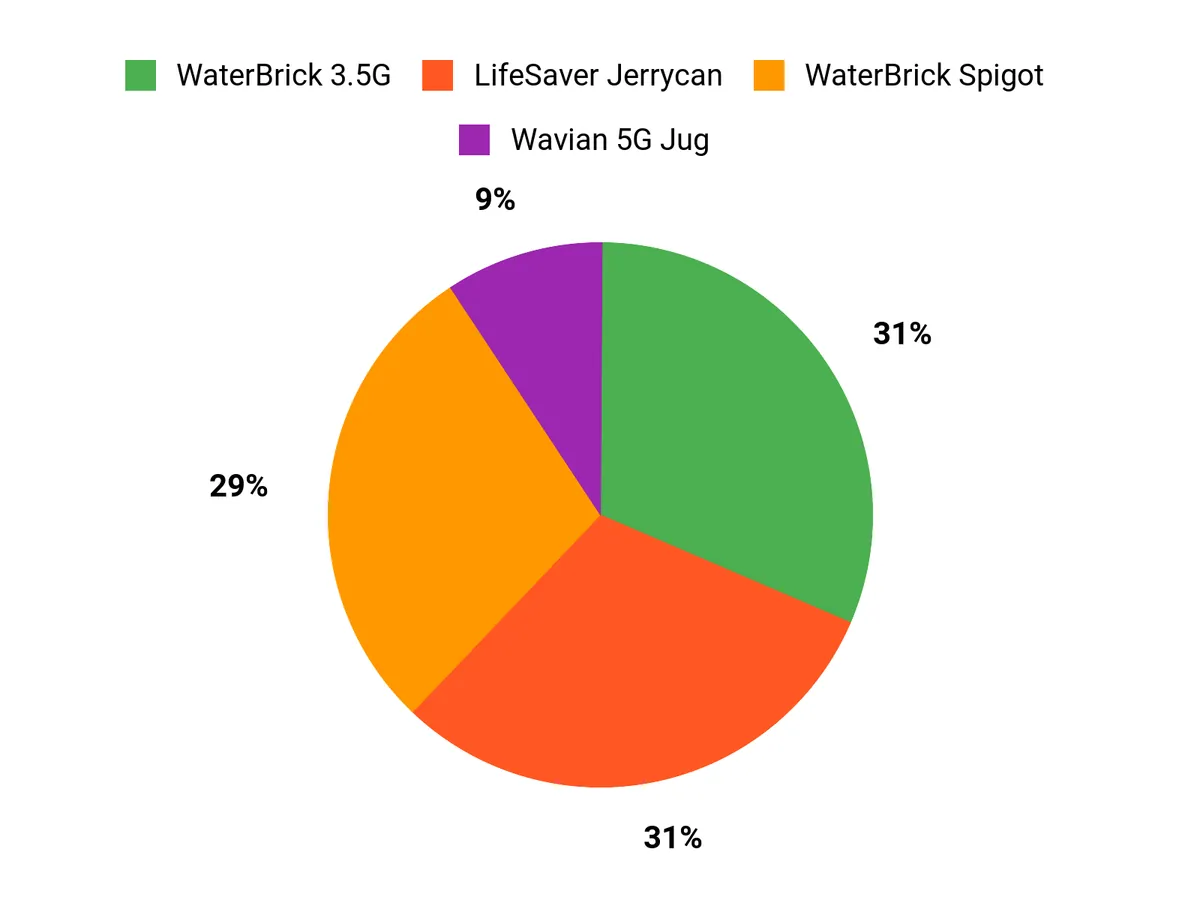
You typically prioritize durability and reliable seals first, then decide between dispensing convenience and space efficiency. If you want rugged bulk storage you lean toward the Wavian jug, for neat, scalable packing you pick WaterBrick bricks, and you add the WaterBrick spigot when easy pouring matters—always test caps and spigots before a trip.
Wrapping Up
Match the container to how you travel. If you need on-vehicle purification and the ability to fill from natural sources, the LifeSaver Jerrycan gives you the clearest advantage by eliminating the need to carry every liter of drinking water.
If modular storage and secure stacking are your priority, WaterBrick’s 3.5 gallon bricks optimize space and handling. Add the WaterBrick spigot if you want easier dispensing without modifying bricks, and consider the Wavian jugs when you need a rugged, military-style plastic can for bulk storage while watching for potential gasket or spigot issues.
Choose based on capacity, dispensing method, and whether you must purify on the go so your kit supports longer, safer travel.
| Product Name | Image | Rating | Capacity | Material | Special Highlights | Dimensions |
|---|---|---|---|---|---|---|
| Wavian USA 5 Gallon Plastic Water Jug Can Container w/Easy Pour Spout, 2 Pack |
|
4.1/5 (23 reviews) | 5 gallons (22 liters) | BPA-free plastic |
|
6.88″W x 18.25″H |
| WaterBrick – WB-0001 – Ventless Spigot Assembly – Blue |
|
4.5/5 (450 reviews) | Compatible with WaterBrick containers | Polyethylene (HDPE) |
|
8″L x 6″W x 8″H |
| WaterBrick International Water Storage Containers – 10-Pack of 3.5 Gallon Water Container Bricks |
|
4.5/5 (666 reviews) | 3.5 gallons (13.25 liters) per brick | Food-grade HDPE plastic |
|
18″L x 9″W x 6″H |
| Lifesaver Jerrycan Water Purifier – Military Spec |
|
4.7/5 (461 reviews) | 18.5 liters | Plastic |
|
13.75″L x 6.7″W x 14″H |
This Roundup is reader-supported. When you click through links we may earn a referral commission on qualifying purchases.