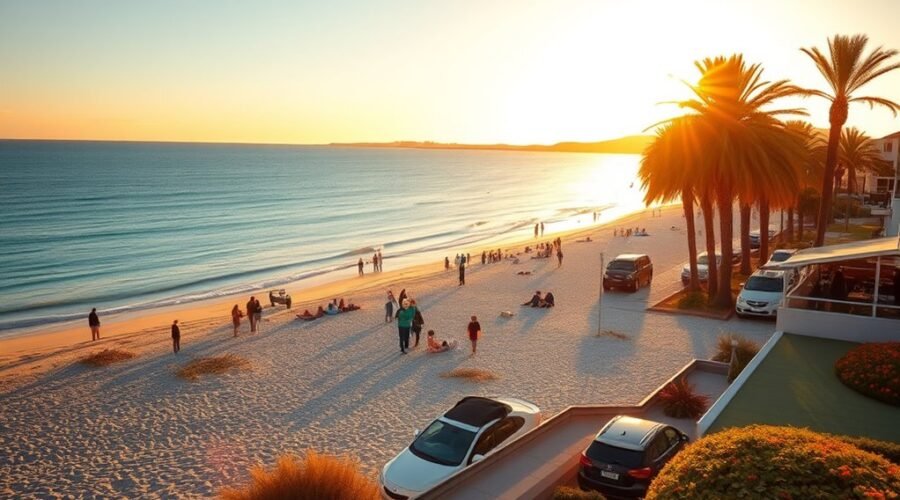
March–May and September–November are useful starting windows for a Port Macquarie trip if you want a mix of coastal walks, sightseeing and time outdoors. Summer suits a beach-focused holiday, but compare school-holiday and event dates before booking. Winter can still suit a walking itinerary, with cooler mornings and water.
Compare our seasonal guides to New South Wales, Australia and Port Stephens, New South Wales when choosing other stops in New South Wales.
There is no single month that guarantees the lowest room price, empty beaches or calm seas. Choose your dates around the activities you want, then check the forecast, current attraction access and actual accommodation quotes.
Port Macquarie temperatures: an official station reference
The table below uses the Bureau of Meteorology’s Port Macquarie Airport station 060139. These are the mean daily maximum and minimum temperatures shown for the station’s available 1995–2022 temperature record, not a 1991–2020 climate-normal series and not a forecast. Airport conditions can differ from an individual beach or headland.
| Month | Mean maximum °C | Mean minimum °C |
|---|---|---|
| January | 27.9 | 18.6 |
| February | 27.6 | 18.5 |
| March | 26.5 | 17.1 |
| April | 24.4 | 13.9 |
| May | 21.7 | 10.4 |
| June | 19.4 | 8.2 |
| July | 19.0 | 6.4 |
| August | 20.4 | 6.6 |
| September | 22.8 | 9.3 |
| October | 24.1 | 12.1 |
| November | 25.4 | 15.1 |
| December | 26.9 | 17.0 |
Bureau of Meteorology: Port Macquarie Airport climate statistics. Check the current station table for any later revisions and the separate record periods for other weather elements.
Summer: beaches with a flexible backup plan
December–February offers the warmest average daytime temperatures in the table. Plan for sun protection, showers and changing beach conditions. Do not infer safe swimming from a warm day or a calm-looking bay. Choose a patrolled beach, follow local signs and swim between the flags when patrols are operating.
Keep a non-beach activity available if the weather changes. Compare parking, walking distance and shade when choosing accommodation; a room close to the places you will use may be more convenient than a cheaper property requiring a drive for every outing.
Autumn and spring: useful for a mixed itinerary
These seasons can work well when coastal walks and local sightseeing matter as much as swimming. Pack a light layer for the start and end of the day. Check the forecast before choosing a long exposed headland walk, and allow time to return before dark.
If whale watching is a priority, use current local operator and visitor information for the applicable season and departure dates. Sightings and sea conditions are not guaranteed. Land-based viewing can be an alternative when a boat trip does not suit your budget or the conditions.
Winter: plan for cooler mornings
June–August is cooler, especially early and late in the day. It can suit visitors who prefer walking and sightseeing to long swimming sessions. Bring layers and a rain jacket. Compare actual winter and shoulder-season quotes rather than assuming winter is always the cheapest period.
Events and school holidays
Use Port Macquarie’s current events calendar to choose an event and confirm its actual date and venue. The official listings include major events such as ArtWalk and IRONMAN Australia alongside local markets and performances. Do not assume that a festival mentioned in an older travel guide still runs in the same month.
Compare those dates with the NSW Department of Education calendars for your travel year. Holiday periods can affect demand, but the price and availability for your chosen property still need a live quote.
Koala Hospital and rainforest visits
Koala Conservation Australia’s redevelopment material and history place the redeveloped Port Macquarie Koala Hospital in the 2026 timeline. An older statement that it reopened after a 2025 redevelopment should not guide your booking. Check the operator’s redevelopment updates and current visitor page for booking arrangements, opening times and entry charges.
For Sea Acres, use the NSW National Parks page to check alerts, boardwalk access and visitor facilities. Avoid assuming that every attraction is open daily throughout the year.
Transport and budgeting
Check airport transfer options and your arrival time before booking. For a bus journey, use the current Transport for NSW trip planner with the actual origin, destination and date. This guide does not promise an airport route number, two-hour frequency or fixed taxi fare.
If you will not have a car, confirm that a tour operator actually offers pickup for your accommodation and date. Do not assume a national park has a public shuttle. For a hire car, include fuel, parking, insurance conditions and any one-way charge when comparing the full trip cost.
Food, evenings and practical choices
Check a venue’s current opening hours and entertainment program directly before making it the centre of an evening. For a serious food allergy, discuss ingredients and cross-contact with the venue; a menu label alone is not a guarantee of safety.
Use current council and park rules for fires, camping and beach access. A quiet beach is not automatically a permitted place for a bonfire or overnight stay. Carry rubbish out and follow closures and local signs.
Sources
The linked Bureau of Meteorology, local visitor authority, NSW education, Koala Conservation Australia, NSW National Parks and Transport for NSW pages provide the responsible sources for climate, events, access and transport planning. Recheck time-sensitive information for your own dates.