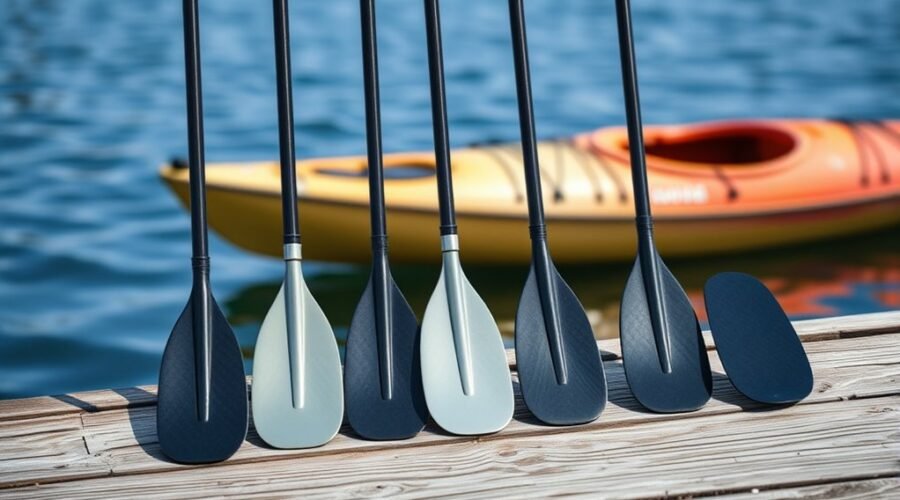
Choosing the right kayak paddle can shape every outing, from long touring trips to relaxed recreation and fishing. In 2026, a few models stand out for different needs, each offering its own mix of comfort, efficiency, and control. The Werner Sherpa, NRS Ripple, Gearlab Kalleq, Aqua Bound Carbon Shred, and Wilderness Systems Pungo all bring something distinct to the water. The details behind those differences may matter more than expected.
Werner Sherpa 4-piece Breakdown Kayak Paddle
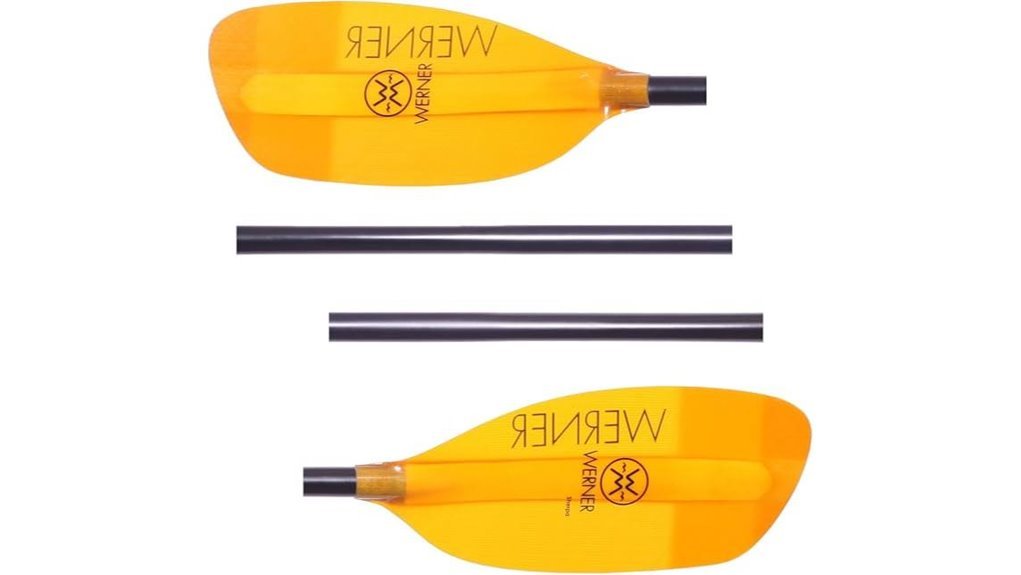
The Werner Sherpa 4-piece Breakdown Kayak Paddle is a strong choice for paddlers who want a durable, travel-friendly paddle that performs well in river running and creeking. Its fiberglass shaft and premium continuous-weave blades provide strength without excessive bulk, while the 41-ounce weight keeps it manageable. The mid-size, 680-square-centimeter blades measure 46 by 19.5 centimeters and offer an even, smooth bite. A slight dihedral supports control and maneuverability without sacrificing power. The four-piece design makes transport simple, and the translucent amber finish reflects Werner’s handcrafted work in Sultan, Washington.
Best For: Paddlers who want a durable, travel-friendly 4-piece kayak paddle for river running, creeking, or keeping as a reliable backup.
Pros:
- Strong fiberglass construction with premium continuous-weave blades for durability
- 4-piece breakdown design makes it easy to pack, transport, and travel with
- Mid-size blades with slight dihedral provide smooth, responsive control
Cons:
- At 41 oz., it is not the lightest paddle in its class
- Best suited to whitewater-style use, so it may not be ideal for all paddling disciplines
- Four-piece design can add a little complexity compared with a one- or two-piece paddle
NRS Ripple Kayak Paddle – Orange, 240 cm
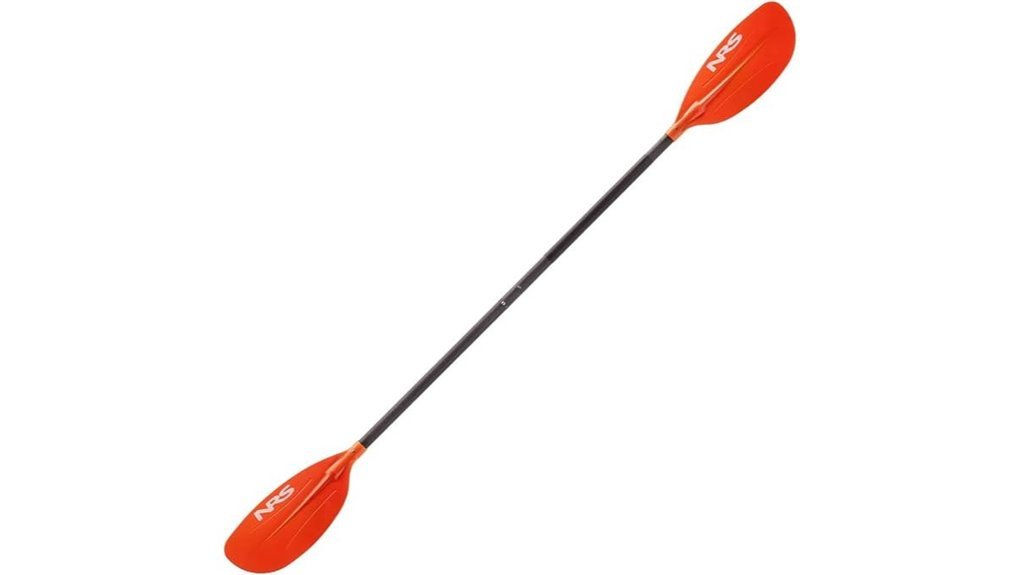
Built for efficiency and comfort, the NRS Ripple Kayak Paddle suits paddlers seeking a lightweight, durable option. Its fiberglass-reinforced ABS plastic blades are built to withstand repeated use while resisting wear from demanding sessions. The asymmetrical blade shape cuts through water efficiently, helping reduce drag and improve power on each stroke. At 38 ounces, it keeps fatigue low during longer outings. Paddlers can tailor performance with 0- or 45-degree blade angles and left- or right-hand control. The 240 cm length supports larger kayaks and taller users with steady, responsive handling.
Best For: Paddlers who want a lightweight, durable 240 cm kayak paddle with efficient performance and adjustable control for larger kayaks or taller users.
Pros:
- Fiberglass-reinforced ABS plastic blades offer durability and good resistance to wear.
- Asymmetrical blade design helps reduce drag and improve stroke efficiency.
- Adjustable 0- or 45-degree blade angles with left- or right-hand control add versatility.
Cons:
- The 240 cm length may be too long for smaller kayaks or shorter paddlers.
- Fixed-length design limits adjustability compared with telescoping paddles.
- ABS plastic blades, while durable, may not feel as premium as higher-end composite options.
Gearlab Kalleq Greenland Kayak Paddle Set
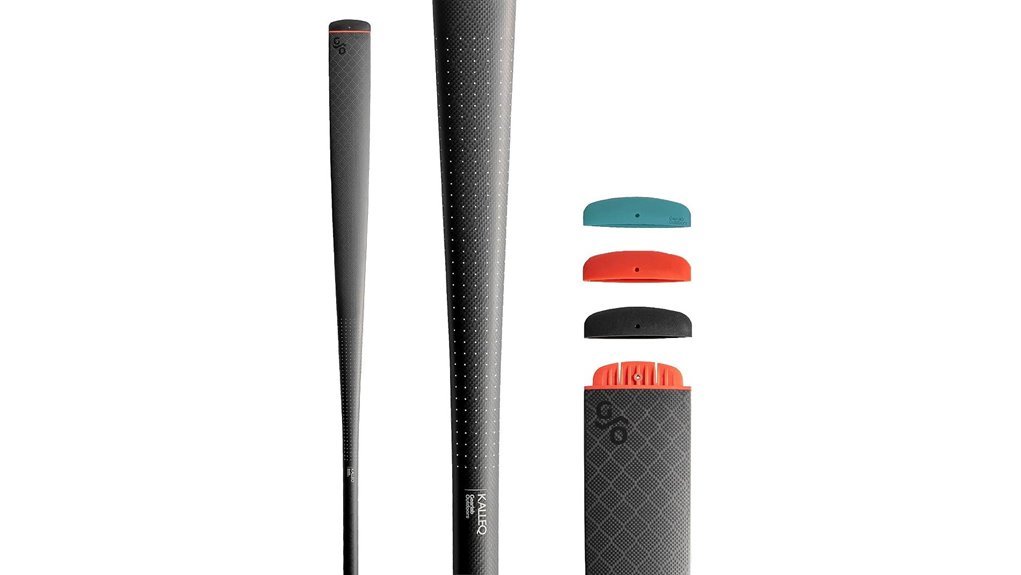
Designed for endurance touring, the Gearlab Kalleq suits paddlers who prioritize efficiency over brute force. This Greenland paddle is built from carbon fiber for light weight and durability, with a two-piece design that separates quickly for travel and storage. Its 1.1 mm thinnest edge and smooth profile help it move cleanly through water, reducing fatigue on long days. The low-profile button release keeps the shaft joint flush. Named for “lightning,” Kalleq reflects its speed-focused intent, while replaceable tip protectors add resilience against rocks and ocean floors.
Best For: Paddlers and touring kayakers who want a lightweight, efficient Greenland-style paddle for endurance trips, easy travel, and durable performance in varied water conditions.
Pros:
- Lightweight carbon fiber construction helps reduce fatigue on long outings.
- Two-piece design with a low-profile button release makes transport and storage easy.
- Replaceable tip protectors add durability against rocks and ocean floors.
Cons:
- Premium carbon fiber design may come at a higher price than basic paddles.
- Greenland paddle shape may not suit paddlers who prefer more brute-force power.
- Replaceable tip parts add extra components that could eventually need maintenance or replacement.
Aqua Bound Carbon Shred Whitewater Kayak Paddle-194cm
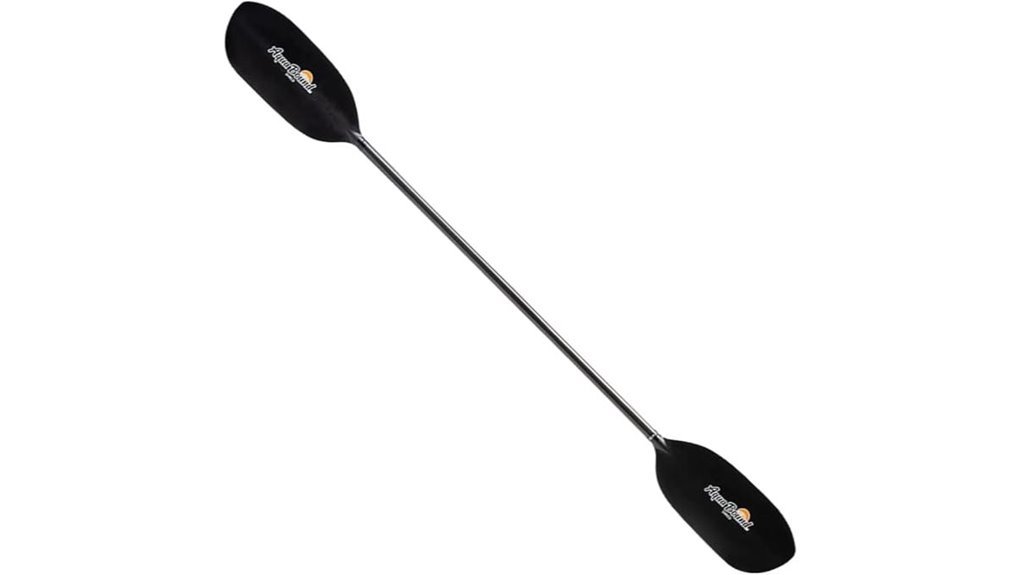
Aqua Bound’s 194cm Carbon Shred suits whitewater paddlers seeking durability and crisp power. Its carbon-reinforced abX blades are built for rough conditions, while the ovalized aerospace-grade Tight Weave Carbon shaft adds control and efficient force transfer. One-piece construction reduces weak points and supports long-term reliability. The stiff design helps deliver precise strokes in demanding currents, and the balance of performance with affordability makes it a practical choice. At 194 cm, it is aimed squarely at whitewater use, where dependable handling and toughness matter most.
Best For: Whitewater kayakers who want a durable, stiff, and reliable 194cm paddle with strong power transfer and good value.
Pros:
- Carbon-reinforced abX blades are built for tough whitewater conditions
- Ovalized aerospace-grade Tight Weave Carbon shaft improves control and efficiency
- One-piece construction increases durability and reduces weak points
Cons:
- 194cm length may not suit all paddlers or boating styles
- Stiff construction can feel less forgiving for some users
- Focused on whitewater use, so it may be less versatile for other kayaking environments
Wilderness Systems Pungo Kayak Paddle (220-240cm)
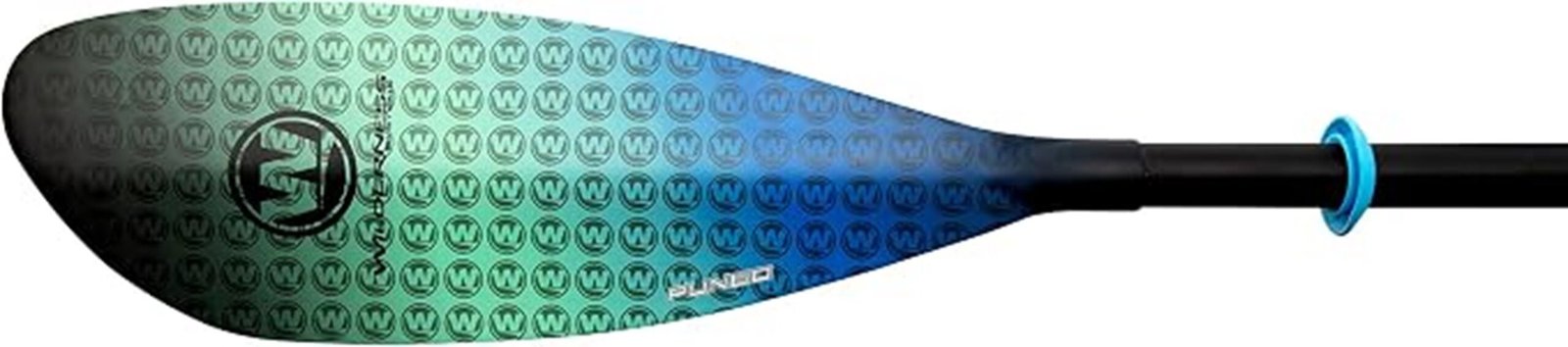
The Wilderness Systems Pungo Kayak Paddle suits paddlers who want a versatile, low-fatigue touring option. Designed for Wilderness Systems Pungo kayaks across all sizes and model years, it also fits many recreation kayaks. The paddle combines a durable fiberglass composite blade with a shaft made from 50% carbon and 50% fiberglass, balancing strength and responsiveness. Its construction supports sustainable paddling power while helping reduce flutter and fatigue. With a base length of 220 cm and adjustability up to 240 cm, it offers added convenience for different paddling positions and boat widths.
Best For: Paddlers looking for a versatile, low-fatigue recreation/touring paddle that fits Wilderness Systems Pungo kayaks and many other recreational kayaks.
Pros:
- Durable fiberglass composite blade for reliable performance
- 50% carbon and 50% fiberglass shaft offers a good balance of strength and responsiveness
- Adjustable from 220 cm to 240 cm for added convenience and fit
Cons:
- May be more paddle than needed for very casual or occasional paddlers
- Not as specialized as some high-end paddles for performance touring
- Adjustable range may still not suit every kayak width or paddling style
Factors to Consider When Choosing Kayak Paddles 2026: Top Picks for Touring, Recreation, and Fishing
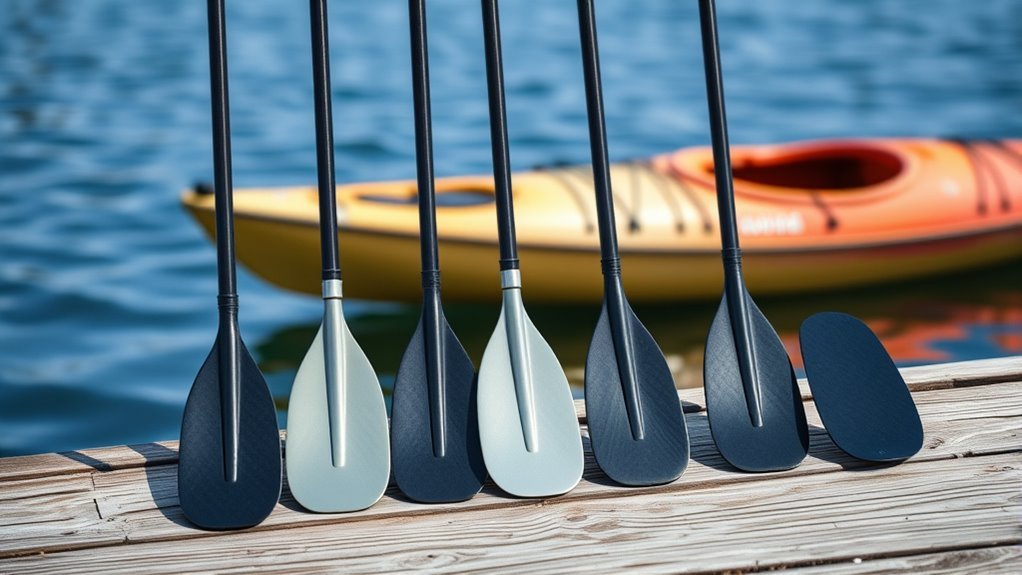
Choosing a kayak paddle in 2026 starts with matching paddle length to the paddler, kayak width, and intended use, whether touring, recreation, or fishing. Blade shape, shaft material, and weight balance also affect stroke efficiency, comfort, and fatigue over long outings. Adjustable ferrules add useful fit and angle control, making it easier to fine-tune performance across changing conditions.
Paddle Length
Paddle length is one of the most important factors in kayak performance, with most paddles falling between 210 cm and 250 cm depending on the paddler’s height, kayak width, and stroke style. A longer paddle can improve reach and suit wider kayaks or relaxed touring, but it may also increase fatigue over time. Shorter paddles usually offer tighter control and quicker handling in confined areas, though they often require more strokes to maintain speed. For recreational use, 220 cm to 240 cm is a practical range for many paddlers and kayak designs. Touring paddlers may favor 240 cm to 260 cm for greater efficiency on long trips. Adjustable-length paddles add flexibility, allowing fine-tuning for comfort, technique, and changing water conditions.
Blade Shape
Blade shape plays a major role in how efficiently a kayak paddle moves through the water, with asymmetrical designs helping reduce drag and deliver more power on each stroke. Mid-size blades, often around 46 x 19.5 cm, provide a practical balance of leverage and control, making them well suited to changing water conditions. A slight dihedral can further improve performance by keeping the blade steady in the water and reducing wasted effort during the pull. Edge thickness also matters, since thinner edges generally slice more cleanly and support quicker, more efficient strokes. Customizable blade angles add another layer of refinement, allowing paddlers to match the paddle to their technique, improve comfort, and maintain control across touring, recreational, and fishing use.
Shaft Material
Shaft material directly influences a kayak paddle’s weight, feel, and overall efficiency on the water. Carbon fiber shafts are the lightest option, improving maneuverability and helping reduce fatigue during long sessions. Fiberglass offers a practical middle ground, pairing solid durability with moderate weight for recreational paddling and steady performance. Composite shafts blend materials such as fiberglass and carbon to increase strength and flexibility, creating a responsive feel suited to varied conditions. Aluminum shafts are usually the most affordable and durable, but their added heft can make extended paddling more tiring. Beyond material, shaft diameter and shape also matter; ovalized shafts often provide a more ergonomic grip and better control for different hand sizes.
Weight Balance
Weight balance is another key factor that affects how a kayak paddle feels and performs on the water. When the weight is distributed evenly, the paddle moves more efficiently and feels easier to control during long outings. Imbalance at either end can create strain in the shoulders and arms, while also making strokes feel less precise. A well-balanced paddle supports smoother, steadier movement and better maneuverability, which matters in changing currents or choppy water. Lightweight materials such as carbon fiber and fiberglass often improve this balance while also reducing fatigue. Understanding where a paddle balances helps paddlers select a model that matches their technique, strength, and body mechanics, leading to greater comfort and a more enjoyable time on the water.
Adjustable Ferrules
Adjustable ferrules add an important layer of fit and versatility to kayak paddles, letting paddlers fine-tune length and overall setup for better comfort and efficiency based on body size, kayak width, and changing conditions. This adjustability helps match the paddle to the user’s height and the kayak’s dimensions, improving stroke mechanics and reducing strain. Many systems also allow blade feather angles of 0 or 45 degrees, giving paddlers flexibility in technique. A secure locking mechanism is essential, since it limits twisting and supports efficient power transfer on every stroke. Their convenience makes them useful for shared equipment and for paddlers who switch between styles. Understanding the ferrule design and keeping it clean and maintained helps preserve long-term reliability, smooth operation, and overall paddle performance.
Water Conditions
Water conditions play a major role in selecting the right kayak paddle, because calm lakes, swift rivers, and rough whitewater each demand different performance traits. In calm settings, touring paddles with longer blades help support efficient strokes over distance, while recreational paddles often emphasize easy handling and steady control. Faster currents call for asymmetrical blade shapes, which can reduce drag and improve efficiency when conditions change quickly. Whitewater paddles generally benefit from stiffer construction, giving the paddler sharper control and quicker response in turbulent water. Material choice also matters: carbon fiber can reduce fatigue during long trips, while fiberglass-reinforced options provide added durability for demanding environments. Mid-size blades remain a practical choice when versatility across multiple conditions is the priority.
Blade Surface Area
Blade surface area has a direct impact on how a kayak paddle performs, with larger blades delivering more power per stroke but demanding more effort to handle. That added power can benefit touring in open water or situations where strong acceleration is useful, yet it may increase fatigue over time. Mid-size blades, around 680 sq cm, often provide a practical compromise between control and force, making them adaptable across recreation, touring, and fishing. Smaller blades reduce resistance and help conserve energy during long sessions, supporting smoother, less tiring strokes. Asymmetrical blade shapes can further improve efficiency by cutting through water cleanly and limiting drag. Matching blade size to paddling style and expected conditions remains essential for balanced performance.
Transport Convenience
Transport convenience matters because a paddle that is easy to move, store, and carry reduces hassle before and after time on the water. A four-piece breakdown design improves portability, allowing a paddle to fit into travel bags, vehicle compartments, or tight storage areas. Collapsible models offer similar advantages, especially for paddlers using smaller cars or limited home space. Lightweight construction also plays a major role by reducing carrying fatigue during launches, portages, and long trips. Adjustable length options add flexibility, letting different users achieve a proper fit while keeping the paddle compact when packed. Durable materials support this convenience over time, since a paddle that lasts longer needs fewer replacements and less repeated transport.
Frequently Asked Questions
How Do I Measure the Correct Paddle Length for My Kayak?
The correct paddle length is measured by the paddler’s height, kayak width, and seat height; taller paddlers and wider kayaks usually need longer paddles. A dealer’s sizing chart and in-water test provide the best confirmation.
What Paddle Blade Shape Is Best for My Paddling Style?
A broad, feather-shaped blade suits powerful strokes and quick acceleration, while a narrower blade symbolizes endurance, favoring smooth touring efficiency. The best choice depends on cadence, distance, and desired effort, not appearance alone.
Are Carbon Kayak Paddles Worth the Extra Cost?
Yes, carbon kayak paddles are often worth the extra cost for frequent paddlers seeking lighter weight, reduced fatigue, and improved efficiency. Casual users may prefer cheaper fiberglass or aluminum options, since performance gains can be modest.
How Often Should I Replace Worn Kayak Paddle Grips?
They should be replaced whenever cracks, peeling, or persistent slipping appear, often every one to three seasons with regular use. Frequent inspection matters more than age, since sun, salt, and abrasion accelerate deterioration.
Can One Paddle Work for Both Calm Water and Rough Conditions?
Yes—like a single key fitting two locks, one paddle can serve both, if it balances length, stiffness, and blade shape. Calm water favors efficiency; rough conditions reward control, durability, and secure grip.
Conclusion
From river runs to calm touring, from rugged whitewater to relaxed recreation, the right paddle shapes every journey. The Werner Sherpa offers control, the NRS Ripple brings light efficiency, the Gearlab Kalleq delivers enduring rhythm, the Aqua Bound Carbon Shred powers through rapids, and the Wilderness Systems Pungo adds versatile comfort. Choose by length, material, and blade design, and every stroke becomes smoother, stronger, and more satisfying on the water.