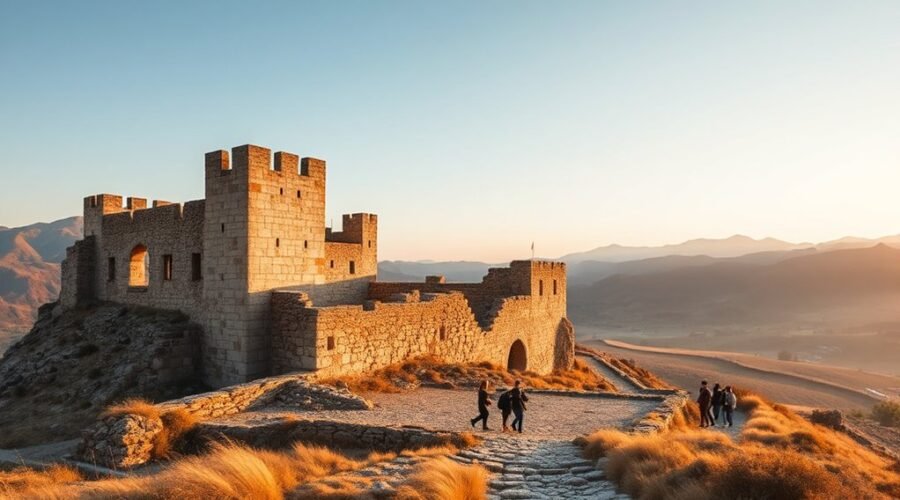
By coincidence you’ll often find October sunlight hitting Ravanda Castle just as the town wakes, casting the battlements in a warm, golden hush. You’ll find mild, comfortable days, thinner crowds, and lower prices that make exploration easier and photos richer. Walks along the ramparts feel calmer, and Kilis’s local eateries lean into hearty off-season menus — but there’s more about the castle’s history, its terrain, and how to get there that will shape your visit.
Quick Answer
The best month to visit Ravanda Castle is October. Daytime temperatures typically sit in a comfortable 18–26°C range, summer’s heat and haze have passed, rain hasn’t yet set in for winter, and the site — an unstaffed, free-to-enter ruin near Kilis — is far quieter than in peak summer.
Key Takeaways
- October is the best overall month: mild temperatures, good light for photos, thinner crowds, and no entrance fee.
- Visit at sunrise or golden hour for the calmest conditions and the most dramatic light on the ramparts.
- March, April, and November are also comfortable shoulder-season options with cooler, more changeable weather.
- Summer (June–August) is hot and dry, with highs regularly above 35°C — plan an early start if you go then.
- The castle has numerous unmarked cisterns and collapsed underground chambers — sturdy shoes and careful footing matter everywhere on-site.
Best Month to Visit Ravanda Castle
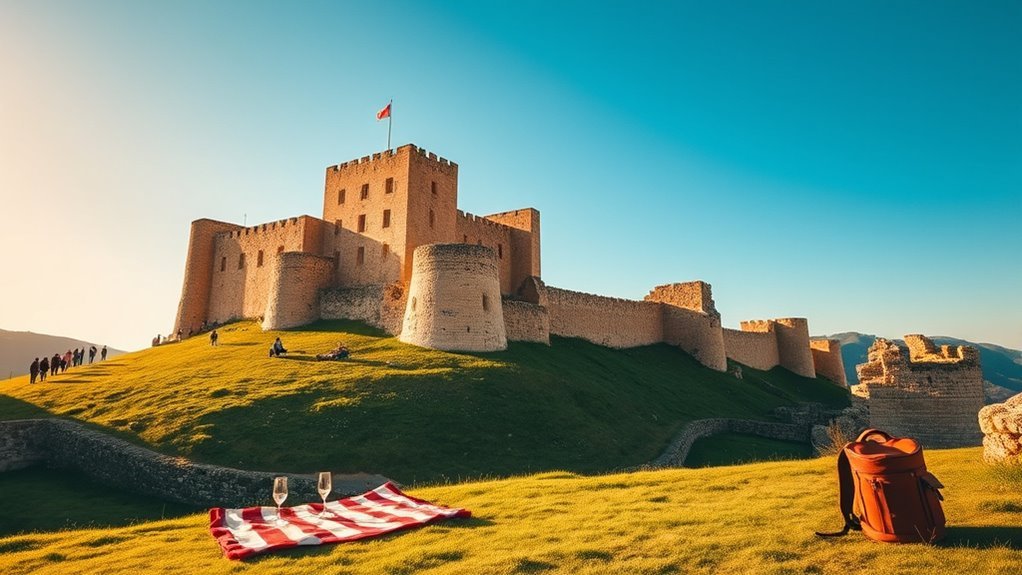
You’ll find the best month to visit Ravanda Castle is October. The heavy summer heat that presses down on the Kilis Plain has broken, the site’s steep, exposed hillside is far easier to climb, and the low-angle autumn light picks out the texture of the castle’s stonework in a way flat midday summer sun doesn’t.
October’s days are warm enough to wander the ruined walls and towers without the punishing heat of July and August, and evenings invite a slower pace — a coffee or a plate of Kilis-style tava in town afterward rather than a rushed retreat from the sun.
You’ll also move with more ease: this is a lightly visited, unstaffed rural site to begin with, and October’s shoulder-season timing means even the modest weekend traffic it does see thins out further. Photographers get richer color, hikers get quieter paths, and the drive out from Kilis feels unhurried rather than urgent.
A Brief History of Ravanda Castle
Ravanda Castle (Ravanda Kalesi), also recorded historically as Ravendel, Ravandal, and er-Ravendan, sits on a conical, flat-topped hill near the village of Belenözü in the Polateli district of Kilis Province, overlooking a bend in the Afrin River. The site was likely used as early as the Hittite period, though the castle’s exact construction date is unknown, and it doesn’t appear in the historical record during the 7th century when neighboring Byzantine–Islamic border fortifications were being built and documented.
The first solid documentation of the castle dates to 1097, during the First Crusade, when it guarded the road between Antioch and Edessa. At that time it was under the control of Ridwan b. Tutush, ruler of Aleppo, and was captured that same year by Baudouin de Boulogne, after which it became part of the Crusader County of Edessa. In the 12th century it passed to the Atabeg of Mosul, Imad al-Din Zengi, then to Nur al-Din Mahmud, and between 1176 and 1181 it was repaired and fortified under Saladin.
Today the partially standing walls, towers, and inner courtyard are open for visitors to explore freely.
What You’ll See at the Castle
Ravanda Castle isn’t a fully restored monument — it’s a genuine ruin, and that’s much of its appeal. Expect to find east–west oriented defensive walls, angular and round bastions, an inner courtyard, remnants of palace structures, and large cisterns cut into the rock. Visitor reviews also describe a main tower, at least two preserved water tanks, and traces of a chapel and extensive underground chambers.
Because the castle was carved into the peak of the hill itself, the payoff for the climb is a wide, uninterrupted view over the Afrin Valley — this is as much a viewpoint as it is a ruin.
Warning: The site has numerous unmarked cisterns and collapsed underground spaces scattered across the hilltop. Watch your footing at all times, keep children close, and avoid wandering off the worn paths — especially in low light or long grass, when a pit can be hard to spot.
Ravanda Castle Weather by Month: Temps, Rain, and Sun
Kilis sits on the inland Anatolian plateau near the Syrian border, which gives it a hot-summer Mediterranean climate: sharp spring warmth, intense summer heat, cooling autumn days, and a wetter, colder winter. Rain is concentrated from late autumn through winter, while July and August are nearly rain-free. Temperatures climb steadily from March, peak in July and August, and drop off through November.
| Period | Typical Range | Conditions |
|---|---|---|
| Mar–May | 10–26°C | Spring warmth, occasional showers, greenery on the slopes |
| Jun–Aug | 21–38°C | Hot, sunny, almost no rain; midday sun is intense on the exposed hilltop |
| Sep–Nov | 8–26°C | Cooling steadily; rain increases toward late November |
| Dec–Feb | 2–12°C | Cold, the wettest stretch of the year, occasional frost |
Plan around these patterns, and check a short-range forecast before you go — the drive out involves an unpaved final stretch that’s best avoided right after heavy rain.
How Weather Affects Rampart Walks (Wind, Shade, and Footing)
On the ramparts, wind can turn a pleasant breeze into a stronger gust that affects your balance near exposed sections. Sun and shade matter too — bright exposure can be intense at midday, while sheltered corners of the walls offer real relief. And the ground itself changes with the weather: wet or uneven stone changes your footing and the pace you should keep.
Wind Impact on Comfort
A brisk wind on Ravanda’s exposed hilltop is noticeable immediately — cooling in summer, sharply colder in shoulder seasons, and strong enough near the crenellations to affect your balance if you’re not braced for it. Gusts can arrive with little warning and amplify how quickly a warm morning turns chilly by afternoon, so layers are worth carrying even on a mild-looking day. Wind-driven dust can also make grit-covered stone slicker underfoot, so favor sturdy, grippy footwear and stay toward the inner wall when it picks up.
Shade and Sun Exposure
Because the site is largely open hilltop with limited tree cover, shade is scarce and valuable — the stone walls themselves are your main source of relief from summer sun.
- Look for shaded stretches near the bastions for a rest break.
- Visit in early morning or later afternoon in summer to avoid the harshest sun.
- Use covered wall sections and embrasures to escape glare and wind together.
- Carry water — there’s no shop or fountain on-site.
Footing and Surface Safety
Wind loosens grit and pebbles on the paths, shaded stones can stay damp and slick well after rain, and sun-baked ground can crack into uneven patches. Choose footwear with real grip — smooth-soled shoes are a poor match for this terrain — and take rough, worn stretches slowly rather than quickly. When wind gusts pick up near the walls, stay toward the inner side and lower your stance slightly. Above all, remember the site’s open cisterns: move deliberately and don’t step off marked paths to get a better angle for a photo.
When to Visit Ravanda Castle for Smallest Crowds and Best Photos
Arrive around sunrise for soft, golden light spilling over the ramparts and an empty hilltop. Choose weekdays to avoid the modest weekend traffic the site does get from Kilis-area day-trippers. And favor the shoulder seasons — spring or autumn — for milder light and thinner numbers overall.
Early Morning Light
For the quietest moments and softest light, aim to arrive just before sunrise, when the sky still holds blue-gray tones and the first warm rays reach the towers.
- Arrive 20–30 minutes before sunrise to set up.
- Use a wide lens for sweeping valley views over the Afrin River.
- Shoot toward the light for rim-lit walls and towers.
- Stay on established paths, even in low light — the cisterns are a real hazard before sunrise.
Weekday Off-Peak Times
Weekday late mornings and mid-afternoons outside Turkish school holidays see the fewest other visitors, giving you the courtyard and towers largely to yourself. Check the Kilis municipal events calendar before you go, since local festival days can bring more traffic to the wider area, including the road out to Belenözü.
Shoulder Season Visits
Spring and autumn sit outside the harshest heat and give you Ravanda Castle at its most photogenic — fewer visitors, softer light, and a clearer sense of the site’s scale without heat haze blurring the valley view.
- Arrive at golden hour for shadow-rich photos and an empty hilltop.
- Pair a castle visit with Kilis’s old town and its local cuisine — Kilis tava and olive-oil tastings are worth the detour.
- Expect noticeably lower accommodation rates in Kilis compared with peak summer.
- Bring layers; hilltop weather shifts faster than it does in town.
Kilis Town by Season: Services, Stalls, and Where to Stay
Kilis itself changes rhythm across the year, and since the castle site has no facilities of its own, your base in town matters.
In spring and autumn, Kilis’s markets are at their best — vendors sell peppers, olives, and pastries, and cafés serve the region’s Aleppo-influenced local cuisine. Family-run guesthouses and boutique pensions in town are a good option in these months.
Summer brings a busier, hotter rhythm; market stalls shift into shaded alleys during the day. Simple hotels with terraces and a few modern mid-range options are available in town.
Summer in Kilis moves to the shade: stalls tuck into side alleys by midday, and terraces come alive after dark once the heat breaks.
Winter is quiet — some guesthouses reduce hours or close, but the town’s kitchens and hospitality remain reliable if you’re passing through. Whatever the season, choose a small inn in town if you want local context on the castle and directions to it, or a private apartment if you’d rather have your own space.
Cheapest Months for Hotels, Tours, and Meals in Kilis
There’s no fee to enter Ravanda Castle itself, so most of your savings come from timing your stay in Kilis. Late autumn (November) and early spring (March) tend to bring the lowest hotel rates and quietest restaurants, since they fall outside both the summer peak and any local festival dates.
- November: lower hotel rates, quieter town, fewer other visitors at the castle.
- March: mild weather returning, fewer crowds at eateries.
- January–February: the quietest, cheapest stretch, though hilltop weather is at its coldest and wettest.
- Late September: shoulder-season value if you avoid any local festival dates.
- Weekdays year-round: generally better rates at family-run guesthouses.
Booking a midweek stay at a local guesthouse is the most reliable way to keep costs down. Check the Kilis municipal calendar for festival dates, since these can briefly push up demand and prices in town.
Practical Planning: Timing, Transport, and Day-Trip Ideas
Arrive at first light for the best photo conditions and the fewest other visitors; afternoons bring more heat and, on weekends, more traffic.
Ravanda Castle sits roughly 24–28 km from Kilis city center, near the village of Belenözü in the Polateli district. There’s no public transit directly to the site, so your realistic options are a private car, a hired driver, or a taxi arranged from Kilis — confirm the return trip in advance, since it’s a rural area with limited passing traffic. The final approach involves a hill climb on foot from the parking area, so build in extra time.
Pro Tip: Pair the castle with a loop through Kilis’s old town and its Ulu (Grand) Mosque, built in 1334 — it’s a manageable half-day addition if you start with the castle at sunrise and head back into town by mid-morning.
Pack layers, water, sturdy footwear, and an offline map or downloaded GPS route — mobile signal on the hillside can be patchy. Leave room for spontaneous stops in Belenözü or along the Afrin Valley road; this is a low-traffic route that rewards a relaxed pace more than a tightly booked itinerary.
At a Glance
| Best Time to Visit | October (also good: March–May, November) |
| Entrance Fee | None — free, open access |
| Distance from Kilis | Roughly 24–28 km |
| On-Site Facilities | None — no restrooms, shop, or staff on-site |
| Accessibility | Steep, uneven terrain; not wheelchair accessible |
Frequently Asked Questions
Are guided tours available at Ravanda Castle?
There’s no visitor center or on-site guide staff — this is a self-guided, unstaffed ruin. If you’d like a guide, the practical option is hiring a private driver-guide from Kilis who can walk you through the site’s history in person.
Is Ravanda Castle wheelchair accessible?
No. The approach is a steep, unpaved hillside climb with uneven ancient stonework and no ramps, making it very difficult for wheelchair users or anyone with limited mobility.
Can drones be flown over the castle grounds?
Drone use in Turkey is regulated nationally through the Directorate General of Civil Aviation’s registration and permission system, and additional restrictions can apply near heritage and border-adjacent sites like Kilis. Register your drone and check current permission requirements before you fly rather than assuming it’s allowed.
Is there an entrance fee?
No. Ravanda Castle is freely and openly accessible with no ticket booth, fee, or permit required.
Are there restroom facilities near the castle?
No — there are no facilities on-site. Plan to use restrooms in Kilis before you set out, or ask at a café in Belenözü village on the way.
Conclusion
Visit in October for the sweet spot: comfortably mild days, thinner crowds, and golden light that makes the battlements stand out against the Afrin Valley. You’ll be able to explore the ramparts without summer’s punishing heat, get better photos without other visitors in frame, and pay nothing at all to get in — the only real cost is a private driver or your own car and a bit of planning. Go on a weekday if you can, bring a light jacket for the hilltop breeze, watch your footing around the cisterns, and you’ll come away with a genuinely memorable, uncrowded visit.
Sources
- Castles.nl — Ravanda Castle — site access, safety notes on cisterns, and first-documented history (1097, First Crusade)
- KÜRE Encyclopedia — Ravanda Castle — castle features, Crusader-era timeline, and Saladin-era fortification
- All About Turkey — Kilis — general history of the Ravanda Fortress and Kilis Province
- Kültür Envanteri — Ravanda Kalesi — location, alternate historical names, and site status
- Weather and Climate — Kilis — monthly temperature and rainfall data
- Weather Atlas — Kilis, July — peak summer temperature and sunshine data