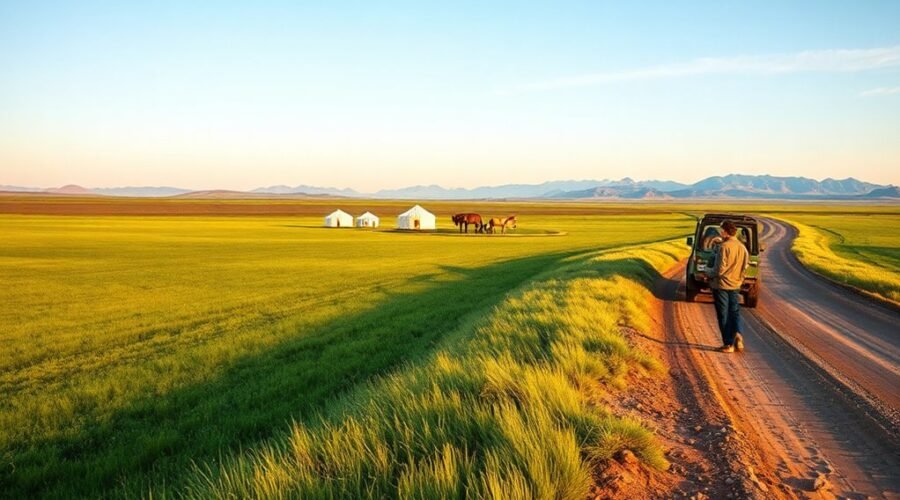
Mongolia’s window of perfect weather is narrow, like a gap between storms you either catch or miss entirely. Time your trip wrong and you’re battling -40°C winters or muddy, rain-soaked trails. Time it right and you’re galloping across open steppe under endless blue sky. But “right” depends entirely on what you’re after — festivals, solitude, desert landscapes, or rock-bottom prices. What you discover next might completely reshape your plans.
Mongolia’s Climate: Temperature, Rainfall, and What to Actually Expect
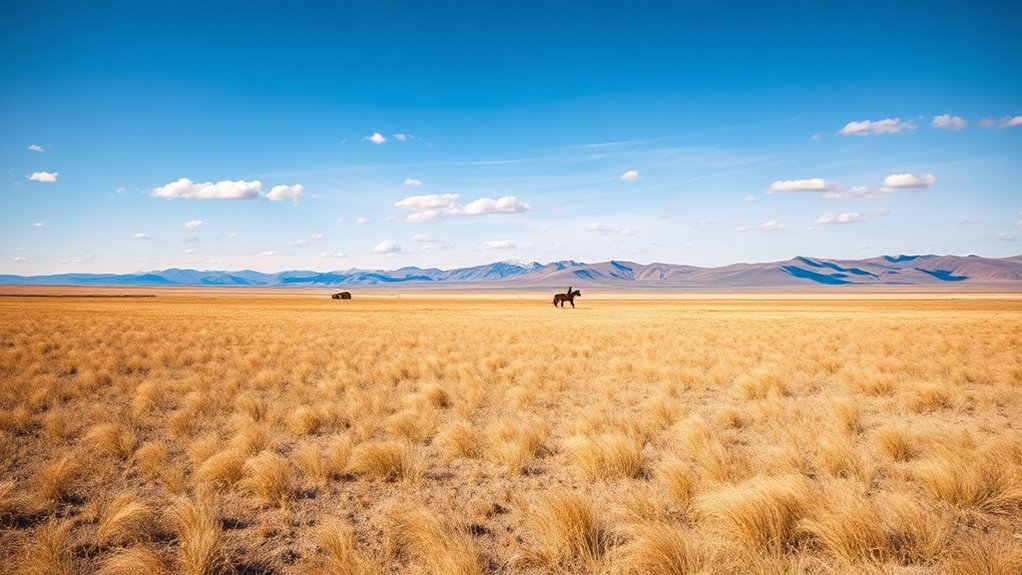
Mongolia’s climate is as extreme as its landscapes — and that’s saying something. You’re looking at a landlocked country sitting at high altitude, far from any moderating ocean influence. The result? Wild weather patterns that swing from brutal to breathtaking.
Winters hit hard, with temperatures plunging to -40°C (-40°F) in some regions. Summers bring warmth — sometimes scorching heat — while spring and autumn offer unpredictable changes. Rainfall stays low overall, mostly concentrated between June and August, making Mongolia technically a semi-arid country.
Mongolia swings from -40°C winters to scorching summers — with barely enough rain to soften the extremes.
Understanding seasonal impacts helps you plan smarter. Summer delivers long daylight hours and green steppes, but also the peak crowd season.
Winter rewards the bold with raw, untouched beauty — if you can handle the cold. Spring sees newborn animals across the countryside, while autumn turns landscapes golden before the freeze returns.
Mongolia doesn’t offer mild. It offers magnificent. Know the difference before you book.
The Best Time to Visit Mongolia for Most Travelers
For most travelers, the sweet spot lands between late June and early August — Mongolia’s brief but brilliant summer window. The weather cooperates, the steppes turn green, and nomadic families are active and welcoming.
You’ll access cultural experiences and local cuisine that simply aren’t available when the land freezes over.
July is the crown jewel, anchored by Naadam Festival — Mongolia’s most iconic celebration of wrestling, archery, and horsemanship.
Here’s why this window works so well:
- Temperatures stay comfortable, averaging 15–25°C across most regions.
- Nomadic camps are fully operational, giving you authentic cultural experiences.
- Local cuisine like khorkhog and airag flows freely at festivals and ger camps.
- Road conditions are at their best, opening remote destinations like the Gobi and Khövsgöl.
You trade peak crowds for peak access — and in Mongolia, that trade is absolutely worth it.
Mongolia Month by Month: Weather, Crowds, and Costs
Each month in Mongolia tells a different story — shifting temperatures, thinning or swelling crowds, and costs that move with the seasons. Understanding this rhythm helps you travel smarter and stretch your freedom further.
January–February: Bitter cold, sparse crowds, rock-bottom prices.
Tsagaan Sar lunar celebrations offer rare Mongolia cultural experiences, but infrastructure is limited.
March–April: Temperatures rise slightly.
Crowds remain thin, costs stay low, and the steppe begins awakening.
May–June: Shoulder season sweetness — mild weather, manageable crowds, and reasonable prices before peak demand hits.
July–August: Peak season.
Naadam Festival draws global visitors, pushing costs higher.
Book early. Local cuisine shines at summer markets and ger camps.
September–October: Golden autumn light, cooling temps, fewer tourists, and dropping prices.
An underrated window.
November–December: Cold returns fast.
Only the most adventurous travelers remain, rewarded with solitude and low costs.
How to Plan Your Trip Around the Naadam Festival
The Naadam Festival — held annually from July 11–13 in Ulaanbaatar — is Mongolia’s most celebrated event, and planning around it requires early action.
Naadam traditions include wrestling, archery, and horse racing — raw, unfiltered expressions of Mongolian identity. Festival logistics, however, can overwhelm unprepared travelers.
Book strategically by following these steps:
- Reserve accommodations 6–12 months in advance — hotels and gers fill fast.
- Purchase event tickets early — stadium seats for wrestling sell out quickly.
- Arrange transportation ahead — domestic flights and trains reach capacity weeks before the festival.
- Build buffer days into your itinerary — arrive by July 9 and depart after July 15 to avoid chaotic travel windows.
Crowds triple during this period, and prices surge accordingly.
If you embrace the energy and prepare deliberately, Naadam delivers an experience that permanently reshapes how you understand freedom and cultural pride.
Mongolia’s Shoulder Seasons: Lower Costs, Fewer Crowds, Surprising Rewards
While Naadam draws the crowds, Mongolia’s shoulder seasons — late May through June and mid-August through September — offer a quieter, often richer alternative.
You’ll discover shoulder season advantages immediately: lower ger camp rates, more attentive guides, and landscapes that feel genuinely yours.
In late May and June, wildflowers blanket the steppe, rivers run full, and wildlife moves freely across open terrain.
You’re not competing with tour groups for the same viewpoints or scrambling for last-minute accommodations.
Mid-August through September rewards you differently. Nomadic families begin their autumn preparations, the air sharpens, and golden light transforms the Gobi and northern forests into hidden gems worth every detour.
Herders are more accessible, conversations more genuine.
You’ll pay less, see more, and move freely.
That’s the shoulder season truth Mongolia’s peak-season visitors rarely discover — and exactly the kind of freedom independent travelers come here to find.
The Best Time to Visit Mongolia’s Gobi Desert vs. the Steppe
Mongolia’s two iconic landscapes—the Gobi Desert and the vast northern steppe—each follow their own seasonal rhythms, so you’ll want to time your visit carefully based on where you’re headed.
The Gobi rewards visitors most in spring and early autumn, when temperatures are bearable and sandstorms less frequent, while summer‘s brutal heat and winter’s bone-chilling lows make those months far less appealing.
The steppe, by contrast, hits its stride in summer, when lush green grasslands, Naadam festivities, and ideal nomadic hospitality experiences combine to create Mongolia’s most celebrated travel season.
Gobi Desert Climate Overview
Mongolia’s vast terrain splits into two distinct climate zones that shape your visit in dramatically different ways: the grassy steppe of the north and center, and the arid Gobi Desert sprawling across the south.
The Gobi operates on extremes you should understand before committing to dates:
- Temperature Variations: Summer hits 40°C (104°F); winters plunge to -40°C (-40°F)
- Precipitation Patterns: Annual rainfall averages just 50–100mm, mostly falling May–August
- Seasonal Wildlife: Spring and autumn draw Bactrian camels, snow leopards, and gazelles into visible terrain
- Wind Intensity: Spring sandstorms can shut down travel entirely
These realities don’t limit your freedom—they redirect it.
Knowing the Gobi’s rhythms lets you arrive when conditions amplify your experience rather than compromise it.
Steppe Seasonal Highlights
The steppe and the Gobi don’t just differ in landscape—they pull you toward completely different travel windows. On the steppe, summer reveals everything: steppe wildlife roams freely, cultural festivals like Naadam ignite the plains, and nomadic families welcome visitors into their rhythms.
| Season | Steppe Experience |
|---|---|
| Spring (Apr–May) | Newborn wildlife, muddy terrain |
| Summer (Jun–Aug) | Peak festivals, green pastures |
| Autumn (Sep–Oct) | Golden landscapes, fewer crowds |
Spring offers raw, unfiltered nature but demands flexibility. Autumn rewards patient travelers with golden grasslands and genuine solitude. Unlike the Gobi, which favors shoulder seasons, the steppe hits its stride mid-summer—when the land breathes loudest and you’ll feel most alive within it.
Comparing Regional Visit Timing
Choosing between the Gobi and the steppe isn’t just about preference—it’s about timing. Each region peaks differently, so aligning your visit with regional highlights maximizes your experience.
Best timing breakdown:
- Gobi Desert — Visit May–June or September–October to avoid brutal summer heat and frozen winter ground.
- Central Steppe — July delivers peak seasonal activities, including Naadam festivals and green, wildlife-rich landscapes.
- Northern Forests (Taiga) — Late summer suits Tsaatan reindeer herder visits before early snowfall cuts access.
- Western Altai — September offers dramatic scenery and the Golden Eagle Festival in Ölgii.
You don’t have to choose one—smart itinerary planning lets you combine regions by moving from cooler highlands to desert edges as temperatures shift.
Visas, Booking Windows, and Transport: What to Lock In Before You Go
Planning ahead separates a seamless Mongolia trip from a logistical nightmare. Visa requirements vary by nationality, so check your status early — many countries receive 30-day visa-free entry, but others must apply in advance. Lock in transport options before peak summer crowds arrive.
| Item | Peak Season (Jun–Aug) | Off-Peak (Sep–May) |
|---|---|---|
| Visa Processing | 2–4 weeks advance | 1–2 weeks sufficient |
| Ger Camp Booking | 3–6 months ahead | 1–4 weeks ahead |
| Domestic Flights | Book immediately | Flexible availability |
| Jeep/Driver Hire | Reserve months early | Book days ahead |
| Ulaanbaatar Hotels | 2–3 months ahead | Last-minute possible |
Don’t underestimate domestic transport — roads are rough, distances are vast, and reliable drivers book fast. If you’re targeting Naadam in July, treat every reservation like a non-negotiable. Your freedom in the steppe depends entirely on your preparation beforehand.
Frequently Asked Questions
Can I Drink Tap Water Safely in Mongolia?
You shouldn’t drink tap water in Mongolia — it’s unsafe. Follow these drinking water tips: stick to bottled water or boil tap water first. Poor tap water quality means you’ll want to stay cautious throughout your trip.
What Vaccinations Do I Need Before Traveling to Mongolia?
You’ll want to research Mongolia vaccination requirements before your trip. Recommended vaccines include hepatitis A and B, typhoid, and rabies. Check with your doctor to confirm you’re fully protected and ready to explore freely.
Is Mongolia Safe for Solo Female Travelers?
Mongolia’s generally safe for solo female travelers, but you’ll want to stay alert. You’ll find rich cultural experiences await you, though choose your transportation options wisely, especially at night, to guarantee your journey remains empowering and secure.
What Currency Is Used in Mongolia, and Can I Use Cards?
Mongolia’s official Mongolian currency is the Tögrög (MNT). You’ll find card acceptance in Ulaanbaatar’s hotels and restaurants, but don’t rely on it rurally — carry cash to stay free and flexible throughout your journey.
Do I Need Travel Insurance Specifically for Mongolia Trips?
You don’t need Mongolia-specific travel insurance, but you should absolutely get extensive coverage. Explore your travel insurance options carefully, ensuring coverage details include medical evacuation, adventure activities, and trip cancellation — Mongolia’s remote terrain demands robust protection.
Conclusion
Mongolia doesn’t wait for the unprepared. Whether you’re chasing the electric energy of Naadam in July, the golden solitude of an autumn steppe, or the raw silence of the Gobi, timing is everything. Lock in your flights early, match your travel style to the season, and you’ll experience a country that rewards those who plan smart. Mongolia’s calling — the only question is when you’ll answer.