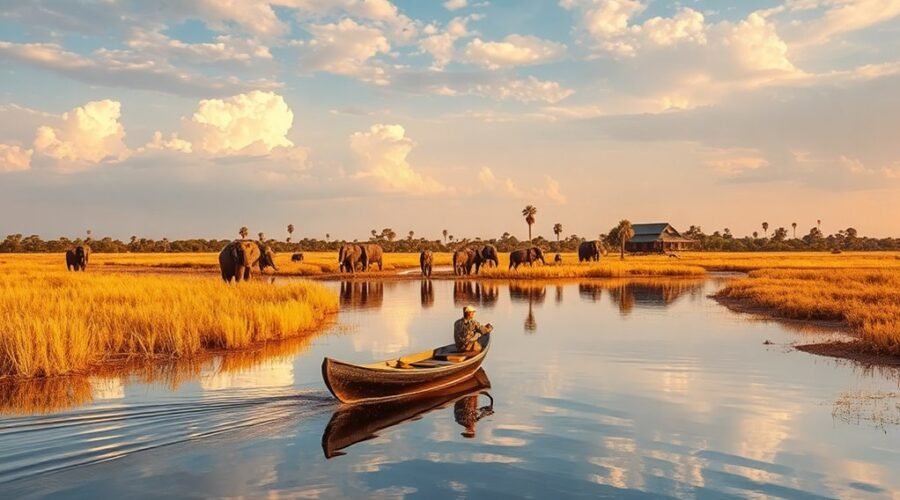
Like Eden before the fall, the Okavango Delta exists in a state of breathtaking, fragile abundance—but only if you arrive at the right moment. Time your visit poorly and you’ll miss the spectacle entirely. Get it right and you’ll witness one of Earth’s last great wildlife congregations. The delta’s seasons don’t just affect what you’ll see; they determine what you’ll pay and who you’ll share it with. The details matter more than you’d expect.
When Does the Okavango Delta Flood : and Why It Changes Everything?
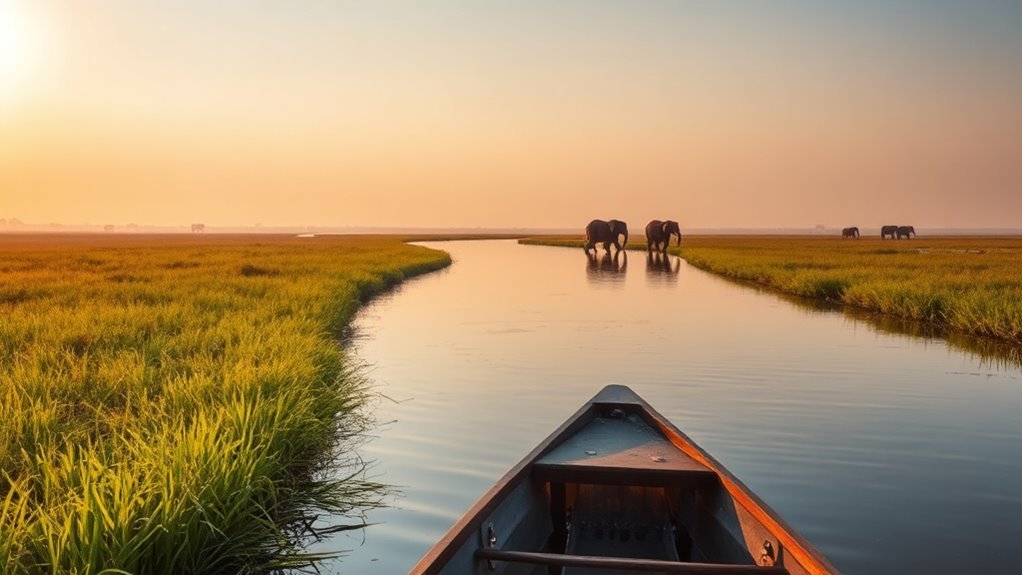
Although the Okavango Delta sits in the heart of the Kalahari Desert, it transforms into one of Africa’s most extraordinary wetland ecosystems each year — not from local rainfall, but from floodwaters originating over 1,000 kilometers away in Angola’s Bié Plateau.
These flood patterns reshape everything you’ll experience on the ground.
Angola’s rains fall between November and February, but the pulse of water doesn’t reach Botswana until June through August — a delayed seasonal change that defies your instincts.
The ecological impact is profound: dry islands become submerged channels, forcing wildlife adaptations that concentrate predators and prey in spectacular, intimate encounters.
For local communities, the flood carries deep cultural significance — it signals renewal, fishing seasons, and traditional movement patterns.
For you, it determines travel logistics entirely. Water levels dictate whether you’re exploring by mokoro, motorboat, or foot.
Understand the flood cycle, and you’ll reveal the Delta’s most extraordinary moments.
How the Okavango Delta’s Landscape Shifts Through the Year
| Season | Landscape Character |
|---|---|
| Dry Season (May–Oct) | Cracked earth, dense wildlife at waterholes |
| Flood Peak (Jul–Aug) | Vast mirror-like channels, island sanctuaries |
| Green Season (Nov–Jan) | Lush vegetation, newborn wildlife, dramatic skies |
| Shift (Feb–Apr) | Retreating waters, exposed floodplains, raw beauty |
You’re not visiting a static destination — you’re stepping into a living cycle that operates on its own terms. Respecting that rhythm means choosing your timing deliberately, not casually. The delta rewards the informed traveler who arrives knowing what it’s becoming, not just what it is.
The Dry Season: Peak Time for Okavango Delta Wildlife Viewing
When the rains withdraw and the land dries out, the Okavango Delta enters its most iconic phase — the dry season, running roughly from May through October. As water recedes, wildlife migration intensifies. Animals converge on shrinking water sources, and you’ll witness raw, unfiltered bush life at its most concentrated.
Seasonal behavior shifts dramatically. Elephants trek vast distances. Lions ambush zebras near permanent pools. Leopards move boldly through open terrain. Vegetation thins, sight lines open up, and tracking becomes genuinely rewarding. You’re not just observing — you’re reading a living landscape.
This is peak safari season for good reason. Game drives and mokoro excursions yield extraordinary sightings, and the lower humidity makes long days in the bush bearable.
Book early, though — camps fill fast, and responsible operators with strong conservation ethics get claimed first. The dry season rewards those who plan with intention.
The Green Season: What You Gain and What You Sacrifice
When the rains arrive between November and April, the Delta transforms into a lush, emerald-green wilderness that rewards patient, curious travelers with something the dry season rarely offers—solitude.
You’ll find far fewer vehicles on the floodplains, dramatically lower lodge rates, and the spectacle of newborn wildlife taking its first steps across a regenerating landscape.
The tradeoff, though, is real: dense vegetation makes predator sightings harder to come by, and some remote areas become inaccessible as water levels rise unpredictably.
Green Season Wildlife Tradeoffs
The green season hands you the Okavango with one hand and takes something away with the other. Lush vegetation fuels extraordinary wildlife photography—dramatic skies, newborn animals, vivid greenery. But dense foliage conceals predators, and seasonal migration pushes herds toward drier terrain, thinning game-viewing corridors.
| Wildlife Aspect | Peak Dry Season | Green Season |
|---|---|---|
| Predator Visibility | High | Reduced |
| Migratory Herds | Concentrated | Dispersed |
| Birdlife | Moderate | Exceptional |
You’re trading density for diversity. Birders gain enormously—over 400 species surge into the delta during rainfall months. Predators still hunt; you simply work harder to find them. If you embrace patience and reward yourself with rawer, less curated encounters, the green season rewards you generously.
Lush Landscapes, Fewer Crowds
Rains transform the Okavango into something almost otherworldly—channels deepen, floodplains bloom, and the delta exhales into vivid, saturated life.
You’ll find lush wilderness stretching uninterrupted toward every horizon, painted in greens so deep they feel ancestral. Photographers and artists make pilgrimages specifically for this light.
Crowds thin considerably. Lodges offer lower rates, and you’ll share that tranquil retreat with far fewer visitors competing for mokoro excursions or sunset spots.
The delta breathes differently when it isn’t performing for peak season audiences.
You’re not sacrificing the experience—you’re accessing a rawer, less curated version of it. Birds nest, amphibians chorus at dusk, and the ecosystem operates on its own terms.
That’s not a compromise. That’s freedom.
Budget-Friendly Wet Months
Budget season runs roughly November through March, and if you’re willing to trade some predictability for significant savings, the green season rewards you generously. Lodge rates drop dramatically, and you’ll find yourself sharing fewer trails with strangers.
| What You Gain | What You Sacrifice |
|---|---|
| Lower lodge rates | Predictable weather |
| Exceptional wildlife photography | Easy game viewing |
| Authentic cultural experiences | Accessible dirt roads |
Migratory birds flood the delta, transforming it into a wildlife photography paradise that dry-season visitors never witness. Local communities open their doors more readily during quieter months, offering cultural experiences that feel genuine rather than performed. Yes, afternoon thunderstorms will interrupt your plans occasionally—embrace them. That rain feeds every ecosystem you’ve traveled here to protect and celebrate.
Okavango Delta Month-by-Month: What to Expect When
Each month in the Okavango Delta tells a different story, and knowing which chapter you’re walking into shapes everything from the wildlife you’ll encounter to the camps you can reach.
The dry season months of June through October deliver the most iconic safari experiences—shrinking water forces game into dramatic concentrations around permanent channels, and predator activity peaks alongside soaring tourist demand.
Peak Season Monthly Highlights
The Okavango Delta transforms dramatically across its peak season months, and knowing what each one offers helps you plan a trip that aligns with your priorities.
| Month | Key Experience |
|---|---|
| June | Wildlife migration peaks; floodwaters concentrate animals |
| July | Ideal seasonal photography; crystal visibility |
| August | Dense predator activity; dramatic hunting encounters |
Each month rewards you differently. June’s rising waters push game onto shrinking islands, creating extraordinary predator-prey dynamics. July delivers the clearest skies and sharpest light for seasonal photography, particularly during golden hour mokoro excursions. August intensifies everything — elephant herds swell, lion prides grow bolder, and the delta hums with raw ecological tension.
Arrive with intention. The delta doesn’t perform on command; it rewards those who understand its rhythms and respect its fragile, magnificent balance.
Wet Season Monthly Changes
Flip the calendar past August, and the delta shifts into a different kind of story.
September brings lingering dryness—wildlife concentrates heavily, and you’ll witness raw survival.
October ignites fierce heat, pushing seasonal wildlife toward scattered water sources as flood patterns begin retreating.
November signals the rains’ arrival. Thunderstorms crack the air open, washing dust from acacia leaves and triggering amphibian choruses overnight.
December deepens the transformation—grasses surge, migratory birds reclaim flooded shallows, and predator-prey dynamics quietly restructure.
Wildlife Activity By Month
Month by month, wildlife activity in the Okavango Delta pulses through a rhythm you can actually plan around.
Seasonal behavior shapes everything — from predator-prey dynamics to wildlife migration patterns that redefine entire landscapes overnight.
January through March, floodwaters push animals onto elevated islands, concentrating predators and prey into dramatic, intimate encounters.
By May, the Okavango’s flood pulse arrives, transforming dry savanna into waterways teeming with hippos, crocodiles, and migratory birds.
June through August delivers peak game viewing — animals cluster around receding water sources, making sightings almost inevitable.
September and October intensify this further as heat stresses the ecosystem, sharpening survival instincts.
November brings relief rains, dispersing herds across rejuvenated grasslands.
Each month offers something irreplaceable — choose yours deliberately, not randomly.
Activities You Can Only Do at Certain Times of Year
Timing your visit to the Okavango Delta reveals experiences that simply aren’t available year-round. Seasonal activities shape what’s possible, and understanding them unveils truly unique experiences.
- Mokoro Excursions (June–August): Flood waters peak, letting you glide silently through papyrus channels, encountering wildlife from water level.
- Walking Safaris (May–October): Dry conditions expose animal tracks and compressed ecosystems, making foot exploration safe and extraordinarily rewarding.
- Fishing Season (September–November): Tiger fish become aggressively active as waters recede, drawing serious anglers to productive channels.
- Birding Migrations (November–March): Over 400 species converge during the green season, including rare Carmine Bee-eaters nesting in riverbanks.
You’re not just choosing dates—you’re choosing which version of the Delta you’ll witness.
Each window demands respect for the ecosystem driving it, so align your timing with nature’s rhythm rather than convenience.
Crowds in the Okavango Delta: When to Go for Solitude
If solitude strategies matter to you, consider the shoulder months: late April, May, or early November. Camps run quieter, guides move slower, and the ecosystem feels genuinely untouched.
You’ll share fewer sunrises with strangers and more with elephants.
The green season, November through March, rewards the deliberate traveler with near-empty concessions. Yes, some areas flood and wildlife scatters, but that trade-off grants you something increasingly rare—authentic wildness without an audience.
The green season empties the concessions. What remains is wildness—unwitnessed, unhurried, entirely yours.
The Delta doesn’t diminish when fewer people show up. It expands.
Choose your timing intentionally, and you won’t just witness this landscape—you’ll actually *inhabit* it.
How Safari Costs in the Okavango Delta Shift by Season
When you plan your Okavango Delta safari, the season you choose directly shapes what you’ll spend—peak months from July through October command premium rates, with top camps charging upward of $1,500 per person per night.
If you’re watching your budget, the green season (November through April) offers considerably lower rates, often 30–50% less, rewarding you with lush landscapes and remarkable off-peak wildlife encounters.
Shoulder months like May, June, and November strike a compelling balance, delivering quality game viewing at more accessible price points before or after the high-season rush.
Peak Season Premium Pricing
Costs in the Okavango Delta swing dramatically across the calendar, and understanding those shifts can shape your entire safari experience.
Peak season—June through October—commands premium rates across camps and concessions.
Here’s what drives those elevated costs:
- Luxury safari lodges restrict availability, pushing nightly rates between $1,500–$5,000 per person.
- Wildlife photography conditions peak during dry months, attracting specialist guides whose expertise commands higher fees.
- Eco friendly travel infrastructure requires year-round maintenance, costs concentrated into fewer occupied months.
- Family adventures during school holidays create demand surges, particularly July and August.
You’re fundamentally paying for concentration—animals gathered around shrinking water sources, skies clear and golden.
That ecological convergence is irreplaceable.
Book eight to twelve months ahead, or watch premium availability vanish entirely.
Budget-Friendly Off-Season Rates
The flip side of peak pricing opens real opportunity for budget-conscious travelers. During the green season (November through March), you’ll find lodge rates drop 30–50%, giving you genuine access to one of Africa’s most extraordinary ecosystems without financial strain.
You’re not sacrificing experience—you’re trading crowds for intimacy. Off season activities include exceptional birding as migratory species arrive, dramatic thunderstorm photography, and lush landscapes that transform the delta’s character entirely.
Smart budget tips: book directly with smaller camps, combine your visit with neighboring Chobe National Park for regional value, and embrace early morning game drives before afternoon rains arrive.
Conservation fees remain consistent year-round, so your wildlife contribution stays meaningful regardless of season. Freedom here isn’t just philosophical—it’s financial.
Shoulder Season Cost Savings
April, May, and October represent the Okavango Delta’s shoulder seasons—and they’re where savvy travelers find the most compelling balance of value and experience. The cost comparison against peak season is striking.
Shoulder season advantages include:
- Lodge rates drop 20–35% below July–August peaks
- Smaller wildlife-viewing groups mean more intimate, impactful encounters
- Concession fees often bundle activities previously priced separately
- Conservation levies sometimes offer reduced structures, keeping your spend locally grounded
You’re not sacrificing quality—you’re reclaiming choice.
April delivers the last of the green season’s lush drama. May signals rising waters and arriving wildlife. October offers dry-season concentrations without the premium price tag.
Travel during these windows, and you’re funding conservation more efficiently while experiencing the Delta on your own terms.
What to Pack for the Dry Season vs. the Green Season
Packing smart for the Okavango Delta means respecting the rhythm of its two distinct seasons. Your choices directly shape your experience and your impact on this fragile ecosystem.
For dry season essentials, prioritize neutral-toned, breathable layers. Mornings bite with cold; afternoons scorch. Pack a fleece, sun-protective clothing, a wide-brimmed hat, and quality binoculars. Dust is relentless, so protect your camera gear accordingly.
Green season gear demands a different mindset. Lightweight, quick-dry fabrics handle humidity well. Waterproof boots, a packable rain jacket, and insect repellent containing DEET become non-negotiable. Mosquito nets offer critical protection during malaria season.
Both seasons call for reef-safe, biodegradable toiletries — the Delta’s waterways deserve that respect.
Travel light, choose durable gear over disposable, and leave nothing behind but footprints. The Delta doesn’t just host you; it trusts you.
Which Type of Traveler Does the Okavango Delta Suit Best?
Who belongs in the Okavango Delta? Almost anyone craving raw, unfiltered wilderness — but certain travelers thrive here more than others.
You’ll feel deeply at home if you’re:
- A wildlife photographer or birdwatching aficionado — the Delta’s extraordinary biodiversity rewards patience and a sharp eye.
- An adventure seeker or eco-tourism enthusiast — mokoro rides, walking safaris, and floodplain exploration demand curiosity and respect for nature.
- A cultural explorer — engaging with San Bushmen traditions offers perspective that reshapes how you understand humanity’s relationship with land.
- A luxury vacationer or family traveler — world-class camps balance indulgence with conservation impact, making every dollar purposeful.
Photography lovers will find compositions that simply don’t exist elsewhere. Wildlife photographers, specifically, encounter predator-prey dynamics in an ecosystem still largely intact.
If you believe travel should leave places better than you found them, the Okavango Delta isn’t just a destination — it’s a calling.
Frequently Asked Questions
Do I Need a Visa to Visit the Okavango Delta in Botswana?
You’ll need to check visa requirements based on your nationality. Many countries enjoy visa-free access, but always verify your travel documentation before departure — freedom to explore Botswana’s wild, pristine delta starts with proper preparation.
Are There Any Health Vaccinations Required Before Visiting the Okavango Delta?
Ready to roam free? You’ll want to follow key health precautions before visiting. Vaccination recommendations include hepatitis A, typhoid, and yellow fever. You should also take antimalarial medication, protecting yourself while respecting this pristine wilderness.
Can I Visit the Okavango Delta as a Solo Traveler Safely?
You can absolutely visit solo! Embrace the wild with confidence by following smart solo travel tips and essential safety precautions — book reputable guided camps, stay aware of wildlife, and you’ll discover profound, liberating freedom in this pristine wilderness.
What Currency Is Accepted at Okavango Delta Safari Camps?
Like a universal key, the US dollar opens most safari camps. You’ll find local currency (Botswana Pula) equally welcomed, and exchange options await at camps—empowering your financial freedom while supporting conservation-minded travel throughout this pristine wilderness.
How Far Is the Okavango Delta From Maun International Airport?
You’ll travel roughly 100km from Maun International Airport to the Okavango Delta, but distance factors vary by camp. Your transportation options include light aircraft or 4WD transfers, making travel logistics an adventure that’ll deepen your conservation-minded journey into wilderness freedom.
Conclusion
It’s no coincidence that the Okavango’s most breathtaking moments align perfectly with your own need for stillness, wonder, or wild abandon. Whether you’re chasing the flood’s quiet surge in May or the parched drama of August, you’ll find the delta meeting you exactly where you are. Choose your season wisely—not just for the experience you want, but for the ecosystem that depends on travelers who care enough to look deeper.