Taiwan packs a lot into a small island, and when you go can shape your entire experience. The north can be rainy while the south enjoys sunshine, and summer brings intense heat and typhoon risks. Understanding the best time to visit Taiwan helps you choose the right season for sightseeing, outdoor adventures, festivals, and affordable travel.
Quick Answer
For most trips, aim for October or November. Temperatures ease after summer, humidity falls, and much of western and southern Taiwan becomes drier. September is still warm and can bring typhoon-related rain, while Taipei and the northeast stay wetter in winter. Choose spring for blossoms or winter for southern sunshine.
Last checked: 19 November 2026. Dates and figures were verified against official sources.
Key Takeaways
- October and November offer the best overall combination of comfortable temperatures and manageable rainfall.
- Spring brings cherry blossoms and cultural events, but May and June introduce the rainy season.
- Winter is a good time to explore southern Taiwan, enjoy hot springs, and avoid summer heat.
- Taiwan’s 2027 holiday periods include February 4–10, April 3–6, and October 9–11.
- Check current trail conditions before visiting Taroko Gorge because earthquake damage has affected access to several attractions.
Taiwan’s Climate by Region: What Changes and What Stays the Same
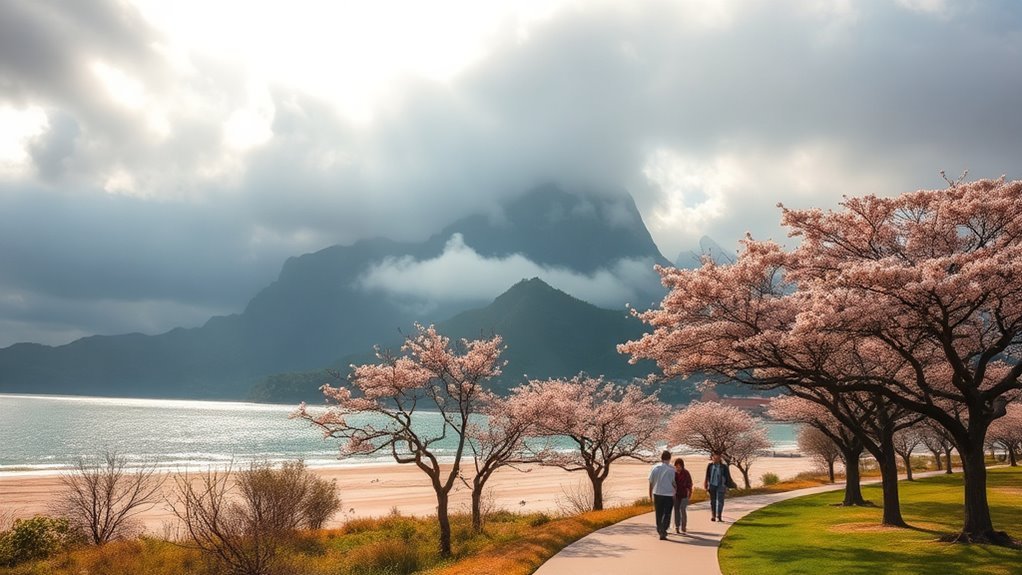
Taiwan does not have one uniform climate. The Central Mountain Range creates major differences between the east and west, while seasonal winds affect northern and southern cities differently. You can experience rain in Taipei and sunshine in Tainan during the same trip.
Here is how the main regions differ:
- North and northeast: Taipei, Jiufen, Keelung, and Yilan receive more rain during the winter northeast monsoon. September can also be wet, particularly in the northeast.
- West and southwest: Taichung, Tainan, and Kaohsiung generally enjoy drier winters. However, spring rain, the May-June rainy period, and summer storms can still bring heavy precipitation.
- East coast: Hualien and Taitung have different rainfall patterns from western Taiwan. Pacific weather systems and typhoons affect this coastline, while the northeast monsoon creates favorable surfing conditions in autumn and winter.
- Mountain regions: Alishan and Hehuanshan have cooler conditions because of their elevation. Winter mornings can be especially cold, even when coastal cities remain mild.
The Central Weather Administration’s seasonal climate statistics help explain these differences. They also show why choosing a destination matters as much as choosing a month.
| Climate period | Average temperature | Rainfall pattern | Travel conditions |
|---|---|---|---|
| Spring, February-April | 20.8°C | Northern Taiwan receives more spring rain. Southern lowlands generally remain drier. | Good for flowers, sightseeing, and outdoor activities. |
| Mei-yu, May-June | Separate seasonal average not stated. | About 440.7 mm average rainfall across 11 lowland stations. | Expect prolonged rain and occasional heavy downpours. |
| Summer, July-August | About 28.8°C long-term climate average. | About 606.9 mm median rainfall across 11 lowland stations. | Hot, humid, and exposed to typhoon disruptions. |
| Autumn, September-November | 25.1°C | Northeast remains wet, while southwestern Taiwan becomes drier. | October and November are especially good for sightseeing. |
| Winter, December-February | 18.7°C | Northern and northeastern Taiwan receive more rain. Southern lowlands are generally drier. | Ideal for southern city trips and hot springs. |
Climate data note: These are Central Weather Administration lowland-station statistics, not daily highs or mountain temperatures. The agency uses February-April for spring, May-June for Mei-yu, July-August for summer, September-November for autumn, and December-February for winter. The summer figure of about 28.8°C is calculated from the agency’s statement that the 2014 summer mean of 29.6°C was 0.8°C above its climate average. Read the Central Weather Administration’s seasonal climate analysis.
These differences matter when planning your itinerary. If you want sunshine during winter, southern Taiwan is usually a better choice than Taipei or Jiufen.
Spring in Taiwan: Mild Temperatures and Major Festivals
Spring (March through May) is a good time for mild weather, flower viewing, and outdoor sightseeing. However, it is not consistently dry. Northern Taiwan receives spring rain, and the Mei-yu rainy period begins in May and continues into June.
You can enjoy comfortable sightseeing conditions while exploring mountain landscapes and cultural attractions. The main challenge is planning around changing rainfall and popular festival dates.
Spring Weather Overview
Spring temperatures rise gradually, creating pleasant conditions for exploring Taiwan. The Central Weather Administration records a mean temperature of 20.8°C across 11 lowland stations during its February-April spring period.
Here is what you can expect:
- Cherry blossoms: Mountain regions, especially Alishan and Yangmingshan, attract flower enthusiasts during the spring bloom.
- Spring rain: Northern Taiwan receives more rain from February through April. Carry a compact umbrella or light rain jacket.
- Increasing humidity: May becomes noticeably warmer and more humid as the rainy season approaches.
- Longer daylight: More daylight gives you additional time for sightseeing and outdoor activities.
Alishan offers particularly attractive blossom viewing. At Alishan National Forest Recreation Area, the main cherry blossom season generally runs from mid-March to mid-April. Other locations in the wider Alishan National Scenic Area have blossoms from December through March, depending on the location and weather. See the official Alishan flower-season information.
Key Festivals and Events
Spring and late winter bring some of Taiwan’s most recognizable cultural celebrations. You can experience traditional ceremonies, flower festivals, and spectacular lantern displays.
These events are worth considering:
- Lantern Festival: Celebrated on the 15th day of the first lunar month, this event features lantern displays, traditional activities, and the famous Pingxi Sky Lantern Festival.
- Tomb Sweeping Day: Observed in April, this tradition allows families to honor their ancestors through visits to graves and memorial sites. In 2027, Tomb Sweeping Day falls on April 5.
- Cherry Blossom Season: Alishan and Yangmingshan attract visitors who want to see seasonal flowers and enjoy mountain scenery.
The Pingxi Sky Lantern Festival takes place in February, but its individual event dates are announced separately. The official New Taipei City event listing provides the festival location and scheduling updates. See the Pingxi Sky Lantern Festival information.
Expect increased domestic travel around major celebrations. Book accommodation early if your itinerary includes popular flower-viewing areas or festival weekends.
Travel Tips for Spring
Spring is easier to enjoy when you prepare for both cool mornings and warmer afternoons. Pack clothes that you can layer, especially if you plan to visit mountain destinations.
Use these practical tips:
- Reserve accommodation ahead of major festivals and long weekends.
- Visit night markets such as Shilin and Raohe to enjoy local food and evening entertainment.
- Carry a compact umbrella because showers can arrive unexpectedly.
- Use an EasyCard for convenient travel on many MRT and bus services. It can also be used for eligible YouBike journeys.
Spring suits travelers who want comfortable sightseeing temperatures and seasonal flowers without the intense summer heat.
Summer in Taiwan: Heat, Humidity, and Typhoon Risk
Summer in Taiwan (June through August) brings high temperatures, humidity, heavy rainfall, and typhoon risks. July and August are particularly hot, while May and June are affected by the Mei-yu rainy period.
Temperatures can rise above 35°C (95°F), especially during heat events. Wear breathable clothing, drink enough water, and plan strenuous outdoor activities around the hottest hours.
Despite the challenging conditions, summer offers several cultural experiences:
- Dragon Boat Festival: Held in June, this celebration features traditional dragon boat races and local festivities. In 2027, it falls on June 9.
- Ghost Month: The seventh lunar month brings religious ceremonies and traditional offerings throughout Taiwan.
- Night markets: Evening markets remain popular places to enjoy street food, shopping, and local entertainment.
Typhoon risk continues through summer and into autumn. The East Coast National Scenic Area notes that typhoons often affect the region from August through October. Storms can disrupt flights, ferries, trains, and road travel. See the official East Coast weather and surfing guidance.
Warning: Never ignore official typhoon or heavy-rain warnings. Mountain roads, coastal attractions, and ferry services can close with little notice. Check weather alerts and make sure your travel insurance covers relevant weather-related disruptions.
Summer school holidays also bring domestic families to popular beaches, resorts, and mountain destinations. You may encounter busy attractions even when the weather is less comfortable.
Summer is best suited to travelers who enjoy warm weather, cultural events, and flexible itineraries. It is less suitable if you want reliable conditions for hiking or long road trips.
Autumn Is the Best Time to Visit Taiwan for Most Travelers
Autumn (September through November) offers some of Taiwan’s most comfortable sightseeing conditions. October and November are particularly attractive because temperatures become milder, humidity decreases, and much of western and southern Taiwan becomes drier.
However, September is still a transitional month. Northern and northeastern Taiwan can remain wet, and typhoons can affect travel into October.
Mild and Pleasant Weather
Autumn brings more comfortable temperatures after the summer heat. The Central Weather Administration records a September-November mean temperature of 25.1°C across 11 lowland stations.
Several factors make this period attractive:
- More comfortable temperatures: October and November are generally better for walking tours, cycling, and outdoor sightseeing.
- Lower humidity: Outdoor activities become more comfortable as summer humidity decreases.
- Improving conditions in western Taiwan: Southwestern areas become considerably drier from October onward.
- Mountain scenery: Autumn offers attractive conditions for visiting Alishan and other mountain destinations, although mountain weather can change quickly.
One important exception is northeastern Taiwan. Taipei, Keelung, and Yilan can still experience considerable rainfall as the northeast monsoon develops.
For the most reliable overall sightseeing conditions, choose October or November rather than assuming all three autumn months offer the same weather.
Fewer Crowds, Lower Costs
Outside major holidays, autumn can provide a more relaxed travel experience than the summer school break. You may find it easier to arrange accommodation and visit popular attractions without the same level of domestic holiday traffic.
However, not every autumn week is quiet. Taiwan’s National Day holiday and other local celebrations can create temporary increases in demand.
October and November are particularly useful for travelers who want to combine city sightseeing with mountain excursions. You can spend more time outdoors without facing the intense heat of midsummer.
Choose dates outside major holiday weekends if you want a quieter experience and more flexibility with accommodation.
Winter in Taiwan: Quiet, Cool, and Underrated
Winter in Taiwan (December through February) offers a different experience from the hotter months. Northern Taiwan becomes cooler and wetter, while southern cities such as Tainan and Kaohsiung generally enjoy milder, drier conditions.
This makes winter particularly attractive if you plan your itinerary around regional weather rather than trying to cover the entire island under one set of conditions.
Here are some worthwhile winter experiences:
- Hot springs: Soaking in Beitou or Wulai is especially enjoyable during cooler weather.
- Local street food: Warm dishes such as oyster vermicelli and scallion pancakes are particularly appealing on cool evenings.
- Mountain scenery: Alishan offers dramatic misty landscapes and forest walks. Bring warm clothing because temperatures change with elevation.
- Lantern Festival: Late winter brings colorful lantern displays and traditional celebrations, including events around Pingxi.
The northeast monsoon brings moisture to northern and northeastern Taiwan. Pack layers and a waterproof jacket if Taipei, Jiufen, or Yilan are part of your itinerary.
Southern cities are generally better choices if you want more sunshine during winter. You can explore historic sites, enjoy local food, and spend time outdoors without dealing with the summer heat.
One important exception is Lunar New Year. In 2027, the official holiday period runs from February 4 through February 10. Transport and popular accommodation can become busy during this period, while some businesses operate limited hours.
The Best Time to Visit Taiwan on a Budget
The best value usually comes from traveling outside major holidays and popular school breaks. November, early December, and quieter winter weeks can offer attractive accommodation options, while Lunar New Year and major festivals can increase demand.
Consider these planning strategies:
- November: Often a good balance between comfortable sightseeing conditions and lower seasonal demand.
- Early December: A useful option for travelers who want to avoid the summer rush and Lunar New Year crowds.
- January and February: These months can offer good value outside Lunar New Year and major festival periods, although northern Taiwan can be rainy.
- Spring and late autumn: These shoulder-season periods balance outdoor activities with manageable travel demand.
Taiwan also offers plenty of affordable experiences throughout the year. Many temples are free to visit, and public transportation makes it easier to explore major cities without renting a car.
Night markets provide budget-friendly food options, while hiking and exploring scenic areas can add variety to your itinerary. Remember that some mountain attractions require permits, and access can change after severe weather.
Compare your travel dates with Taiwan’s public holiday calendar before making non-refundable reservations. A popular festival week can change the cost of an otherwise affordable trip.
When Crowds and Prices Peak in Taiwan
Taiwan’s busiest travel periods usually coincide with domestic public holidays, school vacations, and major cultural celebrations. Hotels, transport services, and popular attractions can become crowded during these dates.
These are the main periods to consider when planning a 2027 trip:
| Period | 2027 dates | What to expect |
|---|---|---|
| Lunar New Year | February 4-10 | A seven-day holiday period with heavy domestic travel and possible business closures. |
| Tomb Sweeping and Children’s Day | April 3-6 | A four-day holiday period when domestic trips increase. |
| Dragon Boat Festival | June 9 | A national holiday with dragon boat races and local celebrations. |
| Summer school holidays | July-August | Families visit beach resorts, mountain destinations, and popular attractions. |
| National Day | October 9-11 | A three-day holiday weekend that can increase domestic travel. |
These dates come from Taiwan’s 2027 government work calendar. View the official 2027 government calendar.
During these periods, popular hotels and transport services can become busy. Booking ahead is especially useful if your itinerary includes major cities, mountain resorts, or festival locations.
If you have flexible dates, moving your trip by a few days can help you avoid the busiest travel periods without missing the main attractions.
Best Time to Visit Taiwan by Trip Type
The best time to visit Taiwan also depends on what you want to experience. Hiking, cultural festivals, beach activities, and diving all have different seasonal advantages.
Match your travel dates to your main activities rather than relying on one island-wide recommendation.
For Hiking and Outdoor Adventures
October and November are generally the best months for hiking and outdoor exploration. Temperatures are more comfortable than in summer, and many western and southern destinations become drier.
Alishan is particularly attractive for forest walks and mountain scenery. However, high-altitude routes still require attention to weather, temperature, and current trail conditions.
Taroko Gorge needs special consideration. The April 3, 2024 earthquake caused extensive damage, and several popular trails remain closed or partially accessible. The park currently lists open routes such as Dekalun and Dali-Datong, along with partially open sections around Tianxiang and Lushui. Shakadang Trail remains closed. Check the official Taroko National Park trail information.
Warning: Do not enter closed Taroko trails or damaged sections. Earthquake and typhoon damage can create rockfall and landslide risks. Confirm road access and trail openings before traveling to the park.
For Cultural Experiences and Festivals
Late winter and spring are excellent for experiencing Taiwan’s traditional celebrations. Lunar New Year, the Lantern Festival, Pingxi Sky Lantern Festival, and Tomb Sweeping Day offer different ways to experience local culture.
Summer also has important events, including the Dragon Boat Festival and Ghost Month ceremonies. Choose your dates based on the particular celebration you want to see.
For Beaches, Surfing, and Diving
Beach lovers and surfers should consider Taiwan’s east coast. Surfing is possible throughout the year, but the northeast monsoon during autumn and winter produces higher waves at several popular locations.
Surfers should avoid the water during typhoon warnings and follow local safety guidance. The east coast is particularly attractive for people looking for wave-based activities rather than only traditional beach relaxation.
Divers often prefer the calm, crystal-clear waters of May and June off Green Island.
Frequently Asked Questions
What Visa Requirements Should I Know Before Visiting Taiwan?
Taiwan’s visa rules depend on your passport. Some nationalities qualify for visa-exempt stays, while others need a visitor visa or may qualify for a landing visa or eVisa. Check the Bureau of Consular Affairs’ current entry rules before booking, because eligibility and permitted stay lengths differ.
Is Taiwan Safe for Solo Female Travelers Year-Round?
Taiwan is generally considered a safe destination for solo female travelers, but no place is risk-free. Use normal precautions, stay aware around nightlife areas, and avoid entering closed or isolated trails alone. For outdoor trips, follow current weather and park warnings.
What Currency Does Taiwan Use and Are Cards Widely Accepted?
Taiwan uses the New Taiwan dollar (TWD or NT$). Major hotels, department stores, and many restaurants accept cards, but small shops, traditional markets, and some local eateries may take cash only. Keep some notes and coins with you for everyday purchases.
How Many Days Should I Budget for a Taiwan Trip?
Plan at least 7 to 10 days for a first visit. That gives you time to explore Taipei, add one or two other regions, and avoid spending the whole trip on long transfers. Add more days if you want to hike or visit offshore islands.
What Vaccinations or Health Precautions Are Recommended for Taiwan Visitors?
The U.S. CDC recommends hepatitis A for unvaccinated travelers aged 1 or older and hepatitis B for unvaccinated travelers of all ages. Keep routine vaccines current, use insect repellent, and seek medical advice at least a month before departure. Advice may differ by country and personal health. See the CDC Taiwan travel health recommendations.
Is September a Good Time to Visit Taiwan?
September can work if you accept heat, humidity, and a higher chance of rain. The northeast remains wet, and typhoons can affect travel into October. For more settled conditions in most years, choose October or November, especially for hiking and road trips.
When Can You See Cherry Blossoms in Taiwan?
Cherry blossom timing depends on altitude and weather. At Alishan National Forest Recreation Area, the main viewing period is usually mid-March to mid-April, while some spots in the wider Alishan National Scenic Area bloom from December to March. Check local bloom reports before you travel.
Note: Vaccination recommendations depend on your health, travel history, and planned activities. Consult a qualified travel-health professional before departure, especially if you have a medical condition or plan extended rural or outdoor travel.
Conclusion
October and November are the strongest choices for most Taiwan trips, offering comfortable temperatures and better conditions for sightseeing. Spring is ideal for cherry blossoms and cultural events, while winter favors southern cities and hot springs.
Before booking, compare your dates with Taiwan’s holiday calendar, choose destinations according to regional weather, and check trail and typhoon warnings. A little planning will help you enjoy much more of the island.
Sources
- Central Weather Administration: Seasonal climate statistics, including temperature averages, spring rainfall, the Mei-yu period, and regional rainfall patterns.
- Directorate-General of Personnel Administration: Official 2027 government work calendar and public holiday periods.
- Alishan National Scenic Area Administration: Cherry blossom locations and seasonal viewing periods.
- New Taipei City Travel: Pingxi Sky Lantern Festival location, annual timing, and event information.
- East Coast National Scenic Area Administration: Surfing conditions, northeast monsoon effects, and typhoon-season precautions.
- Taroko National Park Headquarters: Current trail access, earthquake-related closures, and partially reopened hiking routes.
- Bureau of Consular Affairs, Taiwan: Visa-exempt entry eligibility and permitted stays.
- U.S. Centers for Disease Control and Prevention: Taiwan-specific travel vaccination and health recommendations.