The best time to visit Central Coast NSW depends on whether you’re planning beach days, coastal walks, whale watching, or a budget-friendly break. This stretch of New South Wales has warm summers, mild winters, and plenty to explore throughout the year. But the weather, school holidays, and local events can make a big difference to your experience.
Quick Answer
For the best balance of pleasant weather, manageable crowds, and accommodation value, visit the Central Coast in March–April or October–November, outside school holidays. December–February is warmest but busiest, while June–August offers quieter sightseeing. Whale watching is possible from May to November, with particularly good opportunities during the winter migration.
Last checked: October 23, 2026. Dates and figures were verified against official sources.
Key Takeaways
- Best for swimming: December to March brings the warmest weather, although beach conditions still depend on waves, currents, and lifeguard advice.
- Best for coastal walks: April–May and September–October offer comfortable daytime temperatures for exploring headlands and national parks.
- Best for fewer crowds: May, August, and early September are generally quieter, particularly on weekdays outside holidays.
- Best for whale watching: May–November covers the broader migration season, with whales heading north during May–July and returning south later in the year.
- Rainfall matters: The coast receives rain throughout the year. March–June can be especially wet, while September and October have relatively low average rainfall at Norah Head.
- Check holiday dates: Summer breaks, Easter, long weekends, and major events can make otherwise quiet months surprisingly busy.
Which Months Are Best for Visiting the Central Coast?
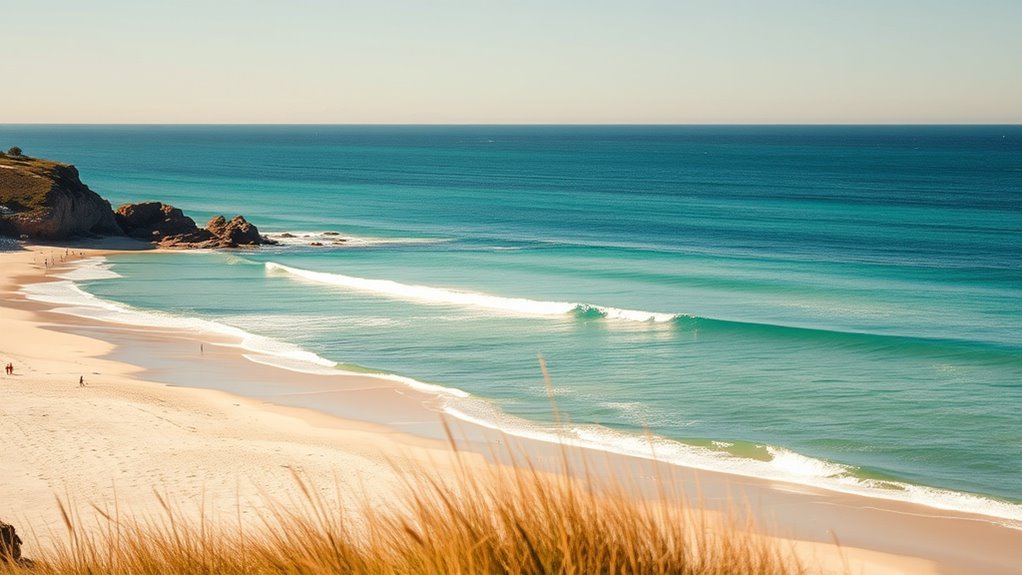
October–November and March–April are excellent choices when you want to combine beach visits, scenic walks, local markets, and outdoor dining. These months usually provide more comfortable conditions than the middle of summer or winter.
If warm-water activities matter most, choose late summer or early autumn. January and February have the highest average coastal temperatures, while March often remains warm enough for comfortable beach outings.
For sightseeing, September and October are appealing. Spring brings wildflowers to national parks, longer daylight hours, and generally comfortable walking weather.
However, these months aren’t automatically quiet. The October school holidays and major local festivals can bring thousands of additional visitors.
If you prefer a relaxed atmosphere, weekdays outside school holidays are usually the better choice.
The Central Coast is also accessible from Sydney, making it popular for weekend trips. Tourism Australia identifies December–February as the high season and June–August as the low season.
Central Coast Weather Month by Month: Temperatures and Rainfall
The Central Coast has a temperate coastal climate, with warm summers and relatively mild winters. Rain can occur in every month, so summer does not guarantee dry weather, and winter does not always mean constant rain.
The following figures come from the Australian Bureau of Meteorology’s Norah Head AWS climate statistics, station 061366. The station is near the coast, so inland locations such as Gosford and the hinterland may experience different temperatures.
These are long-term averages, not forecasts for a particular trip. Rainfall figures show average monthly totals rather than the amount of rain you’ll necessarily experience.
| Month | Average High | Average Low | Average Rainfall | Best For |
|---|---|---|---|---|
| January | 26.4°C | 19.9°C | 86.5 mm | Summer holidays and beaches |
| February | 26.3°C | 20.1°C | 116.8 mm | Warm beach days after holidays |
| March | 25.4°C | 19.0°C | 131.8 mm | Warm weather and smaller crowds |
| April | 23.3°C | 16.1°C | 130.3 mm | Coastal walks and sightseeing |
| May | 20.4°C | 13.2°C | 139.4 mm | Quiet breaks and early whale migration |
| June | 18.1°C | 11.0°C | 141.9 mm | Whale watching and cooler hikes |
| July | 17.6°C | 9.9°C | 93.4 mm | Winter walks and migrating whales |
| August | 19.0°C | 10.7°C | 79.4 mm | Quiet sightseeing and whale watching |
| September | 21.3°C | 12.9°C | 60.8 mm | Wildflowers and coastal trails |
| October | 23.1°C | 15.0°C | 66.4 mm | Spring beaches and outdoor events |
| November | 24.0°C | 16.9°C | 92.8 mm | Beach trips before peak holidays |
| December | 25.3°C | 18.5°C | 69.7 mm | Summer beaches and holiday activities |
September has the lowest average monthly rainfall at this coastal station, at 60.8 mm. June has the highest average, at 141.9 mm, although rainfall varies widely between years.
Actual sea conditions are less predictable than monthly air temperatures. Swell direction, wind, tides, and recent weather determine whether an individual beach is suitable for swimming, surfing, or snorkeling.
Summer: December to February
Summer is the warmest season and the most popular time for beach holidays. Average daytime highs at Norah Head range from about 25°C to 26°C, with warm evenings and long daylight hours.
Terrigal, Avoca Beach, and The Entrance are especially attractive for swimming, waterfront dining, and summer outings. December becomes much busier around Christmas, with peak holiday demand continuing through January.
Humidity and occasional storms can affect summer plans, particularly in February. Choose outdoor activities around the day’s actual conditions rather than assuming every summer afternoon will be clear.
Autumn: March to May
Autumn is one of the most flexible times to visit. March can still feel summery, while April and May bring cooler mornings that are more comfortable for longer walks.
March is particularly appealing for visitors who want warm beach weather without the main January holiday crowds. April suits coastal walks, cafes, galleries, and scenic drives.
Rain remains a consideration. At Norah Head, average monthly rainfall exceeds 130 mm in each month from March through May.
By May, the northbound whale migration is beginning, giving you another reason to explore ocean-facing headlands.
Winter: June to August
Winter is cooler, generally quieter, and often appealing to travelers who care more about views and walking than swimming. July is the coolest month, averaging 17.6°C during the day and 9.9°C overnight at Norah Head.
June is comparatively wet on average, but July and August have lower rainfall totals at the same station. Clear winter days can be excellent for photography, lookout visits, and bushwalking.
Whale watching is a major seasonal attraction. Accommodation demand is often lower outside winter school holidays and long weekends.
Spring: September to November
Spring brings warmer temperatures, longer days, wildflowers, and outdoor events. September and October are especially appealing for coastal walks, while November becomes increasingly suitable for beach-focused trips.
September’s relatively low average rainfall makes it attractive for sightseeing, although ocean water may still feel cool to swimmers.
Spring is also a good time to explore Bouddi National Park and other coastal reserves. It is not always uncrowded, however, because school holidays and local festivals can create busy weekends.
When Is the Central Coast Busiest, and When Is It Quiet?
The Central Coast is busiest during summer school holidays, Easter, long weekends, and major festivals. Its location near Sydney also brings weekend visitors throughout the year.
December and January are the main peak period. Popular beaches, accommodation, restaurants, and parking areas can become crowded, particularly on sunny weekends.
| Period | Typical Crowd Level | What to Expect |
|---|---|---|
| Summer (Dec–Feb) | Very High during holidays | Busy beaches, restaurants, parking areas, and holiday accommodation |
| School Holidays | High | More families, longer queues, and stronger demand for stays |
| Shoulder Months | Low to Moderate outside events | More relaxed sightseeing and generally easier parking |
| Winter Weekdays | Low | Quiet beaches, coastal paths, and less demand for accommodation |
School Holidays and Public Holidays to Consider
For the 2026–2027 travel period, several confirmed NSW holidays are particularly relevant when planning accommodation and beach visits.
- Summer school holidays: December 18, 2026–January 27, 2027, for NSW Eastern Division public schools.
- Australia Day: January 26, 2027.
- Easter long weekend: March 26–29, 2027.
- Autumn school holidays: April 12–23, 2027.
- King’s Birthday: June 14, 2027, creating a winter long weekend.
- Winter school holidays: July 5–16, 2027.
- Spring school holidays: September 27–October 8, 2027.
- Labour Day: October 4, 2027, during the spring school holidays.
The dates come from the NSW Department of Education’s 2027 calendar and the NSW Government public holiday calendar. Private school schedules can differ.
Major Central Coast Events That Affect Crowds
Local festivals can make accommodation and parking busier even outside the normal holiday peak. Two confirmed spring events are especially relevant for late 2026.
- ChromeFest: October 23–25, 2026, at The Entrance. This free retro car and entertainment festival includes classic vehicle displays, live music, and market stalls. The official NSW ChromeFest event listing confirms the dates and free admission.
- The Lakes Festival: November 6–15, 2026. This region-wide celebration focuses on Central Coast waterways, cultural activities, recreation, and community events. The dates are confirmed by Central Coast Council.
These are attractive events if you enjoy a lively atmosphere. If peace and quiet are your priority, avoid staying close to major festival venues on their busiest days.
Central Coast Accommodation Costs: Cheapest and Most Expensive Months
The cheapest time to stay on the Central Coast is generally outside summer, school holidays, and major event weekends. Winter weekdays often provide better accommodation value, while Christmas, January, and holiday weekends bring stronger demand.
Exact rates vary by property, location, booking date, and the size of your group. There is no reliable single nightly price that represents the entire Central Coast.
When Accommodation Is Usually Most Expensive
December through January is the main premium period, particularly for beachfront hotels, holiday homes, and family-sized accommodation.
School holiday dates, Easter, public holiday weekends, and major events can also push up prices in otherwise moderate months.
Popular coastal areas such as Terrigal and Avoca Beach may be especially attractive to visitors wanting to walk directly to the beach, increasing competition for conveniently located stays.
When to Look for Better Value
May through August is a sensible starting point for budget-focused accommodation searches, with winter weekdays often quieter than weekends.
Late February, March, April, September, October, and November can also offer better value than the main summer holiday period, provided you avoid school breaks and large events.
If your schedule is flexible, compare weekday and weekend totals rather than looking only at advertised nightly rates.
- Compare total costs: Include cleaning fees, parking, breakfast, and cancellation conditions.
- Consider different locations: Town-centre and inland accommodation may offer alternatives to beachfront properties.
- Look for off-peak packages: Midweek specials and longer-stay offers can sometimes reduce the final bill.
- Use refundable bookings when practical: They provide flexibility if your plans change.
- Allow for transport costs: A cheaper room far from your planned activities may require additional driving or car hire.
For the strongest mix of comfortable weather and value, March and November are worth comparing first, outside school holidays and event dates.
Best Time for Central Coast Beaches, Hiking, Surfing, and Whale Watching
The ideal season depends on what you want to do. Summer is best suited to warm beach holidays, autumn and spring favor coastal exploration, and winter brings the northbound whale migration.
Best Time for Beaches and Swimming
December–March is the best general window for warm beach days. January and February have the highest average air temperatures, while March often remains pleasant for swimming.
Terrigal, Avoca Beach, Umina Beach, and The Entrance are popular choices for a classic coastal holiday. If you want sheltered water, Toowoon Bay is another option worth considering.
Swimming safety matters more than the month. Central Coast Council identifies 15 seasonally patrolled beaches, including Terrigal, Avoca, Toowoon Bay, MacMasters, and Umina.
Beach patrols generally operate from late September into April, but daily flag locations and hours vary. Follow Central Coast Council’s beach safety guidance and swim only between the red and yellow flags at a patrolled beach.
Warning: Calm-looking water is not necessarily safe. Rip currents, changing tides, and unexpected waves can occur in any season. Never enter rough surf or unpatrolled water simply because the weather is warm.
Best Time for Surfing and Snorkeling
Surfing is possible year-round, but the right conditions depend on experience and the day’s swell. Summer and early autumn can offer enjoyable sessions, while winter storms and large swells may create more challenging conditions.
If you’re a beginner, choose a suitable lesson with an instructor rather than assuming a particular month guarantees smaller waves.
Snorkeling works best when the water is clear, waves are small, and winds are light. March–April and calm spring days can be appealing, but there is no guaranteed calm-water season.
Toowoon Bay and suitable sheltered sections of the coast can be worth exploring when conditions allow. Avoid entering the water during poor visibility, hazardous surf, or after heavy rain that may affect water quality.
Best Time for Hiking and Coastal Walks
April–May and September–October are especially comfortable for walking. Cooler temperatures help make exposed coastal sections more manageable than on hot summer afternoons.
One of the best-known options is the Bouddi coastal walk in Bouddi National Park.
NSW National Parks lists this walk as 8.5 km one way, with an estimated walking time of 3 hours 30 minutes to 4 hours 30 minutes. It is graded 3 and runs between Putty Beach and MacMasters Beach.
Along the way, you can enjoy coastal views, beaches, forest sections, and lookout points. The trail can also be divided into shorter walks.
- Putty Beach to Maitland Bay: Approximately 3 km.
- Maitland Bay to Little Beach: Approximately 3.5 km.
- Little Beach to MacMasters Beach: Approximately 1.7 km.
The national park has an $8 per vehicle daily entry fee in the Putty Beach area, according to NSW National Parks. Entry fees do not apply throughout every part of the coastal walk.
The walk itself offers coastline viewing without booking a paid guided tour, although parking or park-entry charges may apply depending on where you start.
Spring is particularly attractive for wildflowers, while autumn offers mild walking conditions. In winter, clear days provide excellent lookout views, but wet or windy weather can make exposed sections uncomfortable.
Best Time for Whale Watching
May to November is the broad whale migration season along the NSW coast. The northbound migration generally occurs from May to July, while whales travel south again from July through November.
These seasonal movements are explained in the NSW National Parks whale-watching guidelines.
June and July are particularly worthwhile for watching northbound humpback whales from coastal headlands. Spring can also bring sightings as whales return south.
On the Central Coast, good land-based viewing locations include Gerrin Point lookout in Bouddi National Park and Crackneck Point lookout in Wyrrabalong National Park.
Land-based whale watching from public lookouts can be free, apart from applicable park-entry or parking charges. Organized boat tours generally cost extra and depend on sea conditions.
Clear visibility and suitable ocean conditions improve your experience. Even during migration season, sightings are never guaranteed.
Pro Tip: For a budget-friendly whale-watching outing, choose an accessible coastal lookout on a clear day and bring binoculars. You can enjoy the scenery and walking tracks even if no whales appear.
How to Plan a Central Coast Trip Without a Car
You can reach several Central Coast towns by train, then use local buses or other transport to explore. However, some beaches, national parks, and smaller coastal communities are harder to reach without a car.
The Central Coast & Newcastle Line serves Woy Woy, Gosford, Tuggerah, Wyong, and other stations between Sydney and Newcastle.
Eligible train and local bus journeys accept Opal or contactless payments, subject to the relevant service and fare conditions.
Passenger ferries also connect Palm Beach on Sydney’s Northern Beaches with Wagstaffe and Ettalong Beach. These are separate ferry services, with their own timetables and ticketing arrangements.
If you want a simple public-transport trip, consider staying near a train station or an established coastal town with regular bus connections.
For remote walking tracks or an itinerary with several beaches in one day, a car often offers greater flexibility.
Frequently Asked Questions
Are There Any Local Festivals or Events to Avoid Crowds?
Yes. ChromeFest, The Lakes Festival, school-holiday activities, and Easter can attract extra visitors. ChromeFest takes place at The Entrance on October 23–25, 2026, while The Lakes Festival runs November 6–15, 2026. Avoid major event locations on those dates if you prefer quieter surroundings.
How Accessible Is the Central Coast by Public Transport?
The Central Coast is accessible by train from Sydney and Newcastle, with stations including Woy Woy, Gosford, Tuggerah, and Wyong. Local buses serve many towns, and passenger ferries connect Ettalong Beach with Palm Beach via Wagstaffe. A car is useful for visiting remote beaches and national park tracks.
Are Pets Allowed on Popular Beaches and Trails?
Dogs are allowed in designated off-leash areas, but not on every beach or walking trail. Central Coast Council’s dog exercise rules identify permitted areas and restrictions. Dogs must remain under control, and pets are generally prohibited in NSW national parks, including Bouddi National Park, apart from permitted assistance animals.
What Medical Facilities Are Available in Emergencies?
Call Triple Zero (000) for a serious medical emergency. Gosford Hospital and Wyong Hospital both have emergency departments. Woy Woy Hospital does not have an emergency department. For non-emergency treatment, local general practitioners and other healthcare services may be appropriate.
Is Tap Water Safe to Drink Throughout the Region?
Yes. The Central Coast’s treated town water supply is generally safe to drink. Central Coast Council monitors drinking-water quality through regular testing. If you’re staying somewhere with an independent rainwater or private water supply, confirm its treatment and suitability before drinking.
Conclusion
For most travelers, March–April or October–November offers the best balance of comfortable weather, outdoor activities, and manageable crowds on the Central Coast NSW. Choose summer for swimming, autumn or spring for hiking, and winter or spring for whale watching.
Match your dates to your favorite activities, avoid major holiday peaks if you’re watching your budget, and plan your beach or walking days around suitable conditions. That way, you can enjoy the Central Coast at a pace that suits you.
Sources
- Australian Bureau of Meteorology — Norah Head AWS: Official average monthly maximum and minimum temperatures and rainfall statistics.
- NSW Department of Education — 2027 School Calendar: Confirmed school holiday dates for the 2026–2027 travel period.
- NSW Government — Public Holidays: Confirmed public holidays and long-weekend dates.
- NSW Government — ChromeFest: Festival dates, location, activities, and admission information.
- Central Coast Council — The Lakes Festival 2026: Confirmed dates and festival activities.
- NSW National Parks — Bouddi Coastal Walk: Walking distance, estimated duration, route sections, entry fees, and seasonal attractions.
- NSW National Parks — Whale-Watching Guidelines: Migration timing and whale-watching recommendations.
- Central Coast Council — Beach Safety: Patrolled beaches, swimming safety, and lifeguard information.
- Transport for NSW — Central Coast & Newcastle Line: Rail access and stations serving the Central Coast.
- Central Coast Council — Dog Exercise Areas: Pet-friendly locations, leash requirements, and prohibited areas.
- Central Coast Local Health District — Emergency Information: Hospital emergency departments and emergency contact information.
- Central Coast Council — Drinking Water Quality: Town water treatment, monitoring, and drinking-water safety.