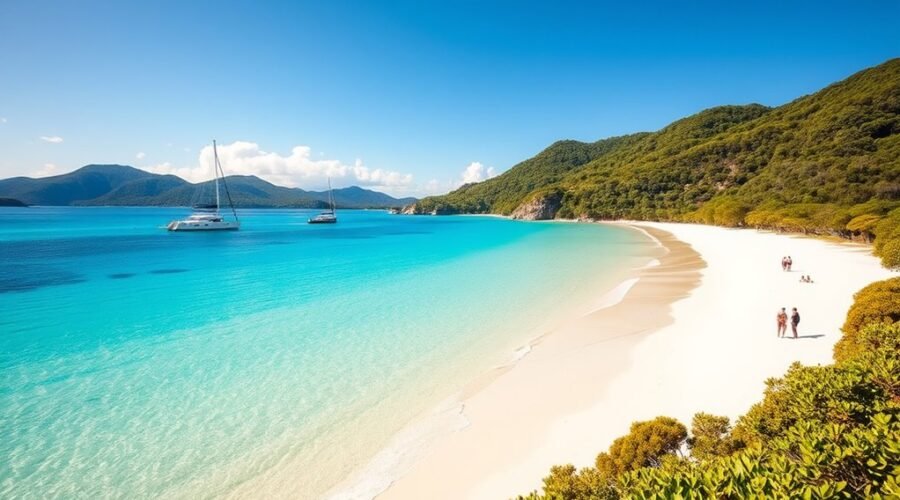
If you want warm, sunny days, calm seas and clearer water for snorkeling or freediving, aim for the shoulder seasons—late April to early June or early September to early November—when crowds thin and prices fall. Mid‑week trips and early or late sailings shave costs further, while refundable bookings 60–90 days out protect you from holiday spikes and cyclone season surprises. Here’s how to time your trip for the best weather, wildlife and value.
Compare our seasonal guides to Queensland, Australia and Southern Great Barrier Reef, Queensland when choosing other stops in Queensland.
Key Takeaways
- Best overall: shoulder months (April–June, Sept–Nov) for warm, sunny days, calm seas, and lower prices than peak season.
- Weather: May–Sept offers crisp, clear water and calm seas ideal for snorkeling and sunset photography.
- Wildlife: April–June brings abundant turtles and reef fish; May–Sept increases manta and dolphin sightings.
- Crowds & costs: Expect higher prices and crowds around New Year, school holidays, and major festivals.
- Booking tip: Travel mid‑week in shoulder months, book refundable fares 60–90 days out, and favor small-boat operators.
Best Time to Visit the Whitsundays : Quick Recommendation
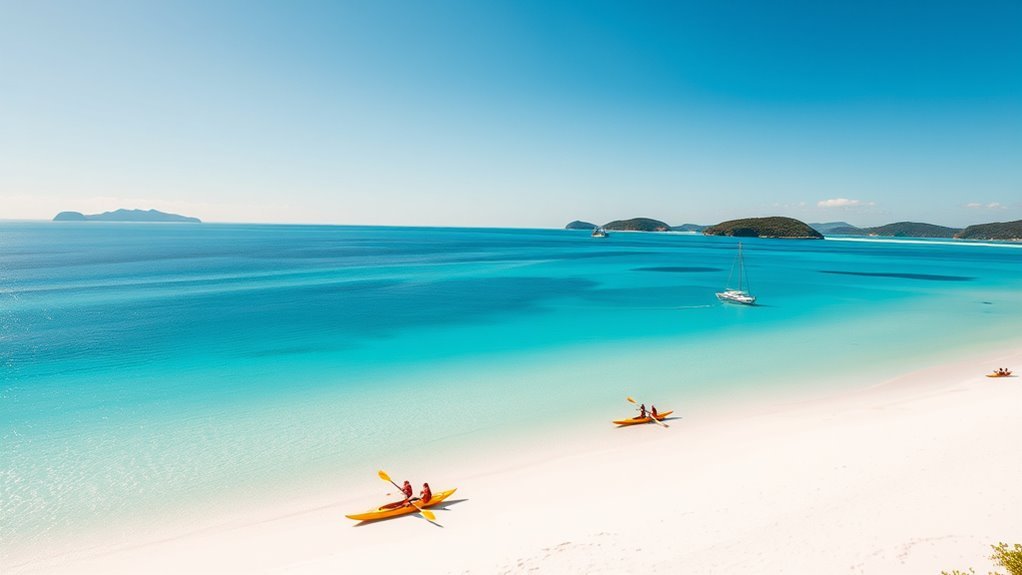
Plan your Whitsundays trip for the shoulder months—April to June or September to November—when you’ll get warm, sunny days, calmer seas, and fewer crowds; these windows strike the best balance between ideal weather for snorkeling and sailing and lower prices than peak season.
You’ll arrive ready to move freely between islands, slipping into turquoise bays and standing on quiet sands without the usual bustle.
Choose mornings for reef dives and afternoons to wander local cultural immersion spots and heritage trails that reveal island stories and old seafaring lore.
Book a small-boat charter or eco-cruise to keep your footprint light and your itinerary flexible—so you can chase deserted coves, kayak through mangrove fringes, or linger at a beachfront café watching light change the horizon.
This timing gives you freedom: better value, gentler waters, and space to explore both wild reefs and cultural corners at your own pace.
Seasonal Weather in the Whitsundays: Months, Seas, and Wildlife
Any month you choose brings its own palette of sky and sea in the Whitsundays, so knowing the seasonal rhythms helps you pick the experience you want. You’ll feel trade-wind tradeoffs: dry winter months (May–Sep) give crisp seas, clearer water and ideal sunset photography; wet summer months (Nov–Mar) warm the air, swell the tides and animate marine flora after rains. Shoulder seasons ease crowds and costs while offering shifting light and migrating wildlife.
| Month Range | Sea State | Wildlife Highlights |
|---|---|---|
| May–Sep | Calm | Manta rays, dolphins |
| Oct–Nov | Variable | Nesting birds, coral bloom |
| Dec–Apr | Livelier | Turtle hatchlings, reef fish |
Plan for liberating days: choose calmer seas to drift with your thoughts, or storm-touched skies to chase dramatic shots. Respect seasonal cues—marine flora reblooms with the rains, and wildlife rhythms dictate your best viewing windows.
Whitsundays Snorkeling & Sailing : Best Months by Activity
Now that you know how seasonal winds and wildlife shape the archipelago, pick months that match the activities you want on the water.
Now that seasonal winds and wildlife shape the archipelago, choose months that match how you want to move on the water.
If you crave calm snorkeling and vivid coral encounters, aim for April to June: seas cool slightly, visibility sharpens, and marine wildlife like turtles and reef fish are abundant.
For freediving and drift‑snorkel thrills, September to November brings warmer water and steady southeast trade winds that keep conditions predictable.
If sailing and feeling wind in your face is liberation, target May to October when trades strengthen and passages are lively but manageable.
Want softer evenings and romance? Book sunset cruises in the shoulder months—March‑April or October—when skies glow and crowds thin, making each horizon feel like your own.
Avoid peak cyclone season for peace of mind.
Match months to how you want to move—quiet observing, playful exploring, or full‑throttle sailing—and the Whitsundays will answer.
Crowds & Costs: Holidays, Events and Cyclone Impacts
While holiday weeks and big events can swell island numbers, you’ll usually feel the difference most at key ferry terminals, popular beaches and on sunset cruises—expect shoulder months to offer the quietest, most economical visits.
You’ll notice festival event pricing spike around New Year’s, school holidays and regional festivals; hotels and tour operators lift rates, and the vibe turns celebratory and crowded.
If you crave freedom, avoid those clustered dates and seek early-morning launches or lesser-known bays where crowds thin and you reclaim space.
Cyclone season adds another cost layer: last-minute itinerary changes, repairs to affected infrastructure and higher insurance premiums for operators can push prices unpredictably.
You’ll want flexible plans and to watch forecasts—cyclones reshape availability and mood, sometimes shutting services.
Ultimately, timing your trip gives you control: pick calm windows to stretch your budget, find solitude on powdery sands, and move through the islands with the liberated rhythm you came for.
Save Money & Avoid Crowds: Booking Windows and Date Strategies
If you want the best deals and quieter shores, book well outside peak holiday windows and aim for midweek arrivals where ferries and tours run under capacity.
You’ll find savings by targeting shoulder months—late April to early June and September to early November—when weather’s pleasant and operators lower prices.
Scan calendars for local festivals so you can choose to join crowd‑free days or celebrate community events without paying peak premiums.
Lock in refundable fares 60–90 days out for budget travel flexibility, then monitor flash sales and weekday departures that shave costs and dodge full boats.
Choose early‑morning or late‑afternoon sailings to avoid tour rushes and claim tranquil beaches.
If you crave liberation, pick staggered stays across islands to escape tourist hubs at dusk and dawn.
Book accommodations with flexible check‑ins and prioritize small operators; they often run fewer guests and offer authentic, quieter experiences without the markup.
Frequently Asked Questions
Can I Swim With Humpback Whales in the Whitsundays?
No — you can’t swim with humpback whales in the Whitsundays; whale watching tours keep distance for marine safety. You’ll witness their power from a boat, feel liberated, inspired, and respectfully connected to wild whales.
Are There Wheelchair-Accessible Beaches and Tours on the Islands?
Yes — you’ll find wheelchair-accessible beaches and adaptive tours across the Whitsundays; islands and operators offer accessiblechair beach access, ramps, boardwalks and tailored adaptive tours so you can freely explore turquoise shores and reef.
Do Any Islands Allow Camping or Overnight Beach Stays?
Yes and no: you can camp on some islands with campsite permits and strict beach fire rules, so you’ll plan, book, and respect limits, embracing freedom while following regulations to keep wild nights safe and shared.
What Vaccinations or Health Precautions Are Recommended Before Traveling?
You should get routine vaccinations, check an updated vaccine schedule, consider hepatitis A and tetanus boosters, and discuss malaria prophylaxis only if visiting remote tropical areas; carry insect repellent, sunscreen, and a basic first-aid kit.
Are There Restrictions for Bringing Drones to the Islands?
Yes—you’ll need drone permits for many Whitsunday areas and must respect designated flight zones; you’ll feel freer photographing reefs from approved airspace, so check local rules, secure permissions, and fly responsibly to avoid fines.
Conclusion
Go when the islands are at their most gently generous: late April–early June or early September–November. You’ll find warm, sunny days, calm seas for snorkeling and sailing, and far fewer people than in high summer — a quieter kind of magic. Book midweek or early-morning sails, grab refundable dates 60–90 days out, and you’ll enjoy better prices and peace of mind, letting the Whitsundays unfold without the usual fanfare.