

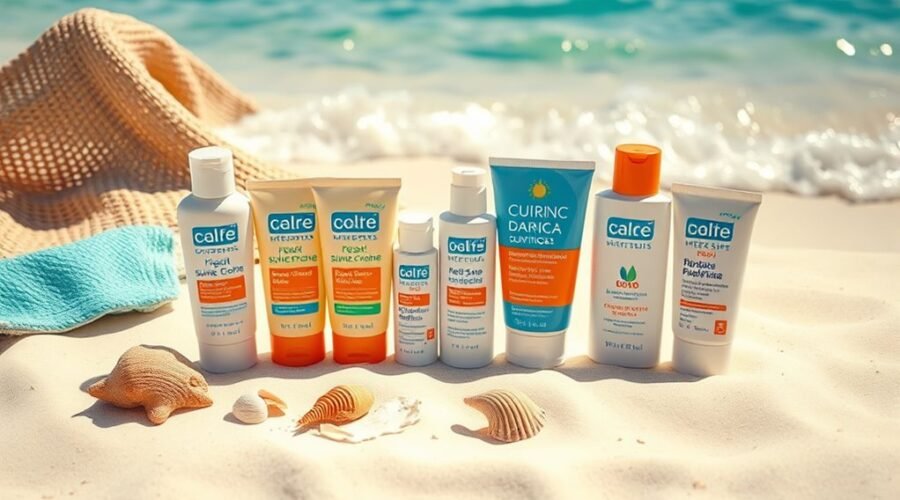
A beach sunscreen comparison needs to distinguish an SPF product from an after-sun moisturiser. It also needs to separate a manufacturer’s “reef-safe” marketing from proof that a complete formula is harmless to marine life. Choose sun protection by its actual label, your intended use and local rules.
The three options below have published manufacturer information for SPF and water resistance. This is a label-based guide, not a Lele Tours wear test, medical endorsement or measured environmental ranking. Confirm the current package, expiry date, ingredients and directions before use.
Three mineral sunscreens to compare
| Product | Published SPF | Labelled water resistance | Important distinction |
|---|---|---|---|
| Kōkua Hawaiian Natural Zinc Sunscreen | 50 | 80 minutes | The SPF sunscreen is different from Kōkua’s after-sun serum |
| Badger Baby Mineral Sunscreen Cream | 40 | 40 minutes | For children under six months, the directions say to ask a doctor |
| Little Hands Hawaii Body & Face Mineral Sunscreen | 35+ | 80 minutes | Original and tinted options differ in appearance; tint can stain fabric |
Kōkua SPF 50: compare the sunscreen, not the serum
Kōkua’s product page identifies this as a broad-spectrum zinc oxide sunscreen with SPF 50 and 80-minute water resistance. Check that the item in your basket is the SPF 50 sunscreen in the intended size. A similar brand name or bottle does not establish the same protection.
Its 80-minute claim is not permission to stay in water indefinitely. Follow the package’s application and reapplication instructions, including reapplying after towel drying. Skin feel, finish and tolerance are individual; the manufacturer’s claims do not establish how it will perform for every user.
Badger Baby SPF 40: read the age and reapplication directions
Badger specifies broad-spectrum SPF 40 and 40-minute water resistance. The brand’s directions call for reapplication after 40 minutes of swimming or sweating, immediately after towel drying and at least every two hours. This is a different interval from the two 80-minute products in the table.
Do not describe it as automatically suitable for newborns. The directions advise asking a doctor for children under six months. Check the full ingredient list and age directions on the package rather than treating “baby”, “natural” or “hypoallergenic” as a guarantee against irritation.
Little Hands Hawaii: choose the exact shade and format
The manufacturer’s 3.4 oz Body & Face listing gives SPF 35+ and 80-minute water resistance, with zinc oxide as the active filter. It offers an original version and several tinted shades. Select the variant deliberately rather than assuming that every product in the brand’s range has the same size or finish.
The manufacturer notes that tinted products can mark clothing. That can matter when packing light-coloured beachwear or towels. Follow the current application directions and reapply when the product is rubbed off or after towel drying.
What “reef-safe” does and does not establish
The National Park Service explains that no sunscreen has been proven completely reef-friendly. A mineral active ingredient or an absence of certain filters does not establish that an entire formula has no environmental effect. Check the destination’s current ingredient and access rules, and avoid touching coral.
Use shade, hats and suitable protective clothing as part of sun protection. Those measures can reduce the amount of exposed skin needing sunscreen. Do not replace adequate skin protection with an unsupported environmental promise.
Water resistance is time limited
FDA guidance rejects “waterproof” and “sweat-proof” sunscreen claims. A product may instead carry a tested 40- or 80-minute water-resistance label. Reapply according to the exact label, at least every two hours, and after towel drying. SPF is not a number of hours that you can safely remain in the sun.
After-sun products are a separate category
Kōkua AfterSun Serum and Badger After Sun Balm are moisturising after-sun products, not SPF sunscreen picks in this comparison. Do not use an after-sun serum or balm as a substitute for sunscreen, protective clothing or shade. This guide does not claim that either product cures sunburn or prevents further UV exposure.
Before buying
- Check the exact product’s SPF, broad-spectrum statement and water-resistance interval.
- Read ingredients, age directions and warnings on the current package.
- Check the expiry date and seller, particularly for remaining or older stock.
- Choose a format you can apply adequately and reapply as directed.
- Check local rules instead of relying solely on “reef-safe” wording.
Sources
- The three linked manufacturer product pages provide the product-specific label information.
- FDA: sunscreen labels and water-resistance claims.
- National Park Service: sun protection and reefs.
- Kōkua: AfterSun Serum product category.



[…] Broad-spectrum sunscreen. […]
[…] midday, pack sunscreen, a hat, and water; shade is scarce and the sun’s […]
[…] Aim for dawn hikes to claim quiet vistas, then retreat midday for shade, water, and sunscreen. […]
[…] sunscreen, a light jacket for cool evenings, and an appetite for casual […]
[…] reef-safe sunscreen and stay […]
[…] protection: A hat, sunscreen, and sunglasses are useful during warmer […]
[…] strong sunshine, busy cafés, and crowded car parks are the main drawbacks. Bring drinking water, sunscreen, and shade for longer outdoor […]
[…] Breathable clothing, sunscreen, a hat, and drinking […]
[…] demand a light jacket plus an umbrella; summers get warm and sun-drenched, so bring swimwear, sunscreen and a hat; and autumn cools into crisp, windier days ideal for a windbreaker and sturdy shoes for […]
[…] Bring sunscreen […]
[…] the calendar in mind: lightweight layers, a windproof shell, sturdy walking shoes and reef-safe sunscreen will cover most summer and shoulder-season needs, while a warm insulated jacket, thermal base […]