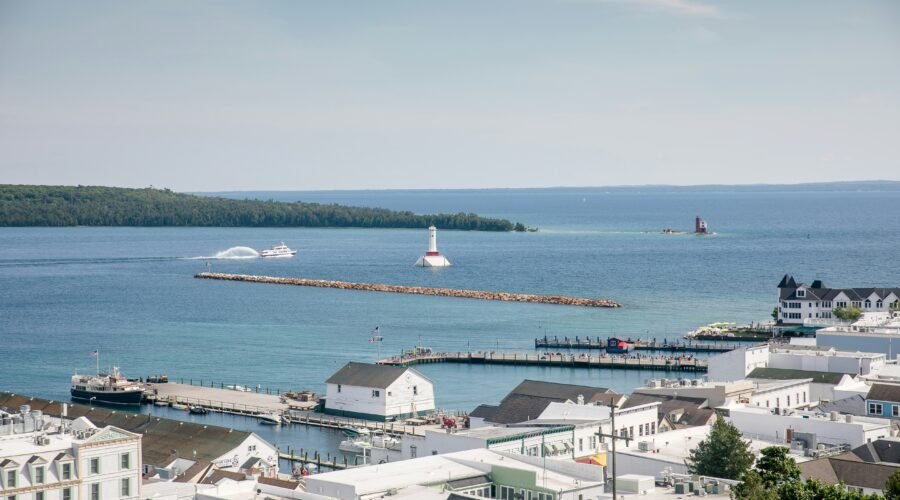
The best time to visit Mackinac Island depends on what you want from your trip. Choose late May to early June for vibrant spring scenery and lighter crowds, September for crisp sightseeing weather, or July and August for the energetic peak summer resort season. Early October offers striking fall foliage, though historic sites and restaurants begin shuttering as winter approaches.
Located in the Straits of Mackinac between Michigan’s Upper and Lower Peninsulas, Mackinac Island prohibits personal motor vehicles. Visitors travel on foot, by bicycle, or in horse-drawn carriages. Picking the right travel window helps balance pleasant Great Lakes weather, sidewalk traffic, hotel pricing, and ferry schedules.
Quick Answer
For most first-time travelers, late May to early June or September is the best time to visit Mackinac Island. These shoulder windows offer comfortable daytime temperatures, lighter sidewalk congestion, and fully operating attractions. Summer (July and August) provides classic resort warmth and vibrant nightlife, while early October offers colorful fall foliage before seasonal closures begin.
Last checked: September 29, 2026. Dates and figures were verified against official sources.
Key Takeaways
- Peak Season (Late June–August): Warm summer days in the 70s, packed downtown docks, and a full calendar of historic reenactments and sailing races. Book rooms months ahead.
- Shoulder Season (May & September–October): Mild cycling weather, blooming lilacs in June, and crisp autumn foliage in October. Lodging rates drop noticeably outside holiday weekends.
- Crowd Control: Arriving Tuesday through Thursday avoids the heavy weekend influx of regional day-trippers. Staying overnight unlocks peaceful mornings and evenings.
- Transportation Basics: Passenger ferries run from Mackinaw City and St. Ignace. Budget $26 to $39 per adult round trip, plus mainland parking and bicycle transfer fees.
- October Operating Limits: Attractions close progressively through October; Fort Mackinac closes October 24 in 2026, and many shops close before November.
1. Best Time to Visit Mackinac Island by Season
Mackinac Island’s primary tourism season spans from early May through late October. While the island remains accessible year-round for its small resident community, regular ferry crossings drop sharply and nearly all hotels, restaurants, and historic sites close during the snowy winter months.
Matching your travel priorities to the seasonal shifts outlined below will ensure you get the experience you expect.
| Season | Typical Conditions | Crowd Level | Planning Considerations | Best For |
|---|---|---|---|---|
| Spring (May–Early June) | Crisp days, chilly evenings, blooming lilacs | Low to moderate; surges during Lilac Festival | Businesses reopen gradually; lake breezes feel cold | Sightseeing, photography, budget travelers |
| Summer (Mid-June–August) | Warm afternoons (70s°F), sunny skies | High; crowded downtown streets and docks | Premium room rates; book tours and hotels early | Families, outdoor recreation, resort dining |
| Fall (September–Late October) | Brisk air, brilliant foliage, shorter days | Moderate in September; drops in mid-October | Check closing dates for historic sites and dining | Couples, hiking, cycling, leaf-peeping |
| Winter (November–April) | Freezing temperatures, heavy snow, lake ice | Very low (residents and occasional visitors) | Most businesses shut down; flights may replace ferries | Solitude, cross-country skiing, snowshoeing |
For up-to-date business hours and openings, consult the Mackinac Island seasonal updates and the Mackinac State Historic Parks operating calendar.
Spring (May to Early June)
Spring marks the island’s emergence from winter dormancy. Ferries increase sailing frequencies, garden beds flourish, and historic sites open their doors to travelers.
- Pros: Moderate crowds, blooming flowers, lower room rates than midsummer, and easy sidewalk walking.
- Cons: Chilly lake breezes, unpredictable showers, and limited evening dining hours early in May.
- Ideal for: Budget travelers, couples, birdwatchers, and flower enthusiasts.
The annual Lilac Festival in June brings a marked spike in visitor volume. If you want a peaceful spring escape, plan your stay outside this 10-day window.
Summer (Mid-June to August)
Summer delivers long daylight hours, vibrant street energy, and reliable warmth. Every museum, carriage company, bike rental stand, and waterfront patio operates at maximum capacity.
- Pros: Warmest weather of the year, all attractions open daily, and ideal conditions for cycling the 8.2-mile M-185 shoreline loop.
- Cons: Peak hotel pricing, busy bike paths, crowded ferry docks, and heavy daytime pedestrian traffic.
- Ideal for: Families on summer school breaks, festival attendees, and classic resort vacations.
Midweek visits during July and August offer noticeable relief from weekend crowds and help secure reservations at popular restaurants.
Fall (September to Late October)
September provides mild temperatures and reduced crowd sizes once primary school resumes. In October, autumn colors ignite the hardwood canopies throughout the state park interior.
- Pros: Crisp hiking temperatures, stunning fall colors, discounted late-season room rates, and quiet evening streets.
- Cons: Reduced ferry departure schedules, chilly nights requiring heavy coats, and rolling business shutdowns.
- Ideal for: Active hikers, road cyclists, photographers, and couples seeking autumn scenery.
Plan around specific attraction schedules. In 2026, Fort Mackinac closes for the season on October 24, with several private inns and restaurants finishing their seasons earlier in the month. Review the Tourism Bureau’s October guide when planning an autumn itinerary.
Key Annual Events to Plan Around
Large events bring temporary surges in crowd density and lodging rates. The published dates below reflect the 2026 schedule:
- Mackinac Island Lilac Festival (June 5–14, 2026): A 10-day celebration with walking tours, equine presentations, and the signature Grand Parade. Published dates for next year are June 4–13, 2027.
- Chicago Yacht Club Race to Mackinac (July 10–14, 2026): Hundreds of racing sailboats cross Lake Michigan, filling the harbor and downtown hotels.
- Bayview Mackinac Race (July 18–21, 2026): The classic Lake Huron race that draws sailing crews and spectators to the docks.
- Fall Fudge Festival (October 2–3, 2026): A seasonal weekend featuring fudge-making demonstrations, autumn hayrides, and family activities.
- Great Turtle Trail Run (October 24, 2026): A scenic half-marathon and 5.7-mile race traversing the interior park trails on the final major weekend of the main tourist season.
Before confirming nonrefundable reservations, verify upcoming festivals on the official annual events calendar.
Pro Tip: Compare Tuesday-through-Thursday room rates with Friday-to-Sunday rates. Midweek visitors often save 20% to 40% on boutique accommodations while avoiding the midday ferry congestion of weekend day-trippers.
2. Mackinac Island Weather by Month and What to Pack
Mackinac Island features a temperate maritime climate moderated by Lake Huron and Lake Michigan. Water temperatures keep spring days cool and delay early summer heat, while open waters buffer sudden temperature drops into early autumn.
The monthly averages below reflect long-term climate data from the NOAA National Centers for Environmental Information recorded in the Straits of Mackinac.
| Month | Average High | Average Low | Precipitation | General Weather Conditions |
|---|---|---|---|---|
| May | 61°F (16°C) | 41°F (5°C) | 2.5 in | Cool lake breezes; blooming flowers; jacket needed |
| June | 70°F (21°C) | 51°F (11°C) | 2.6 in | Pleasantly warm days; cool evenings; lilac blooms |
| July | 76°F (24°C) | 57°F (14°C) | 2.7 in | Warmest month; comfortable humidity; sunny |
| August | 74°F (23°C) | 57°F (14°C) | 2.8 in | Warm afternoons; cooling evenings late in month |
| September | 67°F (19°C) | 50°F (10°C) | 3.0 in | Crisp mornings; sunny days; optimal cycling weather |
| October | 54°F (12°C) | 39°F (4°C) | 3.2 in | Chilly and windy; peak foliage; layers required |
| Nov–Apr (Winter) | 25°F–42°F | 11°F–30°F | 1.1–2.4 in/mo | Freezing temperatures; heavy snow (~87 in annual) |
For seasonal travel recommendations, consult the Mackinac Island Tourism Bureau’s weather overview. Live weather forecasts and marine storm watches can be tracked through the National Weather Service.
Warning: Ferry operations across the Straits of Mackinac depend entirely on wind, fog, and water conditions. High winds can cause rough open-air crossings or schedule delays; always confirm operating statuses before departing the mainland docks.
Packing Essentials
- Layered Windproof Outerwear: Even during July and August, open-air ferry crossings and evening shoreline walks bring brisk winds. Pack a light windbreaker and a warm fleece.
- Comfortable Walking Shoes: With zero motorized transit, expect to walk several miles daily across pavement, wooden boardwalks, and crushed-limestone trails.
- Sun and Glare Protection: Sunlight reflects strongly off Lake Huron. Bring sunglasses, broad-spectrum sunscreen, and a secure hat that will not blow off on breezy ferry decks.
- Compact Daypack: Useful for carrying water bottles, extra layers, rain gear, and purchases while bicycling the perimeter road.
3. When Is Mackinac Island Least Crowded?
Mackinac Island is least crowded between November and April, but for visitors wanting open attractions, the quietest months are May and September. Outside holiday weekends and the June Lilac Festival, shoulder-season weekdays provide open pathways and peaceful cycling.
Day-Tripper Waves vs. Overnight Stays
Peak crowd congestion on the island follows a predictable daily rhythm. Ferries deposit thousands of day-trippers onto Main Street starting around 10:00 AM, with downtown remaining busy until roughly 5:00 PM.
Overnight guests gain access to the island’s best hours. Before 9:30 AM and after 6:00 PM, Main Street empties out, bicycle paths clear, and historic sites offer unhurried views.
Weekday vs. Weekend Visits
Regional visitors from Michigan and neighboring states travel heavily on weekends. Visiting between Monday and Thursday delivers shorter lines for carriage tours, immediate bike rentals, and easier dining access.
Arriving at popular photography spots like Arch Rock or Fort Mackinac before 10:00 AM ensures you avoid crowds regardless of the day of the week.
Note: Over 80% of the island is preserved within Mackinac Island State Park. When downtown streets feel congested, exploring the limestone bluffs, Fort Holmes, and interior forested trails provides immediate seclusion.
4. How Much Does a Mackinac Island Trip Cost?
A vacation to Mackinac Island ranges from an economical $120 day trip to over $900 per night for historic luxury resorts. Total expenses depend on lodging choices, dining styles, and whether you stay on the island or mainland.
The prices below reflect published 2026 operational rates across ferry operators and island services.
Accommodation Options
- Historic Luxury (e.g., Grand Hotel): High-end resorts average $500 to $1,000+ per night. Check if rates include multi-course dinners, resort fees, baggage transfers, and 19.5% hotel taxes.
- On-Island Boutique Hotels & Inns: Historic downtown hotels and bed-and-breakfasts typically range from $220 to $480 per night during peak summer, dropping to $140 to $280 in May and October.
- Mainland Accommodations (Mackinaw City or St. Ignace): Mainland motels cost $90 to $200 per night. While cheaper, factor in round-trip ferry tickets, mainland parking, and the extra 45 minutes of transit each day.
Browse current lodging availability directly on the Mackinac Island Tourism Bureau hotel portal.
Transportation & Activity Expenses
- Round-Trip Passenger Ferries: Shepler’s lists published 2026 basic adult round trips at $39 and child tickets (ages 5–12) at $27, plus a $2 online booking fee per ticket. Arnold Transit offers traditional fast ferry round trips at $37 for adults ($25 for children) and classic ferry service from St. Ignace for $26 ($19 for children).
- Mainland Vehicle Parking: Shepler’s published 2026 day parking is $15 per vehicle. Standard overnight parking is $25 per night, with premium secured lots priced at $50 or $75 per night depending on day and demand.
- Bicycle Rentals & Transfers: Hourly bike rentals on the island average $10 to $15 per hour, or $40 to $70 per day. Transporting your personal bicycle via ferry costs $19 round trip on Arnold Transit (which includes the $2 municipal licensing fee).
- Horse-Drawn Carriage Tours: The official 2026 visitor guide lists public carriage tours with Mackinac Island Carriage Tours at $46 for adults and $17 for children ages 5–12 (children under 4 ride free on laps). Private carriage rentals start around $150 to $200 per hour.
- Historic Site Admission: Entry to Fort Mackinac costs $17.50 for adults and $10.50 for children (ages 5–12), with kids 4 and under admitted free.
Review the official pages for Shepler’s ticket and parking information, Arnold Transit fares, and Mackinac State Historic Parks admission information for schedule changes.
Sample Daily Budget Scenarios (Per Person, Excluding Long-Distance Travel)
The daily scenarios below help estimate trip expenses. Ferry fares are paid once as a round-trip ticket, while lodging and parking divide among traveling companions.
| Expense Item | Budget Day-Tripper | Mid-Range On-Island | Luxury Island Resort |
|---|---|---|---|
| Lodging | $0 (Stay mainland or home) | $140–$250 (split room) | $400–$800+ (resort package) |
| Food & Dining | $25–$40 (Doud’s Market / casual) | $75–$120 (Sit-down cafes & pubs) | $150–$250+ (Fine dining / included) |
| Ferry & Local Transit | $39 (Ferry) + $15 (Day parking) | $39 (Ferry) + $12.50 (Overnight split) | $39 (Ferry) + $37.50 (Premium split) |
| Activities & Sights | $0–$19 (Own bike or state trails) | $46–$65 (Carriage tour or Fort entry) | $100–$250 (Golf, spa, private buggy) |
| Estimated Total / Day | $79–$113 per person | $290–$486 per person | $689–$1,337+ per person |
5. Essential Planning & Travel Logistics
Because cars were banned in 1898, travel logistics require more thought than typical destinations. Planning ferry arrivals, luggage transfers, and on-island mobility ensures a seamless journey.
Ferry Logistics & Mainland Dock Gateways
Passenger ferries depart regularly from two mainland ports: Mackinaw City (Lower Peninsula) and St. Ignace (Upper Peninsula). The two primary ferry companies are Shepler’s Mackinac Island Ferry and Arnold Transit Company.
Standard high-speed catamarans reach the island in 15 to 20 minutes, while classic sightseeing departures routed beneath the Mackinac Bridge take 35 to 45 minutes.
- Luggage Transfers: When you arrive at the mainland ferry dock, staff tag your luggage with your island hotel. Dock porters load the bags onto ferries and deliver them to participating island hotels via horse-drawn cart. Confirm your hotel’s porter service before arrival.
- Airport Connections: The closest commercial airport with airline service is Pellston Regional Airport (PLN), roughly 15 miles south of Mackinaw City, with shuttle connections to the docks. Chippewa County International Airport (CIU) sits 35 miles north in Sault Ste. Marie.
- Winter Travel: Arnold Transit runs limited winter ferries based on ice conditions. When the Straits freeze, Great Lakes Air provides charter flights from St. Ignace directly to the island’s airstrip.
Review comprehensive transfer details in the official Mackinac Island transportation guide.
What Should Day-Trippers Check Before Boarding?
Always photograph or verify the final departure time for your mainland ferry before heading out to explore. The last boats generally depart between 6:00 PM and 9:00 PM depending on the season, and missing the final boat leaves you stranded without transport.
If you rent a bicycle downtown, return it at least 45 minutes before departure to account for dock walk-up lines and boarding calls.
On-Island Rules & Local Etiquette
- Horse Right-of-Way: Horses always have the absolute right-of-way. Give teams a wide berth, never make sudden loud noises near working horses, and do not pet them without the driver’s permission.
- E-Bike Prohibitions: Standard electric bicycles and throttled scooters are strictly illegal on Mackinac Island. Only individuals with qualifying mobility disabilities holding an approved city license may operate a Class 1 pedal-assist bicycle. Check the current e-cycle requirements before bringing any electric vehicle.
- M-185 Shoreline Rules: Michigan State Highway M-185 is the nation’s only motor-free state highway. Ride single-file when other cyclists approach, pass on the left with a bell or verbal warning, and dismount when passing stopped carriages.
Is One Day Enough for Mackinac Island?
One full day is sufficient for a first-time introduction. A day trip allows you to walk through downtown, sample world-famous fudge, take a horse-drawn tour, and cycle the 8.2-mile shoreline perimeter.
However, spending at least one night allows you to hike the interior bluffs, visit the art museums, and experience the car-free tranquility of the island after day-trippers return to the mainland.
Frequently Asked Questions
What is the best time to visit Mackinac Island, Michigan?
Late May to early June and September offer the best balance of open attractions and lighter crowds. July and August suit travelers who want warm weather and lively resort nightlife. Early October is ideal for fall foliage, though some businesses begin closing.
What is the weather like on Mackinac Island throughout the year?
Mackinac Island experiences four distinct seasons shaped by the Great Lakes. Spring is cool with highs around 60°F, summer reaches the mid-70s with pleasant lake breezes, fall is crisp in the 50s and 60s, and winter brings freezing temperatures and heavy snow.
When are the peak tourist seasons on Mackinac Island?
Peak season runs from late June through late August. Major events like the Lilac Festival in June, yacht races in July, and Labor Day weekend create peak crowd levels and the highest accommodation rates of the year.
When is the off-peak season on Mackinac Island?
November through April is the official off-peak season. Most hotels, restaurants, and tourist attractions close, leaving only a few businesses open for local residents. Ferry service is minimal and dependent on winter ice.
How does the cost of visiting Mackinac Island vary throughout the year?
Lodging prices peak in July and August at $300 to $800+ per night. Shoulder season rates in May, September, and October drop by 30% to 50%. Day-trip ferry and parking fees remain consistent throughout the active operating season.
Is October too late to visit Mackinac Island?
No, early to mid-October is a wonderful time to visit for vibrant fall foliage and quiet trails. However, you must check individual business schedules, as Fort Mackinac and several restaurants close after the third or fourth week of October.
Is one day enough to visit Mackinac Island?
One day is enough to walk downtown, take a historic carriage tour, and cycle the perimeter highway. Staying overnight gives you access to peaceful early mornings, evening dining, and interior forest trails without day-tripper crowds.
Sources
- Mackinac Island Tourism Bureau: Official seasonal planning resources, lodging guides, and events.
- Official Annual Events Calendar: Published dates for the Lilac Festival, races, and autumn runs.
- Mackinac Island Seasonal Updates: Operating dates and end-of-season closures.
- Mackinac State Historic Parks: Operating calendar and seasonal historic site hours.
- Shepler’s Mackinac Island Ferry: Published passenger ticket fares and mainland parking charges.
- Arnold Transit Company: Fast ferry, classic ferry, and bicycle transit pricing.
- Mackinac Island E-Cycle Regulations: City ordinances governing mobility aids and electric bikes.
- Official 2026 Mackinac Island Visitor Map: Published carriage tour rates and landmark locations.
- NOAA National Centers for Environmental Information: Climate normals, temperature averages, and precipitation data for the Straits of Mackinac.