In 2027, two belay glasses stand out for rock climbers with different priorities. The Belay Glasses – Hot Pink offer a lightweight build, yet their weak customer rating raises concerns. BG Climbing Belay Glasses, by contrast, pair a durable frame with quality prismatic lenses and useful accessories. Their 60° prism angle also supports better comfort on long belays. The real difference becomes clearer when the key features are compared side by side.
Belay Glasses – Hot Pink
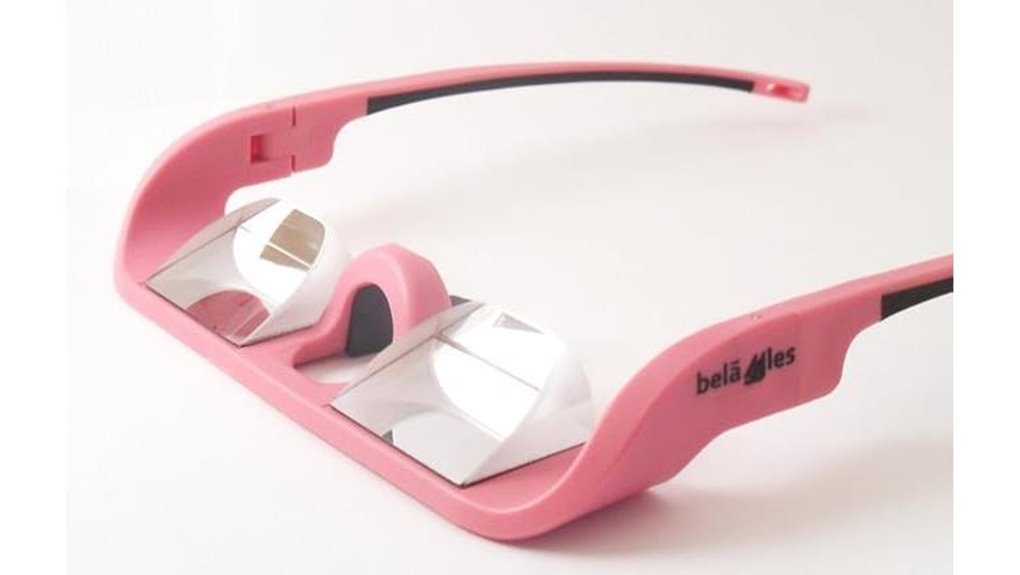
The Belaggles Belay Glasses – Hot Pink stand out as a lightweight option for climbers who want simple, easy-to-wear belay eyewear without added bulk. Built by Belaggles, this model measures 7.99 x 4.02 x 2.01 inches and weighs 7.2 ounces, making it relatively compact for regular use. Its main selling point is comfort, supported by a lightweight design intended to reduce strain during belaying. The product is sold as a single unit and identified by UPC 852662648621 and ASIN B00C5ULMCS. Customer feedback is significantly weak, with a 1.0-star rating overall.
Best For: Climbers who want a lightweight, easy-to-wear pair of belay glasses for basic use without extra bulk.
Pros:
- Lightweight design helps reduce strain and improve comfort during belaying.
- Compact size makes it relatively easy to carry and use regularly.
- Sold as a single unit with clear product identification details.
Cons:
- Very poor customer rating at 1.0 out of 5 stars.
- Limited evidence of strong performance or reliability from user feedback.
- Hot pink styling may not appeal to everyone.
BG Climbing – Belay Glasses for Rock Climbing
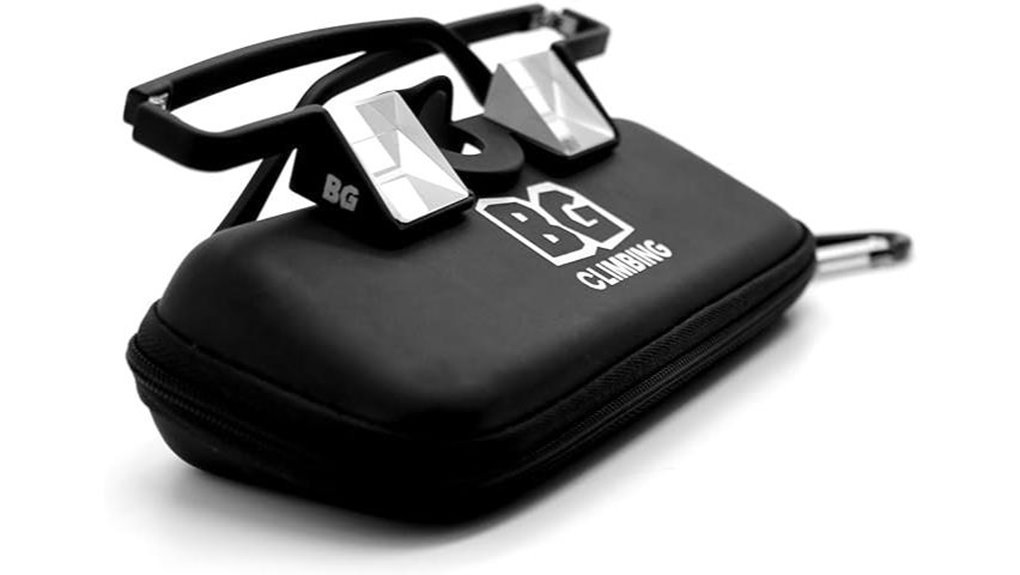
BG Climbing’s belay glasses suit climbers wanting reduced neck strain and a comfortable over-the-eyeglasses fit. The model 123456 uses a black rectangular full-rim frame with a 60° prism angle for belaying efficiency. BK7 prisms, tempered glass, plastic, and stainless steel support durability, while UV coating adds lens protection. A hard case with carabiner, neck strap, microfiber cloth, and spare screws improve practicality. At 0.09 kg, the one-size design targets rock climbing use. Strict quality checks aim for defect-free output, and care is simple: wipe clean with the included microfiber cloth after use.
Best For: Rock climbers who want a lightweight, one-size-fits-all belay glasses setup that reduces neck strain and fits comfortably over eyeglasses or sunglasses.
Pros:
- 60° prism angle improves belaying comfort and visibility.
- Fits over eyeglasses and sunglasses for added versatility.
- Includes useful accessories like a hard case, carabiner, neck strap, microfiber cloth, and spare screws.
Cons:
- One-size design may not suit every face shape perfectly.
- Belay glasses add an extra item to carry and maintain.
- Requires careful cleaning and handling to protect the prisms and coating.
Factors to Consider When Choosing Belay Glasses 2026: Top Picks for Rock Climbing
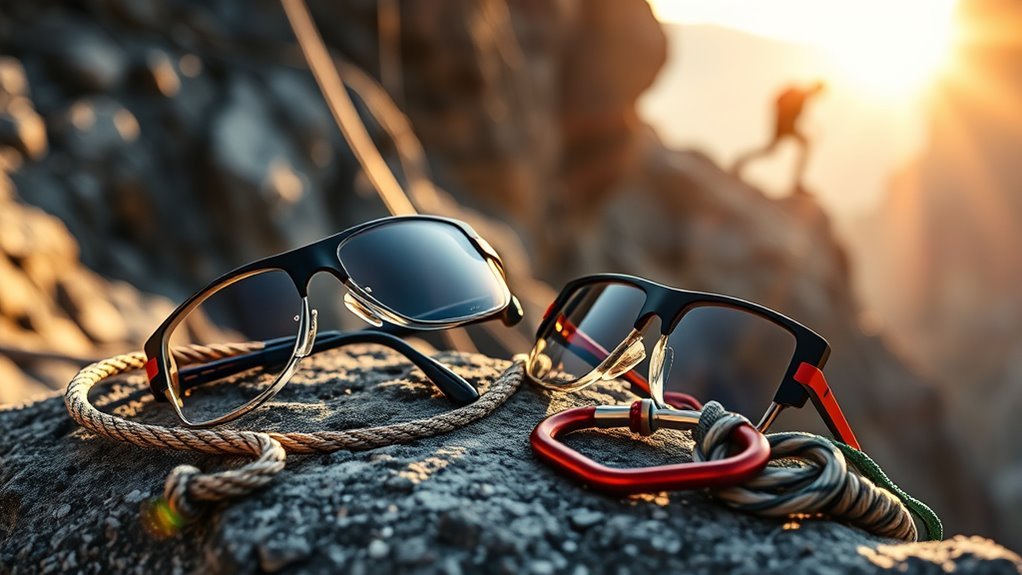
When selecting belay glasses in 2026, prismatic lens quality remains central because it affects clarity and neck strain during long belays. Comfort and fit, frame durability, packaged accessories, and UV protection also shape how well a model performs in real climbing conditions. The strongest top picks balance sharp optics with a secure feel, rugged construction, and practical extras for daily use.
Prismatic Lens Quality
Crystal-clear prisms make a noticeable difference in belay glasses, since lens quality directly shapes depth perception and visual sharpness while keeping the climber in view. Prismatic quality determines whether the image appears clean or distorted, which affects how confidently a belayer tracks movement on the wall. Materials matter as well: BK7 prisms and tempered glass generally offer better durability and fewer optical aberrations than weaker alternatives. A UV-protective coating adds another important layer, shielding eyes during long outdoor sessions. Prism angles, often near 60 degrees, are chosen to reduce neck strain while maintaining a practical line of sight. Consistent quality control also matters, because even small defects can compromise performance, clarity, and safety during repeated climbing use.
Comfort And Fit
Comfort and fit can make or break the belay-glasses experience, especially during long climbing sessions. A lightweight build helps minimize pressure on the face and reduces fatigue when the device is worn for extended periods. Proper sizing matters as well, since belay glasses should sit securely without pinching and should work comfortably with prescription eyewear. Lens angle also influences comfort; a well-set 60° angle can improve downward visibility while easing neck tension during belays. User comfort is further supported by quality optics and coatings, which help maintain clear vision. Practical extras, such as a neck strap or hard case, add convenience by making transport and storage easier between climbs.
Frame Durability
Frame durability is a major consideration for belay glasses, since they need to handle outdoor use, frequent packing, and the occasional drop without losing alignment or integrity. High-quality plastic and stainless steel are common choices because they resist wear while keeping the frame light enough for long sessions. Full rim designs usually offer more protection and structural stability than half-rim options, which can be useful when glasses are handled often on belay. Careful manufacturing also matters; regular quality control helps reduce defects that could weaken the frame over time. UV-protective coatings further support durability by shielding lenses from harsh sunlight, helping the glasses stay effective in demanding climbing conditions.
Packaged Accessories
Practical accessories can make a meaningful difference in how well belay glasses hold up in regular climbing use. A hard case is one of the most valuable additions, shielding the glasses during transport and storage so frames and lenses stay protected between sessions. A neck strap adds convenience by keeping the glasses secure and easy to reach while moving around the crag. Many models also include a microfiber cleaning cloth, which helps preserve lens clarity through routine maintenance. Spare screws are a useful bonus, since they allow quick replacement if hardware loosens or goes missing. Some brands further improve portability by adding a carabiner to the case, letting climbers clip the package to a harness or gear loop and reduce the chance of accidental drops.
UV Protection
Beyond accessories and storage, lens performance matters just as much when comparing belay glasses. UV protection ranks among the most important lens features because it helps shield eyes from harmful ultraviolet rays linked to long-term damage and cataract risk. Quality models usually include UV-protective coatings that support comfort during extended outdoor belaying. Climbing-focused lenses should ideally block 99% to 100% of both UVA and UVB rays, offering a strong defense against sun exposure on bright walls. This level of protection also helps preserve visual clarity and reduce glare, which can improve focus on route movement. Anti-reflective coatings add another advantage by minimizing surface reflections and increasing contrast, making details easier to see in changing light conditions during long climbing sessions.
Belay Angle Design
Belay angle design plays a major role in comfort and visibility, with most models set between 45° and 60° to keep the climber in view while limiting neck strain. This range helps belayers maintain a clear line of sight without constant head tilting, which is especially valuable on longer routes. A 60° angle is often viewed as ideal because it supports easy observation with minimal movement. A well-balanced angle also promotes a stable, relaxed belaying posture, reducing fatigue over time. Many designs are shaped to fit over prescription eyeglasses, broadening usability. Material quality matters as well, since better prisms can improve image clarity and reduce distortion, making the viewing experience more accurate and dependable.
Frequently Asked Questions
Do Belay Glasses Work With Prescription Eyeglasses?
Yes, most belay glasses fit over prescription eyeglasses, though sizing varies. Some models accommodate frames comfortably, while others do not. Careful checking of bridge width, lens position, and temple clearance helps guarantee proper use.
Can Belay Glasses Be Used for Indoor Climbing Gyms?
Like a steady lighthouse in a bustling harbor, belay glasses can be used in indoor climbing gyms, as long as helmet rules and sightlines permit. They help reduce neck strain while watching climbers above.
How Do You Clean Belay Glasses Safely?
They should be cleaned with a microfiber cloth, mild soap, and lukewarm water, then air-dried. Harsh chemicals, abrasive pads, and hot water should be avoided to protect coatings, frames, and prisms.
Are Belay Glasses Allowed in All Climbing Competitions?
No, belay glasses are not allowed in all climbing competitions. Some events permit them for belaying, while others restrict accessories for safety or visibility reasons. Competitors should check each federation’s rules and specific event regulations.
What Is the Average Lifespan of Belay Glasses?
Belay glasses typically last three to five years, though frames and prisms can survive longer with careful use. Scratches, loose hinges, and damaged coatings usually shorten service life more than simple age.
Conclusion
In 2027, the choice between these belay glasses is clear. Belay Glasses – Hot Pink may look light and lively, but its poor customer rating leaves much to be desired. BG Climbing Belay Glasses, by contrast, stand like a reliable anchor—offering sharp prismatic lenses, a sturdy frame, and helpful accessories. For climbers seeking comfort, durability, and less neck strain, BG Climbing rises above the rest as the stronger, safer pick.