In 2027, gluten-free freeze-dried meals for camping are expected to focus on convenience, nutrition, and cleaner ingredients. OMEALS Chickpea Masala and Farm to Summit Thai Carrot Slaw stand out for different reasons, with one emphasizing self-heating ease and the other prioritizing real food and sustainability. The choice is not obvious, especially when certification, shelf life, and packaging also come into play.
OMEALS Chickpea Masala MRE 6 Pack
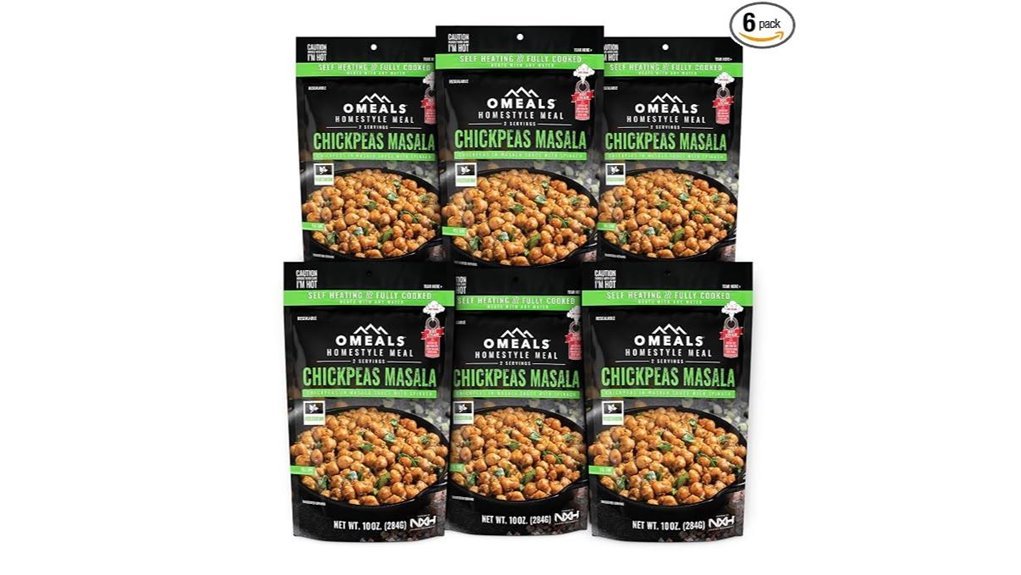
The OMEALS Chickpea Masala MRE 6 Pack stands out as a strong option for campers who want a gluten-free, vegan-friendly meal with minimal effort. It offers a fully cooked chickpea masala made with curry spices and sautéed spinach, delivering familiar Indian-inspired flavor without complicated preparation. The lightweight, tamper-proof pouches include utensils and can be eaten directly from the package. NHX heating technology warms each meal in about five minutes with any liquid. With a three-year shelf life and U.S.-made, HACCP-certified quality, it suits camping and emergency storage alike.
Best For: Campers, travelers, and emergency-preparedness users who want a lightweight, gluten-free, vegan meal that heats quickly with minimal cleanup.
Pros:
- Fully cooked chickpea masala with curry spices and sautéed spinach for a flavorful plant-based meal
- Self-heats in about 5 minutes with any liquid, making it convenient in the field or during emergencies
- Tamper-proof, waterproof pouches include utensils and have a long three-year shelf life
Cons:
- Single-flavor meal option may not appeal to those wanting more variety
- Requires access to some liquid for heating, which may be inconvenient in very dry situations
- Packaged meal format may be less satisfying than fresh-cooked food for regular use
Farm to Summit Thai Carrot Slaw (2-Serving)
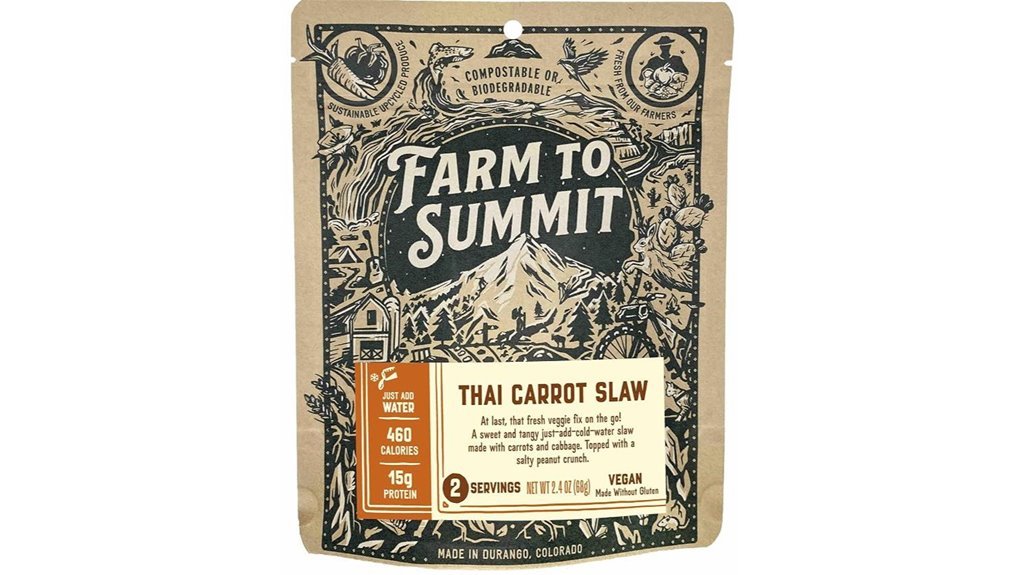
Farm to Summit Thai Carrot Slaw suits gluten-free campers seeking a quick, no-cook meal with real ingredients. The two-serving dehydrated mix is vegetarian and vegan, and it goes from pouch to plate with hot water, or cold water for a cold soak. Made in small batches from local farm produce and upcycled vegetables, it avoids added preservatives while preserving texture and flavor. The meal is designed to deliver calories and nutrients for outdoor energy, with an 18 to 24 month shelf life. Its compostable pouch and 2% profit donation add sustainability and social value.
Best For: Gluten-free, vegetarian, or vegan campers and backpackers who want a quick, no-cook dehydrated meal made with real ingredients and minimal cleanup.
Pros:
- Easy to prepare with just hot water, and it can also be cold-soaked.
- Made with local farm produce and upcycled vegetables, with no added preservatives.
- Compostable pouch and 2% of profits donated to fight food insecurity.
Cons:
- Only makes two servings, so it may not be enough for larger groups.
- Dehydrated slaw may not appeal to everyone’s taste or texture preferences.
- Requires water and time to rehydrate, so it’s not an instant ready-to-eat option.
Factors to Consider When Choosing Gluten-Free Freeze-Dried Meals 2026 for Camping and Backpacking
When choosing gluten-free freeze-dried meals for camping and backpacking in 2026, attention often begins with gluten-free certification and the quality of ingredients. Ease of preparation also matters, since simple cooking steps can save time and effort on the trail. Shelf life and nutrition density remain important, helping guarantee the meals are both practical and sustaining.
Gluten-Free Certification
Certified gluten-free labeling is one of the most important checks for camping and backpacking meals, since it indicates the product meets strict standards of 20 parts per million of gluten or less. Certification also signals that the meal was processed in a facility designed to reduce cross-contamination, which matters for people with celiac disease or gluten sensitivity. Reputable seals from organizations such as the Gluten-Free Certification Organization or the National Celiac Association can provide added confidence because they rely on testing and review. Packaging should also be tamper-proof and display a clear expiration date, since storage conditions can affect product safety. It is equally important to distinguish gluten-free from gluten-removed products, because the latter may still contain trace gluten and cause reactions in sensitive individuals.
Ingredient Quality
Ingredient quality plays a major role in choosing gluten-free freeze-dried meals for camping and backpacking, because meals made with real, whole ingredients generally deliver better flavor and more nutrition than those built around artificial additives or preservatives. Prioritizing meals with high-quality grains or legumes can improve protein intake and support a balanced nutritional profile. Options that feature fresh produce often provide stronger taste and better micronutrient value, especially when sourced from local farms. Ingredient sourcing also matters; meals made with upcycled vegetables can help reduce food waste while supporting sustainability goals. Certifications or quality claims such as organic or non-GMO may also indicate stricter production standards. Careful attention to ingredient lists helps campers choose meals that are both nutritious and dependable in the backcountry.
Preparation Ease
After ingredient quality, preparation ease becomes the next practical filter for gluten-free freeze-dried meals on camping and backpacking trips. Meals that need only water are often preferred because they reduce setup time and conserve energy at camp. Some options can be eaten directly from the package, which removes the need for extra cookware and simplifies cleanup. Quick cooking times, ideally within five to ten minutes, also help travelers eat without long delays after a strenuous day. Cold-soak compatibility adds useful flexibility when a stove is unavailable or fire restrictions apply. Lightweight, tamper-proof packaging further improves convenience by making the meal easier to carry and better protected from outdoor conditions. Together, these features support efficient meal preparation in the backcountry.
Shelf Life
Shelf life is a practical marker of how well a gluten-free freeze-dried meal will serve on camping and backpacking trips. Most products last 18 months to more than three years, but longevity depends heavily on storage and packaging quality. Cooler, darker places slow deterioration, while heat, humidity, and light can shorten freshness. Vacuum-sealed pouches add protection by limiting oxygen, which helps preserve flavor and reduce spoilage. For campers planning ahead, longer shelf stability supports both remote trips and emergency storage. Even so, the printed expiration date should always be checked before use. That date offers a reliable guide to safety, taste, and overall product condition, helping guarantee the meal performs as intended when needed outdoors.
Nutrition Density
Nutrition density is a key factor when selecting gluten-free freeze-dried meals for camping and backpacking, since the best options deliver more vitamins, minerals, and protein per calorie. This measure helps determine whether a meal can sustain energy, reduce fatigue, and support recovery after demanding days outdoors. Meals built around whole grains, legumes, and vegetables often supply more fiber and micronutrients than highly refined alternatives. A balanced mix of carbohydrates, protein, and fats also matters, because each macronutrient contributes differently to endurance and repair. For longer trips, nutrient-dense snacks such as nuts or seeds can complement meals and improve overall intake. Prioritizing these qualities allows travelers to choose meals that support health, performance, and consistent energy in challenging environments.
Packaging Sustainability
Packaging sustainability has become an important consideration in gluten-free freeze-dried meals for camping and backpacking, as more brands turn to compostable, omnidegradable, or otherwise low-waste pouches that reduce landfill impact. Materials that minimize plastic waste align with broader outdoor-industry efforts to limit environmental harm. Some packages are designed for easy recycling or repeated use, which supports responsible disposal and lowers single-use waste. Upcycled ingredients further strengthen sustainability by repurposing food streams that might otherwise be discarded. Shoppers increasingly favor brands that explain their packaging choices and environmental goals clearly. That transparency helps distinguish genuinely eco-conscious products from marketing claims. For campers and backpackers, packaging now matters alongside taste, nutrition, and weight, making it a practical marker of a meal’s overall environmental footprint.
Frequently Asked Questions
How Long Do Gluten-Free Freeze-Dried Meals Stay Fresh Unopened?
Unopened gluten-free freeze-dried meals typically stay fresh for 12 to 25 years, depending on packaging, ingredients, and storage conditions. Cool, dry, dark storage helps preserve quality, while damage or heat shortens shelf life.
Can Freeze-Dried Meals Be Prepared With Cold Water?
Yes, many freeze-dried meals can be prepared with cold water, though rehydration slows; some remain crunchy. Like a telegram in a smartphone era, the process works, but warm water usually improves texture and flavor.
Are Gluten-Free Freeze-Dried Meals Suitable for High-Altitude Camping?
Yes, gluten-free freeze-dried meals are generally suitable for high-altitude camping, since they are lightweight, shelf-stable, and easy to prepare. However, they may need slightly longer rehydration time and extra water at elevation.
How Much Water Is Needed per Serving?
Typically, one serving needs about 1 to 1.5 cups of water, though exact amounts vary by brand and meal size. He or she should check the package instructions for the most accurate hydration level.
Do These Meals Contain Common Allergens Besides Gluten?
Yes, some do. Beyond gluten, freeze-dried meals may contain dairy, soy, eggs, peanuts, tree nuts, fish, shellfish, or sesame. Ingredient labels should be checked carefully, since formulations vary widely among brands.
Conclusion
As camping food trends advance in 2027, gluten-free freeze-dried meals continue to balance convenience, nutrition, and sustainability. OMEALS Chickpea Masala stands out for its self-heating ease, while Farm to Summit Thai Carrot Slaw appeals with real, upcycled ingredients. One notable statistic: the global freeze-dried food market is projected to surpass $100 billion by 2030, reflecting rising demand for lightweight, shelf-stable options. For campers and backpackers, these meals offer practical, eco-conscious fuel.