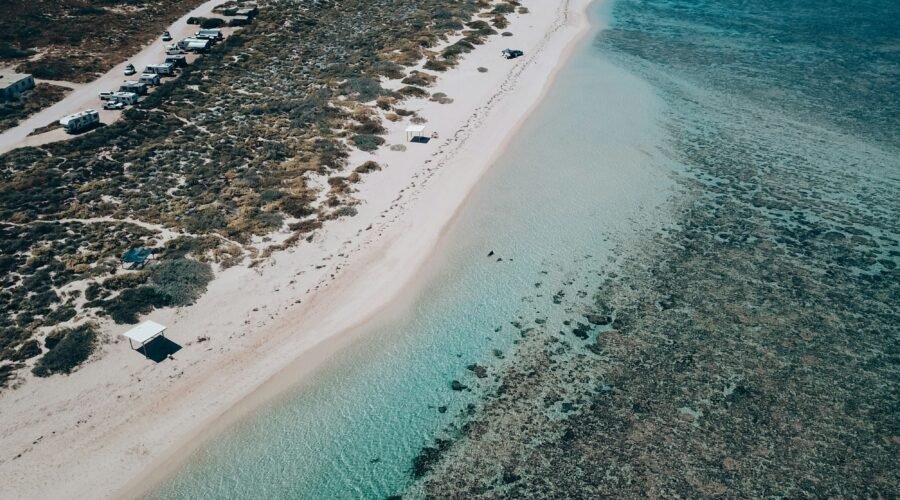
Planning a trip to Coral Bay, Western Australia? Your timing can change almost everything: the heat, the crowds, which marine animals you are most likely to see, and how early you need to book. For most travellers, May and September to October offer one of the best overall balances. April can also be excellent for whale sharks, while June to August brings the coolest weather but heavier visitor demand.
Quick Answer
For most travellers, May and September to October give Coral Bay the best mix of comfortable weather, marine-life opportunities, and less intense demand than July. April is excellent for whale sharks but remains inside cyclone season. June to August is coolest and busiest, while November to March is hottest and carries the greatest cyclone disruption risk.
Key Takeaways
- Best all-around balance: May and September to October, especially outside school-holiday periods.
- Whale sharks: Plan around the March-to-August migration window; April and May are especially attractive for combining sightings with more comfortable weather.
- Humpback whales: The broad Ningaloo season runs from June into November.
- Biggest visitor demand: The Ningaloo Coast’s broader peak period runs from Easter through October, with school holidays adding extra pressure.
- Cyclone risk: Australia’s official tropical cyclone season runs from November through April, so flexible plans matter during those months.
Best Time to Visit Coral Bay by Season
Coral Bay sits beside the World Heritage-listed Ningaloo Reef, so choosing a month is about more than air temperature. Marine migrations, wind and sea conditions, school holidays, tour availability, and cyclone risk can all influence your trip.
Mild Season (Winter)
June through August brings Coral Bay’s coolest daytime conditions. It is one of the easiest times for long beach days, snorkelling, boat trips, and other outdoor activities. It is also part of the Ningaloo Coast’s busiest visitor period, so you should not treat winter as low season.
Hot Season (Summer and Cyclone Risk)
December through March is much hotter. Days can become extremely warm, particularly in January and February. This period also sits inside Australia’s November-to-April tropical cyclone season. Coral Bay is arid, however, so it is more accurate to call this the hot or cyclone-risk season than a conventional tropical “wet season.”
Shoulder-Like Periods
May and parts of September and October can offer a useful middle ground. The weather is generally easier than midsummer, and you may avoid the very heaviest July demand. These months are not guaranteed to be quiet, though. Easter and spring school holidays can create sharp crowd increases.
Weather and Water: What to Expect When
Coral Bay’s weather has a direct effect on how comfortable you will be on the beach, in the water, and on boat tours. Because long-term observations for nearby Learmonth Airport provide a useful regional climate reference, the temperature figures below use Learmonth as a guide rather than pretending they are exact measurements for the Coral Bay beachfront.
Note: Nearby Learmonth Airport climate records show average maximum temperatures ranging from about 24-27°C in June-August to roughly 37-38°C in December-February. Coral Bay conditions can differ on any individual day, so check the current forecast before travelling.
Winter Wonders (June – August)
- Air Temperature: Nearby Learmonth’s long-term average maximum is about 24.9°C in June, 24.4°C in July, and 26.6°C in August. Average nights are much cooler, so a light layer is useful after sunset.
- Water Temperature: The ocean remains suitable for swimming and snorkelling for many visitors, although longer winter snorkels can feel cool. A rash vest or light wetsuit can improve comfort.
- Wind: Conditions vary from day to day. Calm mornings can be excellent for snorkelling and boat activities, while stronger winds may affect tours later in the day.
- Rainfall: Winter is not guaranteed to be rain-free. Nearby Learmonth averages about 43 mm of rain in June, 21 mm in July, and 12 mm in August, although rainfall can be highly irregular from year to year.
- Marine Life: Humpback whales move along the Ningaloo Coast during this period. Whale sharks can also remain within their broader seasonal window into winter, while manta rays and other reef wildlife add further opportunities.
Spring Sensations (September – October)
- Air Temperature: Conditions warm quickly. Nearby Learmonth averages a maximum of about 29.7°C in September and 33°C in October.
- Water Temperature: The ocean becomes increasingly comfortable for longer swimming and snorkelling sessions as the season warms.
- Wind: Conditions can change during the day, so check the forecast and tour operator advice rather than assuming every day will be calm.
- Rainfall: September and October are among the driest months in nearby Learmonth’s long-term climate record.
- Marine Life: Humpback whales are still a major attraction. Whale sharks, however, are generally outside their main planning season by September and October, so do not choose an October trip specifically because you expect whale sharks.
Autumn’s Appeal (April – May)
- Air Temperature: April can still be hot, with nearby Learmonth averaging a maximum around 33.4°C. May is noticeably milder, averaging about 28.7°C.
- Water Temperature: The sea is generally warm and inviting after summer, making this an appealing period for swimming and snorkelling.
- Wind: Conditions can become more comfortable as the intense summer heat eases, although day-to-day wind still affects boat and snorkelling conditions.
- Rainfall: Do not assume autumn is completely dry. Rainfall on this part of the coast is irregular, and May can still receive useful rainfall in some years.
- Marine Life: This is one of the strongest periods to plan a whale-shark trip. April and May combine the whale-shark migration with weather that becomes progressively more comfortable.
Summer’s Challenges (November – March)
- Air Temperature: This is the hottest part of the year. Nearby Learmonth’s long-term average maximum is about 34.6°C in November, 37.1°C in December, 38.1°C in January, 37.6°C in February, and 36.6°C in March.
- Water Temperature: The ocean is warm, which can make swimming attractive during the hottest part of the day.
- Wind: Conditions may range from ordinary coastal breezes to much rougher weather when tropical systems are nearby.
- Rainfall: Coral Bay does not experience constant monsoonal rain. Instead, rainfall is highly variable, and tropical lows or cyclones can occasionally produce intense rain, strong winds, dangerous seas, and road disruption.
- Marine Life: Manta rays can be encountered around Coral Bay throughout the year. Whale sharks begin returning during the later part of summer, while humpback whales are generally associated with the cooler half of the year and can extend into November.
Warning: Australia’s official tropical cyclone season runs from November through April. If you travel during this period, check Bureau of Meteorology warnings, keep accommodation and transport plans flexible, and make sure your travel insurance actually covers the weather disruptions that concern you.
Crowds and Atmosphere: Finding Your Peace
Coral Bay is small, so changes in visitor numbers are easy to notice. A busy holiday week can feel very different from a quiet summer weekday.
DBCA describes Easter through October as the broader peak visitor period for the Ningaloo Coast, so “shoulder season” does not automatically mean empty beaches or easy last-minute bookings.
Peak Period (Easter – October and School Holidays)
- Vibe: Lively, social, and increasingly busy during holiday periods. July can be especially popular.
- Why it’s busy: Cooler weather, whale-shark and humpback seasons, school holidays, and the desire of southern Australian travellers to escape colder winter conditions all contribute.
- Impact: Accommodation choices shrink, popular wildlife tours fill earlier, and the easiest snorkelling locations can feel busier.
Shoulder-Like Windows (May & September – October)
- Vibe: Often more relaxed than the busiest July weeks while still feeling active and well serviced.
- Why it’s good: May can combine whale sharks with milder temperatures, while September and October provide warm conditions and humpback-whale opportunities.
- Impact: You may have more flexibility than during peak school-holiday weeks, but advance bookings are still smart. Easter and the late-September school break can erase the usual shoulder-season advantage.
Low Season (November – March)
- Vibe: Generally quieter because of the heat and cyclone risk.
- Why it’s quiet: Very hot days and greater weather uncertainty discourage some travellers.
- Impact: Accommodation may be easier to find and some activities feel less crowded. However, Christmas and New Year can still create a short seasonal surge, and weather may cancel or alter marine tours.
Costs and Budget: Making Your Dollars Stretch
Coral Bay can be an expensive destination because accommodation and tour inventory are limited. Timing still matters, but there is no reliable universal rule saying a room will cost a fixed multiple more in one season than another.
Peak-Period Pricing (Easter – October & School Holidays)
- Accommodation: Expect the least flexibility when demand is strongest. Popular rooms, villas, and caravan sites can sell well ahead of arrival.
- Tours: Wildlife tours usually have limited daily capacity, so waiting for a last-minute discount during a busy period can backfire.
- Flights and Car Hire: Fares and vehicle availability can tighten around holidays and other popular travel periods. Compare dates rather than assuming one fixed seasonal price.
- Overall: Your biggest budget advantage often comes from booking early and avoiding school-holiday dates rather than simply choosing a particular month.
Shoulder-Period Value (May & Selected September – October Dates)
- Accommodation: You may find better availability than in the busiest July weeks, particularly outside public holidays and school breaks.
- Tours: Whale-shark and humpback experiences can still be in strong demand, so book the activity that matters most to you early.
- Flights: Prices vary by route, day, and how far ahead you book. Compare several travel dates if your schedule is flexible.
- Overall: These periods often provide a useful balance between comfort, wildlife opportunities, availability, and price.
Low-Season Opportunities (November – March)
- Accommodation: Outside the Christmas-New Year period, availability can be easier than during the cooler visitor season.
- Tours: Some activities may have fewer departures or may depend more heavily on weather and minimum passenger numbers.
- Flights: You may find attractive fares on some dates, but there is no guarantee that summer is always cheapest.
- Overall: Summer can suit budget-focused travellers who tolerate extreme heat and accept the possibility of cyclone-related changes.
Pro Tip: If swimming with whale sharks or humpbacks is the main reason for your trip, choose your tour date first and arrange accommodation at the same time. Saving a little on a room is not useful if the wildlife tour you travelled for is already full.
Special Considerations: Beyond the Basics
| Month | Weather & Wildlife | Crowds | Costs |
|---|---|---|---|
| January | Very hot; cyclone season | High around summer holidays; otherwise quieter | Can be higher during holiday dates |
| February | Very hot; cyclone season | Low | Often more flexible |
| March | Very hot; cyclone season; whale-shark period begins | Low to medium | Often more flexible outside holidays |
| April | Hot; whale sharks; cyclone season continues through April | Medium to high around Easter | Variable; holiday dates can be expensive |
| May | Warm and milder; excellent whale-shark timing | Medium | Mid-range; book key tours early |
| June | Mild; whale sharks possible; humpbacks arrive | High/rising | Higher demand |
| July | Mild; strong humpback season | Very high | Among the strongest-demand periods |
| August | Mild to warm; humpbacks | High | Higher demand |
| September | Warm and dry; humpbacks | High, especially around school holidays | Higher around holiday dates |
| October | Warmer; very dry; humpbacks can still be present | Medium to high | Mid to high |
| November | Hot; cyclone season begins; late humpbacks possible | Low | Often more flexible |
| December | Very hot; cyclone season | High around festive holidays | Can rise sharply around holiday dates |
Weather, crowds, and prices are the big three factors, but Coral Bay has a few extra seasonal considerations that can completely change which month is best for you.
Whale Shark Season
- Timing: DBCA lists roughly March through August as the best period to catch whale sharks during their Ningaloo migration. Exact tour seasons can shift with sightings and conditions.
- What to expect: Commercial tours travel beyond the reef to locate whale sharks and, when conditions allow, provide managed in-water encounters.
- Booking: Book early if this is the main purpose of your trip, particularly during April and May.
Humpback Whale Season
- Timing: Humpback whales are associated with the Ningaloo Coast from roughly June through November.
- What to expect: Whales migrate along the coast, and later in the season you may see mothers travelling with calves.
- Booking: Wildlife tours can fill during the main visitor season, particularly during school holidays, so reserve early if a whale experience is important to you.
School Holidays
- Impact: Western Australian school holidays can create major jumps in demand, particularly around Easter, July, and late September or early October.
- Check Dates: School-holiday dates change each year. Check the official Western Australian Department of Education calendar before booking if avoiding crowds is a priority.
Cyclones and Tropical Lows
- When: Australia’s official tropical cyclone season runs from November through April.
- Risk: Tropical lows and cyclones can bring damaging winds, heavy rain, rough seas, flooding, road closures, cancelled flights, and cancelled marine tours even when the system does not pass directly over Coral Bay.
- Preparation: Check Bureau of Meteorology forecasts and warnings before travelling, keep enough flexibility to change plans, and read your insurance policy rather than assuming all weather-related cancellations are covered.
Road Conditions
- Main Access: You do not normally need a 4WD simply to stay in Coral Bay and use its main visitor areas.
- Remote Beaches: DBCA identifies nearby locations such as Oyster Bridge, The Lagoon, Five Finger Reef, and Maud’s Landing as four-wheel-drive access areas. Conditions can become more difficult after significant rain, so check local advice before leaving sealed routes.
If you are comparing seasonal travel conditions in very different landscapes, you can also see the guide to the best time to visit Ihlara Valley.
The Verdict: Your Ideal Trip Awaits
The best month depends on what matters most to you, but the choices are much clearer once wildlife seasons, heat, school holidays, and cyclone risk are considered together.
- For whale sharks plus improving weather: April-May is an excellent window. May removes the official cyclone-season risk that still applies during April.
- For humpback whales and cooler days: June-August is excellent, but expect stronger visitor demand and book ahead.
- For warm weather and humpbacks with a chance of slightly more flexibility: September-October can work very well outside school-holiday dates.
- For the quietest general period: February-March can be much less crowded, but you must tolerate extreme heat and cyclone-season uncertainty.
- For the best general compromise: May is arguably the strongest single month for many first-time visitors because it combines whale-shark season with noticeably milder weather.
Coral Bay can be rewarding throughout the year, but there is no single perfect season for everyone. Match your dates to the wildlife you want to see, check school-holiday timing, and give cyclone-season travel extra flexibility. Most importantly, book limited-capacity accommodation and marine tours early when travelling between Easter and October.
Sources
- Bureau of Meteorology — Learmonth Airport climate statistics — nearby long-term temperature and rainfall reference.
- Bureau of Meteorology — Tropical cyclones — official Australian cyclone-season timing and risk information.
- DBCA — Ningaloo Marine Park — whale-shark and humpback-whale seasonal guidance.
- DBCA — Ningaloo Coast visitor information — peak visitor-period guidance.
- DBCA — Coral Bay — snorkelling, marine tours, and four-wheel-drive beach-access information.
- Western Australian Department of Education — Future term dates — official school-term and holiday planning information.
Frequently Asked Questions
1. What is the best time to visit Coral Bay, Western Australia?
May is one of the best all-around choices because temperatures are milder than summer and whale-shark season is underway. September and October are also attractive for warm weather and humpback whales, although school holidays can increase crowds.
2. What is the weather like in Coral Bay throughout the year?
Summer is extremely hot, while June through August is much milder. Nearby Learmonth climate records show average maximum temperatures around 24-27°C in winter and roughly 37-38°C in the hottest summer months. Rainfall is irregular rather than following a simple monsoonal wet-season pattern.
3. When is Coral Bay busiest?
The broader Ningaloo Coast visitor season runs from Easter through October. July and school-holiday periods can be particularly busy, while late summer is generally quieter outside the Christmas-New Year period.
4. Are Coral Bay accommodation and tours more expensive in peak season?
They can be. Limited availability during school holidays and the cooler visitor season often means less pricing flexibility. There is no reliable universal rule that accommodation will cost a specific multiple more, so compare your exact dates and book early.
5. When is whale-shark season in Coral Bay?
DBCA identifies roughly March through August as the best period for whale sharks migrating through Ningaloo Marine Park. April and May are especially appealing because they combine the migration with weather that becomes progressively milder.
6. When can you see humpback whales at Coral Bay?
Humpback whales migrate along the Ningaloo Coast from roughly June through November. The middle of this period is popular for whale-focused tours, while later months may include mothers travelling with calves.
7. When is cyclone season in Coral Bay?
Australia’s official tropical cyclone season runs from November through April. A cyclone does not need to cross directly over Coral Bay to disrupt roads, flights, marine tours, or accommodation, so monitor Bureau of Meteorology warnings when travelling during this period.
8. Do you need a 4WD to visit Coral Bay?
No. A 4WD is not normally necessary simply to stay in Coral Bay and enjoy its main beaches. However, DBCA identifies several nearby beaches and coastal areas, including Oyster Bridge, The Lagoon, Five Finger Reef, and Maud’s Landing, as four-wheel-drive access destinations.
9. Are there any specific events or festivals to consider when visiting Coral Bay?
Event calendars change, and you should not plan a Coral Bay trip around an assumed fixed annual whale-shark festival. Check current Coral Bay and Ningaloo regional event listings for the year you intend to travel, especially if an event would affect accommodation availability.