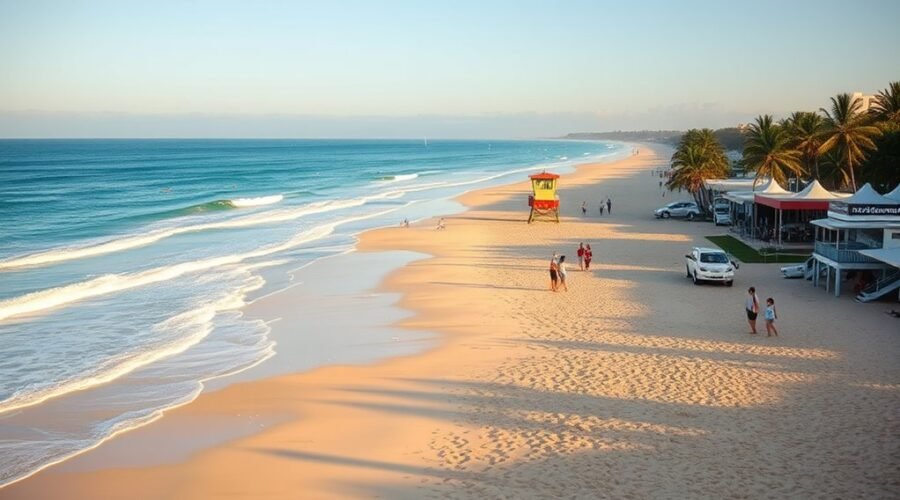
About 300 clear, sunny days a year mean Mooloolaba gives you plenty of beach time. You’ll find November–March delivers warm water and lively events, while shoulder months offer milder weather and fewer people. Winter brings calmer seas and great whale watching, and budget travelers score the best deals in May–August. Keep going to match the month to the vibe and activities you care about most.
Key Takeaways
- Visit November–March for warm beach weather, swimming, snorkeling, and peak events, but expect higher prices and crowds.
- Choose September–October or April for milder warmth, fewer crowds, and pleasant shoulder-season rates.
- June–August (winter) offers calm seas, great whale-watching, and the cheapest accommodation deals.
- Book accommodation, tours, and restaurants well in advance during school holidays and summer to avoid sold-out options.
- Avoid swimming without precautions October–May due to marine stingers; check flag zones and consider stinger suits.
Best Months for Beach Weather (Mooloolaba Monthly Guide)
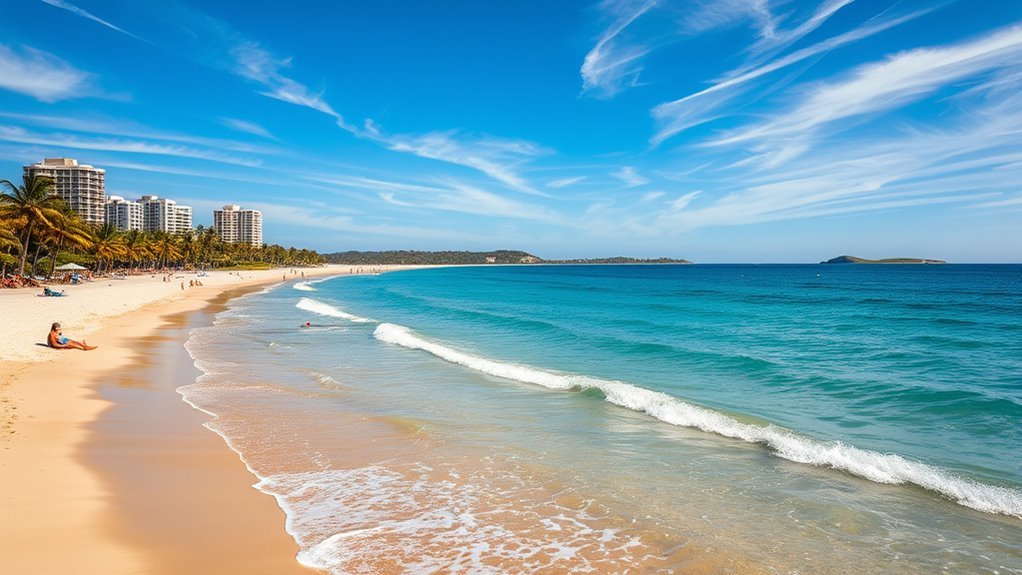
If you’re chasing warm, sunny beach days in Mooloolaba, the best months run from November through March, when daytime temperatures typically sit between the low 20s and high 20s°C and the water’s comfortable for swimming and snorkeling.
You’ll find long, golden mornings that invite freedom—stretch out on sand, try paddleboarding, or join group beach volleyball to meet spirited locals.
Late spring and summer bring lively local events: markets, outdoor concerts, and food festivals that pulse along the esplanade, so you can plan days of relaxation and nights of communal celebration.
Late spring and summer light up the esplanade with markets, concerts, and food festivals—relax by day, celebrate by night
Shoulder months—September–October and April—offer milder warmth with fewer crowds, perfect if you want unfettered access to tide pools and quieter sunsets.
Rain is more likely in peak summer, but showers rarely derail plans; they often clear to brilliant light.
Choose timing that matches your desire for connection or solitude, and you’ll own Mooloolaba’s coastline on your terms.
Mooloolaba Surf, Snorkel & Whale Seasons
When you hit Mooloolaba’s beaches, you’ll find conditions that suit everything from mellow snorkeling to pumped surf—each season brings its own strengths. You’ll time visits to chase clear water or big swells: winter often delivers calm snorkeling spots with excellent visibility, while autumn and spring fire up surfing conditions for riders craving powerful breaks. Whale season (June–November) invites soul-stirring sightings from headlands and boats — you’ll feel unburdened watching giants migrate.
| Season | What to Expect |
|---|---|
| Summer | Warm water, busy beaches, gentle snorkeling spots |
| Autumn | Cleaner reefs, stronger surf, fewer crowds |
| Winter | Best visibility for snorkeling spots, calmer seas |
| Spring | Consistent swells, prime surfing conditions, whale activity starts |
Plan by your freedom: if you want solitude and easy snorkeling, pick winter; if you need adrenaline and big waves, aim for spring or autumn. Whales add a freeing, unforgettable backdrop.
Peak Seasons: Events & School Holidays in Mooloolaba
Although Mooloolaba’s coastline is inviting year-round, peak seasons — school holidays and major events — pack the town with families, surf lovers, and festivalgoers, so you’ll want to plan ahead.
You’ll feel the buzz during Queensland school breaks and when local festivals light the esplanade; family friendly events draw crowds to beachfront markets, outdoor concerts, and kids’ surf clinics. That energy can be liberating if you crave connection, but it also means booking early and embracing flexibility.
- Spring & Summer school holidays: expect busy beaches, full cafés, and a lively, communal vibe; choose quieter mornings to claim space.
- Major events: weekend festivals and regattas fill accommodation and streets; plan transport and dining in advance.
- Shoulder days: arrive just before or after peak weekends to enjoy events’ atmosphere without constant crowds, keeping your trip both vibrant and free.
Cheapest Months to Visit Mooloolaba & How to Score Deals
If you’re after the cheapest months, aim for late autumn and early spring when crowds thin and prices drop.
You’ll find the best flight deals by booking mid-week, watching fare alerts, and being flexible with nearby airports.
For budget stays, consider self-catering apartments, off-peak B&Bs, or last-minute cancellations to snag lower rates.
Cheapest Months Overview
Because Mooloolaba’s peak season centers on school holidays and summer, you’ll find the best bargains in the quieter months of late autumn through early spring — roughly May to August — when accommodation rates drop, flights are cheaper, and attractions are less crowded.
You can roam with fewer constraints, enjoy affordable activities like coastal walks and markets, and savor local dining without long waits.
Plan midweek stays for deeper discounts and choose flexible bookings so you can pivot if weather shifts.
- Time: visit weekdays in May–August to grab lower nightly rates.
- Bookings: pick refundable or flexible options to maintain freedom.
- Experiences: prioritize free or low-cost activities and neighborhood local dining for value and authenticity.
Finding Flight Deals
When should you buy flights to Mooloolaba to get the best price? Plan for shoulder seasons—late autumn and early spring—when demand dips and fares fall.
You’ll find the cheapest months often in May–June and August–September, but prices shift, so run a flight comparison across carriers to catch dips.
Set fare alerts, check flexible date calendars, and clear cookies or use incognito so you’re not nudged to higher rates.
Use travel apps with price prediction and watch weekly trends; they liberate you from guesswork and empower sharp choices.
Be ready to book when a true deal appears: midweek departures and red-eye flights often shave costs.
That small effort unveils affordable freedom to explore Mooloolaba.
Budget Accommodation Tips
A smart approach to budget stays in Mooloolaba starts with timing: visit during the quiet shoulder months—May–June and August–September—and you’ll get the widest range of cheap rooms without sacrificing pleasant weather.
You can free your travel budget by mixing hostel options with self-catered apartments and scouting last-minute deals. Look for weekday stays, join loyalty programs, and subscribe to local property alerts so you’re first to snag discounts.
- Compare hostels and budget apartments — prioritize cleanliness, location, and free kitchen access to cut costs.
- Use flexible dates and bundle flights or car hire to access package savings.
- Eat like a local — choose budget dining spots, markets, and cook-ins to stretch funds and taste Sunshine Coast life.
Weather Risks : Rain, Humidity & Marine Stingers
If you plan your Mooloolaba visit around the weather, you’ll steer clear of most surprises—tropical downpours, humid heat, and seasonal marine stingers shape how you’ll enjoy the beach and water activities.
Plan your Mooloolaba trip by the weather to avoid tropical downpours, humidity and seasonal marine stingers.
You’ll watch forecasts for tropical storms during summer and early autumn: heavy rain can close roads and curtail boat trips, so keep flexible plans. Monitor humidity levels—mornings can be muggy, afternoons sticky—and pick lighter clothing, breathable fabrics, and early starts to reclaim comfortable hours.
Marine stingers (jellyfish) appear most often from October to May. You’ll find flagged swimming zones and stinger nets at patrolled beaches; always swim between the flags and heed lifeguards.
If you crave freedom on the water, consider stinger suits for snorkeling or choose protected coves. Pack reef-safe sunscreen, a compact first-aid kit, and local emergency numbers.
With simple precautions, you’ll enjoy Mooloolaba’s sun and surf while staying safe and in control.
Where to Stay in Mooloolaba by Season & Traveler Type
Because seasons and trip goals shape the best neighborhoods and accommodation types, you’ll want to match where you stay in Mooloolaba to both the time of year and your travel style.
In shoulder months, pick a beachside apartment for easy walks and flexible days; during summer, favor places with A/C and pool access. If you crave liberation from routines, choose a boutique stay that feels private and expressive.
- Family friendly options: Look for self-catering apartments or holiday parks near the esplanade — room to spread out, safe beach access, and playgrounds keep kids happy and you sane.
- Romantic getaways: Book a waterfront suite or secluded villa with sunset views and alfresco dining for intimate evenings and slow mornings.
- Active travelers: Opt for central condos or surf-hostels close to rental shops, bike paths, and cafes so you can move freely and own your schedule.
Match lodging to season and spirit, and you’ll travel on your terms.
How Crowds Affect Dining, Tours & Transport
When crowds swell in peak season, you’ll notice dining spots fill fast, tour departures sell out early, and buses and ferries run on tighter schedules—so plan meals and bookings ahead and leave extra time for transfers.
When crowds swell in peak season, book meals and tours early and allow extra time for transfers.
You’ll want to book local dining reservations as soon as you lock your dates; walk-ins work in quieter months, but peak periods reward foresight.
Check tour availability online the week before you arrive and the morning of excursions for last-minute openings.
With limited transport options during busy spells, aim for off-peak departures and carry a compact plan B: rideshares, bike hires, or a short walk can free you from timetable stress.
Embrace crowd management tactics—staggered dining times, early starts for popular tours, and flexible meeting points—to reclaim freedom while minimizing waits.
Being proactive lets you savor Mooloolaba without surrendering to queues, so you can roam, eat, and explore on your own liberated terms.
Choose the Best Month for Your Priorities
Now that you’ve got strategies for handling crowds, pick the month that lines up with what you want from Mooloolaba.
You’ll choose freedom: long, warm days for salt on your skin or quieter months to savor local cuisine without waiting.
Think about weather, events, and how much spontaneity you want.
- December–February: Peak summer brings ideal beach activities, vibrant markets, and nightlife; expect crowds and higher prices, but you’ll feel alive and sunlit.
- March–May: Autumn cools slightly, surf stays good, and shoulder-season deals free you to explore seafood spots and local cuisine with fewer queues.
- June–August: Winter is mild, perfect for relaxed walks, whale-watching tours, and cheaper stays—choose this if you crave calm and liberation from tourist rhythms.
Match your month to the experience you value: buzz, balance, or solitude, and design a trip that frees you to enjoy Mooloolaba on your terms.
Frequently Asked Questions
Are There Safe, Family-Friendly Tide Pools Near Mooloolaba?
Yes — you’ll find safe, family-friendly tide pools at Point Cartwright and nearby rock platforms; practice tide pool safety, watch tides and slippery rocks, and enjoy liberating family activities exploring pools, sea life, and shallow, calm water together.
Can I Bring My Dog to Mooloolaba Beaches or Cafes?
Of course dogs are welcome—well, most of the time. You’ll find dog friendly accommodations and pet friendly cafes nearby, but you’ll need to follow leash rules, seasonal beach bans, and respect local wildlife and cafe policies.
What Public Transport Options Connect Mooloolaba With Brisbane Airport?
You can catch shuttle services from Brisbane Airport to Mooloolaba or ride train options to nearby Nambour or Landsborough, then take a connecting coach or taxi; you’ll feel free choosing flexible, empowering transport connections.
Are There Guided Night-Time Wildlife or Bioluminescence Tours?
Yes — you’ll find night tours offering immersive wildlife experiences and occasional bioluminescence walks; they’re guided, low‑impact, liberating adventures that let you connect with coastal ecosystems, spotting nocturnal critters and glowing waters under expert leadership.
Where Can I Find Locally Made Souvenirs and Markets?
You’ll find locally made souvenirs at Mooloolaba and nearby Eumundi markets, beachfront stalls and artisan shops; seek local artisans, check market hours—weekend mornings and occasional evenings—and you’ll support creative freedom while discovering unique keepsakes.
Conclusion
Plan for sunny beach days in November–March, choose shoulder months for quieter strolls in September–October and April, seek winter for whale watching and calm seas, or book May–August for lower prices. Expect surf and snorkel seasons, watch for stinger risks, and time trips around events and school holidays. Stay near the Esplanade for convenience, opt for quieter neighborhoods for value. Decide by priorities: sun, solitude, savings, or wildlife—then go enjoy Mooloolaba.