
About 20–30% cheaper accommodation during the shoulder seasons makes the Gold Coast an easy pick for budget-savvy travelers. You’ll find sunny days around 20–25 °C, fewer crowds, and plenty of surf or festivals without the summer crush. If you want warm water, lively nightlife, or quieter beaches, the timing changes everything — and there’s a simple way to match your priorities to the best months.
Key Takeaways
- Late spring–early autumn (Nov–Mar) offers warm, consistent surf and lively beachfront festivals, ideal for beachgoers and surfers.
- Summer (Dec–Feb) brings high crowds, humid heat, and peak events, so expect higher prices and book well in advance.
- Shoulder seasons (Mar–May, Sep–Nov) provide mild weather, thinner crowds, and lower costs, perfect for savings and local festivals.
- Winter (Jun–Aug) features cooler, clearer days, fewer tourists, better whale‑watching, and lower accommodation rates.
- Travel midweek or during shoulder months to minimize crowds and costs, or target winter for budget-friendly whale tours.
Best Time to Visit Gold Coast (Quick Picks by Goal)
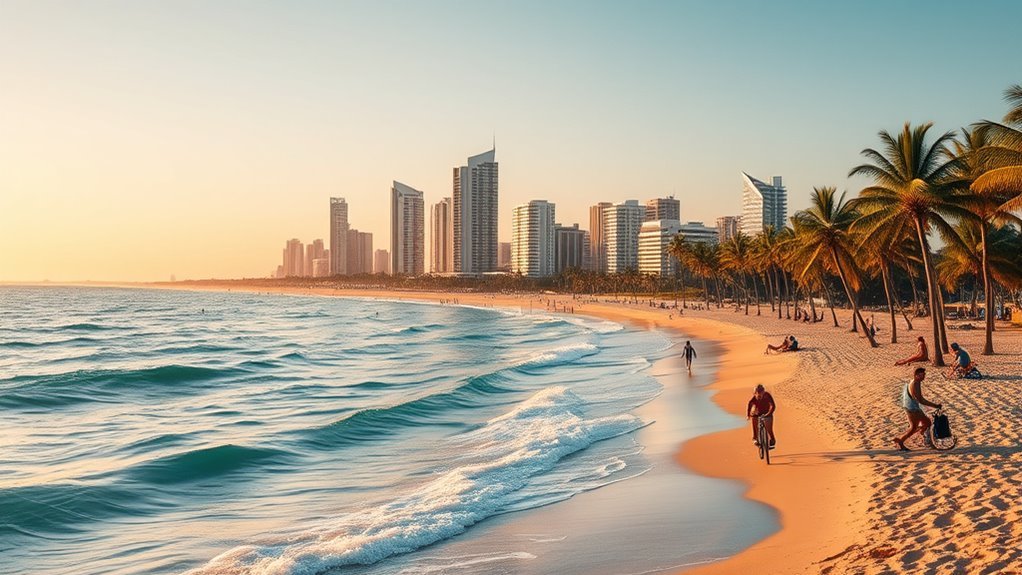
If you’re chasing sunshine and surf, plan for late spring to early autumn (November–March), when warm days and consistent swell make the beaches irresistible; if you want fewer crowds and lower prices, aim for the shoulder seasons of April–May or September–October, when pleasant weather and quieter attractions give you more space to explore.
Choose late spring for lively festival events and bright, balmy waves—you’ll join street parties and beachfront festivals without sacrificing beach time.
Pick summer if you want high energy and long days, though you’ll trade solitude for vibrant nightlife.
Opt for shoulder months to roam freer paths, snag deals at family friendly resorts, and wake up to uncrowded horizons.
Traveling solo? Go in autumn to savor mellow light and renewed clarity.
If liberation’s your aim, plan around what you’ll gain: crowd-free sunrise surf, sunset drinks by sparkling skyline, or a festival night that feels like your first true breath of freedom.
Gold Coast Summer (Dec–Feb) : Weather, Crowds & Who It’s For
When summer rolls in from December to February, you’ll find the Gold Coast pulsing with long, sunlit days, humid warmth and a steady surf that draws swimmers, surfers and festival‑goers to its golden shores; expect daytime highs around 25–29°C (77–84°F), balmy evenings, and the occasional steamy thunderstorm that refreshes the air.
You’ll wake early to uncrowded waves or linger at dusk for beachfront concerts that spill music across the sand, then chase freedom along coastal paths and vibrant nightlife.
Crowds swell: family holidays, international visitors and locals converge, so booking stays and key experiences in advance liberates you from last‑minute stress.
The season suits you if you crave energetic beaches, nonstop events and water sports—kayaking, surf lessons, snorkeling—and want to join marine festivals celebrating ocean life.
Perfect for beach lovers craving nonstop events, water sports and lively marine festivals celebrating ocean life.
Be ready for higher prices and sticky humidity, but imagine trading routine for sun‑soaked spontaneity: if you’re enthusiastic to live loud, move fast and soak up culture beside the sea, summer here answers that call.
Shoulder Seasons (Mar–May, Sep–Nov) : Mild Weather, Savings & Activities
Though still warm enough for beach days, the shoulder seasons (Mar–May, Sep–Nov) strip away summer’s intensity and give you gentler weather, thinner crowds and better value—think sunny mornings, mild afternoons around 20–25°C (68–77°F), and fewer sudden storms.
You’ll feel freer to roam: promenades, cafés and coastal lookouts are calmer, so you claim space without fighting tourist tides.
Prices dip, so you can upgrade where you stay or linger longer without guilt.
Off‑peak festivals pop up with local flavor—music, markets and pop‑up art that let you connect rather than spectate.
Adventure options broaden: kayak serene waterways, cycle elevated trails, or join local wildlife tours when creatures are active but undisturbed.
Days flow at a kinder pace; evenings cool enough for bonfires or rooftop drinks.
If you seek escape with practical savings and authentic experiences, shoulder seasons hand you flexibility, access and a quieter, more liberated Gold Coast.
Gold Coast Winter (Jun–Aug) : Weather, Crowds, Surf & Whale Watching
Move from the mellow shoulder months into Gold Coast winter and you’ll find a different, brisk charm: clear skies, cool breezes and a rhythm that favors outdoor adventure without the summer crush.
You’ll feel liberated by wide, uncrowded beaches where mornings glow and afternoons hold soft light—ideal for walking, cycling or simply peeling away from routine. Crowds thin; prices often ease; you get space to breathe.
Whale migration transforms the horizon between May and November, but winter is when sightings intensify—take a boat or watch from headlands as humpbacks trace ancient routes.
Surf conditions steady into cleaner, more powerful sets; wetsuits replace bikinis, and surfers relish less crowded lineups and predictable breaks.
Nights drop cool but dry, so you sleep well and wake enthusiastic. If you crave freedom, winter’s clarity, wildlife spectacle and honest surf invite you to move with the coast, not against it.
Choose Travel Dates: Budget, Crowd-Avoidance & Activity-Based Tips
If you’re flexible with dates, you can stretch your travel budget, dodge peak crowds and tailor the trip to the activities you care about most.
Shift weekdays and shoulder seasons to save: late autumn and early spring bring gentler prices, fewer tourists, and easier parking near Surfers Paradise.
Travel midweek or in shoulder seasons—late autumn and early spring mean lower prices, fewer crowds, and easier parking.
Book around budget friendly festivals to enjoy culture without premium rates; local events often offer free or low-cost performances and food stalls.
If you crave waves, time your visit for smaller winter swells or aim for summer mornings when surfers clear the line-up.
For wildlife, plan winter whale-watching charters and book early to secure spots.
If you travel with a companion on four paws, scan pet friendly accommodations and reserve those rooms well ahead—choices vanish fast during school holidays.
Finally, use flexible tickets and refundable stays so you can chase quiet days, spontaneous surf, or sunrise vistas without penalty.
Be intentional, roam freely, and spend smarter.
Frequently Asked Questions
What Vaccination or Health Precautions Are Needed for Gold Coast Travel?
You’ll need routine Vaccination requirements up to date, consider hepatitis A and influenza if exposed, and carry robust Health insurance; you’ll choose freedom by prepping, staying observant of outbreaks, and protecting your journey boldly.
Are There Visa Requirements for International Visitors to Australia?
Yes—you’ll usually need a visa to enter Australia. Embrace freedom: check visa extensions, carry travel insurance, sort currency exchange, and respect local customs; plan early so you’ll stay flexible, safe, and empowered while exploring.
What Are the Best Neighborhoods to Stay for Nightlife Vs Family-Friendly Areas?
You’ll choose Surfers Paradise and Broadbeach as Nightlife hubs—vibrant, buzzing, liberating—while opting for Burleigh Heads and Robina as Family friendly suburbs, relaxed, safe, and spacious, giving you freedom to party or unwind together.
Is It Safe to Swim on All Gold Coast Beaches Year-Round?
Like a compass guiding you, you can’t assume t safety on all Gold Coast beaches year-round; seasonal hazards like rip currents, jellyfish and storms change conditions, so you’ll check local warnings, swim between flags, and stay vigilant.
Can I Bring Pets to Beaches, Parks, or Accommodations on the Gold Coast?
Yes — you can bring pets to many beaches, parks and accommodations, though rules vary; you’ll find pet friendly rentals, designated leash free zones and restricted areas, so plan boldly, respect rules and liberate adventures together.
Conclusion
You’ll want to visit the Gold Coast in shoulder-season serenity — March–May or September–November — when mild mornings, mellow middays and cool coastal evenings combine for crowd‑free comfort. You’ll save on stays, surf cleaner breaks, stroll quieter sands and savor sunny festivals without summer swell. Pick dates to prioritize price, peace or peak activities, and you’ll leave refreshed, recharged and ready for your next relaxed, radiant Queensland return.