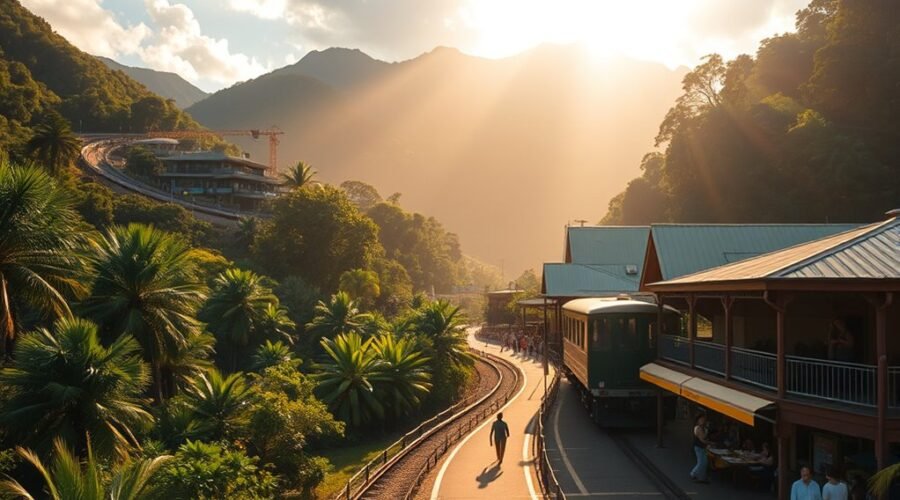
If you’re planning a trip to Kuranda, aim for late May to early October when sunny, cool days, low humidity, and clear views make hikes, waterfalls, and wildlife shine. Midweek visits outside school holidays cut crowds and costs, while festivals and wet months change the mood and access. Keep going—there’s a sweet spot that balances weather, value, and experiences that you’ll want to pin down.
Compare our seasonal guides to Queensland, Australia and Southern Great Barrier Reef, Queensland when choosing other stops in Queensland.
Key Takeaways
- Dry season (May–Oct) offers sunny days, cooler temperatures, clearer wildlife viewing, and easier hikes—peak crowds and higher accommodation rates.
- Wet season (Nov–Apr) delivers lush rainforest, dramatic waterfalls, and cheaper rooms but high humidity, slippery tracks, and possible closures.
- Shoulder months (Apr–May, Oct–Nov) balance fewer tourists, softer light for photography, moderate prices, and sudden blooms.
- Midweek travel and booking Skyrail/tours 4–6 weeks ahead reduce costs, queues, and guarantee peak‑day availability.
- Visit early mornings for wildlife, late afternoons for cooler trails, and avoid school holidays and festival weekends to minimize crowds.
Best Time to Visit Kuranda
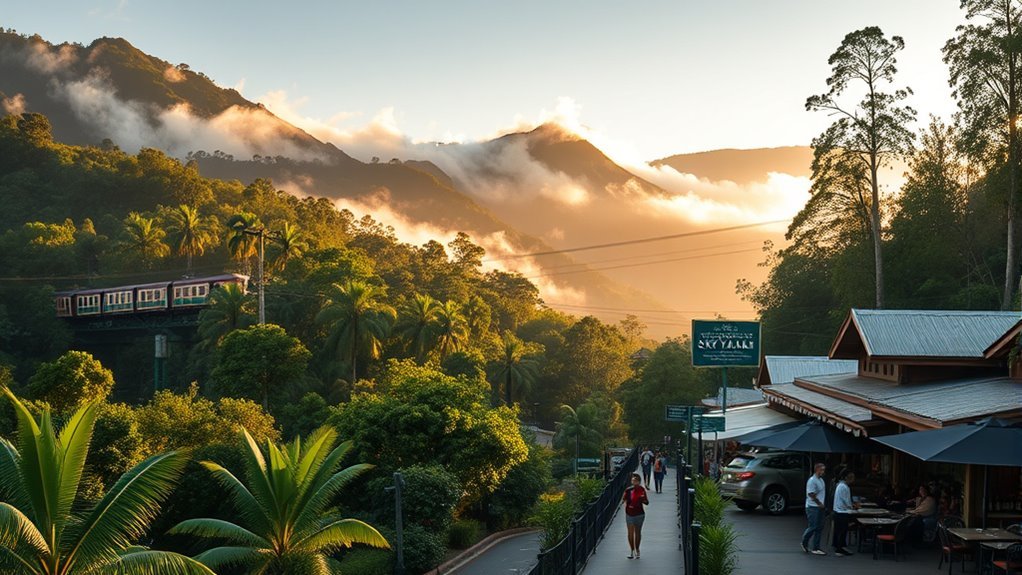
If you’re planning a trip to Kuranda, aim for the dry season between May and October when sunny days, cooler temperatures, and low humidity make rainforest walks, wildlife spotting, and scenic rail or skyrail rides most enjoyable.
You’ll find the village alive but not overwhelmed: markets hum with handcrafted treasures, cafes serve fresh bites reflecting Kuranda cuisine, and Indigenous art galleries glow with stories you can carry home.
Traveling then lets you move freely—wander shady trails, pause at lookout points, and linger over a meal without sweating through your plans.
Costs tend to be steadier, bookings more predictable, and local guides have time to share deeper knowledge about country and culture.
If you crave liberation from noisy crowds and rigid schedules, this window offers a calmer, richer experience.
Pack layers, a reusable water bottle, and an open mind: Kuranda’s blend of nature, culinary simplicity, and Indigenous art will reward the traveler who wants to breathe and belong.
Kuranda Weather and Lushness by Season
Because Kuranda sits in a tropical rainforest on the Atherton Tablelands, its seasons reshape the landscape as clearly as a painter’s stroke: during the wet season (roughly November to April) warm, heavy rains swell waterfalls, deepen greens, and send humidity climbing, while the dry season (May to October) brings cooler, clearer days that crisp the foliage and make walking the trails far easier.
Kuranda breathes in seasons: wet months swell waterfalls and greens; dry months crisp trails and reveal sky.
You’ll feel the rainforest breathe: the wet season floods the world with sound and scent, while the dry reveals structure and sky. The Lush canopy hangs heavy after storms; paths glisten and orchids erupt in a quiet Seasonal bloom.
- Wet season: intensified greens, roaring waterfalls, dense humidity.
- Transitional months: sudden blooms, softer light, fewer tourists on trails.
- Dry season: crisp air, easier hikes, clearer wildlife sightings.
You can choose freedom: chase the riotous wet-season growth or savor the liberated clarity of the dry — both promise their own wild, renewing rewards.
Kuranda Crowds and Peak Days (School Holidays & Festivals)
If you visit during school holidays, expect Kuranda to fill with families and longer queues at the Skyrail and markets.
Festivals can swell the village into a lively, bustling hub with street performers and limited parking.
For a calmer experience, plan weekdays rather than weekends when day-trippers from Cairns are most numerous.
School Holiday Peaks
When school holidays roll around, Kuranda quickly fills with families and day‑trippers chasing rainforest walks, markets, and scenic railway rides, so plan for larger crowds and longer waits at popular spots.
You’ll feel the lively pulse as pathways swell and stalls bustle; embrace the energy but move with intent.
Consider budget transport options early and sample local cuisine during off‑peak hours to avoid lines.
- Arrive at attractions right at opening to beat queues and claim peaceful viewpoints.
- Use shuttle timetables and public buses to save money and skirt parking headaches.
- Eat light at market stalls between 10–11 am or 2–3 pm to enjoy flavors without the crowds.
You’ll reclaim time by planning smartly and flowing with Kuranda’s holiday rhythm.
Festival Crowd Surges
As festival dates roll around, Kuranda transforms into a vibrant, bustling hub where narrow streets and market aisles swell with visitors, live music, and colourful stalls.
You’ll feel a rush of freedom moving through the crowds, drawn to artisan goods and impromptu performances.
Plan ahead: festival logistics can affect transport, parking, and stall access, so check shuttle timetables and vendor maps to keep your day fluid.
Expect surges at main stages and cafes during headline sets; you’ll want an early arrival to claim space.
Ticket pricing varies by event and seating, so compare advance fares and combo deals to avoid surprises.
With smart planning you’ll navigate the energy, soak in culture, and leave feeling unrestrained.
Weekday Versus Weekend
After soaking up festival energy, you’ll notice Kuranda’s rhythm shifts noticeably between weekdays and weekends.
You can breathe easier on weekdays: markets hum at a gentler pace, trails feel more open, and vendors welcome longer conversations.
Weekends swell with day-trippers, amplified during school holidays and local events, so expect busier cafes and photo spots.
Plan with intent:
- Check transportation schedules first; trains and Skyrail fill fast on peak days, so book early.
- Visit weekday mornings for solitude and unfettered access to galleries and wildlife parks.
- If you crave communal buzz, time a weekend with a festival, but arrive early to avoid crowds.
You’ll choose freedom or fellowship—both reveal Kuranda’s magic, if you match timing to your desire.
Kuranda Costs: Skyrail, Tours, and Accommodation by Season
When planning your trip to Kuranda, you’ll want to weigh Skyrail ticket price trends against tour package comparisons to get the best value.
Seasonality also shapes accommodation rates, from budget stays in the low season to premium prices during school holidays and festivals.
I’ll break down typical costs so you can pick the right combination for your timing and budget.
Skyrail Ticket Price Trends
If you’re planning a trip to Kuranda, tracking Skyrail ticket prices by season will help you budget smarter and choose the best time to ride the iconic rainforest cableway.
You’ll notice Ticket pricing shifts with demand: peak holiday months push fares up, while quieter seasons unlock lower rates and occasional Seasonal discounts.
Watch for mid-week and shoulder-season deals that free you from crowds and cost.
- Peak season: higher fares, limited availability, book early.
- Shoulder season: moderate prices, occasional promo codes.
- Off-peak: lowest fares, greater freedom to explore.
Tour Package Comparisons
Although prices shift with the seasons, comparing tour packages will give you a clear sense of what you’ll pay for Skyrail rides, guided activities, and lodging in Kuranda. You’ll spot packages that bundle Skyrail return trips with guided rainforest walks, localultural immersion experiences, and culinary tours — perfect if you crave freedom from routine. Look for small-group options to feel unbridled and meaningful; private guides cost more but deepen connection. Consider cancellation policies, included meals, and transport to weigh true value. Use the table below to compare typical offerings and pick the season and style that frees you.
| Package Type | Typical Inclusion | Price Range (AUD) |
|---|---|---|
| Budget | Skyrail + basic tour | 80–130 |
| Standard | Skyrail + guided walk + lunch | 150–220 |
| Premium | Private guide + culinary tours | 300–500 |
Seasonal Accommodation Rates
Having compared package options, you’ll want to match the season to the accommodation that fits your budget and comfort level.
Prices surge during Local festivals and school holidays, when boutique lodges and Rainforest B&Bs book fast; off-peak months give you quiet verandas and lower nightly rates.
Consider how Transport links affect value: peak-season shuttle availability and Skyrail tour bundles can tip a mid-range stay into great value.
Choose intentionally to feel free rather than trapped by crowds.
- Wet season (Dec–Mar): cheaper rooms, occasional closures, lush solitude for liberated souls.
- Dry season peak (Jun–Aug): premium rates, full transport links, vibrant village life.
- Shoulder months: balanced prices, fewer crowds, flexible tours and better deals.
Kuranda Wildlife, Waterfalls, and Best Hiking Windows
When you step onto Kuranda’s rainforest tracks, mist from hidden waterfalls cools the air and crimson birds flash through the canopy while wallabies and possums forage just off the path; this is a place where wildlife and tumbling falls shape every hiking choice.
You’ll trace paths that reveal kuranda flora—ferns, ancient strangler figs and orchids—that invite slower, reverent movement.
Plan hikes for early morning or late afternoon windows when animals are active and trails are cooler; those hours give you solitude and sharper wildlife sightings.
Short circuits to local cascades reward you quickly; longer ridge walks open to vistas and fewer people.
Join nocturnal tours to see possums, tree frogs and owls emerge, but keep noise low and light minimal to protect fragile life.
Pack water, slip-resistant shoes and a lightweight rain shell.
Move deliberately, leave no trace, and let the rainforest loosen your pace—this is hiking that frees you and keeps Kuranda wild.
When to Avoid Rain : And When Rain Makes Kuranda Beautiful
If you’re hoping for clear trails and reliable views, steer clear of Kuranda’s heaviest wet-season downpours—saturated tracks become slippery, creeks can rise quickly, and visibility through the canopy vanishes into mist.
Still, you don’t have to fear every cloud: rain sculpts the rainforest, intensifies waterfalls, and frees you from tourist crowds if you embrace its moods.
Don’t dread the rain — it carves the rainforest, amplifies falls, and clears the crowds for richer, intimate moments.
For safe, satisfying visits, pick windows when showers are patchy rather than persistent.
- Visit after short storms for dramatic rainy photography: glossed leaves, saturated colors, and reflective pools.
- Seek early morning misty trails when fog lifts slowly — you’ll find secret light and solitude.
- Avoid prolonged cyclonic periods and night deluges that force closures and muddy tracks.
You want liberation on the trail: rain can grant that—transforming familiar paths into cinematic, almost private landscapes—just time your visit to savor beauty without risking safety or access.
Avoid Crowds & Save Money: Timing and Booking Tips
Rain can thin the tourist numbers and give you quiet, cinematic trails—but you can plan even more deliberately to avoid crowds and cut costs.
Travel midweek and outside school holidays; you’ll find markets, canopy walks and viewpoints all to yourself.
Chase shoulder seasons—late April to early June or September—to catch mild weather, lower prices, and fewer coach tours.
Book transport and accommodations at least 4–6 weeks ahead for the best rates, but snag last-minute deals if you’re flexible.
Tap into local cultural festivals for authentic, uncrowded experiences where community events replace tourist traps.
Choose small operators and family-run cafes over peak-time attractions.
Stay in eco‑lodges or guesthouses on the outskirts to wake to birdsong and lower rates than town-center hotels.
Pack light, carry a rain jacket, and time your arrival for early mornings when paths are empty.
With intent and nimbleness, you’ll conserve money, claim solitude, and feel freer to wander Kuranda on your own terms.
Sample Itineraries: Day Trip, Overnight, and Budget Travelers
Although Kuranda packs a surprising variety into a compact area, you can easily tailor a visit to a single day, an overnight escape, or a tight‑budget adventure without missing the highlights. You’ll feel liberated exploring rainforest trails, markets, and viewpoints that pulse with life.
For a day trip, ride the Scenic Railway or Skyrail, browse Indigenous art stalls, and grab a riverside lunch. Overnight stays let you wander evening trails, join cultural festival events, and wake to birdsong. On a shoestring, hitch free walking tracks, picnic, and time the cheaper midweek fares.
- Day trip: Scenic Railway, Kuranda Village markets, Butterfly Sanctuary, afternoon return by Skyrail.
- Overnight: sunset at Barron Falls, evening cultural performance, morning rainforest hike and relaxed markets.
- Budget: self‑catered picnic, free walking trails, visit Indigenous art galleries during market hours.
Choose the pace that frees you—Kuranda rewards curiosity, not a schedule.
Frequently Asked Questions
Are Dogs Allowed on the Kuranda Skyrail or Scenic Railway?
No — dogs aren’t allowed on the Skyrail or Scenic Railway; you’ll need to follow pet policies and ticket restrictions. You can arrange alternative care or local pet transport, freeing yourself to explore Kuranda unburdened and bold.
Can I Charge Electric Vehicles in Kuranda Town?
Yes — you can charge EVs in Kuranda. Like finding a hidden oasis, public charging stations sit around town with clear pricing tiers; you’ll reclaim freedom on the road, choosing speed and cost that suit your journey.
What Are the Nearest Medical Facilities or Pharmacies?
You’ll find the nearest ph emergency services at Mareeba Hospital (about 25–30 minutes’ drive) and pharmacy access in Kuranda village for basics; larger Cairns hospitals and full pharmacies are roughly an hour away by road.
Is Mobile Phone and Internet Coverage Reliable in Kuranda?
Don’t worry — you’ll usually get signal. You’ll find mobile coverage patchy in rainforest gullies but solid around town; internet reliability is decent for basics, letting you stay connected while feeling free and adventurous in Kuranda’s wild beauty.
Are Local Eateries Accommodating Vegan or Gluten-Free Diets?
Yes — you’ll find vegan options and gluten free menus in Kuranda’s cafes and markets; vendors adapt warmly, offering creative plant-based dishes and safe GF swaps, freeing you to explore bold, flavorful meals without compromise.
Conclusion
Plan your Kuranda visit for late May to early October when dry, sunny days make hikes, waterfalls and wildlife vivid and crowds thin. Mid‑week trips outside school holidays cut Skyrail queues and costs. Book accommodation and tours in advance but expect moderate rates — great value without peak premiums. Whether you’re on a quick day trip or an overnight stay, Kuranda feels like a well‑timed song: calm, clear, and perfectly in tune with adventure.