When you start planning a trip to Nepal, the first question you’ll face isn’t where to go — it’s *when*. The timing of your visit shapes everything: the trails you can access, the prices you’ll pay, and the crowds you’ll navigate. Nepal’s seasons aren’t subtle. They swing between ideal and genuinely difficult, and picking the wrong window can derail even the best-laid itinerary. Here’s what each season actually delivers.
Nepal’s Weather Patterns: A Season-by-Season Overview
Nepal’s climate divides into four distinct seasons, each shaping your experience of the country in dramatically different ways. Understanding these patterns liberates you from costly mistakes and missed opportunities.
Spring (March–May) brings mild temperatures and blooming rhododendrons, perfectly framing Himalayan treks and seasonal festivals like Holi and Bisket Jatra.
Summer/Monsoon (June–August) delivers Nepal’s most dramatic weather extremes—relentless rainfall, landslides, and dense humidity transform landscapes into lush, emerald terrain.
Trails become treacherous, but costs drop considerably.
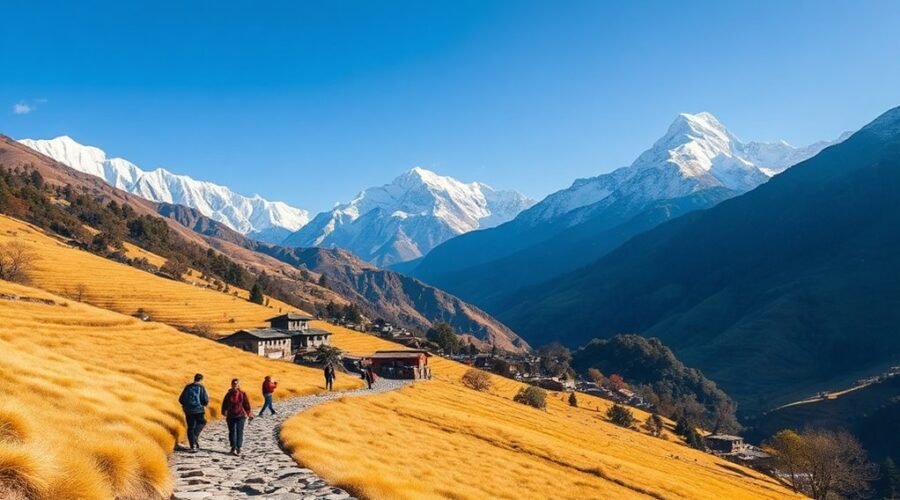
Autumn (September–November) offers Nepal’s golden window—crystalline skies, stable temperatures, and post-monsoon freshness create ideal trekking and climbing conditions.
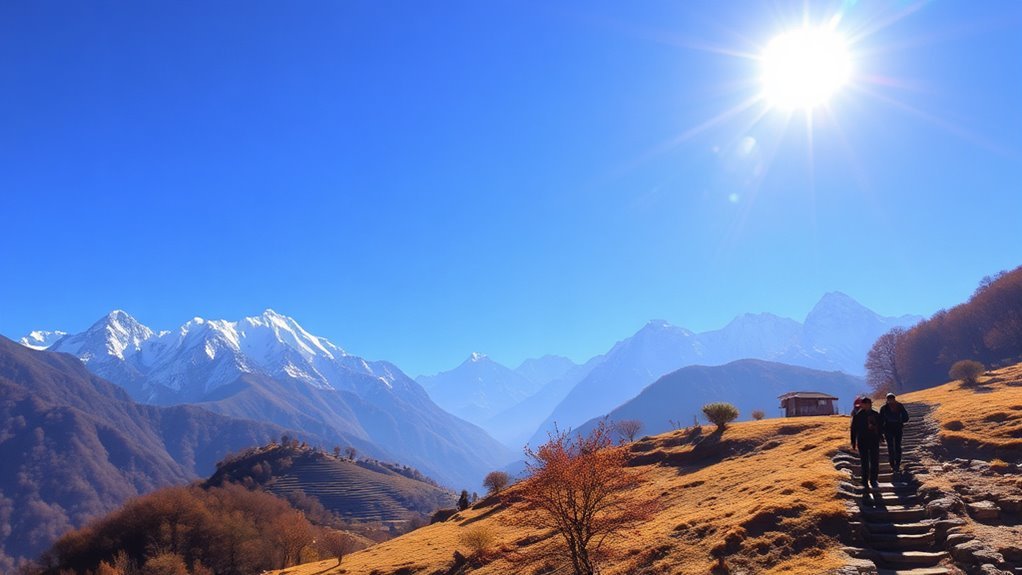
Winter (December–February) pushes weather extremes to the opposite pole, blanketing high passes in snow while keeping lower valleys surprisingly pleasant and crowd-free.
Each season demands different gear, routes, and mental preparation—choose intentionally.
October and November: Nepal’s Best Trekking Conditions
When the monsoon retreats in late September, it leaves behind something extraordinary—skies scrubbed clean, trails refreshed, and the Himalayas revealed in their sharpest relief.
October and November hand you Nepal at its absolute peak.
October and November don’t ease you into Nepal—they hand it to you at full volume.
Every major trekking route—Everest Base Camp, Annapurna Circuit, Langtang Valley—operates under ideal conditions. Visibility stretches for dozens of kilometers, temperatures stay manageable, and the trails pulse with energy from fellow adventurers who’ve timed their journey wisely.
You’ll also walk directly into Nepal’s richest cultural calendar. Dashain and Tihar, two of the country’s most significant cultural festivals, unfold during this window. Villages transform with marigold garlands, lights, and collective celebration.
You’re not observing from a distance—you’re moving through it.
The trade-off is straightforward: this is peak season, so expect higher accommodation costs and busier trails.
Book early, embrace the vibrancy, and you’ll understand why these two months define Nepal’s trekking identity.
December Through February: Cold, Quiet, and Cheap
Drop the crowds and prices fall with them. Nepal’s winter strips everything back — fewer trekkers, lower lodge rates, and crystal-clear mountain views you won’t share with hundreds of strangers. It’s cold, yes, but that’s manageable with the right gear.
| Month | Temperature (Kathmandu) | Travel Tips |
|---|---|---|
| December | 2°C – 19°C | Pack thermal layers; ideal for lower-elevation winter activities |
| January | 1°C – 17°C | Coldest month; Pokhara stays warmer |
| February | 4°C – 20°C | Rhododendrons begin blooming; trails reopen |
Lower Himalayan treks like Ghorepani or Langtang stay accessible throughout winter. Teahouse prices drop considerably, and you’ll negotiate better deals everywhere. Kathmandu’s cultural sites feel genuinely yours without tourist congestion.
If freedom means moving on your own terms without fighting crowds, Nepal’s winter delivers exactly that.
March, April, and May: Spring Crowds and Blooming Trails
Spring transforms Nepal’s trekking landscape into something genuinely spectacular — rhododendron forests ignite in red and pink across the mid-hills, skies stay reliably clear, and the high passes open up after winter’s grip.
Trail conditions improve dramatically by March, making routes like the Annapurna Circuit and Everest Base Camp fully accessible and visually stunning.
You’ll pay peak-season prices for this privilege. Lodges fill fast, popular campsites get crowded, and Everest sees its highest concentration of summit-bound climbers in May. Book accommodation well ahead.
Spring blooms draw crowds for good reason — this is Nepal at its most photogenic. Temperatures climb steadily, though afternoons can turn warm at lower elevations.
April and May bring pre-monsoon humidity and occasional afternoon thunderstorms, so start your hiking days early.
If witnessing Nepal’s mountain landscapes in full color matters to you, spring delivers it without compromise.
June Through September: What Monsoon Season Actually Looks Like
Monsoon arrives in Nepal around early June and doesn’t leave until late September — and it reshapes the country entirely. Rain falls hard and fast, often daily, triggering landslides, washing out roads, and grounding flights. These monsoon challenges are real, and you shouldn’t underestimate them.
Monsoon doesn’t visit Nepal — it takes over. Landslides, grounded flights, washed-out roads. Underestimate it at your peril.
But here’s what most travelers miss: the landscape transformation is extraordinary. Rice terraces flood with vivid green. Waterfalls cascade down Himalayan ridges. Forests thicken. The land breathes.
Trekking becomes genuinely difficult — leeches, mud, low visibility, and trail closures test even seasoned hikers. However, the Mustang and Dolpo regions sit in rain shadows, offering dry trekking when everywhere else drowns.
Crowds disappear. Prices drop dramatically. If you crave Nepal without the tourist machinery, monsoon delivers that freedom — but only if you embrace unpredictability rather than fight it.
Permits, Crowds, and Which Months to Avoid
Before you set foot on any trail in Nepal, you’ll need the right permits—including a TIMS card and national park entry fees that vary depending on your destination.
If you’re trekking during October or November, brace yourself for peak-season crowds on popular routes like the Annapurna Circuit and Everest Base Camp, where teahouses fill fast and trail traffic can erode the solitude you came for.
You’d do well to avoid late June through August if heavy rains, leeches, and washed-out trails aren’t your idea of adventure, and February can hit high-altitude routes with brutal cold that makes trekking genuinely dangerous.
Essential Permit Requirements
Trekking in Nepal isn’t as simple as booking a flight and lacing up your boots — you’ll need the right permits before you set foot on any trail.
Start with your tourist visa, obtainable on arrival in Kathmandu. Next, secure your TIMS card and the relevant national parks entry permits through the application process at the Nepal Tourism Board.
Different trails demand different permit types — Annapurna, Everest, and Langtang each carry their own fees. Restricted areas like Upper Mustang and Dolpo require specialized cultural permits, costing considerably more.
These restricted area permit fees fluctuate seasonally, so budget accordingly. Research your specific route thoroughly, as overlapping jurisdictions mean you’ll often need multiple trekking permits simultaneously.
Skipping permits risks heavy fines and forced removal from the trail.
Peak Season Crowd Surges
Once you’ve sorted your permits, timing your trek becomes the next strategic decision — and getting it wrong means sharing narrow mountain trails with hundreds of other hikers.
October and November transform Everest Base Camp and Annapurna Circuit into crowded corridors. Peak season experiences shift dramatically when lodges overbook, teahouses run dry, and sunrise viewpoints become elbow fights rather than spiritual moments.
October alone funnels roughly 50,000 trekkers into Nepal’s highlands. Tourist behavior during this window turns meditative mountain culture into something resembling an outdoor festival queue. You’ll wait longer, pay more, and feel less free.
March and April carry similar pressure. If you value breathing room over perfect skies, shoulder months — late September or early December — offer genuine connection with Nepal’s landscapes without the suffocating crowd density.
Months To Skip
June, July, and August push Nepal into full monsoon mode — trails turn slippery, leeches colonize every wet surface, and mountain views vanish behind persistent cloud cover for weeks at a time.
Landslides frequently cut off trekking routes, creating serious travel safety concerns that even experienced hikers shouldn’t underestimate. Flight cancellations become routine, and remote teahouses close entirely.
January and February bring bitter high-altitude cold, limiting your movement and shrinking your options considerably.
While Kathmandu remains accessible, Everest and Annapurna circuits become brutally harsh above 3,000 meters.
That said, if local festivals like Indra Jatra or Teej draw you, the monsoon shoulder months offer cultural richness with far fewer crowds.
Know your priorities before you commit — Nepal rewards intentional travelers, not impulsive ones.
Which Season Fits Your Budget and Travel Style?
Whether you’re a budget backpacker or a luxury traveler, Nepal’s seasons shape your costs and experience as much as your itinerary does. Matching your travel style preferences to the right season reveals a richer, more intentional journey.
- Spring (March–May): Peak trekking season with premium pricing, but budget-friendly activities like monastery visits and local teahouse stays balance the costs.
- Autumn (September–November): Crystal-clear skies and ideal trails justify higher costs; book early to control spending.
- Winter (December–February): Low-season rates dominate—perfect for culturally immersive, budget-conscious travelers who don’t need high-altitude passes.
- Monsoon (June–August): Cheapest flights and lodges reward flexible travelers willing to embrace rain-soaked landscapes and fewer crowds.
Your ideal season isn’t just about weather—it’s about aligning your financial boundaries and personal freedom with what Nepal genuinely offers each time of year.
Frequently Asked Questions
What Vaccinations or Health Precautions Should I Take Before Visiting Nepal?
Before visiting Nepal, you’ll want essential vaccination recommendations like Hepatitis A, Typhoid, and Tetanus. Follow these health tips: carry altitude sickness medication, drink purified water, and protect yourself against mosquito-borne diseases for a liberated, worry-free adventure.
Do I Need Travel Insurance Specifically for High-Altitude Trekking in Nepal?
You’re chasing breathtaking peaks, yet facing life-threatening high altitude risks — yes, you absolutely need trekking insurance. Standard policies won’t cover helicopter evacuations. Secure specialized trekking insurance that explicitly covers high-altitude emergencies before you go.
How Far in Advance Should I Book Flights to Kathmandu?
Book flights to Kathmandu 3-6 months ahead for the best flight deals. You’ll access prime travel windows during October-November and March-April. These booking tips guarantee you’re not scrambling last-minute, freeing you to focus on your transformative Himalayan journey.
Are There Any Cultural Festivals That Significantly Impact Accommodation Availability?
Yes, you’ll find that Dashain and Tihar’s cultural significance draws massive festival crowds, squeezing accommodation availability dramatically. Book your lodging months ahead to secure your freedom to explore Nepal’s vibrant celebrations without stressful last-minute scrambling.
What Currency Should I Bring, and Are ATMS Widely Available?
Bring Nepali Rupees — you’ll find ATMs in Kathmandu and Thamel, but don’t rely on them trekking remotely. Use currency exchange at official counters, and factor in ATM fees so you’re never financially stranded.
Conclusion
Whether you’re chasing clear Himalayan skies in October or stretching your budget through a quiet February, Nepal rewards every type of traveler. With over 1,700 peaks towering above 3,000 meters, you’re never far from something breathtaking. Your ideal season isn’t just about weather—it’s about how you want to experience this extraordinary country. Choose wisely, pack accordingly, and Nepal’s ancient trails, vibrant festivals, and dramatic landscapes won’t disappoint you.