Your ideal month still depends on what matters most: warm river-valley days, major events, fall colour, winter activities, or a lower-cost trip.
Quick Answer
Choose June through August for warm weather and the biggest event calendar. Choose late May or September for the best overall balance of pleasant weather and fewer crowds. Winter suits travellers who want snow activities, quiet attractions, and generally lower travel costs.
Last checked: October 5, 2026. Dates and figures were verified against official sources.
Key Takeaways
- July is Saskatoon’s warmest month by normal daytime high, at 25.0°C (77°F), but June is wetter on average than July or August.
- September is one of the strongest shoulder-season choices: the normal high is 19.1°C (66°F), summer events taper off, and fall colour begins to appear.
- January is much colder than many visitors expect, with normal highs around -10.0°C (14°F) and lows around -20.7°C (-5°F).
- Major summer dates can create local crowd spikes even outside July, so event timing matters as much as the month.
Best Time to Visit Saskatoon by Month
Saskatoon has a true four-season continental climate. The table below uses Environment and Climate Change Canada’s 1991–2020 normals for Saskatoon Diefenbaker Airport. Crowd levels are a practical planning guide rather than an official tourism count.
| Month | Average high / low | Average precipitation | Typical crowds | Best for |
|---|---|---|---|---|
| January | -10.0 / -20.7°C | 14.2 mm | Low | Winter sports, quiet museums |
| February | -7.9 / -18.9°C | 9.1 mm | Low | Snow activities, winter events |
| March | -0.7 / -11.4°C | 13.6 mm | Low | Late-winter value |
| April | 10.5 / -2.6°C | 23.0 mm | Low | Quiet city breaks |
| May | 18.3 / 3.4°C | 42.3 mm | Moderate | Shoulder-season sightseeing |
| June | 22.1 / 9.0°C | 75.0 mm | High | Long days, outdoor exploring |
| July | 25.0 / 11.5°C | 58.8 mm | High | Warmest weather, festivals |
| August | 24.8 / 10.0°C | 42.5 mm | High | Festivals, patios, river valley |
| September | 19.1 / 4.7°C | 32.2 mm | Moderate | Fall colour, balanced trip |
| October | 9.9 / -2.4°C | 20.8 mm | Low | Cool-weather city breaks |
| November | -0.7 / -10.4°C | 14.2 mm | Low | Indoor attractions, lower demand |
| December | -8.0 / -18.0°C | 11.6 mm | Low | Holiday atmosphere, skating |
One useful correction to many simplified travel guides: summer is not Saskatoon’s driest season by total precipitation. The 1991–2020 normals show June at 75.0 mm and July at 58.8 mm, compared with 9.1 mm in February.
1. Summer: Best for Warm Weather and Major Events
Summer is the easiest season for a first Saskatoon trip because temperatures are warm, daylight is long, and the river valley is fully usable. It is also the period when event weekends can make hotels, restaurants, and central attractions busier.
What Is Saskatoon Weather Like in Summer?
- June: Average high 22.1°C (72°F) and low 9.0°C (48°F). It is also the wettest month in the 1991–2020 normals, so a light rain layer is useful.
- July: Average high 25.0°C (77°F) and low 11.5°C (53°F), making it the warmest month by normal daytime high.
- August: Average high 24.8°C (77°F) and low 10.0°C (50°F). Warm days continue, but nights begin to cool.
Thunderstorms can occur in summer, but they do not automatically mean a washout. Pack for sun, wind, and a short spell of rain rather than expecting one kind of weather all day.
Which Summer Events Create the Biggest Crowd Spikes?
The event calendar is one of summer’s biggest strengths. It also explains why a quiet-looking week can suddenly become busy.
| Event | Verified dates | Planning note |
|---|---|---|
| TD Sask Jazz Festival | July 5–11, 2026; July 4–10, 2027 | The official Sask Jazz site lists the 2027 festival for July 4–10. In 2026, Victoria Park included both free-programming and ticketed days. |
| Saskatoon Fringe Festival | July 30–August 8, 2026; July 29–August 7, 2027 | The official Fringe organizer has already announced the 2027 dates. |
| Saskatoon EX | July 30–August 6, 2026; August 5–12, 2027 | The Saskatoon EX is a major Prairieland event with rides, entertainment, and large attendance. |
| Saskatoon Folkfest | Usually an August event | Another strong cultural draw. Future dates were not available on its official site when this guide was checked. |
What Can You Do Outdoors?
The South Saskatchewan River and Meewasin Valley are at their most accessible in warm weather. The Meewasin Trail network runs for more than 105 km along both sides of the river, with access points throughout the city.
- Walk, run, or cycle along riverfront sections of the Meewasin Trail.
- Use parks for picnics and longer relaxed stops.
- Plan river activities such as paddling only when conditions and operators are suitable.
- Enjoy patios and outdoor dining after the afternoon heat eases.
What Are the Downsides of Summer?
- Higher demand: July and August combine warm weather with large events.
- Event-weekend pressure: The 2026 Saskatoon EX and Fringe overlapped from July 30 to August 6, which is a good example of why specific dates matter.
- Advance planning helps: If a major festival is the reason for your trip, reserve accommodation and any ticketed events before the final weeks.
2. Autumn: Best for Fall Colour and a Slower Pace
Early autumn is one of the best times to visit Saskatoon if you want pleasant daytime weather without the full summer rush. September is especially strong; October is cooler and much more variable.
What Is Fall Weather Like?
- September: Average high 19.1°C (66°F) and low 4.7°C (40°F).
- October: Average high 9.9°C (50°F) and low -2.4°C (28°F), so freezing nights become normal.
- November: Average high -0.7°C (31°F) and low -10.4°C (13°F), which feels much closer to winter than to early fall.
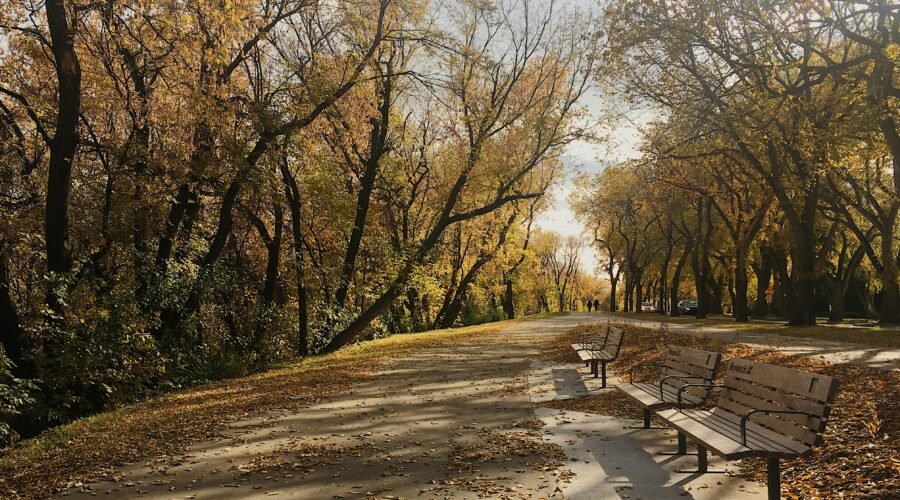
The river valley can show strong yellow and gold colour in early fall, but the comfortable outdoor window narrows quickly after September. Layers matter because mornings and evenings can feel much colder than the afternoon.
What Is Happening in Early September?
The Labour Day period can still feel like festival season. In 2026, the Nutrien Fireworks Festival ran September 4–5 at River Landing, with free family entertainment and fireworks at 9:30 p.m. each night.
That makes early September different from late September: you can still hit a major event weekend, then see crowds thin as the month progresses.
What Are the Trade-offs in Autumn?
- Rapid cooling: September can feel mild, while October nights average below freezing.
- Shorter days: You have less evening light for long river walks than in June or July.
- Seasonal wind-down: Some warm-weather attractions and outdoor event programs finish after summer.
3. Winter: Best for Snow Activities and the Quietest City Break

Winter works best for travellers who are comfortable with real prairie cold and want skating, skiing, indoor culture, and fewer visitors. It is not the season to choose if your priority is long outdoor sightseeing days.
How Cold Does Saskatoon Get?
January is the coldest month in the 1991–2020 normals, with an average high of -10.0°C (14°F) and an average low of -20.7°C (-5°F). February is only slightly milder, while December averages -8.0°C (18°F) by day and -18.0°C (0°F) at night.
- Dress for exposure: Use insulated footwear, gloves, a warm hat, and layers that block wind.
- Expect snow and ice: Walking and driving conditions can change after snowfall or a freeze-thaw cycle.
- Plan warm-up breaks: Outdoor activities are more comfortable when you alternate them with indoor stops.
Why Visit Saskatoon in Winter?
Winter adds activities that do not exist in summer. The City of Saskatoon’s winter-trail program includes groomed cross-country ski routes when snow conditions allow.
- Outdoor skating: The Cameco Meewasin Skating Rink at Nutrien Plaza typically operates from mid-December to mid-March, depending on weather.
- Cross-country skiing: City and Nordic club trails provide several options around Saskatoon.
- Indoor culture: Museums, galleries, restaurants, and theatres are natural anchors for very cold days.
- Lower travel costs: Winter is generally the best season in the original planning model for finding cheaper flights and accommodation than peak summer.
What Are the Challenges of a Winter Trip?
- Extreme cold: Cold snaps can make even a short walk uncomfortable without proper clothing.
- Limited outdoor time: River-valley sightseeing becomes more about selected activities than all-day wandering.
- Driving conditions: Snow, packed ice, and blowing snow can make roads more demanding.
4. Spring: Best for Quiet Travel Before Summer

Spring is a transition season rather than one consistent travel period. March still feels wintry, April can be raw and muddy, and May is when Saskatoon becomes much easier for comfortable outdoor sightseeing.
How Quickly Does Saskatoon Warm Up?
- March: Average high -0.7°C (31°F) and low -11.4°C (11°F).
- April: Average high 10.5°C (51°F) and low -2.6°C (27°F).
- May: Average high 18.3°C (65°F) and low 3.4°C (38°F).
That jump explains why “spring” can mean two completely different trips. Early spring may still include snow and icy mornings; late May can feel close to summer during the day.
What Does Spring Offer?
- Fewer visitors: March and April are generally quiet months for leisure travel.
- Green-up in May: Trees and parks begin to look more active as temperatures rise.
- Earlier outdoor access: Walking and cycling become more appealing as trails dry.
What Are the Downsides of Spring?
- Mud and meltwater: Trail conditions can be messy during the thaw.
- Weather swings: A mild afternoon does not guarantee a mild morning or evening.
- Smaller event calendar: Spring generally has fewer major city-wide festivals than July and August.
5. Shoulder Seasons: The Best Balance for Many Travellers
Late May and September are Saskatoon’s strongest shoulder-season windows. They avoid the deepest winter cold and much of the peak-summer pressure while still giving you useful outdoor weather.
Late May
Late May works well if you want the city before the busiest summer calendar begins. The normal daytime high for May is 18.3°C (65°F), but nights still average only 3.4°C (38°F), so pack a light warm layer.
- Good for walking, neighbourhood exploring, and early patio weather.
- Usually easier to plan than July or early August.
- Weather can still turn cool quickly, especially after sunset.
September and Early October
September is the stronger option if weather matters most. The normal high remains 19.1°C (66°F), and the first half of the month can still include large events.
- Fall colour adds interest to the river valley.
- Crowds often ease after the Labour Day period.
- Early October can still be pleasant, but the normal nighttime low is already below freezing.
How to Get the Most Value from a Shoulder-Season Trip
- Stay flexible: Build one indoor backup into any day with long outdoor plans.
- Book around event dates: A major festival can temporarily erase the usual shoulder-season crowd advantage.
- Pack layers: Shoulder seasons have bigger day-to-night temperature swings than midsummer.
6. Choose the Best Time Based on What You Want to Do
The best month changes once you define the trip. Use your main activity as the deciding factor, then check the weather and event dates for that period.
For Festival Lovers
July and August are the strongest choices. Sask Jazz, Fringe, Saskatoon EX, and Folkfest create the densest part of the annual event calendar. Early September can also work if a Labour Day weekend festival is part of your plan.
For Outdoor Enthusiasts
June through September is the best window for walking, cycling, picnics, and river-valley exploring. September gives you cooler temperatures, while July gives you the warmest normal daytime high.
For Budget Travellers
Winter usually offers the lowest travel demand, with spring and fall as practical compromises. Prices can still jump around holidays, sports weekends, conventions, or major events, so treat the season as a guide rather than a guaranteed rate.
For a Quiet, Relaxed Pace
Late fall, winter, and early spring generally bring fewer leisure visitors. These periods suit museum visits, restaurants, and slower city days better than a packed outdoor itinerary.
For the Best Overall Balance
Late May, early June, and September are the strongest all-round choices. Late May avoids the main summer rush, early June gives you long days, and September combines mild afternoons with fall colour and a lighter pace.
Summer remains the safest choice if your priority is warmth and events, but it is not the only good time to visit. Match the month to your tolerance for cold, your preferred activities, and the event calendar, and Saskatoon can work well in every season.
Frequently Asked Questions
What is the best time to visit Saskatoon for good weather?
The best time for reliably warm weather is June through August. July has the highest normal daytime temperature at 25.0°C (77°F), while August is nearly as warm at 24.8°C (77°F).
When is peak tourist season in Saskatoon?
Peak leisure travel is generally in summer, especially July and August. Major event weekends can be busier than the surrounding dates, so check the festival calendar before choosing a hotel.
What is the off-peak season in Saskatoon?
Winter is Saskatoon’s main off-peak period for leisure travel. December through February bring very cold temperatures, fewer outdoor sightseeing hours, and generally quieter attractions.
When can visitors usually find lower travel costs in Saskatoon?
Winter generally has the lowest travel demand, while late spring and early fall can offer a better balance of weather and value. Actual hotel and airfare prices vary by event, holiday, and booking date.
What are the main festivals to plan around in Saskatoon?
Major summer events include the TD Sask Jazz Festival, Saskatoon Fringe Festival, Saskatoon EX, and Saskatoon Folkfest. The Nutrien Fireworks Festival also makes the Labour Day period a notable early-September weekend.
If you’re planning a trip to Saskatoon, Saskatchewan, it’s essential to consider not only the best time to visit but also how to make the most of your experience. A related article that provides valuable insights into travel planning is available at Lele Tours, where you can find information on various travel tips, including weather patterns, local attractions, and budget-friendly options that can enhance your visit to this vibrant city.
If you’re planning a trip to Saskatoon, Saskatchewan, understanding the best time to visit can greatly enhance your experience. Factors such as weather, crowds, and costs play a significant role in determining the ideal time for your journey. For more insights on how to make the most of your travel plans, you might find this related article helpful. It offers valuable tips and suggestions that can help you navigate your visit more effectively. You can check it out here.
If you’re planning a trip to Saskatoon, Saskatchewan, it’s essential to consider not only the best time to visit but also the various activities and attractions available throughout the year. For a deeper understanding of what to expect during your stay, you might find it helpful to read an article on the local culture and events that can enhance your experience. This will provide insights into the vibrant community and seasonal festivities that make Saskatoon a unique destination.
Sources
- Environment and Climate Change Canada: Saskatoon Diefenbaker Airport 1991–2020 temperature, precipitation, and snowfall normals.
- TD Sask Jazz Festival: official festival dates and programming information.
- 25th Street Theatre: official Saskatoon Fringe Festival dates.
- Saskatoon EX: official exhibition dates and event information.
- Discover Saskatoon: 2026 Nutrien Fireworks Festival dates, times, location, and free admission.
- Meewasin Valley Authority: Meewasin Trail network length and access information.
- Cameco Meewasin Skating Rink at Nutrien Plaza: typical operating season and winter rink information.
- City of Saskatoon Winter Trails: groomed cross-country ski trail locations and conditions.