The best time to visit St. Lucia depends on the weather you want, your budget, and the events you hope to experience. The island stays warm throughout the year, but rainfall, hotel demand, and hurricane exposure change considerably between seasons.
Quick Answer
The best time to visit St. Lucia for sunny beaches and outdoor activities is December through May. January to April offers particularly dependable weather, but it is also the busiest and most expensive period. For better value and fewer visitors, consider May or June, accepting more rain from June onward.
Also compare: Yalvaç, Isparta.
Last checked: November 18, 2026. Dates and figures were verified against official sources.
Key Takeaways
- The dry season runs from December through May, while the wetter season lasts from June through November.
- May is an attractive shoulder-season month because it combines relatively dry weather with fewer visitors.
- Atlantic hurricane season runs from June 1 through November 30, with the greatest activity usually occurring between mid-August and mid-October.
- The 2027 Jazz & Arts Festival runs from April 30 to May 9, while Carnival runs from July 1 to 21.
- October brings Creole Heritage Month and Jounen Kwéyòl, making it an interesting month for cultural experiences.
St. Lucia’s Weather Year-Round: Monthly Temperatures and Rainfall
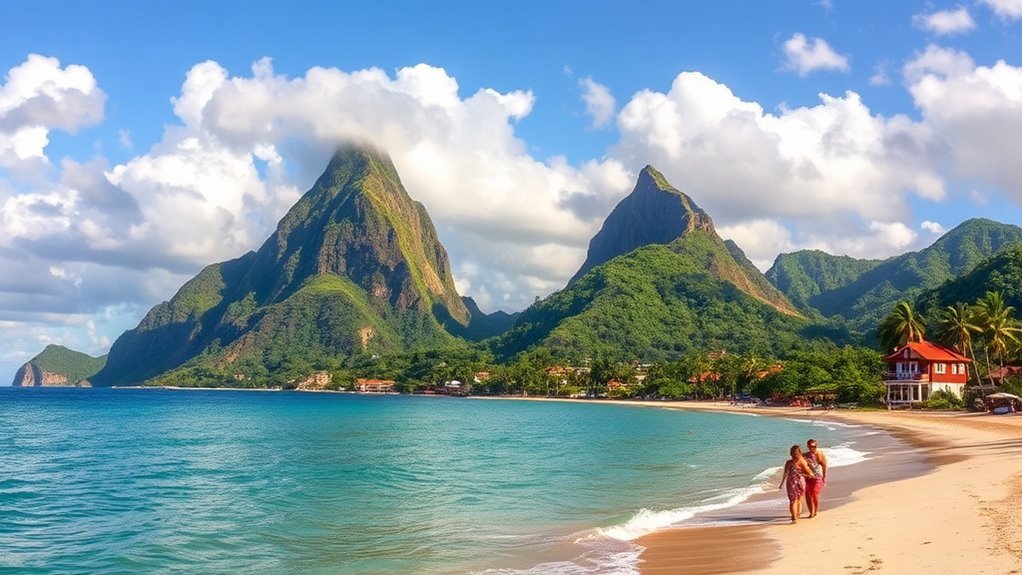
St. Lucia has a warm tropical climate throughout the year, but rainfall changes considerably between seasons. The official dry season runs from December through May, while the wet season lasts from June through November.
According to the Saint Lucia Meteorological Services’ 1991–2020 climate normals, temperatures remain fairly consistent. At Hewanorra Airport in the south, average monthly daytime highs range from 29.2°C to 31.5°C (84.6°F to 88.7°F). Average nighttime lows range from 23.7°C to 25.8°C (74.7°F to 78.4°F).
Rainfall is more variable. The northern George F. L. Charles station in Castries generally records more rain than Hewanorra. The mountainous rainforest interior can receive even heavier rainfall than coastal areas.
The following table uses official 30-year climate averages. Rainfall figures show monthly totals at both airport stations, not guaranteed amounts for a particular year.
| Month | Average high at Hewanorra | Average low at Hewanorra | Rainfall: Hewanorra (south) | Rainfall: Castries (north) |
|---|---|---|---|---|
| January | 29.2°C (84.6°F) | 23.8°C (74.8°F) | 84.7 mm (3.3 in) | 104.9 mm (4.1 in) |
| February | 29.2°C (84.6°F) | 23.7°C (74.7°F) | 50.7 mm (2.0 in) | 72.1 mm (2.8 in) |
| March | 29.7°C (85.5°F) | 24.0°C (75.2°F) | 57.0 mm (2.2 in) | 65.9 mm (2.6 in) |
| April | 30.3°C (86.5°F) | 24.9°C (76.8°F) | 84.4 mm (3.3 in) | 86.2 mm (3.4 in) |
| May | 30.9°C (87.6°F) | 25.7°C (78.3°F) | 71.6 mm (2.8 in) | 105.1 mm (4.1 in) |
| June | 30.9°C (87.6°F) | 25.8°C (78.4°F) | 136.4 mm (5.4 in) | 156.7 mm (6.2 in) |
| July | 30.9°C (87.6°F) | 25.7°C (78.3°F) | 153.4 mm (6.0 in) | 199.0 mm (7.8 in) |
| August | 31.2°C (88.2°F) | 25.6°C (78.1°F) | 167.5 mm (6.6 in) | 217.6 mm (8.6 in) |
| September | 31.5°C (88.7°F) | 25.4°C (77.7°F) | 186.3 mm (7.3 in) | 205.8 mm (8.1 in) |
| October | 31.2°C (88.2°F) | 25.4°C (77.7°F) | 215.9 mm (8.5 in) | 250.9 mm (9.9 in) |
| November | 30.5°C (86.9°F) | 24.9°C (76.8°F) | 191.4 mm (7.5 in) | 234.0 mm (9.2 in) |
| December | 29.8°C (85.6°F) | 24.4°C (75.9°F) | 99.0 mm (3.9 in) | 129.4 mm (5.1 in) |
The figures reveal an important difference between the two seasons. February is the driest month at Hewanorra, while October records its highest monthly rainfall. Castries also experiences particularly wet conditions in October and November.
Rain does not necessarily mean a full day indoors. Showers can arrive in short bursts, followed by sunshine. However, heavy rainfall is possible, especially in the mountains and rainforest.
The Best Time to Visit St. Lucia for Sun and Beaches
December through May is the best time for beach holidays in St. Lucia. You generally get less rain, lower humidity, and calmer seas. January through April is particularly attractive if you want dependable sunshine for swimming, snorkeling, diving, and outdoor activities.
Reduit Beach in Rodney Bay is a popular choice for a traditional beach day. Anse Cochon offers another option if you want to explore a quieter coastal setting.
May deserves special attention. It is still part of the official dry season, but visitor numbers and accommodation demand often begin to ease. You can enjoy warm beach weather without facing the same peak-season pressure.
Your choice of coastline also matters. The Caribbean-facing west coast generally has calmer water than the Atlantic-facing east coast. The east coast can experience stronger currents and larger waves.
The Saint Lucia Tourism Authority’s beach safety guidance recommends checking wave conditions and local warnings before swimming. Avoid entering the water after heavy rainfall, and remember that many beaches do not have lifeguards.
Sun protection also matters throughout the year. Use sunscreen, wear a hat, choose protective clothing, and take breaks in the shade. Reef-conscious sunscreen is a sensible choice when enjoying the island’s marine environment.
When Is St. Lucia Cheapest and Least Crowded?
St. Lucia is generally busiest from December through April. This is the dry-season peak, when travelers escaping colder weather increase demand for flights, hotels, and resorts. May through November usually offers better accommodation value and a quieter atmosphere.
The Saint Lucia Tourism Authority’s seasonal travel guide identifies December through April as the busiest period and highlights May and June for more affordable accommodation opportunities.
| Travel period | Crowds and prices | What to expect |
|---|---|---|
| December–April | Highest demand and generally highest prices | Drier weather, busy resorts, and excellent beach conditions |
| May | Shoulder-season value and fewer visitors | Dry-season conditions and the Jazz & Arts Festival |
| June–July | Generally lower accommodation demand, with event-related increases | Wetter conditions and July Carnival celebrations |
| August–November | Quieter periods and potentially substantial discounts | More rain, hurricane exposure, and cultural festivals |
Off-peak accommodation rates can sometimes be 30–50% lower than peak-season prices. The actual saving depends on the resort, room type, and travel dates, so do not treat that range as a guaranteed discount.
May and June are worth considering if you want a balance between cost and weather. May stays within the dry season, while June marks the beginning of the wetter period. You can still enjoy sunny days, but should allow more flexibility for outdoor plans.
September can offer quieter resorts, but it also falls near the peak of Atlantic hurricane activity. October brings Creole Heritage Month and other cultural celebrations, so it is not necessarily the island’s quietest month for every visitor.
Remember that festivals can create temporary increases in demand. A normally quieter month may become busy around major concerts, Carnival, or community celebrations.
Hurricane Season in St. Lucia: How Worried Should You Be?
Hurricane season in St. Lucia runs from June 1 through November 30. The risk is not equal throughout these six months. Atlantic tropical cyclone activity usually increases in August, reaches its highest level around September, and declines later in autumn.
According to the NOAA National Hurricane Center’s tropical cyclone climatology, September 10 is the statistical peak of the Atlantic hurricane season. Most activity occurs between mid-August and mid-October.
Here is how the season generally breaks down:
| Period | Seasonal pattern | Travel considerations |
|---|---|---|
| June–July | Early hurricane season | Tropical systems are possible, even though activity is generally below the seasonal peak. |
| Mid-August–mid-October | Highest Atlantic tropical cyclone activity | September is the statistical peak. Allow for possible weather-related travel changes. |
| Late October–November | Late hurricane season | Activity generally declines, but tropical systems remain possible until November 30. |
St. Lucia’s location does not make it immune to hurricanes. Even when a storm does not make a direct landfall, heavy rain, rough seas, flight disruption, and temporary activity closures can affect your vacation.
Warning: Standard travel insurance may exclude certain hurricane-related cancellations or disruptions. Read the policy’s named-storm, cancellation, and trip-interruption conditions before purchasing coverage. Flexible accommodation and flight arrangements can also reduce the financial risk.
Before traveling during this period, follow official weather updates and travel advisories. Pay attention to instructions from local authorities if a tropical storm approaches.
Hurricane season does not automatically mean a ruined vacation. Many days remain suitable for sightseeing and relaxation. The key is understanding the seasonal risk rather than assuming every day will be sunny or every storm will miss the island.
Best Time to Visit St. Lucia by Travel Style: Beaches, Budget, or Crowds
The best month depends on what matters most to you. Dry-season visitors get more dependable beach weather, while shoulder-season and wet-season visitors can find better value, greener landscapes, and lively cultural events.
- Beach lovers: Choose January through April for sunny conditions and generally calmer seas. December through May also falls within the official dry season.
- Budget travelers: Consider May, June, or November. May offers a better chance of dry weather, while June and November bring more seasonal rain.
- Crowd avoiders: Look at May or early June, outside the main winter travel rush. September can be quieter, but comes with greater hurricane exposure.
- Romantic couples: January through April offers attractive weather for outdoor dining, beach days, and sunset cruises. However, it is also the busiest period. May can provide a better balance of weather and value.
- Families: July and August can be practical if your children’s school holidays determine your travel dates. Remember that both months fall within the rainy and hurricane seasons.
- Festival lovers: April, May, July, August, and October offer opportunities to experience Saint Lucian music, Carnival, and local traditions.
Major Festivals to Consider When Booking
St. Lucia has cultural celebrations throughout the year. Some events attract visitors from across the Caribbean, while others offer a closer look at local traditions.
- April–May: Saint Lucia Jazz & Arts Festival. The 2027 festival takes place from April 30 to May 9. It combines international music performances with local art, theater, and cultural activities. The official Saint Lucia festival calendar provides event information.
- July: Saint Lucia Carnival. The 2027 Carnival season runs from July 1 to July 21. Expect themed parties, soca, calypso, costume parades, and major street celebrations. See the official 2027 Carnival information when planning your dates.
- August: La Rose Flower Festival. This traditional celebration belongs to one of the island’s historic flower societies. It features music, processions, costumes, and folk dancing.
- October: La Marguerite Flower Festival. The rival flower society celebrates its traditions through church services, processions, singing, and dancing.
- October: Creole Heritage Month. The island celebrates its Kwéyòl language, traditional food, music, and cultural identity. The month culminates in Jounen Kwéyòl, held on the last Sunday of October. The official Jounen Kwéyòl guide explains what visitors can expect.
If you visit outside these major celebrations, you can still experience local nightlife. The Gros Islet Friday Night Street Party takes place every week and offers music, food, and a lively community atmosphere.
Festival dates and programs can change. If an event is the main reason for your trip, plan around its confirmed schedule rather than relying on the usual month alone.
Frequently Asked Questions
What Vaccinations or Health Precautions Should I Take Before Visiting St. Lucia?
The CDC recommends hepatitis A vaccination for unvaccinated travelers aged 1 year or older and hepatitis B vaccination for unvaccinated travelers of all ages. Typhoid vaccination is worth discussing if you will visit rural areas, stay for a month or more, or visit friends and relatives. Review your routine vaccines with a travel-health clinician before departure. See the CDC’s Saint Lucia travel health recommendations for details.
Do I Need a Visa to Enter St. Lucia as a Tourist?
Not every visitor needs a visa. Requirements depend on your passport and length of stay; many visitors from the United States, Canada, the United Kingdom, and several European countries are visa-exempt for short trips. Check the Saint Lucia Tourism Authority’s entry guidance before booking, and confirm you have a valid passport and proof of onward travel.
What Currency Is Used in St. Lucia, and Should I Exchange Money?
St. Lucia uses the Eastern Caribbean dollar (EC$ or XCD), and US dollars are widely accepted in hotels, restaurants, and tourist areas. You may receive change in EC dollars, so carrying some local cash is useful for smaller purchases and local markets.
How Many Days Should I Plan for a St. Lucia Trip?
Seven to ten days is a useful starting point. This gives you time to visit the Pitons, explore the rainforest and volcanic attractions, and enjoy several beaches without rushing between the north and south of the island.
Is St. Lucia Safe for Solo Female Travelers Visiting the Island?
You can travel alone in St. Lucia, but the island should not be described as risk-free. Stay in secure accommodation, avoid isolated beaches after dark, use licensed taxis, and take extra care around crowded festivals and street parties. Review the UK Foreign Office safety guidance before departure.
Does It Rain All Day in St. Lucia During the Rainy Season?
No. Showers can be brief, but the wet season brings higher monthly rainfall and occasional heavy downpours. Rainfall also varies by location. Castries in the north is generally wetter than Hewanorra in the south, while the rainforest interior can receive more rain than coastal areas.
Conclusion
Choose December through April if dependable sunshine matters most, May if you want a better balance of weather and value, and June through November if you accept more rain and hurricane-season uncertainty in exchange for potentially lower prices and greener scenery.
Match your dates to the activities and festivals you care about, then arrange suitable travel insurance before paying for your trip. With the right timing, St. Lucia can deliver an excellent Caribbean vacation in any season.
Sources
- Saint Lucia Meteorological Services: 1991–2020 monthly temperature and rainfall averages for Hewanorra and Castries.
- Saint Lucia Tourism Authority: Travel Seasons and Weather: Seasonal visitor demand, weather patterns, and accommodation guidance.
- NOAA National Hurricane Center: Official Atlantic hurricane season dates and historical activity patterns.
- Saint Lucia Tourism Authority: Festival Calendar: Jazz & Arts Festival dates and cultural celebrations.
- Saint Lucia Carnival 2027: Official 2027 Carnival season dates.
- Saint Lucia Tourism Authority: Jounen Kwéyòl Guide: Creole Heritage Month and the annual Creole Day celebration.
- Saint Lucia Tourism Authority: Plan Your Trip: Entry requirements, passports, and practical visitor information.
- Centers for Disease Control and Prevention: Vaccination recommendations and health precautions for Saint Lucia.
- UK Foreign, Commonwealth & Development Office: Personal safety and crime precautions for visitors.
- Saint Lucia Tourism Authority: Beach Safety and Swimming Tips: Coastline conditions, swimming precautions, and water safety.