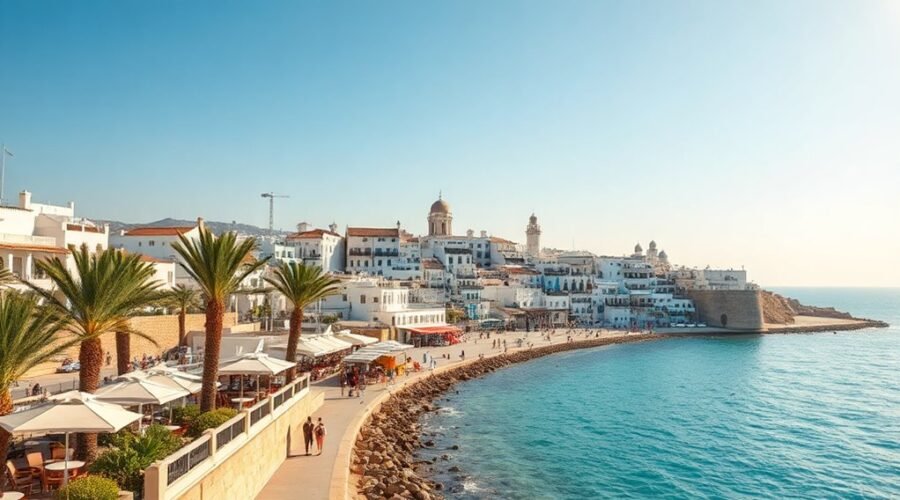
The best time to visit Tunisia depends on how far south you plan to go and what you want to experience. The Mediterranean coast, central steppe and Sahara follow different seasonal patterns, so a month that suits a beach holiday may be too hot for a desert adventure.
Quick Answer
April–May and October are the strongest all-round months for visiting Tunisia. You can explore Roman ruins, medinas and inland oases without midsummer heat. Choose June–September for swimming, October–April for the Sahara, and November–February for quieter cities and lower-season rates.
Also compare: When to Visit Iowa City, IA.
Last checked: November 18, 2026. Dates and figures were verified against official sources.
Key Takeaways
- Spring offers comfortable sightseeing weather, green landscapes and good conditions for exploring ancient sites.
- Summer is best for Mediterranean beaches, warm water and lively resorts, but July and August bring the biggest crowds.
- Autumn combines warm coastal weather with better conditions for exploring the Sahara and inland attractions.
- Winter is quieter and often cheaper. It also offers excellent birdwatching at Ichkeul and comfortable desert days, although nights can be cold.
Tunisia’s Climate by Region: Temperatures, Rainfall, and Seasonal Patterns
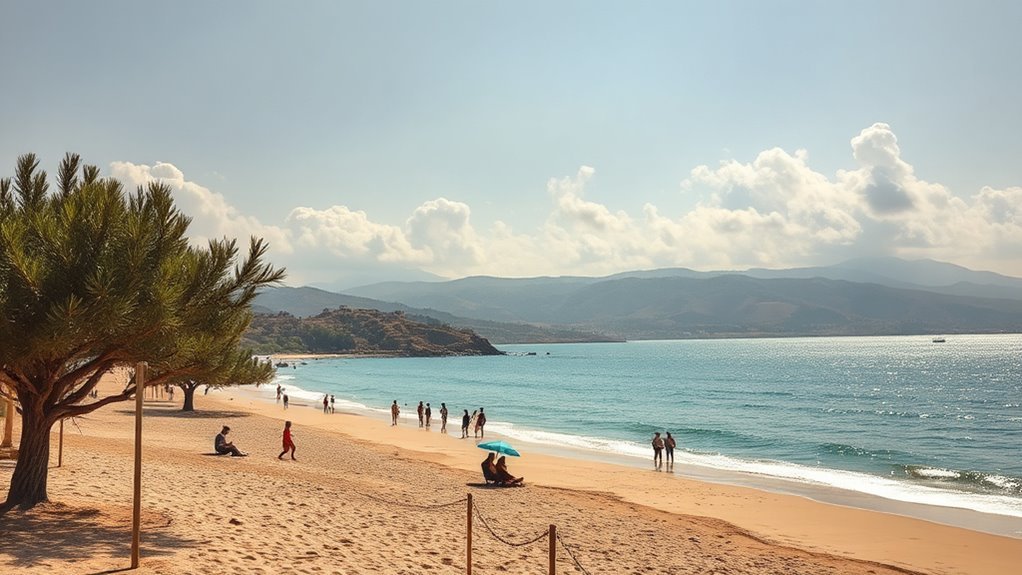
Tunisia has three main climatic zones: the Mediterranean north, the semi-arid central steppe and the Saharan south. These regions experience different rainfall patterns, temperatures and seasonal conditions. Understanding these differences helps you choose the right travel dates for each destination.
From Mediterranean shores to Saharan sands, Tunisia offers several distinct climates within one relatively compact country.
How Does the Climate Differ Across Tunisia?
The northern coast has mild, wetter winters and hot, dry summers. Inland areas experience greater temperature changes, while the south has a dry desert climate with intense summer heat and cold winter nights.
The World Bank’s 2025 Climate Risk Country Profile documents these regional differences. Its rainfall figures show how sharply conditions change as you travel south.
| Region | Climate | Annual rainfall | What it means for travelers |
|---|---|---|---|
| Northwest, including Jendouba | Mediterranean, relatively wet | Over 900 mm in Jendouba | Greener landscapes and more winter rain |
| Northern interior and coast | Mediterranean | Over 700 mm in Béja, Bizerte and Le Kef; 528 mm in Ariana | Good sightseeing conditions in spring and autumn |
| Central and eastern areas, including Sfax | Semi-arid steppe and coastal influences | 258 mm in Sfax | Hotter summers and drier landscapes |
| Southern desert | Arid to Saharan | Generally below 100 mm in the southern desert areas | Best explored during cooler months |
These figures come from the World Bank’s Tunisia Climate Risk Country Profile. They show why a single national temperature or rainfall average cannot describe every Tunisian destination.
Tunis Weather Month by Month
Tunis provides a useful example of the northern Mediterranean climate. The following figures show average daily maximum temperatures and monthly rainfall at Tunis-Carthage, using the historical climate records published through the World Meteorological Organization.
| Month | Average daily high | Average rainfall | Typical conditions |
|---|---|---|---|
| January | 15.7°C | 59.3 mm | Cool, relatively wet and quiet |
| February | 16.5°C | 57.0 mm | Cool with occasional rain |
| March | 18.1°C | 47.2 mm | Mild spring weather begins |
| April | 20.7°C | 38.0 mm | Comfortable for sightseeing |
| May | 24.9°C | 22.6 mm | Warm, mostly dry days |
| June | 29.0°C | 10.4 mm | Hot and dry; beach season begins |
| July | 32.6°C | 3.1 mm | Very hot and busy on the coast |
| August | 32.7°C | 7.1 mm | Peak beach season and heat |
| September | 29.7°C | 32.5 mm | Warm, with crowds beginning to ease |
| October | 25.2°C | 65.5 mm | Mild, with increasing rainfall |
| November | 20.5°C | 56.0 mm | Cooler, quieter and wetter |
| December | 16.7°C | 66.8 mm | Coolest, wetter winter conditions |
Climate data note: These Tunis-Carthage figures use the 1961–1990 historical averages published by the WMO. They describe long-term seasonal patterns, not today’s weather or a current forecast. The WMO’s Tunis-Carthage climate records provide the original station data.
Recent warming also matters. The World Bank’s 2025 profile reports a substantial warming trend across Tunisia and notes that Tozeur, Kebili and Tataouine already experience approximately three months each year with maximum temperatures above 35°C.
The Best Time to Visit Tunisia Overall
April, May and October offer the best balance for a first visit to Tunisia. These months make it easier to combine coastal towns, historic sites and inland landscapes without facing the most intense summer heat or the coldest winter conditions.
September is another excellent option if swimming and warm coastal evenings matter more than exploring the southern desert early in the month.
Ideal Months To Visit
Your best month depends on the activities you want to prioritize. Use these seasonal windows to match your dates with your plans.
- March–April: Good for Roman ruins, green countryside, hiking and comfortable city walks. April is especially attractive for a first sightseeing trip.
- May–June: Warm coastal weather, longer beach days and fewer visitors than the July–August peak. June works particularly well for a beach-focused holiday.
- September–October: Warm sea conditions, improving temperatures inland and more manageable visitor numbers. October is especially good for combining the coast with desert excursions.
- November–February: A quieter period with lower-season accommodation options. It suits travelers who prefer cultural visits, winter birdwatching and daytime desert activities.
Weather And Climate Overview
Tunisia has a Mediterranean climate in the north and a much drier climate in the south. The coast receives more winter rain, while the Sahara remains dry and experiences much greater summer heat.
Spring and autumn offer the most useful compromise. Summer is better for coastal holidays, while winter suits travelers who value quieter cities and can handle cold desert nights.
Which Season Is Best for Each Type of Trip?
| Season | Months | Weather and crowds | Best for |
|---|---|---|---|
| Spring | March–May | Mild to warm; generally manageable crowds | Roman ruins, hiking and sightseeing |
| Summer | June–August | Hot and dry; highest coastal demand | Beaches, swimming and water sports |
| Autumn | September–November | Warm early, cooler later; crowds ease after August | Desert tours, sightseeing and value |
| Winter | December–February | Cooler, quieter and wetter in the north | Medinas, birdwatching and daytime desert trips |
Balancing Crowds And Costs
Weather determines what you can comfortably do, but visitor demand affects accommodation prices and the atmosphere at popular resorts. July and August are the busiest coastal months, while shoulder seasons generally offer more flexibility and better value.
April–May and September–October are useful choices if you want a balance between weather, sightseeing opportunities and accommodation availability. November–February can offer deeper discounts, although some beach hotels and seasonal businesses reduce their operations.
Spring in Tunisia: The Best Time for Sightseeing and Sahara Trips
Spring, from March to May, is one of the most comfortable times to explore Tunisia’s ancient sites and inland landscapes. Temperatures rise gradually, the countryside becomes greener and outdoor activities become easier before the strongest summer heat arrives.
Spring Weather Conditions Overview
Spring brings mild to warm days, especially in April and May. At Tunis-Carthage, historical average daily highs rise from 18.1°C in March to 24.9°C in May.
Rain becomes less frequent as the season progresses, although occasional showers remain possible in the north. Southern destinations warm more quickly, so plan longer desert activities earlier in spring rather than waiting until late May.
Spring is also a useful period for nature enthusiasts. At Ichkeul National Park, migratory birds use the wetland as a stopover during spring and autumn. The Tunisian National Agency for Environmental Protection identifies winter as the main season for large concentrations of waterbirds, with up to 200,000–250,000 birds recorded.
That makes winter the stronger choice for large waterbird gatherings, while spring offers another opportunity to observe migrating species. The National Agency for Environmental Protection’s Ichkeul information explains the park’s seasonal birdlife.
Top Sightseeing Destinations
Spring weather makes Tunisia’s archaeological sites and historic towns more comfortable to explore. You can spend longer outdoors without dealing with the strongest summer heat.
- Carthage: Explore the remains of the ancient Punic and Roman city, including its archaeological areas and historic landmarks.
- Sidi Bou Said: Walk through its famous blue-and-white streets and enjoy views over the Mediterranean.
- Dougga: Visit one of Tunisia’s most impressive Roman archaeological sites, with temples, public buildings and a well-preserved theater.
- Matmata: See traditional underground homes and the unusual architecture developed to cope with the region’s hot climate.
- Tunis Medina: Explore historic streets, traditional markets and local food stalls.
Food is another reason to explore during spring. Look for brik pastries, merguez sausage, dishes flavored with harissa and traditional Tunisian meals served in local restaurants.
Sahara Trip Planning Tips
Spring is a good time for a Sahara excursion because daytime temperatures are more manageable than in midsummer. However, the desert still has significant temperature changes between day and night, so preparation matters.
- Pack suitable clothing: Choose lightweight, sun-protective clothing, a head covering and warmer layers for the evening.
- Arrange a local guide: Use an experienced desert operator who understands the route, local conditions and access restrictions.
- Carry enough water: Bring more drinking water than you expect to need, especially on longer excursions.
- Plan outdoor activities carefully: Schedule demanding walks for cooler parts of the day rather than the hottest hours.
March and April are particularly useful for combining inland sightseeing with desert activities. Late spring becomes hotter, especially around Tozeur and Douz.
Summer in Tunisia: Best Time to Visit Tunisia’s Mediterranean Coast
Summer, from June through August, is the main beach season in Tunisia. The Mediterranean coast offers hot, sunny days, warm swimming conditions and lively resorts, but the same weather makes inland sightseeing and Sahara excursions more demanding.
Hammamet, Sousse and Djerba attract beach visitors looking for swimming, snorkeling, windsurfing and other water sports. Coastal restaurants and resort areas also become busier during the European summer holiday period.
At Tunis-Carthage, historical average daily highs reach 32.6°C in July and 32.7°C in August. Inland and desert locations can become considerably hotter, especially during heatwaves.
Coastal evenings are more comfortable than midday, so early mornings and later afternoons are better times for outdoor activities. You can spend the hottest hours swimming, relaxing in shaded areas or enjoying indoor attractions.
The 60th International Festival of Carthage also took place during summer 2026, running from July 16 to August 19 at the Roman amphitheater. The Radio RTCI festival announcement provides the 2026 schedule.
July and August are also the busiest months for many coastal resorts. If you want similar beach conditions with somewhat more breathing room, June is worth considering.
Fall in Tunisia: The Best Time for Budget Travelers
Autumn, from September through November, is an attractive period for travelers who want warm weather without the strongest summer crowds. Coastal temperatures remain pleasant early in the season, while inland destinations become more comfortable for longer excursions.
Hotel rates often become more attractive after the summer peak. The original planning estimates suggest accommodation savings of 30–50% compared with July and August, although the actual difference depends on the resort, property and booking dates.
September is particularly good for swimming because the sea retains much of its summer warmth. October is better for combining coastal visits with Roman ruins and desert excursions.
Autumn also offers opportunities to experience local food traditions and olive-growing regions during the harvest period. Smaller towns can provide a quieter experience than the main summer resorts.
One festival detail is worth correcting: the International Festival of Carthage is a summer event, not an autumn event. Its 2026 edition ran from July 16 to August 19.
November brings cooler evenings and more rain in northern Tunisia, but it can still work well for sightseeing and travelers seeking a quieter holiday.
Winter in Tunisia: Who Should Actually Visit and Who Shouldn’t
Winter, from December through February, suits travelers who prefer quieter cities, cooler sightseeing weather and lower-season accommodation options. Northern Tunisia becomes cooler and wetter, while the south remains suitable for daytime desert activities.
Tunis has historical average daily highs of approximately 15.7–16.7°C during these months. Desert destinations are generally warmer during the day, but nights can become cold enough to require proper winter clothing.
Winter is also a strong season for birdwatching at Ichkeul National Park. The park attracts large numbers of migratory waterbirds, including ducks, geese and coots. Its winter concentrations are one of its major ecological attractions.
The International Sahara Festival in Douz is another reason to consider a December trip. The 58th edition is being prepared for 2026. The later Tunis Afrique Presse announcement gives December 23–26, 2026, although an earlier September media report listed different dates. Treat the later announcement as the most recent reported schedule and confirm the final programme before arranging your trip.
Winter is less suitable if you want a conventional beach holiday. Mediterranean water is cold compared with summer, and some coastal hotels and seasonal businesses reduce their services or close.
Pack layers, choose accommodation carefully and allow for occasional rain in the north. Winter works best when you want cultural experiences and quieter travel rather than guaranteed sunshine and beach activities.
How Much Does Tunisia Cost to Visit by Season?
Tunisia generally costs more during the busy summer beach season and less during the quieter months. Accommodation, tours and transport demand all influence the final price, so the best value depends on where you stay and what you plan to do.
These are the broad seasonal cost patterns to consider:
| Travel period | Typical price pattern | Main trade-off |
|---|---|---|
| Peak season: June–August | Hotels and tours can be 40–60% higher than shoulder-season prices, according to the original estimates. | Warmest beach conditions and the busiest resorts |
| Shoulder season: March–May and September–October | Accommodation may be 30–50% below peak-season rates, according to the original estimates. | Good sightseeing conditions and fewer summer visitors |
| Off-season: November–February | Often the lowest accommodation and flight prices | Cooler weather and reduced coastal services |
Traveling outside July and August can give you more flexibility with accommodation and activities. However, a lower hotel price does not always mean that every attraction, beach facility or tour operator will be operating.
When Is Tunisia Most Crowded: and How Much Does It Matter?
July and August are generally Tunisia’s busiest months, especially in coastal resorts such as Hammamet, Sousse and Djerba. Beaches, hotels and popular tourist areas attract more visitors during the European summer holiday period.
Official tourism statistics provide useful evidence of this seasonal pattern. Tunisia’s National Institute of Statistics publishes monthly accommodation-night figures sourced from the Ministry of Interior and the National Tourism Office.
| Month | Total overnight stays | Year |
|---|---|---|
| January | 880,000 | 2025 |
| June | 3.235 million | 2025 |
| July | 4.138 million | 2025 |
| August | 4.886 million | 2025 |
These figures represent total overnight stays, not a count of unique foreign tourists. They nevertheless show the strong summer demand pattern. The National Institute of Statistics’ monthly bulletin provides the underlying figures.
You can avoid some of the pressure by visiting popular attractions early in the day, choosing accommodation outside the busiest resort centers and traveling inland when conditions allow. Even during peak season, smaller towns and less-visited archaeological areas can offer a quieter experience.
Best Time to Visit Tunisia for Desert and Inland Travel
October through April is generally the best period for exploring Tunisia’s desert and inland attractions. Cooler daytime conditions make desert excursions, oasis visits and longer drives more comfortable than during the hottest months.
Tozeur, Douz and nearby Saharan destinations experience intense summer heat. The World Bank’s climate profile confirms that southern interior locations such as Tozeur, Kebili and Tataouine already experience approximately three months each year with maximum temperatures above 35°C.
Your most useful travel windows are:
- October–November: Comfortable conditions return, making this an excellent period for oasis visits, desert landscapes and inland sightseeing.
- December–February: Daytime excursions remain possible, but desert nights can be cold. Bring warm clothing for overnight camps.
- March–April: Spring temperatures make longer journeys and outdoor activities more comfortable. The countryside can also look greener after winter rainfall.
July and August are poor choices for demanding desert activities because of the extreme heat. If you must travel during summer, arrange activities with experienced local operators and avoid strenuous outdoor excursions during the hottest hours.
Warning: Desert heat can cause serious dehydration and heat-related illness. Do not attempt remote desert routes alone. Use an experienced local operator, carry sufficient water and follow current travel restrictions. The U.S. Department of State specifically advises against travel to certain border areas and the military desert zone south of Remada.
For U.S. travelers, the U.S. Department of State’s Tunisia travel advisory lists no-travel areas, including locations within 16 km of the Algerian and Libyan borders, designated mountain areas and the desert south of Remada. Travelers with other passports should also read their own government’s current advice before planning remote excursions.
Best Time to Visit Tunisia for Beach Holidays and Water Sports
June through October offers the strongest beach season along Tunisia’s Mediterranean coastline. June brings the start of comfortable swimming conditions, while July, August and September provide warmer water and long sunny days.
Djerba is one of the warmer swimming destinations. Historical sea-temperature averages show how the water changes through the main beach season.
| Month | Average Djerba sea temperature | Swimming conditions |
|---|---|---|
| June | 23°C | Pleasant for swimming |
| July | 26.5°C | Warm water and busy beaches |
| August | 28.5°C | Warmest water of the year |
| September | 28°C | Very comfortable for swimming |
| October | 26°C | Pleasant with fewer summer crowds |
These are historical averages for Djerba, not measurements for every Tunisian beach. The Djerba sea-temperature guide uses 1991–2020 averages and explains the seasonal swimming conditions.
Hammamet, Sousse and Djerba are popular choices for beach activities. If you want warmer water without the busiest summer atmosphere, September and early October are especially attractive.
For kitesurfing, snorkeling and windsurfing, late May, June, September and early October are useful periods to consider. Local wind, wave and beach conditions still matter, so choose your activity and location carefully.
Frequently Asked Questions
Note: Vaccination recommendations depend on your health, age and itinerary. Discuss your travel plans with a qualified travel-medicine clinician before departure.
What Is the Best Month to Visit Tunisia?
April and October are two of the strongest choices for an all-round Tunisia trip. April is excellent for spring sightseeing, while October combines pleasant coastal conditions with more comfortable temperatures for inland and desert excursions. September is better if warm swimming water is your main priority.
When Can You Swim in Tunisia?
June through October is generally the best swimming period. In Djerba, average sea temperatures are about 23°C in June, 28.5°C in August, 28°C in September and 26°C in October. Northern and central beaches can have different water temperatures.
What Vaccinations or Health Precautions Are Recommended Before Visiting Tunisia?
No general vaccination requirement applies to U.S. visitors entering Tunisia, but recommended travel vaccines are different from mandatory entry requirements. The CDC recommends hepatitis A, hepatitis B for eligible unvaccinated travelers, typhoid for most travelers and up-to-date routine vaccinations. Yellow fever vaccination is not required. Ask a travel-health professional about your individual needs.
Do I Need a Visa to Enter Tunisia as a Tourist?
Visa requirements depend on your nationality. U.S. citizens can visit Tunisia without a visa for stays of up to 90 days under U.S. government guidance. Other passport holders should confirm their own requirements with the Tunisian embassy or relevant government authority before booking.
Is Tunisia a Safe Destination for Solo Female Travelers?
Women can travel independently in Tunisia, but safety requires sensible precautions. Respecting local customs, choosing reliable transportation and avoiding isolated areas after dark are useful steps. The U.S. travel advisory also reports harassment and assault incidents affecting women in some areas of Tunis, so remain aware of your surroundings.
What Currency Is Used in Tunisia and Can I Use Cards?
Tunisia uses the Tunisian dinar (TND). Many hotels, restaurants and larger businesses accept credit cards, but cash remains useful for markets, smaller shops and local vendors. Tunisian dinars generally cannot be taken out of the country, so arrange to exchange any remaining cash before departure.
What Languages Are Spoken in Tunisia and Is English Widely Understood?
Arabic is Tunisia’s official language, and Tunisian Arabic is widely used in everyday conversations. French is also common, particularly in business, education and tourism. English is more likely to be understood in major hotels and tourist areas than in smaller towns and rural communities.
Conclusion
April, May and October are excellent choices if you want to experience several sides of Tunisia in one trip. Choose summer for beaches and swimming, autumn for comfortable inland travel, or winter for quieter cities and desert adventures. Match your dates to your main activities, check current travel restrictions and prepare for the different conditions between the coast and the Sahara.
Sources
- World Meteorological Organization, Tunis-Carthage climate records: historical monthly temperatures and rainfall.
- World Bank, Climate Risk Country Profile: Tunisia (2025): regional rainfall patterns and southern heat exposure.
- Tunisia National Institute of Statistics, August 2025 Monthly Statistical Bulletin: monthly tourism overnight stays.
- Tunisia National Agency for Environmental Protection: Ichkeul National Park, wintering waterbirds and seasonal migration.
- Radio RTCI: 60th International Festival of Carthage, 2026 schedule.
- Tunis Afrique Presse: announcement concerning the 58th International Sahara Festival in Douz, December 2026.
- U.S. Centers for Disease Control and Prevention: Tunisia Traveler View, vaccines and health precautions.
- U.S. Department of State: Tunisia Travel Advisory, entry requirements, currency and regional safety restrictions.
- Djerba Authority: historical monthly sea-temperature averages and swimming season.