Choosing the best time to visit Yosemite depends on what you want to see and how much you want to deal with crowds. Waterfalls reach their peak in spring, high-country roads open in summer, autumn brings subtle colors, and winter offers a quieter experience. Understanding the seasonal differences helps you plan a trip that matches your priorities. Knowing the best time to visit Yosemite National Park helps you plan around weather, crowds, and budget.
Quick Answer
The best overall windows are late May to early June for strong waterfalls and expanding road access, or September to early October for cooler weather and fewer visitors. July and August offer the widest high-country access but the heaviest crowds. January is quietest, though snow closes major high-elevation roads.
Also compare: Yalvaç, Isparta.
Last checked: November 18, 2026. Dates and figures were verified against official sources.
Key Takeaways
- May and June bring the strongest waterfall flows, although some high-elevation trails remain snowy.
- July and August provide the widest access to Yosemite’s high country but also attract the most visitors.
- October offers autumn color, particularly around mid-month, but Yosemite does not have extensive fall foliage.
- December through March brings winter recreation and quieter trails, with important road closures and possible snow-chain requirements.
Yosemite Weather and Crowds Month by Month
Yosemite’s weather changes significantly throughout the year, and visitor numbers follow a clear seasonal pattern. The National Park Service provides climate averages for 1991–2020 and monthly visitation averages for 2010–2024. The following table combines both datasets to help you compare temperatures and crowd levels.
The temperature figures represent average daily highs and lows in Yosemite Valley. Higher elevations, including Tuolumne Meadows, are colder and receive more snow. Visitor percentages represent each month’s share of average annual visitation.
| Month | Average High / Low | Average Visitors | Annual Visitor Share |
|---|---|---|---|
| January | 48°F / 29°F (9°C / -2°C) | 120,827 | 3% |
| February | 51°F / 30°F (11°C / -1°C) | 134,729 | 3% |
| March | 57°F / 34°F (14°C / 1°C) | 160,225 | 4% |
| April | 63°F / 38°F (17°C / 3°C) | 250,943 | 6% |
| May | 71°F / 45°F (21°C / 7°C) | 372,595 | 9% |
| June | 81°F / 51°F (27°C / 11°C) | 526,209 | 13% |
| July | 89°F / 57°F (32°C / 14°C) | 624,559 | 15% |
| August | 89°F / 57°F (32°C / 14°C) | 607,000 | 15% |
| September | 83°F / 51°F (28°C / 11°C) | 511,200 | 13% |
| October | 71°F / 41°F (22°C / 5°C) | 388,581 | 10% |
| November | 56°F / 33°F (13°C / 0°C) | 196,374 | 5% |
| December | 46°F / 28°F (8°C / -2°C) | 154,033 | 4% |
These figures are historical averages, not a promise of specific weather or crowd conditions. Snowpack, storms, wildfires, and road work can change access from one year to the next.
Spring in Yosemite: Waterfalls, Wildflowers, and Trail Conditions
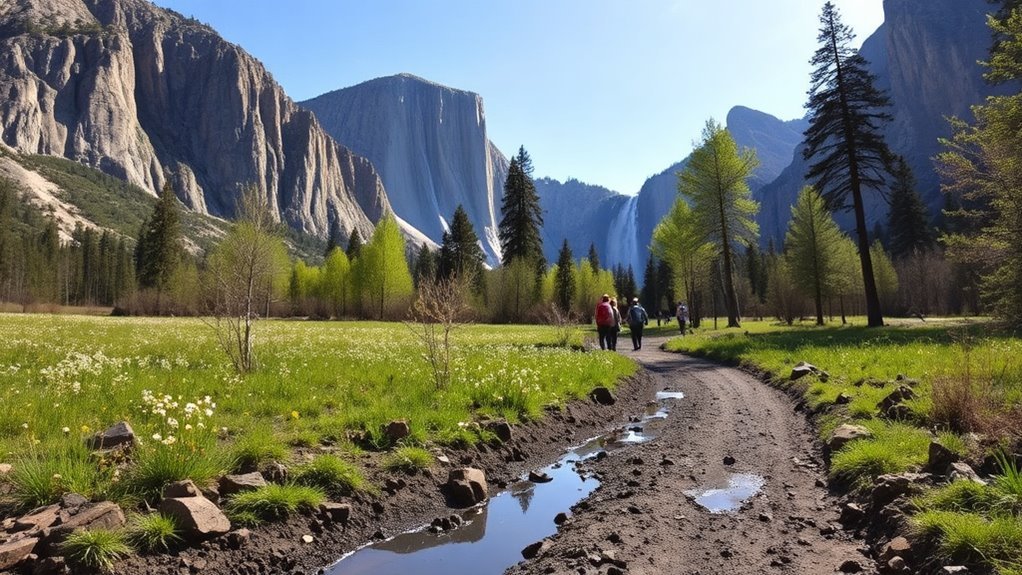
Spring in Yosemite covers April and May and offers some of the park’s strongest waterfall displays. Snowmelt feeds the rivers and falls, while lower-elevation trails gradually become easier to access. However, high-country roads and trails can remain snowy well into May and June.
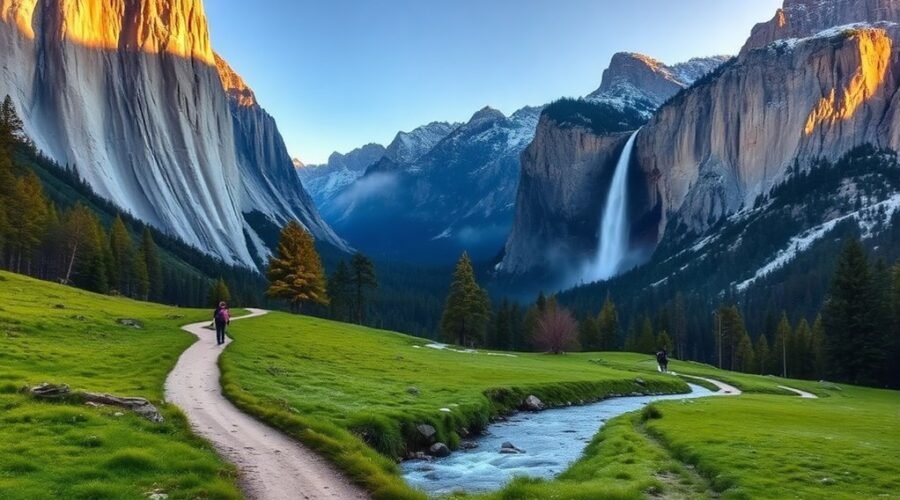
Waterfalls are spring’s biggest attraction. The National Park Service identifies May and June as the usual peak runoff period. Yosemite Falls often reaches peak flow in May, while other waterfalls also carry powerful snowmelt-fed water during this period. By August, Yosemite Falls may have little water or become completely dry. See the NPS waterfall guide for seasonal flow information.
Spring also brings colorful wildflowers. Some lower-elevation flowers begin appearing in March, while many species bloom in Yosemite by mid-May. Look for shooting stars, dogwood, lupine, and other flowers as the season progresses. The official Yosemite wildflower guide explains where different flowers grow.
However, spring does not mean every trail is dry. Snowmelt can leave flooded sections, muddy ground, slippery rocks, and difficult creek crossings. Lower trails in Yosemite Valley, Wawona, and Hetch Hetchy often become snow-free before higher routes.
Higher elevations can remain snowy through May and June. Respect trail closures and stay on designated paths to protect fragile meadows and avoid dangerous water crossings.
Crowds are generally lighter than in July and August, especially on weekdays. May weekends and the Memorial Day holiday period can still attract substantial visitor numbers.
Best for: Waterfall photography, spring scenery, lower-elevation hiking, and travelers who want to visit before peak summer crowds arrive.
Summer in Yosemite: Crowds, Heat, and High-Country Access
Summer runs from June through September and provides the widest access to Yosemite’s roads, trails, and visitor facilities. You can explore the high country, visit Tuolumne Meadows, and enjoy long daylight hours. However, July and August bring the highest visitor numbers and the warmest Valley temperatures.
Yosemite Valley has an average high of 89°F in both July and August, according to the NPS climate normals. Higher elevations offer cooler conditions. Tuolumne Meadows, at approximately 8,600 feet, has average summer highs in the low 70s°F.
Summer also brings a second wildflower opportunity. Most blooming in Yosemite Valley and Wawona occurs in June, while subalpine flowers in Tuolumne Meadows appear later in the summer. However, waterfall flows often decline as snowmelt ends.
Peak Summer Crowd Management
Summer remains Yosemite’s busiest season, but choosing the right day and arrival time can make a major difference. Weekdays generally offer a better experience than weekends, although popular areas can become congested on any summer day.
| Strategy | Best Timing | Why It Helps |
|---|---|---|
| Arrive before 8 AM | Spring through fall | Yosemite Valley parking usually fills after 8 AM. |
| Choose weekdays | Especially June–August | Weekend and holiday traffic is usually heavier. |
| Park once and use the shuttle | Busy Valley days | Walking, biking, and the free shuttle reduce unnecessary driving. |
The National Park Service recommends arriving early and avoiding unnecessary driving between Valley destinations. Its Yosemite traffic and parking guidance explains how parking shortages can affect access.
There is also an important reservation update. Yosemite does not use a season-wide timed-entry reservation system for the 2026 season. The NPS announced this change after reviewing visitor traffic and parking during 2025. This policy applies to 2026 and should not be assumed to cover later years. You can read the official entrance reservation announcement.
Heat and Trail Accessibility
Summer heat affects how and when you should hike. Average Valley highs reach 89°F in July and August, while exposed trails can feel hotter during sunny afternoons. Start strenuous hikes early and avoid pushing yourself during the hottest part of the day.
Higher elevations provide a cooler alternative. Tuolumne Meadows has average July temperatures of approximately 72°F during the day and 39°F at night. August averages are about 70°F during the day and 37°F at night.
Keep in mind that higher trails can still have snow in early summer. Some routes remain snowy into June or July, depending on the winter snowpack. Carry enough water, protect yourself from the sun, and choose routes that match your fitness and current conditions.
Summer thunderstorms can also develop quickly at higher elevations. Lightning, heavy rain, hail, and strong winds can affect exposed hiking routes, even during otherwise sunny weather.
Best for: High-country hiking, backpacking, camping, scenic drives, wildflowers in Tuolumne Meadows, and visitors who want the greatest range of accessible park areas.
Fall in Yosemite: Fewer Crowds, Autumn Color, and Cooler Weather
Fall in Yosemite covers October and November. It brings cooler temperatures, fewer visitors than summer, and seasonal colors from deciduous trees. October is generally the better month for exploring before winter weather begins closing high-elevation roads and facilities.
Yosemite does not have the extensive fall foliage found in some eastern US forests because most of its trees are evergreen. However, black oaks, dogwoods, and bigleaf maples add attractive golden, orange, and red colors. The strongest displays often appear around mid-October, although weather affects the timing.
Fall gives Yosemite a quieter photographic character, with golden oaks and colorful dogwoods standing against its granite cliffs.
October offers a good balance of cooler weather and access. The average Valley high is 71°F, with an average low of 41°F. November becomes colder, with an average high of 56°F and a low of 33°F.
Waterfall flows are usually much lower than in spring. Yosemite Falls may be dry, while some other waterfalls continue flowing at reduced levels. Late-fall storms can bring fresh water and frost to the surrounding cliffs.
Road access also becomes less predictable. Services along Tioga Road are generally unavailable after September, and snow can close high-country roads during fall. Overnight parking on Tioga Road and Glacier Point Road beyond Badger Pass is prohibited beginning October 15.
Visitor numbers decline from summer, but October weekends can still be busy. November usually offers a quieter experience, although some attractions and facilities may close as winter approaches.
Wildlife remains present throughout the season, but you should not expect a guaranteed increase in sightings. Animals use different elevations and habitats depending on food, weather, and other conditions.
Best for: Autumn photography, cooler hikes, fewer crowds, and visitors who prefer mild daytime weather over summer heat.
Winter in Yosemite: What’s Open, What’s Closed, and What to Do
Winter offers Yosemite’s quietest atmosphere, particularly in January and February. Yosemite Valley and Wawona remain accessible by car throughout the year, but snow closes important high-country roads. You can still enjoy winter scenery, snow sports, and peaceful Valley viewpoints.
Snow does not always cover Yosemite Valley’s floor. However, higher elevations usually receive much more snow, and conditions can change quickly during winter storms.
Tioga Road and Glacier Point Road generally close around November and remain closed until late May or June. This limits access to Tuolumne Meadows and Glacier Point. However, the road toward Badger Pass Ski Area receives winter plowing.
Winter activities include snowshoeing, cross-country skiing, downhill skiing, and ice skating. Badger Pass provides a popular base for winter sports, while the Curry Village ice rink generally operates from mid-November through mid-March, conditions permitting.
The NPS also maintains marked winter routes for cross-country skiing and snowshoeing. Snow conditions vary, and trails can become difficult to follow when snow covers signs and landmarks. Read the official Yosemite winter activities guide before planning a snow-based outing.
January and February are particularly attractive if you want fewer visitors. Both months account for approximately 3% of average annual park visitation, making them the quietest months in the historical visitor statistics.
Best for: Winter photography, snowshoeing, skiing, ice skating, and travelers who value solitude more than access to every high-country attraction.
Which Yosemite Roads and Trails Are Actually Open Each Month?
Yosemite’s road and trail access depends heavily on elevation and snowfall. Yosemite Valley stays accessible year-round, but Tioga Road and Glacier Point Road usually close during winter. Spring openings happen gradually, and a road reopening does not mean every nearby trail is ready for hiking.
Winter Road Closures
Snow changes Yosemite’s driving routes significantly during winter. Understanding which roads remain open helps you avoid planning a trip around an inaccessible entrance or viewpoint.
These are the main seasonal road restrictions:
- Tioga Road (Highway 120 East): Usually closes around November and reopens in late May or June. When closed, you cannot drive through the park to Tuolumne Meadows or enter from the eastern Tioga Pass entrance.
- Glacier Point Road: Usually closes around November and reopens around late May or early June. From mid-December through winter, the road is plowed to Badger Pass Ski Area, but you cannot drive all the way to Glacier Point.
- Hetch Hetchy Road: This road operates from sunrise to sunset throughout the year. Snow and ice can cause temporary winter closures, but it is not a road that only follows a winter nighttime closing schedule.
- Other main park entrances: Wawona Road, El Portal Road, and Big Oak Flat Road from the west generally remain open throughout the year, although snow-chain restrictions may apply.
The NPS Hetch Hetchy information page explains its daylight operating hours and seasonal access conditions. The park’s seasonal road and weather guide also explains how snow affects other routes.
Warning: Tire-chain requirements are common from November through March. Carry appropriate chains or cables and know how to install them. Four-wheel-drive vehicles are not automatically exempt when chain controls are in effect.
Spring Trail Accessibility
Spring access depends on elevation and snow conditions. Lower routes often become usable before high-country trails, but even open trails can contain icy sections, flooded areas, and difficult creek crossings.
| Month | Low-Elevation Trails | High-Elevation Roads and Trails |
|---|---|---|
| March | Some lower routes may be accessible, depending on snow and rain. | Generally closed or covered in heavy snow. |
| April | Many Valley, Wawona, and Hetch Hetchy routes may become snow-free. | High-country roads remain closed; trails can be snowy or icy. |
| May | Most lower-elevation hikes are usually snow-free by sometime in May. | Roads may begin opening, but higher trails can remain snowy or flooded. |
Snow can remain around 7,000 feet in May and reach 8,000 to 9,000 feet in June. Trails around Tuolumne Meadows and Glacier Point may therefore remain difficult even after the access roads reopen.
Creek crossings also need extra care during snowmelt. Some crossings become deep or fast, while snow bridges can hide moving water underneath. Review the NPS current road and trail conditions before choosing a route.
Summer Peak Openings
By late May or early June, most park areas are usually accessible by car. However, services along Tioga Road may open later in June, and snow can remain on high-country trails after the roads reopen.
The 2026 opening dates provide a useful example of how access can vary. Glacier Point Road opened to vehicles on May 9, while Tioga Road opened on May 15. These dates do not guarantee similar openings in other years.
Two major road openings determine much of the summer experience:
- Tioga Road: Opens access to Tuolumne Meadows, Lembert Dome, Cathedral Lakes trailheads, and other high-country destinations.
- Glacier Point Road: Provides vehicle access to Glacier Point and popular high-elevation trailheads, subject to seasonal conditions.
Road crews must clear snow, assess avalanche areas, remove fallen trees, and prepare facilities before opening these routes. The official Tioga and Glacier Point road updates provide opening announcements and historical dates.
How Crowded Is Yosemite, and When Should You Avoid It?
Yosemite receives more than four million visitors in many years, but the crowds are not spread evenly across the calendar. July and August are the busiest months, while January and February are the quietest. Nearly 75% of average annual visitation occurs between May and October.
According to the NPS historical monthly averages, July and August each account for 15% of annual visitors. June and September each account for 13%. These numbers explain why summer weekends can feel particularly crowded.
Some holiday periods attract even more visitors. For 2027, pay particular attention to these US holiday weekends:
- Memorial Day: May 29–31, 2027.
- Independence Day: July 3–5, 2027, with the federal holiday observed on July 5.
- Labor Day: September 4–6, 2027.
The dates follow the US Office of Personnel Management’s 2027 holiday calendar. These long weekends are particularly worth avoiding if you want less traffic and easier parking.
April, May, October, and November offer lower average visitation than the summer peak. However, their road access and weather conditions differ. May is better for waterfalls, while October offers more reliable access to many lower-elevation attractions before winter closures begin.
If you want the greatest chance of a quiet Valley experience, January and February are the strongest choices. If you want a balance of access and fewer visitors, consider a weekday in May or October instead of a summer holiday weekend.
How to Choose the Best Time to Visit Yosemite for Your Trip
The best time to visit Yosemite depends on your main activity. Waterfall photography, high-country hiking, autumn photography, and winter sports each have different ideal periods. Choose your travel month around the experience you value most rather than assuming summer is always the best option.
Use these recommendations to narrow your dates:
- Waterfall photographers: Choose mid-May through June. Snowmelt creates powerful flows, and Yosemite Falls often reaches its peak in May.
- Hikers and backpackers: Choose July through early September for broader high-country access. Some trails can still have snow in early summer, depending on elevation and winter conditions.
- Wildflower enthusiasts: Visit lower elevations from mid-May, Yosemite Valley around June, and Tuolumne Meadows during the later summer bloom.
- Autumn photographers: Target mid-October for the best chance of seeing colorful dogwoods, maples, and oaks.
- Solitude seekers: Consider January or February for the lowest average visitation, but plan around snow and seasonal road closures.
- Budget-conscious travelers: Consider shoulder-season dates and compare accommodation costs. Yosemite’s standard entrance fees do not change by season, so your savings will depend more on lodging and travel arrangements.
Also consider your accommodation plans. Popular lodging and campgrounds can sell out during the busiest periods, even when entrance reservations are not required. Your preferred season should leave enough time to arrange a suitable place to stay.
Best Time To Visit Yosemite National Park: Frequently Asked Questions
Are There Entrance Fees, and Do They Change by Season?
No. Yosemite’s standard entrance fees are the same throughout the year. In 2026, a private vehicle pass costs $35, a motorcycle pass costs $30, and entry on foot or by bicycle costs $20 per person. Non-US residents aged 16 or older also pay an additional $100 per person unless covered by a qualifying Annual or America the Beautiful Pass. See the official Yosemite fee information.
Can You See Bears in Yosemite, and When Are They Most Active?
Yes, black bears live throughout Yosemite, but no season guarantees a sighting. Bears naturally avoid people, and some remain active during winter. Stay at least 150 feet away from bears and coyotes, never feed wildlife, and store food properly to protect both visitors and animals.
Is Yosemite Accessible for Visitors With Disabilities Year-Round?
Yes. Yosemite offers a free, fully accessible shuttle service in Yosemite Valley, along with accessible facilities and visitor services. However, not every trail or viewpoint is accessible, and snow, ice, or temporary closures can affect individual locations. The official Yosemite accessibility guide helps visitors plan suitable routes.
What Wildlife Besides Bears Can You Spot in Yosemite?
Yosemite supports more than 400 vertebrate species, including many mammals and birds. Look for mule deer, squirrels, Steller’s jays, American robins, acorn woodpeckers, common ravens, and mountain chickadees. Wildlife sightings depend on habitat and conditions, so observe animals from a safe distance without feeding or approaching them.
Are Pets Allowed on Yosemite Trails or in Campgrounds?
Yes, but pet access is limited. Pets are allowed in developed areas, on many fully paved roads and paths, and in campgrounds except walk-in and group campsites. They must remain on a leash no longer than six feet. Most unpaved hiking trails do not allow pets. Review the official Yosemite pet regulations before bringing an animal.
Do You Need a Timed-Entry Reservation to Visit Yosemite in Summer?
No, Yosemite did not require a season-wide timed-entry reservation during the 2026 season. However, this does not guarantee parking, lodging, or campground availability. Entrance reservation policies can change in later years, so do not assume the 2026 arrangement will remain in place.
Conclusion
The best time to visit Yosemite depends on your priorities. Choose May or June for powerful waterfalls, July or August for high-country access, October for autumn colors, or January and February for quieter winter scenery. Match your dates to the activities you want, then plan around seasonal road access and actual trail conditions.
Sources
- National Park Service: Yosemite Weather: 1991–2020 monthly climate averages for Yosemite Valley and Tuolumne Meadows.
- National Park Service: Visitation Statistics: Average monthly visitors and annual visitation percentages from 2010–2024.
- National Park Service: Waterfalls: Seasonal waterfall flows and typical peak runoff periods.
- National Park Service: Where to See Wildflowers: Wildflower seasons, elevations, and viewing locations.
- National Park Service: Traffic in Yosemite: Parking availability, visitor congestion, and travel recommendations.
- National Park Service: Entrance Reservations: 2026 timed-entry reservation policy.
- National Park Service: Tioga and Glacier Point Roads: Seasonal road opening dates and 2026 opening announcements.
- National Park Service: Seasons: Seasonal weather, snow conditions, trail access, and road closures.
- National Park Service: Hetch Hetchy: Road operating hours and winter access restrictions.
- National Park Service: Current Conditions: Current road, trail, and facility closures.
- National Park Service: Winter Activities: Skiing, snowshoeing, and winter recreation information.
- National Park Service: Fees and Passes: Entrance fees and nonresident charges.
- National Park Service: Accessibility: Accessible transportation and visitor facilities.
- National Park Service: Pets: Pet access, leash requirements, and campground restrictions.
- National Park Service: Wildlife Safety in Yosemite: Wildlife observation distances and animal safety.
- US Office of Personnel Management: Federal Holidays: Official 2027 federal holiday dates.