By [VERIFY: add real author/byline] · Last updated: September 9, 2026
If you’re deciding when to visit Leavenworth, Washington, the best month depends on what matters most to you. Fall brings color and Bavarian festivals, winter delivers snow and famous lights, spring offers blossoms and snowmelt-fed rafting, and summer is best for long days outdoors. The biggest planning mistake is treating every weekend within a season as equally busy.
Quick Answer
For the best balance of comfortable weather, lighter crowds, and better lodging availability, plan a midweek trip in September or late spring and avoid major festival weekends. Choose October for fall color and Oktoberfest, July–August for warm-weather hiking and river days, and January–February for snowy scenery and Leavenworth’s winter lights with fewer holiday-season visitors.
Key Takeaways
- Best overall balance: Try a midweek stay in September or late spring, outside major event dates.
- Best for fall color: October is a strong choice, but Oktoberfest weekends can be very busy.
- Best for warm outdoor weather: July and August have average highs near 87°F, although hot spells above 90°F are common.
- Best for winter lights with fewer holiday crowds: January and February can be easier than December because the Village of Lights display continues through the end of February.
- Best for rafting: Spring is excellent, with snowmelt typically pushing Wenatchee River flows highest around May.
- Best value strategy: Think midweek and shoulder season rather than assuming an entire month is cheap; festival and summer weekends can change lodging demand quickly.
Best Time to Visit Leavenworth at a Glance
Leavenworth has a large seasonal swing. NOAA’s 1991–2020 climate normals for the Leavenworth 3 S station show average highs ranging from roughly 33–34°F in the coldest part of winter to about 87°F in July and August. That makes the right season highly dependent on the experience you want.
| Season | Typical Leavenworth Climate | Crowd Pattern | Best For |
|---|---|---|---|
| Fall September–October |
September normal high/low: 77.9°F / 41.7°F. October: 62.1°F / 33.1°F. | Comfortable midweek, but late-September events and Oktoberfest weekends can be very busy. | Fall foliage, Bavarian festivals, hiking, patios, harvest-season visits. |
| Winter November–February |
December–January normal highs are about 33–34°F; November and February are milder during the day. Snow is common. | Heavy around Christmastown and holiday periods; generally quieter in January and February. | Village lights, snow, Nordic skiing, snowshoeing, tubing, nearby downhill skiing. |
| Spring March–May |
Normal highs rise from 52°F in March to 61.3°F in April and 71°F in May. | Often lighter than peak seasons, with busier periods around Maifest and holiday weekends. | Blossoms, rafting, river walks, lower-elevation hiking, quieter village time. |
| Summer June–August |
Normal highs are 77.2°F in June and about 87°F in July and August. July and August are usually very dry. | Busy, particularly on weekends, although visitors spread across the village, trails, river, and nearby recreation areas. | Hiking, biking, tubing, swimming, rafting, camping, outdoor dining. |
Leavenworth’s NOAA climate normals show how dramatic the seasonal change can be: July and August average highs are about 87°F, while December and January average highs are only about 33–34°F.
Fall: A Great Overall Choice, but Watch Festival Weekends
Fall is still one of the best times to visit Leavenworth if you want colorful scenery, comfortable outdoor conditions, and plenty happening in town. The key is choosing your dates carefully. September can still feel like late summer, while October becomes much cooler and brings some of the busiest festival weekends of the season.
Fall Weather in Leavenworth
According to NOAA’s 1991–2020 climate normals for Leavenworth 3 S, September has an average high of 77.9°F (25.5°C) and low of 41.7°F (5.4°C). October cools sharply to an average high of 62.1°F (16.7°C) and low of 33.1°F (0.6°C).
That wide temperature range makes layers useful even when the afternoon forecast looks warm. September is relatively dry, averaging 0.76 inches of precipitation, while October averages 2.37 inches. By late October, freezing nights are not unusual.
Fall Colors
Fall color develops at different times depending on elevation, temperature, and weather. Late September can bring the first strong changes, while October is usually the better month if colorful foliage is your main goal. The surrounding hills, river corridor, and Cascade scenery make this an especially attractive time for walking, scenic drives, and photography.
Fall Crowds
Do not assume October is automatically a quiet shoulder season. The Washington State Autumn Leaf Festival and Leavenworth’s Oktoberfest can create heavy weekend demand. A Tuesday-through-Thursday visit will usually feel very different from arriving on a major festival Saturday.
Pro Tip: If you want fall foliage without making Oktoberfest the focus of your trip, check the official event calendar first and choose a midweek stay or a weekend outside the published festival dates.
Fall Costs
There is no reliable rule that all fall lodging is cheaper than summer or winter. Demand changes sharply with the day of the week and event schedule. Leavenworth’s current visitor guidance recommends shoulder-season and midweek stays for better availability and value, while Oktoberfest weekends can fill lodging quickly. If you’re flying into Washington, compare airfare separately rather than assuming it follows Leavenworth’s hotel-price pattern.
Fall Festivals and Activities
The Washington State Autumn Leaf Festival is a long-running late-September tradition with a parade and community events. October brings Leavenworth Oktoberfest, with Bavarian music, dancing, food, beer gardens, and family programming.
Outside the festivals, fall is excellent for strolling Waterfront Park and Blackbird Island, hiking lower and mid-elevation trails, visiting tasting rooms, exploring orchards and wineries, or simply enjoying the village before winter weather arrives. If the weather turns, the Nutcracker Museum’s large private collection [VERIFY: confirm current piece count for citation] makes a good indoor stop in any season.
Winter: Snow, Village Lights, and Mountain Conditions
If your ideal Leavenworth trip involves snowy rooftops, glowing streets, skiing, and a strong holiday atmosphere, winter is the obvious choice. It is also the season when road conditions deserve the most attention.
Winter Weather
Winter temperatures vary more than the original “20s and 30s” description suggests. NOAA normals show an average November high/low of 43.9°F / 26.2°F (6.6°C / -3.2°C). December averages 33.6°F / 20°F (0.9°C / -6.7°C), January 33.5°F / 19.4°F (0.8°C / -7°C), and February 42.4°F / 21.1°F (5.8°C / -6.1°C).
Snow is an important part of winter, but it is never sensible to promise a fresh snow cover on a particular date. At the Leavenworth 3 S station, NOAA’s monthly snowfall normals are 8.1 inches in November, 32.4 inches in December, 22.1 inches in January, and 12.6 inches in February.
Village of Lights: Christmastown
The old weekend-only “Christmas Lighting Festival” description is no longer the best way to explain Leavenworth’s winter celebration. The current program is Village of Lights: Christmastown. The town’s display of more than half a million lights stays on daily from Thanksgiving through the end of February.
The programmed Christmastown festivities are concentrated around the holiday season, while January and February can give you the illuminated village with fewer holiday visitors. That makes the first two months of the year worth considering if lights and snow matter more to you than Christmas-specific entertainment.
Winter Crowds and Costs
Late November and December can be extremely busy, particularly on weekends and during programmed Christmastown events. Book lodging early if you have fixed holiday dates. January and February generally offer more breathing room, though Winter Karneval, ski weekends, fresh snow, and holiday weekends can still increase demand.
Winter Activities
Leavenworth offers Nordic skiing, snowshoeing, tubing, fat biking, and other winter recreation close to town. Downhill skiing and snowboarding are available at nearby mountain areas, including Stevens Pass. Check current snow, trail, and operating conditions before building a trip around one activity.
Warning: Winter travel over the Cascades can involve snow, ice, chain requirements, delays, or pass closures. Leavenworth sits roughly two to two-and-a-half hours from Seattle via Highway 2 or I-90, much of it at higher elevation. WSDOT advises drivers heading into higher elevations to carry approved chains or alternatives and follow posted traction requirements. Check the current mountain-pass report before leaving.
Spring: Blossoms, Rafting, and a Quieter Transition Season
Spring is a useful alternative if you want to avoid the biggest summer, Oktoberfest, and Christmas crowds. It is also a transition season: conditions in downtown Leavenworth may feel mild while high-elevation trails still look and behave like winter.
Spring Weather
March remains cool, with NOAA normals of 52°F (11.1°C) for the average high and 26.3°F (-3.2°C) for the low. April rises to 61.3°F / 32°F (16.3°C / 0°C), and May reaches 71°F / 39.7°F (21.7°C / 4.3°C).
Snow can linger in March around town and much longer in the mountains. Pack layers and rain protection, and do not use downtown temperature alone to judge high-country trail conditions.
Spring Crowds and Value
March and April can feel noticeably calmer than major winter and summer periods. May becomes livelier as warmer weather, events, rafting, and outdoor recreation return. If value is your priority, compare midweek spring dates before defaulting to a weekend.
Spring Activities
Lower-elevation trails, riverfront walks, birding, and cycling become increasingly appealing as the valley warms. Spring is also one of the most exciting times for the Wenatchee River. Leavenworth’s official recreation guidance notes that snowmelt drives whitewater flows and that the river typically reaches peak flow around May.
Maifest celebrates Leavenworth’s Bavarian traditions each May with music, dancing, and seasonal events. If you want the quietest spring experience, check the current Maifest calendar before booking.
Summer: Warm Weather and the Broadest Outdoor Season
Summer is the best choice if hiking, biking, river time, camping, and long evenings outside are the main reasons for your trip. It is warm and comparatively dry, but it is not automatically crowd-free or hazard-free.
Summer Weather
NOAA normals show an average June high of 77.2°F (25.1°C). July and August average about 87°F (30.6°C and 30.5°C). Nights cool substantially, with normal lows around 46°F in June and 50–51°F in July and August.
Hot weather is not unusual. NOAA’s normals indicate that July and August each average roughly 14 days with a high of at least 90°F. At the same time, these are the driest months in the climate-normal record: July averages 0.45 inches of precipitation and August 0.37 inches.
Summer Crowds
Summer weekends bring heavy overall visitor demand. The experience can feel different from a crowded festival weekend because people spread out among downtown, the Wenatchee River, Lake Wenatchee, campgrounds, trailheads, and other recreation areas. Even so, popular restaurants, lodging, parking areas, and trailheads can fill quickly.
Summer Activities
Summer opens the broadest range of activities: hiking, mountain biking, river tubing, rafting, swimming, camping, scenic cycling, outdoor dining, and day trips into the surrounding Cascades.
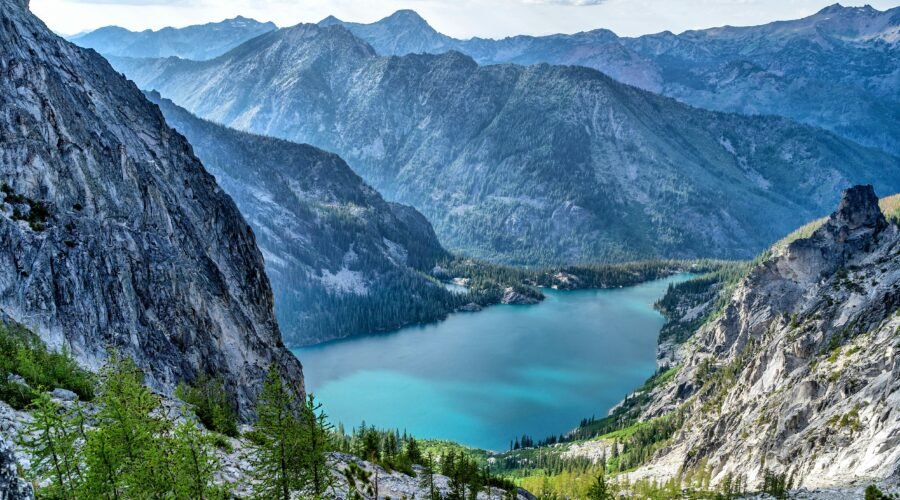
If the Enchantments are part of your plans, understand the permit system before you arrive. Recreation.gov states that permits are required in the Enchantment Permit Area from May 15 through October 31. Day visitors use a free self-issued day-use permit and need the appropriate parking pass, while overnight travel requires a limited overnight permit. The permit area covers five zones—Core Enchantment, Snow Lake, Colchuck Lake, Stuart Lake, and Eightmile/Caroline—and routes like Colchuck Lake and Aasgard Pass are strenuous and primitive enough that they deserve real fitness and daylight planning at any time of year.
Note: The Enchantments are high alpine terrain. Recreation.gov warns that May, June, September, and October can still bring snow and winter-like conditions. A warm forecast in downtown Leavenworth does not guarantee snow-free high-country travel.
Wildfire Smoke and Summer Air Quality
Wildfire smoke can affect Washington during the dry season, including otherwise sunny hiking days. Before a strenuous outdoor trip, check current air quality and smoke forecasts from the Washington State Department of Ecology. If air quality deteriorates, adjust outdoor plans rather than relying only on temperature and rain forecasts.
2026 Event Dates That Can Change Crowd Levels
If you’re planning a 2026 fall or winter trip, these currently published dates matter because an otherwise attractive shoulder-season weekend can behave like peak season.
| Event | Published 2026 Dates | Planning Impact |
|---|---|---|
| Washington State Autumn Leaf Festival | September 25–27, 2026 | Expect more activity and visitors than on an ordinary late-September weekend. |
| Oktoberfest | October 2–3, 9–10, and 16–17, 2026 | Major crowd and lodging-demand periods. Book early if the festival is your goal; avoid these dates if quiet is your priority. |
| Village of Lights | November 26, 2026–February 28, 2027 | Lights remain on well beyond Christmas, making January and February useful alternatives to December. |
| Christmastown festivities | November 27–December 24, 2026 | Holiday entertainment increases the appeal—and the crowd pressure—of the pre-Christmas period. |
| Winter Karneval | Weekends throughout January 2027 [VERIFY: confirm exact closing weekend] | Adds ice carving, fire dancing, and fireworks—typically timed to Martin Luther King Jr. weekend—so a “quiet” January weekend can still see a crowd bump. |
Event schedules can change from year to year, so confirm future dates on the official Leavenworth events calendar before making nonrefundable reservations.
Choose Your Visit Based on Your Priorities
The season-by-season detail above covers weather, crowds, and events in depth. If you just need the shortcut, match your top priority to a window below.
| If Your Priority Is… | Best Window | Why | Watch Out For |
|---|---|---|---|
| Fall color & Bavarian atmosphere | Late September–October | September is warmer; October is cooler and usually shows deeper color. | Oktoberfest Fri/Sat dates draw the biggest crowds — stay midweek to avoid them. |
| Christmas lights & snow | Late November–February | December has the strongest holiday atmosphere; lights run through February. | Late Nov–Dec is the busiest and priciest stretch; Jan–Feb is quieter. |
| Hiking, biking & river days | June–September | July and August are warmest and driest around town; September is cooler for hiking. | Check high-country snow, wildfire smoke, heat, and Enchantments permits before departure. |
| Rafting & spring scenery | May–early summer | Snowmelt drives peak whitewater flows; orchards and valley greenery are at their best. | High-country trails can still hold snow well into early summer. |
| Smaller crowds & better value | Midweek, shoulder season | Early/late spring, early fall outside festivals, and Jan–Feb see lighter demand. | A single festival weekend can turn a quiet month into a busy one — check the calendar first. |
No season is perfect for every traveler. If you match the dates to your priorities—and check the event calendar, weather, road conditions, air quality, and any required recreation permits before leaving—you can get a much better Leavenworth experience than simply choosing the most popular month.
Frequently Asked Questions
What is the best overall time to visit Leavenworth, Washington?
For a balance of comfortable weather, activities, crowds, and lodging availability, try a midweek visit in September or late spring outside major festival dates. October is especially attractive for fall color, but Oktoberfest weekends are much busier.
When is the best time to visit Leavenworth for good weather?
July and August provide the warmest and driest conditions around town, with normal highs near 87°F. September is a good alternative if you prefer cooler evenings and somewhat milder hiking weather.
When should I visit Leavenworth to avoid crowds?
Midweek visits are usually the best strategy. Early spring and other shoulder-season periods can be quieter, while January and February offer another option for seeing the winter lights after the main Christmas rush. Always check the event calendar because a festival can turn a shoulder-season weekend into a peak-demand period.
What are the busiest times of year in Leavenworth?
Summer weekends bring sustained visitor demand, while Oktoberfest and Christmastown can create especially busy event periods. Major holiday weekends can also increase traffic, restaurant waits, lodging prices, and parking demand.
When is the best time to visit Leavenworth for lower costs?
Look for midweek shoulder-season dates rather than assuming one entire season is cheapest. Early spring, late spring, and early fall outside major festivals often provide better availability, while peak summer weekends, Oktoberfest, and Christmas-season dates can be more expensive.
When is the best time to see fall colors in Leavenworth?
Late September into October is the main fall-color period, although exact timing varies with elevation and weather. October is usually the stronger choice for deeper color, while late September tends to be warmer.
Can I see Leavenworth’s Christmas lights after Christmas?
Yes. The Village of Lights display continues from Thanksgiving through the end of February. January and February can therefore be excellent choices if you want illuminated streets and possible snow without the full pre-Christmas crowd level.
What winter activities are available in Leavenworth?
Depending on current snow and operating conditions, winter activities include Nordic skiing, snowshoeing, tubing, fat biking, sleigh rides, and nearby downhill skiing and snowboarding. Check current conditions before traveling because snowpack and road access vary.
How many days do I need in Leavenworth?
Most first-time visitors plan two to three days: one full day for the village and any festival happening that weekend, plus a day for hiking, rafting, or snow activities depending on the season. Add an extra day in winter for Nordic skiing or a Stevens Pass trip, or in summer if the Enchantments or Lake Wenatchee are on the itinerary.
Do I need a permit to hike the Enchantments near Leavenworth?
From May 15 through October 31, day visitors need a free self-issued day-use permit and the appropriate parking pass. Overnight travel is controlled by a limited permit system, so backpackers should arrange permits well before their intended trip whenever possible.
Sources
- NOAA National Centers for Environmental Information — Leavenworth 3 S 1991–2020 Climate Normals — temperature, precipitation, and snowfall averages.
- Leavenworth Official Events Calendar — current Autumn Leaf Festival, Oktoberfest, Village of Lights, and other event dates.
- Leavenworth Official Budget Guide — midweek, shoulder-season, and festival-demand planning.
- Washington State Department of Transportation — Tires & Chains — winter traction and chain guidance for mountain travel.
- Recreation.gov — Enchantment Permit Area — day-use, overnight permit, season, parking, and alpine-condition requirements.
- Washington State Department of Ecology — Wildfire Smoke — air-quality monitoring, forecasts, and smoke-safety guidance.