

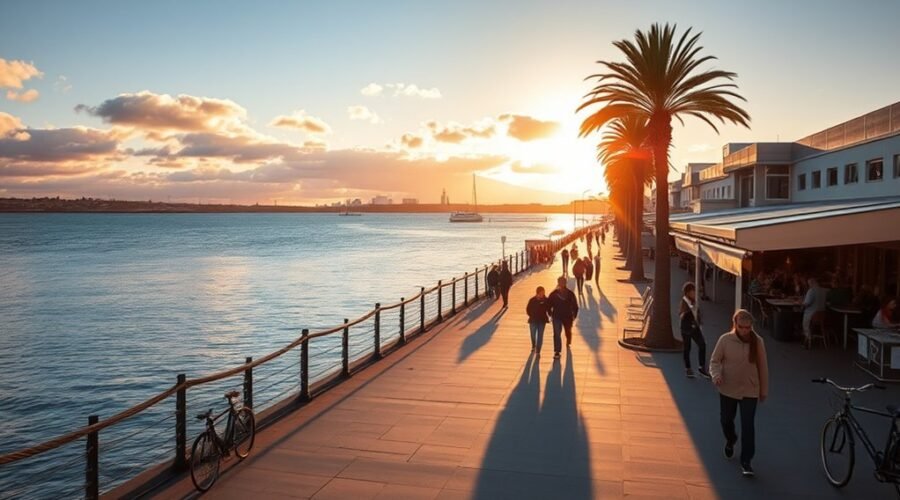
If you’re planning a trip to Geelong, Victoria, aim for late spring or early autumn when the weather’s mild, crowds are smaller, and prices are kinder to your wallet. You’ll get pleasant beach walks, easy vineyard visits, and calmer galleries without the summer crush or heat. Coastal breezes still shape day trips to the waterfront and Great Ocean Road, and timing your stay can save on accommodation and tours—here’s how to pick the best month and pack.
Key Takeaways
- Late autumn (Mar–May) offers mild weather, fewer crowds, and lower rates — ideal for vineyards, cliff walks, and relaxed sightseeing.
- Spring (Sep–Nov) brings mild coastal temps, light breezes, and lower prices, great for rockpooling and nature festivals.
- Summer (Dec–Feb) delivers warm beach weather and lively cafés but higher crowds, peak prices, and a need for sun protection.
- Winter (Jun–Aug) has the fewest visitors and best deals, though it’s brisk, foggy, and suited to indoor cafés and galleries.
- Avoid major events and holiday weekends for lower costs and easier transport; midweek shoulder-season stays maximize savings and space.
Best Time to Visit Geelong : Quick Recommendation
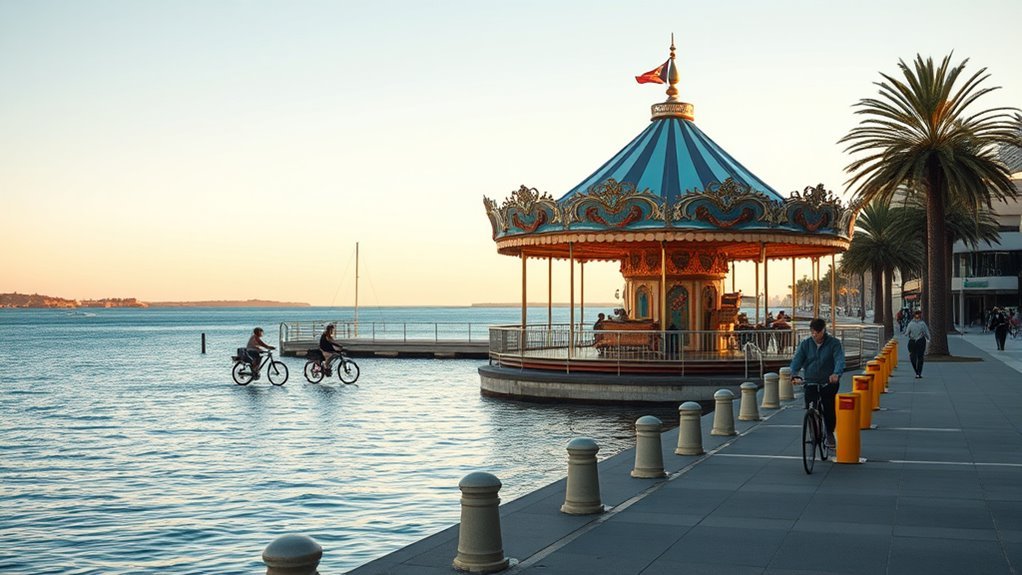
Wondering when to go? You’ll aim for late spring through early autumn—November to March—when Geelong bursts with warmth, long days, and open possibilities.
Go then if you want cultural festivals enlivening waterfront promenades, outdoor markets humming, and alfresco cafés that invite slow conversation.
Choose quieter shoulder months if you crave balance: warm weather and fewer crowds without peak prices.
Pack versatile layers and sun protection so you can pivot between beach time and city exploring.
Bring versatile layers and sunscreen—ready for sunlit beaches, breezy promenades, and spontaneous city wanderings.
For wildlife spotting, mornings and evenings along coastal reserves or the nearby Bellarine Peninsula reward patient observers with seabirds, seals, and migrating shorelife.
You’ll save money and stress by booking midweek and avoiding major events if crowds feel constraining.
Ultimately, pick the interval that aligns with your appetite for activity, connection, and freedom: peak season for energy and open-air culture, shoulder periods for solitude and steadier costs.
Your trip, your rules—plan to feel liberated.
Spring in Geelong (Sept–Nov): Mild Weather, Fewer Tourists
Visit Geelong in spring and you’ll find mild coastal temperatures that make walks along the waterfront and short hikes comfortable.
You won’t be battling crowds, so it’s easier to score a table at a café or a spot on the beach.
Use the quieter season to explore parks, markets, and the Great Ocean Road detours at a relaxed pace.
Mild Coastal Temperatures
Because spring in Geelong (September–November) brings steadily warming days and cooling sea breezes, you’ll enjoy mild coastal temperatures that make outdoor plans comfortable without summer crowds.
The air feels liberating: light layers work, sunrise walks are crisp, and afternoons hover pleasantly so you can linger by the water.
Watch coastal flora wake—wildflowers and salt‑tolerant shrubs scent paths—and note tidal patterns that shape rockpools and bird feeding grounds.
You’ll plan freely, adapting to brief breezes or sunny spells, not chained to extremes.
- Time your walk for low tide to explore rockpools and see marine life.
- Pack a windproof layer for sudden sea breezes.
- Bring binoculars for shorebirds in blooming habitats.
- Choose flexible day trips along the coast.
- Savor slow cafés with outdoor seating.
Lower Tourist Numbers
While spring’s mild weather draws locals outdoors, it keeps big tourist crowds at bay, so you’ll find quieter beaches, shorter waits at cafés, and easier parking near popular sights.
You can wander Geelong’s waterfront and explore historic architecture at your own pace, lingering in laneways or sitting on a bench without feeling rushed.
Small ecocultural festivals pop up, letting you connect with local art and nature without the crush.
Less tourism means better access to guided tours, ferry seats, and restaurant reservations — perfect if you’re craving freedom to choose.
Travel costs often drop, too, so you can stretch your budget toward experiences: a private walking tour, a vineyard lunch, or a spontaneous day trip along the Bellarine.
Summer in Geelong (Dec–Feb): Beaches and Peak Crowds
Summer in Geelong means the beaches are buzzing and you’ll find lively surf, picnics, and busy waterfront cafes.
Expect hot, sometimes humid days, so plan sun protection, water, and shade breaks to stay comfortable.
If you’re visiting popular spots, arrive early or book ahead to beat the peak crowds.
Peak Beach Activity
Looking for lively seaside energy? You’ll find beaches buzzing with swimmers, kids building forts, and music drifting from picnic groups.
Mornings suit surfrise photography and beach yoga—gold light and calm water let you steal quiet freedom before crowds arrive.
Midday brings lifeguards, snack vans, and a festival of umbrellas; afternoons are social, charged, and ideal for joining pickup volleyball or a paddle.
Evenings cool into relaxed barbecues and fire-lit conversations along the shore.
- Rise early for surfrise photography and solitary stretches.
- Join a beach yoga session to free your body and confidence.
- Pack a lightweight picnic and reusable water bottle.
- Scope lifeguard flags and swim between them.
- Time visits for weekdays or late afternoons to avoid peak crush.
Hot Weather Precautions
After a day of beach yoga and late-afternoon volleyball, the heat can sneak up fast in Geelong between December and February, so you’ll want a simple plan to stay safe and comfortable.
Seek shade protection early—pack a light tarp, wide umbrella, or choose shady picnic spots under Norfolk pines to reclaim your energy and avoid sunburn.
Wear breathable clothing and a broad-brimmed hat, and apply SPF regularly: reapply after swimming or sweating.
Set hydration reminders on your phone and carry a reusable water bottle; electrolytes help when you’re sweating hard.
Time high-energy activities for morning or late afternoon, and rest during peak sun.
Respect your limits, listen to your body, and stay free to enjoy summer without risking heat strain.
Autumn in Geelong (Mar–May): Cooler, Calmer, Cheaper
When the days cool and the light softens, Geelong settles into a quieter rhythm that makes autumn one of the best times to visit—mild temperatures, crisp mornings and fewer crowds mean you can explore waterfront walks, wineries and regional drives at your own pace, often for lower prices on accommodation and tours.
You’ll find freedom in slow mornings, clear skies for photography, and the chance to join local harastal festivals without the rush. Vineyard tours feel intimate; guides have time to share stories and tastings linger.
Pack layered clothing, a light rain jacket, and comfortable shoes for cliff-top trails. Book midweek stays to save more and choose small guesthouses for a community vibe. Use quieter afternoons to wander markets, sample seasonal produce, and plan flexible days so you can follow good weather.
Pack layers and comfy shoes, book midweek guesthouses, and spend relaxed afternoons wandering markets and tasting seasonal produce.
- Book vineyard tours midweek for smaller groups
- Walk the waterfront at dawn for calm views
- Attend harastal festivals for local flavor
- Stay in central guesthouses to cut costs
- Carry layers for changing temperatures
Winter in Geelong (Jun–Aug): Low-Season Perks and Indoor Options
Visit Geelong in winter and you’ll feel the brisk coastal air while enjoying far fewer crowds and lower prices.
Use the quieter season to explore cozy cafés, galleries, and museums without the usual wait.
Pack a warm layer and plan a few indoor stops to keep your days comfortable and rewarding.
Cooler Coastal Weather
Though cooler winds sweep the coast from June to August, Geelong’s winter has its own crisp charm and practical perks you can take advantage of. You’ll feel coastal fog rolling in with sharp sea breezes that cleanse the air and sharpen senses — perfect for quiet walks along the waterfront. Pack a warm, windproof layer and embrace moodier skies; shorter daylight pushes you toward cozy cafés, galleries, and heated interiors that free you from summer crowds’ pace.
- Wander the foreshore at dawn, letting coastal fog transform familiar views.
- Layer up for brisk cliff-top walks and sheltered lookout points.
- Visit museums and galleries warmed by central heating.
- Seek out rainproof coastal trails when sea breezes pick up.
- Choose hot local eateries for lingering, liberated meals.
Fewer Crowds, Lower Prices
Because winter quiets the streets and thins the tourist crowd, you’ll find hotel rates, restaurant deals, and attraction discounts that make Geelong easier on your wallet and more relaxed to explore. You can move freely between waterfront walks and quieter laneways, join local‑friendly festivals without the crush, and browse local‑artisan markets where vendors chat and prices feel fair. Budget-friendly travel lets you choose experiences that reflect your values: slow discovery, meaningful purchases, and spontaneous detours.
| Scene | Mood |
|---|---|
| Empty waterfront | Crisp, open |
| Cozy pub lane | Warm, unhurried |
| Market stall | Approachable, authentic |
| Festival evening | Intimate, spirited |
Plan midweek stays, ask about winter offers, and let lower costs free you to linger.
Indoor Attractions & Cafés
With fewer people on the streets and extra cash in your pocket, you’ll find winter the perfect time to explore Geelong’s indoor charms—from snug cafés brewing single-origin coffee to museums and galleries that invite lingering.
You can follow self-guided art art tours through laneways, join curator talks, or sink into the warmth of historic cafés where conversation and local roast free your mind.
Visit the Geelong Gallery, explore the National Wool Museum, and discover pop-up exhibits that reward slow attention.
Practical tips: check opening hours, book weekday tours, and dress in layers for quick outdoor walks between venues.
- Take a guided art art tour of laneways and gallery clusters
- Warm up in listed historic cafés serving seasonal fare
- Book weekday museum visits to avoid groups
- Look for temporary exhibitions and artist talks
- Combine a café crawl with small-gallery stops
School Holidays & Events That Drive Crowd Spikes
When school holidays roll around and major events hit the calendar, Geelong gets noticeably busier—so if you’re planning a visit, expect longer waits, fuller beaches, and higher accommodation rates during peak periods. You’ll feel the surge during summer school festivals and university breaks; they bring joyful crowds, street food, and pop-up markets that energise the waterfront. If you crave freedom, plan around these spikes or embrace them for lively nights and cultural buzz.
| Event type | Typical impact |
|---|---|
| School festivals | Family crowds, daytime queues |
| University breaks | Student-friendly nightlife |
| Major concerts | Higher hotel rates |
| Sporting fixtures | Transport congestion |
| Holiday weekends | Booked restaurants |
Check event calendars, reserve ahead, and pick shoulder-season days to balance vibrancy with space. If you want liberation from crowds, aim for weekdays outside school holidays; if you want connection, engage with the festivals when the city pulses.
How Coastal Weather Affects Waterfront and Great Ocean Road Day Trips
Although the coast often looks calm, coastal weather can change fast and it directly shapes how enjoyable your waterfront strolls and Great Ocean Road day trips will be—sun, wind, swell and fog each rewrite the scenery, safety and logistics.
You’ll want to read forecasts for wind, swell and coastal fog before you go; fog can cut visibility and mute cliffs, while sudden gales turn calm bays into hazardous surfs.
Tidal shifts rewrite rock platforms and access to coves, so plan timing to avoid being stranded or missing tidepools.
Dress in layers, secure loose gear, and choose routes that let you retreat quickly if conditions shift.
Embrace weather as part of the freedom: dramatic skies, roaring surf and sudden clearings make memories that predictable sunshine never will.
- Check swell and wind forecasts first
- Time walks around tidal shifts
- Carry layered clothing and waterproofs
- Avoid exposed cliffs during heavy fog or gusts
- Have an alternative inland plan if visibility drops
Budget Timing: When Accommodation and Tours Are Cheapest
Coastal conditions will shape what you pack and when you explore, but your wallet also benefits from smart timing—pick quieter months and midweek stays to score the best rates on accommodation and tours. You’ll save most in late autumn and early spring when demand dips; hotels, B&Bs and tour operators drop prices and you’ll find flexible cancellation and easier upgrades. Midweek stays cut costs further, and booking slightly outside school holidays keeps you free to chase bargains and spontaneous cultural finds like night festivals or intimate shows in the local art scene. Use comparison sites, subscribe for flash deals, and consider bundle packages with breakfast or guided walks. Be ready to shift dates a little — that freedom releases lower fares and private guides at off-peak rates. Below’s a simple table to plan:
| Period | Typical Deals | Booking Tip |
|---|---|---|
| Late Autumn | 20–40% off | Midweek stays |
| Early Spring | 15–35% off | Bundle tours |
| School Holidays | Low deals | Book early |
Who Should Visit When : Families, Couples, Solo Travellers, Day-Trippers
If you’re travelling with family, a partner, solo or just popping in for the day, pick your timing to match the pace and priorities you want — quieter months suit families chasing space and cheaper stays, couples looking for relaxed beachside dinners, and solo travellers seeking reflective walks, while peak summer is best for day-trippers who want swimming, festivals and lively markets.
For families, aim for shoulder seasons when playgrounds, family festivals and coastal walks feel spacious and affordable; you’ll still get mild weather without the crowds.
Couples seeking Romantic getaways should choose late spring or early autumn for golden light, intimate dinners and quieter beaches.
For romantic getaways, favor late spring or early autumn — golden light, intimate dinners and quieter beaches await.
If you’re travelling solo, pick quieter months to connect with nature, museums and cafés on your own rhythm.
Day-trippers should plan summer weekends for easy swimming, pop-up markets and events.
Travel when it frees you — less bustle lets you breathe, more bustle gives energy.
- Book family-friendly accommodations in shoulder seasons
- Time Romantic getaways for sunset views
- Pack layers for solo exploration
- Check event calendars for Family festivals
- Arrive early to beat day-trip crowds
Quick Planning Checklist: Pick the Best Month and Pack List
When planning your trip to Geelong, start by choosing the month that matches your priorities—warm, busy summers for swimming and markets; mild, quieter shoulder seasons for family-friendly space and romantic sunsets; or cool, peaceful months for solo walks and museum time—and then pack accordingly so you’re ready for whatever the day brings.
Decide if you crave local festivals and a lively nightlife scene or solitude and coastal trails.
Pick a month: December–February for sunshine, March–April or September–November for milder crowds, May–August for introspective calm.
Pack list: lightweight layers, a waterproof jacket, sturdy walking shoes, sun protection, swimsuit, and a compact daypack.
Add a reusable bottle and basic first-aid kit.
For nights out, include smart-casual outfit and comfortable flats.
Bring chargers, a portable battery, and a small guide or offline map.
Book key experiences in advance, then let go—Geelong rewards those who plan enough to be free to explore.
Frequently Asked Questions
Are There Accessible Transport Options From Melbourne to Geelong?
Yes — you’ve got options: accessible train services run regularly, a public ferry offers scenic crossings, bike share systems let you roam, and rideshare apps provide flexible drops, so you’ll travel freely and confidently to Geelong.
Which Local Foods or Markets Are Must-Try in Geelong?
You should try fresh seafood, handmade cheeses, and sourdough at Local markets like Geelong Waterfront and Gateways; Food festivals showcase vibrant street eats, artisanal producers, and bold flavors that free your palate and support local makers.
What Wildlife or Nature Tours Operate Year-Round?
Absolutely endlessly available: you can hop year-round into Wildlife sanctuaries and River cruises that run every season; you’ll learn, heal, spot koalas, seals and birds, and reclaim freedom through hands-on, practical, evocative nature experiences.
Are Pets Allowed on Geelong Beaches and Parks?
Yes — some Geelong beaches and parks are pet friendly, but rules vary: you’ll find off-leash zones and seasonal restrictions, while many reserves enforce park leash rules, so check local signs and respect wildlife and fellow visitors.
How Reliable Is Mobile Phone and Internet Coverage in Geelong?
You’ll mostly get strong mobile coverage and good internet reliability across Geelong, though some coastal and rural spots lag; pack patience, a power bank, and a roaming mindset like a renaissance traveler resisting modern chains to stay liberated.
Conclusion
Think of Geelong like a well-timed vintage: visit in late spring or early autumn and it’ll open smoothly, not spill over. I once walked a near-empty Eastern Beach in October and counted just three sunbathers — a small data point that felt like finding a quiet cork in a busy cellar. So pick Sept–Nov or Mar–May for mild weather, fewer crowds, lower costs, and easy day trips; pack layers, a rain shell, and comfy shoes.



[…] Geelong, Victoria […]
[…] Geelong, Victoria […]
[…] Geelong, Victoria […]
[…] Geelong, Victoria […]
[…] clinics offering GP care, bulk-billing options, and allied health; emergency services at nearby Geelong Hospital handle major trauma, while ambulance and urgent care cover immediate […]
[…] Geelong, Victoria […]