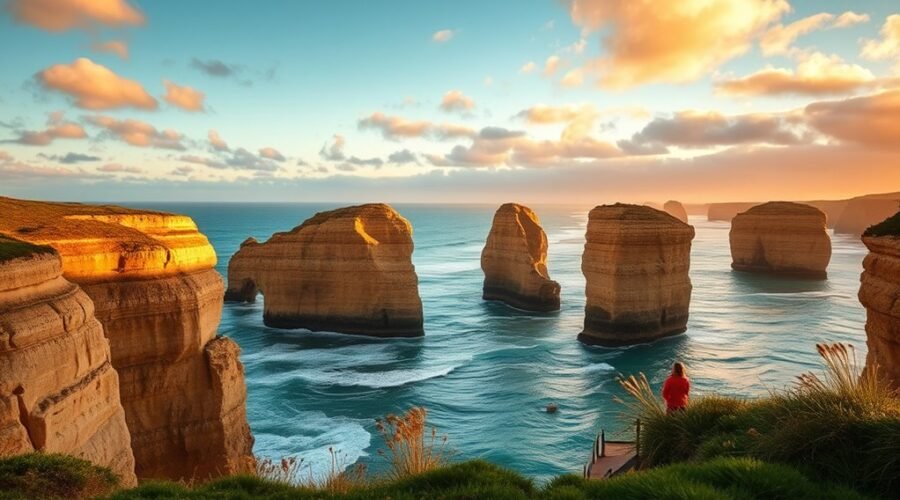
If you’re planning a visit to the Twelve Apostles, timing will shape everything—from the sky’s color to how much you’ll pay and how many people you’ll share the cliffs with. You’ll want to balance weather, light and cost: shoulder months often give crisp skies and thinner crowds, while summer brings long days and heavy traffic. Keep a few simple choices in mind, and you’ll find a visit that feels both dramatic and manageable. Knowing the best time to visit Twelve Apostles Victoria helps you plan around weather, crowds, and budget.
Also compare: Traralgon, Victoria.
Key Takeaways
- Late spring to early autumn (September–March) provides the clearest light and best overall viewing conditions.
- Sunrise and weekday visits minimize crowds, while sunset and summer evenings draw the largest gatherings.
- Shoulder months (October, March) balance pleasant weather, fewer visitors, and luminous photographic light.
- Winter offers dramatic stormy seascapes and lower prices, with package deals on accommodation and tours.
- Off‑peak travel (midweek, late autumn/early spring) reduces costs for parking, tours, and lodging.
Quick Recommendation: Best Time to Visit the Twelve Apostles
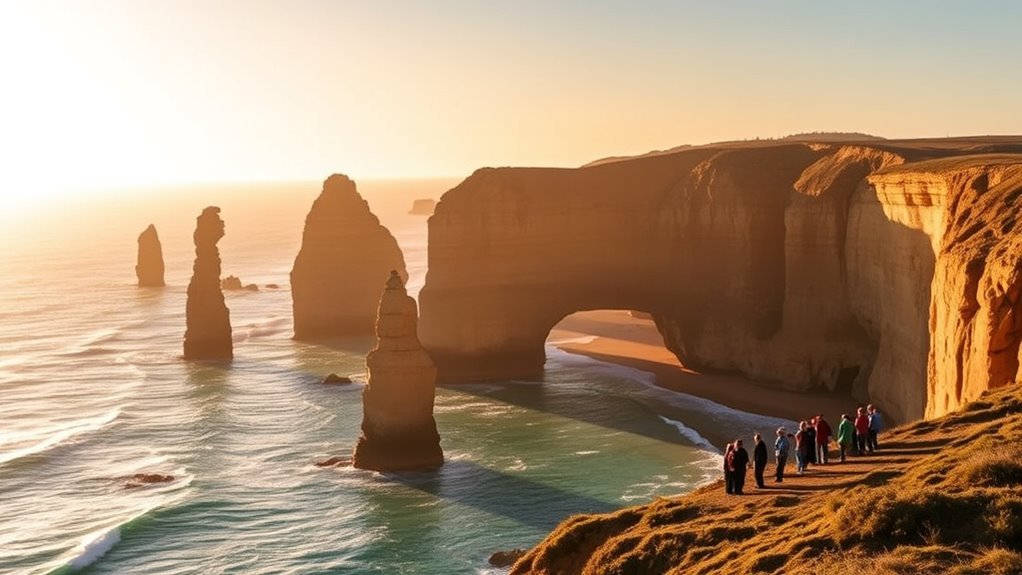
Wondering when to go? You’ll aim for late spring to early autumn—September through March—when light sharpens the limestone cliffs and you can move freely along coastal paths.
Choose shoulder months like October or March if you want softer crowds and luminous sunrises that feel like personal revolutions.
Mornings give you crisp air and fewer people; afternoons offer golden panoramas and wind-carved silhouettes.
You’ll find small-town energy nearby—local cultural festivals flare up in summer, inviting you to stay, dance, and connect with community rhythms rather than rush through photo stops.
Taste matters: local cuisine emphasizes fresh seafood and coastal produce, grounding your visit in place and pleasure.
Pack layers for sudden wind and bring a mindset ready to wander, linger, and reclaim time.
This recommendation helps you balance spectacle and solitude, so you can witness the Apostles with clarity, move at your own pace, and leave feeling quietly liberated by the coast.
How to Choose: Weather, Crowds and Cost Criteria
Because the Twelve Apostles are shaped as much by weather and visitors as by geology, choosing when to go means balancing three practical criteria—weather, crowds, and cost—against the kind of experience you want.
Choosing when to visit the Twelve Apostles means balancing weather, crowds, and cost against your desired experience.
You’ll weigh weather for mood: calm seas and clear skies reveal dramatic light and long vistas; wind and waves deliver raw, elemental power.
Crowds affect intimacy: quieter months let you move freely, breathe, and resist commercial rhythms; busier times mean shared awe and easy services.
Cost ties to timing: off‑peak travel lowers prices and grants freedom; peak convenience costs more.
Decide which value frees you—solitude, spectacle, or savings—and prioritize it.
Also consider local cultural festivals and local cuisine: festivals can amplify connection but swell numbers; seasonal produce and coastal dishes offer sensory liberation without the crowds.
Use this three‑part filter to choose dates that align with your appetite for calm, community, or economy, then book with purposeful confidence.
Summer at the Twelve Apostles: Sun, Crowds and Costs
In summer you’ll feel the sun baking the limestone stacks and the cliffs, so plan for peak-day heat with sun protection and plenty of water.
Expect crowds to swell at viewpoints and carparks, which can add waiting time to your visit.
Those higher visitor numbers also push up prices for parking, tours, and nearby accommodations, so book early and budget accordingly.
Peak-Day Heat
When summer hits the Twelve Apostles, you’ll feel it immediately: bright, relentless sun that turns the limestone stacks into honeyed sculptures and draws crowds that cluster along the cliffs at prime viewing times. You’ll want shade, water, and timing — dawn or late afternoon cools the rock and thins the throng, letting you breathe free. Localultural events pulse nearby, offering evening escapes after hot days; look for budget friendly accommodations to recharge without surrendering spontaneity. Respect the heat: hat, sunscreen, and slow pace keep you liberated to explore. Table below highlights simple tradeoffs so you can choose when to go and how to stay comfortable.
| Time | Temp | Crowd Density |
|---|---|---|
| Dawn | Cool | Low |
| Midday | Hot | High |
| Evening | Warm | Medium |
| Night | Cool | Low |
Summer Crowd Costs
Although the sun brings golden light to the cliffs, it also brings a price: summer crowds push up everything from parking fees to tour rates, and you’ll feel the squeeze at every turn.
You’ll pay more for secure parking, guided walks, and sunrise helicopter spots when demand surges, so plan costs into your escape.
Cafés near the lookout get busy; expect longer waits but also the chance to taste vibrant local cultural festivals, pop‑up stalls and seasonal local cuisine reflecting coastal bounty.
If you want freedom from lines, arrive early, book tours and parking in advance, or explore quieter viewpoints along the Great Ocean Road.
Smart timing and prebooking let you claim open space without surrendering to peak‑season premiums.
Autumn at the Twelve Apostles: Shoulder-Season Tips for Photographers
Crisp coastal mornings and softer afternoon light make autumn an ideal shoulder-season for photographing the Twelve Apostles, and you’ll find fewer crowds, calmer moods, and more dramatic skies than in summer.
You can wander freely for golden-hour compositions, layer clothing against cool breezes, and lean into long shadows for depth.
Scout elevated viewing platforms early to capture sunlit stacks against a muted sea, then move down coastal paths for intimate foregrounds of pebbled beaches and wind-sculpted grasses.
Bring a sturdy tripod, wide and telephoto lenses, and neutral-density filters to stretch exposures for silky surf.
Combine landscape shots with close encounters: plan tidal pool exploration at low tide and practice wildlife spotting quietly to include seabirds or seals in context.
Aim for minimal editing by exposing carefully in-camera.
Watch weather updates, respect fenced areas, and embrace the season’s freedom to compose without haste—autumn invites deliberate frames that feel liberated, timeless, and yours.
Winter Storms at the Twelve Apostles: Atmosphere and Savings
When winter winds roar along the coast you’ll see the Twelve Apostles transformed into a raw, dramatic seascape perfect for moody, long-exposure shots that capture crashing waves and low, brooding skies.
You’ll also find fewer tourists on the viewing platform, so you can compose your frames without interruption.
And because travel and accommodation rates drop in the off-season, you can chase that stormy light without blowing your budget.
Dramatic Seascape Photography
If you chase storms for dramatic seascapes, winter at the Twelve Apostles delivers—wind-driven surf, roiling skies, and golden light breaking through low clouds create scenes you won’t see in summer.
You’ll stand with camera steady against spray, framing monoliths as waves curl and crash.
Use long exposures to blur water into silk, or freeze impact with fast shutter speeds; both reveal raw power and fragile detail.
Scout ledges for compositions that include coastal fog drifting between stacks and night‑time silhouettes against a bruised horizon.
Pack sturdy tripod, rain covers, and grit in your teeth; safety trumps bravado.
You’ll leave with images that feel like liberation—untamed, honest, and impossibly alive—each frame a small revolt against tame travel photos.
Lower Travel Prices
Those winter storms that fuel such dramatic seascapes also bring a practical benefit: lower travel prices that make a trip to the Twelve Apostles more affordable.
When you chase stormy skies, you’ll find hotels, tours, and ferries offering budget discounts to fill quieter rooms and seats.
Operators create package deals combining accommodation, guided walks, and transport at reduced rates, so you can plan boldly without breaking free from your budget.
Savings let you stay longer, upgrade a room, or book a local experience that deepens your connection to the coast.
Embrace the wild weather as an ally: it reduces costs while heightening atmosphere, letting you claim a fierce, solitary moment on the cliffs and leave with both epic memories and smart spending.
Spring at the Twelve Apostles: Wildflowers, Light and Crowds
Because spring brings milder temperatures and longer light, the Twelve Apostles take on a different mood you’ll notice the moment you arrive: coastal cliffs framed by bursts of wildflowers, softer golden hours that linger, and noticeably increasing numbers of visitors.
You’ll walk along paths where locallife habitats reclaim cliff edges—tea-tree, coastal daisies and kangaroo grass weaving through limestone rubble—inviting you to breathe free and move without constraint. Birdsong and distant surf puncture the quiet; rangers and signage remind you these are fragile places shaped by tides and marine navigation routes below.
Expect more people than winter but fewer than peak summer; you can still find secluded spots if you arrive with intention and curiosity. Bring layers, sturdy shoes, and a practiced patience to savor light that flatters the stacks.
Spring rewards those who seek both spectacle and solitude—it’s a season for liberated exploration, mindful of nature’s rhythms and your small but meaningful place within them.
Sunrise or Sunset at the Twelve Apostles: Best Light and Crowd Levels?
Decide whether you want the warm, golden glow of sunrise or the dramatic, color-rich skies of sunset to shape your photos and mood.
Expect smaller, quieter crowds at sunrise and larger, more social gatherings at sunset, so plan for parking and viewpoints accordingly.
For photography, arrive early, bring a tripod, and use low ISO plus bracketing to capture the full dynamic range of the cliffs and sky.
Best Light Conditions
When you stand on the clifftop at sunrise, the soft, golden light creeps across each limestone stack and often paints the sea in glassy pastels, while sunsets tend to flood the scene with richer, warmer tones and dramatic silhouettes against the glowing sky.
You’ll choose light that frees you: sunrise gives quiet, pastel clarity ideal for reflective shots and contemplative walks, while sunset offers bold contrasts for expressive frames.
Plan around the tide schedule and consider nightpheric photography if you linger into twilight for star-lit horizons.
Visual cues to seek:
- Pale gold brushing limestone, soft sea mist lifting
- Deep orange backlighting, stacks as stark silhouettes
- Wet sand mirrors, long reflective streaks
- Star-sprinkled sky after twilight, cool blue gradients
Typical Crowd Patterns
Although both sunrise and sunset deliver spectacular light, they draw very different crowds, so pick the mood you want: sunrise tends to bring smaller, quieter groups—photographers, early walkers and tour buses timed for the glow—while sunset attracts larger numbers, families and day-trippers aiming for dramatic silhouettes and golden skies.
You’ll find solitude at dawn if you crave freedom from crowds and crave uncluttered horizons; at dusk you’ll feel communal energy, especially during localultural events or local festivals when visitors linger. Check tour schedules and park opening times, arrive early for space, or join the communal ritual of evening light. Below is a simple guide to help you choose:
| Time | Crowd Size | Vibe |
|---|---|---|
| Sunrise | Low | Contemplative |
| Midday | Medium | Active |
| Sunset | High | Festive |
Photography Tips
If you want dramatic, textured photos with fewer people in the frame, aim for sunrise—soft, cool light sculpts the limestone stacks and the long shadows add depth while most visitors are still arriving.
You’ll feel free to explore angles, adjust equipment composition, and capture moods that feel like reclamation.
Sunset brings warm, saturated color and a busier horizon; pick it when you want fiery silhouettes and human scale.
- Low tide foregrounds, wet sand reflections, and solitary footprints.
- A telephoto compresses stacks; a wide lens celebrates space and sky.
- Use lens filters (ND or polarizer) to tame highlights and smooth waves.
- Shoot bracketed exposures for shadow detail and fearless editing later.
Avoiding Crowds: Best Weekdays, Holidays and Tour Times
Because the Twelve Apostles sit along a compact stretch of coastline, timing your visit can make the difference between solitary shoreline views and shoulder‑to‑shoulder crowds.
Go midweek—Tuesday to Thursday—when coach tours thin and paths open up, letting you breathe and photograph without interruption.
Avoid national holidays and school breaks when cultural events and festivals draw extra visitors from across Victoria and beyond.
Dawn and late afternoon are golden: sunrise gifts soft light and few people, while an hour before sunset still attracts fewer day‑trippers than midday.
If you crave freedom from the herd, book first‑slot guided walks or private tours that start early; small‑group operators often respect quieter routes and accessibility options for slower walkers.
Check local event calendars for sudden spikes, and choose off‑peak months like late autumn and early spring for milder crowds and raw coastal moods.
Move deliberately, claim a viewpoint, and let the horizon restore your sense of space.
Twelve Apostles Costs: Parking, Nearby Stays and Tour Pricing
A visit to the Twelve Apostles can be as budget-friendly or as indulgent as you make it, and knowing the typical costs up front helps you plan.
You’ll pay modest parking fees at the official Visitor Centre lot, or opt for free roadside spots if you arrive early and feel bold.
Nearby stays range from basic motels to boutique eco-lodges that charge more but support local conservation and cultural events.
Guided tours vary: budget shuttles and self-drive options keep costs low; small-group, sunrise helicopter or gourmet-tasting tours raise the price but amplify freedom and wonder.
- wind-whipped cliffs at dawn in a quiet rental car
- shared eco transport van threading coastal roads
- a cozy B&B where local stories and music linger
- high-end tour with coastal flights and gourmet bites
Choose what frees you—minimal cost for solitude or splurge for deeper connection and memorable comforts.
Practical Tips & Sample Itineraries by Trip Length and Traveler Type
When you’re planning time at the Twelve Apostles, think about how long you’ve got and what kind of experience you want—quick highlights, relaxed exploration, or immersive coastal adventure—and we’ll match practical tips and sample itineraries to fit.
For a day trip: arrive at sunrise via Great Ocean Road access routes, grab the main lookout, and walk the boardwalks; pack windproof layers and a picnic to feel free and unhurried.
For a 2–3 day escape: base in Port Campbell, explore Gibson Steps, Loch Ard Gorge, and a sunset at the Apostles; schedule a helicopter or guided sunset tour to deepen understanding of local cultural significance.
For week-long travelers seeking liberation: add coastal hikes, swim at quieter coves, visit local galleries, and join a marine-wildlife tour.
Always check parking, ranger updates, and tide times; carry reusable water, solid footwear, and a sense of curiosity—your itinerary should liberate, not constrain.
Best Time To Visit Twelve Apostles Victoria: Frequently Asked Questions
Are Dogs Allowed on the Twelve Apostles Walkways and Lookouts?
No — you can’t take dogs on the Twelve Apostles lookouts or main walkways; you’ll need to follow pet leash rules elsewhere, use designated pet‑friendly trails, respect leash‑free zones and local dog‑watch policies for freedom.
Is Drone Photography Permitted Near the Twelve Apostles?
Yes — but don’t assume free reign: you’ll need drone permits and must obey flight restrictions from Parks Victoria and CASA. You’ll feel liberated capturing cliffs, but plan approvals, no-fly zones and respectful distances first.
What Accessibility Options Exist for Visitors With Mobility Impairments?
You’ll find accessible pathways and wheelchair ramps at key viewing platforms, tactile signage, accessible toilets, and nearby parking; you’ll move freely, feel the sea breeze, and claim the landscape with dignity and adventurous independence.
Are There Food or Restroom Facilities at the Twelve Apostles Visitor Area?
Yes — you’ll find food options at the nearby visitor center and café, and clearly marked restroom locations by the car park and lookout; you’ll feel free to explore, refuel, and return refreshed to the cliffs.
Can You Swim or Access the Beaches Near the Twelve Apostles?
Think of the coastline as a wise teacher: you can reach some beaches near the Twelve Apostles, but you shouldn’t swim without caution. Check tide schedules, respect beach safety, and trust local warnings to stay free and safe.
Conclusion
Visit the Twelve Apostles in shoulder months—October to March—for crisp skies, softer light and thinner crowds; mornings offer pastel calm, evenings deliver golden drama. Think weather, crowd levels and budget when you plan: choose weekdays, avoid peak holidays, and pack for coastal wind. Let the coastline surprise you—each visit feels like a new photograph—so time your trip for the light you want, book smart, and savor every sweeping ocean moment.