Most visitors don’t realize Brisbane’s best travel window is actually late autumn to early winter (April–June), when warm sunny days and low humidity make exploring easy. You’ll enjoy fewer crowds, cheaper rooms and pleasant afternoons for river walks or rooftop drinks. Skip the steamy, storm-prone summer unless you want festivals and high energy; plan midweek and stay flexible to avoid event-driven price spikes — here’s how to pick the exact weeks.
Key Takeaways
- April–June (late autumn–early winter) offers sunny, mild days, low humidity, and fewer crowds — ideal overall weather and value.
- December–February brings hot, humid mornings and brief afternoon storms; mornings good for outdoor activities, pack a poncho.
- June–August (winter) has crisp, dry days and cooler mornings; great for clear bushwalks and lower accommodation demand.
- Visit during shoulder months (April–May, September) for lower prices, thinner crowds, and pleasant riverlight for dining and walks.
- Avoid major event periods (Riverstage, Ekka, NRL) unless attending — they drive up accommodation and dining costs.
Best Months to Visit Brisbane : Quick Recommendation
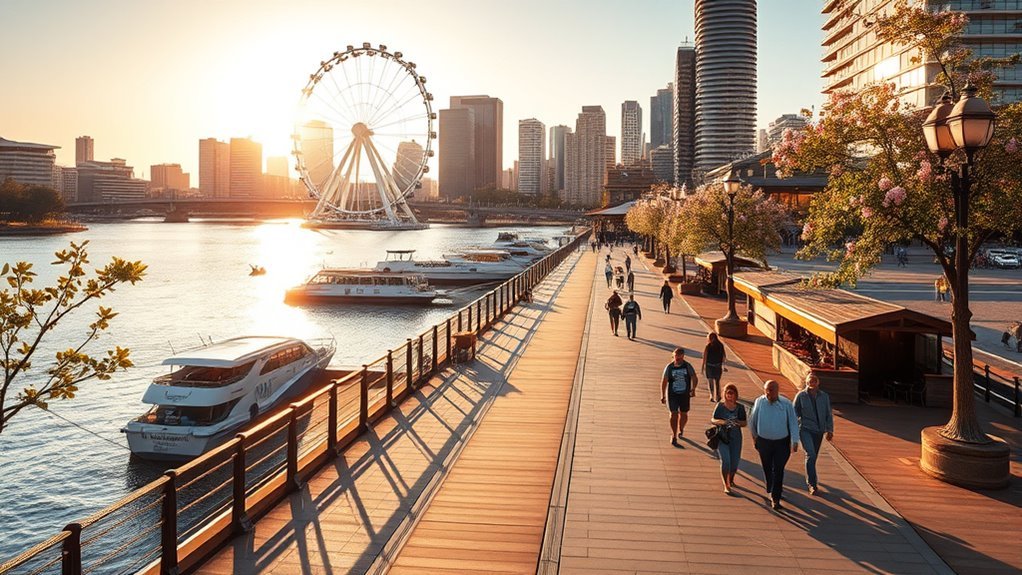
If you want sunny days, manageable humidity, and fewer crowds, aim for late autumn through early winter—April to June is your sweet spot.
You’ll stroll riverfront promenades with a light breeze, slip into museums without queues, and find rooms that cost less than peak season rates.
Plan mornings for Cultural hotspots like the Gallery of Modern Art and laneway galleries, when light sharpens colors and crowds are thin.
Plan mornings at the Gallery of Modern Art and laneways—soft light, vivid colors, and peaceful, crowd-free discovery.
Reserve afternoons for Culinary tours: you’ll chase bold flavors at markets and rooftop bars, tasting freedom in every bite.
Pack versatile layers—cool mornings, warm afternoons—and book outdoor activities midweek to dodge weekend rushes.
Use public transport passes to move fast, and snag restaurant bookings two to three days ahead for popular spots.
You’re after liberation: roam off the beaten path, let serendipity lead your itinerary, and keep one free evening to follow a local’s tip—you’ll leave feeling untethered and refreshed.
Summer vs Winter in Brisbane: Daily Expectations for Travelers
In summer you’ll wake to humid, hot mornings that often peak in the high 20s–30s°C and can turn sudden storms into brief, dramatic downpours, so pack light clothing and a compact rain jacket.
In winter the air is crisp and much drier with cooler daytime highs in the mid‑teens, giving you longer, sunnier hours for river walks, bike rides, and outdoor cafés.
Plan activities around daylight — late sunsets in summer favor evening festivals, while winter’s shorter days make early starts ideal for exploring without the heat.
Daily Temperature Differences
How hot will it feel day-to-day in Brisbane? You’ll notice micro temperature swings between morning and afternoon—diurnal variation that shapes your rhythm.
Mornings can be crisp and freeing, perfect for a jog along the river; by midday the sun climbs, and warmth invites you to shed layers and claim a café table in the shade.
In summer those swings tighten: humid mornings soften into steamy afternoons, so plan outdoor adventures earlier or later.
In winter the contrast sharpens—cool dawns, pleasantly warm afternoons—so pack a light jacket for dawn and a tee for wandering by dusk.
Embrace this daily ebb: time activities to the warmest hours, layer smartly, and let Brisbane’s gentle temperature shifts liberate your itinerary.
Rain And Humidity
Mornings that start cool and dry can quickly give way to sticky humidity or sudden showers, so you’ll want to plan your day with the sky in mind as much as the thermometer.
In summer, rain patterns shift fast: brief, fierce storms often arrive late afternoon, washing streets and leaving lush heat behind.
You’ll feel humidity cycles ramp up mid‑morning, so pack light layers and breathable fabrics; a compact poncho and quick‑dry shirt are freedom tools.
In winter, expect cleaner air and steadier, low humidity cycles, with rarer drizzle that won’t derail plans.
Watch local forecasts, embrace spontaneous shelter under verandas or cafés, and let the weather’s mood swing free you to adapt—don’t let it anchor your itinerary.
Daylight And Activities
Because daylight hours shift noticeably between seasons, you’ll want to time outdoor plans to match Brisbane’s summer stretch of long, golden evenings and its shorter, brisk winter days.
In summer you wake to earlier light and linger past sunset—perfect for sunrise photography along the river, lazy beach mornings, and evening strolls that stretch into warm, social nights. Pack sunscreen, a wide-brim, and a flexible schedule so you can seize late light and spontaneous rooftop bars.
In winter the sun rises later and sets sooner, giving you crisp mornings for freediving into productive days and cool, clear evenings for contemplative walks. Dress in layers, plan your major explorations mid-day, and savor quieter nights when the city feels newly liberated.
Brisbane Shoulder Seasons: Weather, Crowds and Value
Aim for Brisbane’s shoulder seasons—autumn and spring—when mornings are crisp, afternoons warm, and the light makes the river shimmer.
You’ll find fewer tourists at South Bank and cheaper flights and hotels, so you can book a riverside cafe without waiting.
Pack a light jacket and flexible plans to enjoy the best weather windows and stretch your travel budget further.
Mild Weather Windows
Looking for pleasant weather without the peak-season crush? You’ll find mild weather windows in Brisbane’s shoulder seasons where coastal breezes sweep riverfront promenades and the Urban heat‑island cools at dusk.
You can roam freed from humidity spikes, chase golden light across South Bank, and wake to crisp mornings that invite exploration.
- Time outings for calm mornings before the afternoon sea breeze arrives.
- Pack a light layer for cooler nights and comfortable day hikes.
- Seek river views to feel the breeze and escape dense, heated streets.
- Book flexible plans to seize sudden sunny spells or tranquil overcast days.
These pockets of calm let you move with ease, taste the city’s rhythms, and reclaim travel as restorative adventure.
Lower Crowds & Prices
When the peak-season tide recedes, you’ll find Brisbane’s shoulder months strip away the crowds and reveal the city at an easier pace: shorter queues at museums and cafes, quieter ferries on the river, and more room to stroll South Bank without elbowing for a sunset spot.
You’ll move through local attraction neighborhoods like a traveler unshackled—park bench mornings, empty gallery corners, and spontaneous market finds.
Book midweek to dodge dining ticket spikes around events and scoop up accommodation deals that feel like a small rebellion against tourist inflation.
Pack light, plan loosely, and reserve only must-see tickets; let serendipity guide afternoons.
The payoff is simple: cheaper nights, calmer streets, and freedom to enjoy Brisbane on your own terms.
Brisbane Events & Festivals That Affect Crowds and Prices
Brisbane comes alive with a calendar of events that can swell crowds and spike prices, so plan around what matters to you — music lovers should expect packed hotels and higher fares during the Riverstage and Bigsound festivals, sports fans will face peak demand around the NRL and cricket seasons, and families might find citywide rates climb during school holiday events like the Ekka.
You’ll feel the city pulse: cultural markets brim with artisans, Nightlife hotspots thrum until dawn, and precincts close for parade routes. If you want freedom to roam, book early or chase quieter windows.
- Track major event dates and lock accommodation 8–12 weeks ahead to avoid surges.
- Choose neighborhoods a tram ride away to escape inflated CBD rates.
- Attend fringe events for authentic energy without premium pricing.
- Use alerts for flight and hotel deals; flexibility yields liberation.
Read the program guides and pick experiences that feed your appetite for discovery, not crowds.
Who Should Visit Brisbane When : Families, Couples, Budget & Adventure Travelers
Pick the season that matches what you want to do — families will favor warm, school-holiday windows for splash parks and the Ekka, couples might aim for mild, low-humidity autumn evenings for rooftop bars and river walks, budget travelers should target shoulder months for cheaper rooms and flight sales, and adventure seekers will chase clear winter days for hiking and whale-watching.
If you’re traveling with kids, plan days around playgrounds, the City Botanic Gardens and curated family friendly activities like South Bank’s lagoon; book mornings for cooler, calmer outings.
For romantic getaways, pick sunset cruises or hidden laneway dinners in autumn and savour intimate river views without the humidity.
If you crave freedom on a shoestring, go shoulder-season, grab last-minute deals, and explore free city trails and galleries.
Adventure travelers should prioritize crisp winter clarity for bushwalks and Moreton Bay trips, packing layers and sturdy shoes.
Match your pace to the season and you’ll feel liberated, efficient, and fully present.
Save Money & Avoid Weather Pitfalls: Transport, Stays and Timing
If you want to keep cash in your pocket and dodge Brisbane’s surprise storms, plan transport, lodging and timing together so each choice shields you from weather hassles and price spikes.
You’ll feel free when a cheap ferry replaces a drenched taxi, when a riverside apartment puts you close to shelter and skyline views.
Use budget hacks like off-peak trains and multi-day TransLink passes, and pair them with season tips—visit in shoulder months to skirt heat and avoid peak fares.
- Choose riverside suburbs for walkable sights and lower ride-share reliance.
- Book flexible stays with free cancellation to move dates around storm alerts.
- Buy a go card and use off-peak fares to slice transport costs.
- Aim for April–May or September for milder weather, thinner crowds, better rates.
Travel like you own your time: pivot quickly, spend smart, and let timing and transport liberate your trip from costly surprises.
Frequently Asked Questions
Do I Need Travel Insurance for Brisbane-Specific Weather Events?
Yes — you should get travel insurance: it cushions you against storms, floods, and cancellations, pairs with emergency funds, and lets you roam freely knowing medical, evacuation, and lost-belongings costs won’t trap or limit your adventurous plans.
Are Mosquitos or Jellyfish a Major Concern Year-Round?
Not year-round: mosquito season peaks in warm, wet months, and jellyfish risk rises in summer; you’ll pack repellant, wear light long sleeves at dusk, heed stinger nets, and claim outdoor freedom while staying smart and fierce.
Can I Use Contactless Payments Everywhere in Brisbane?
Absolutely — you can tap and go almost everywhere in Brisbane; contactless limits sometimes cap high-value buys, so check with your bank. Carry a little cash for markets, and compare currency conversion rates to stay free.
Is Tap Water Safe to Drink Throughout Queensland?
Yes — tap water across Queensland is generally safe due to strict regulations, but you’ll want practical tips: carry a reusable bottle, check local advisories after storms, and trust treated water while savoring freedom to explore.
How Accessible Are Brisbane Attractions for Travelers With Mobility Needs?
Very accessible — you’ll find inclusive venues, ramps, and lifts so you won’t be held back. Use accessible transport, study wheelchair routes ahead, book mobility-friendly tours, and expect vivid riverside paths and liberating skyline views that welcome you fully.
Conclusion
You’ll want to time your Brisbane trip like a savvy local: aim for the mellow shoulder months (April–May, Sept) to enjoy sun-dappled days, light jackets and friendlier prices, while avoiding peak summer’s steamy tantrums and big-event surges. Families, couples and budget explorers can all find their sweet spot by traveling midweek and booking flexibly. Pack layers, plan afternoon indoor options, and you’ll leave with sun-kissed memories, not weather regrets.