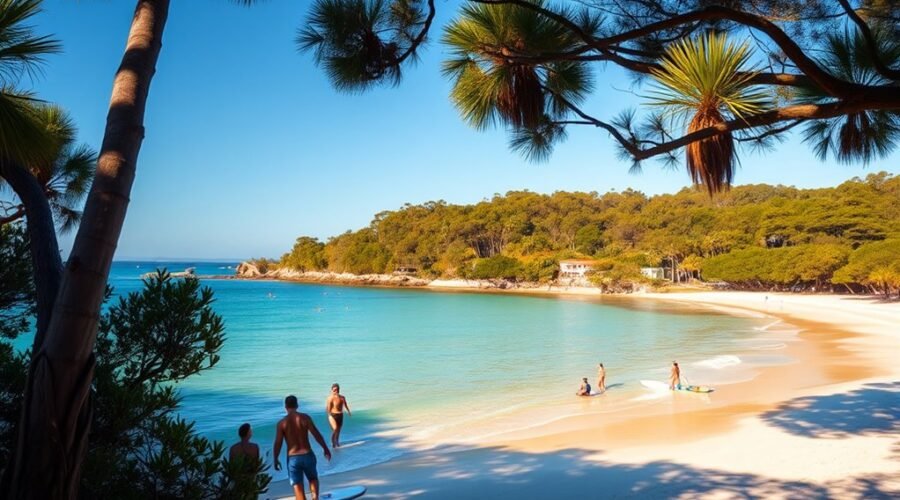
Most visitors don’t realize Noosa’s best weather actually clusters in two shoulder periods rather than mid‑summer. You’ll find warm, sunny days, calmer seas and fewer crowds in April–May and September–October, which also trim accommodation prices and make wildlife spotting easier at dawn and dusk. Depending on whether you want surf, quiet beaches or lower costs, you’ll pick a different month—here’s how to choose the ideal time for your priorities.
Compare our seasonal guides to Queensland, Australia and Southern Great Barrier Reef, Queensland when choosing other stops in Queensland.
Key Takeaways
- Late spring to early autumn (Oct–Apr) offers warm sunny days, calm seas, and best beach weather.
- Winter (Jun–Aug) is cooler, drier, less crowded, and ideal for lower costs and peaceful exploration.
- Shoulder months (Apr–May, Sep) balance milder temperatures, softer surf, and moderate crowd levels.
- Summer (Dec–Feb) brings humidity, lively surf, afternoon storms, and peak visitor numbers.
- Book early for school holidays and peak season to secure accommodation and avoid higher prices.
Best Time to Visit Noosa : Short Answer
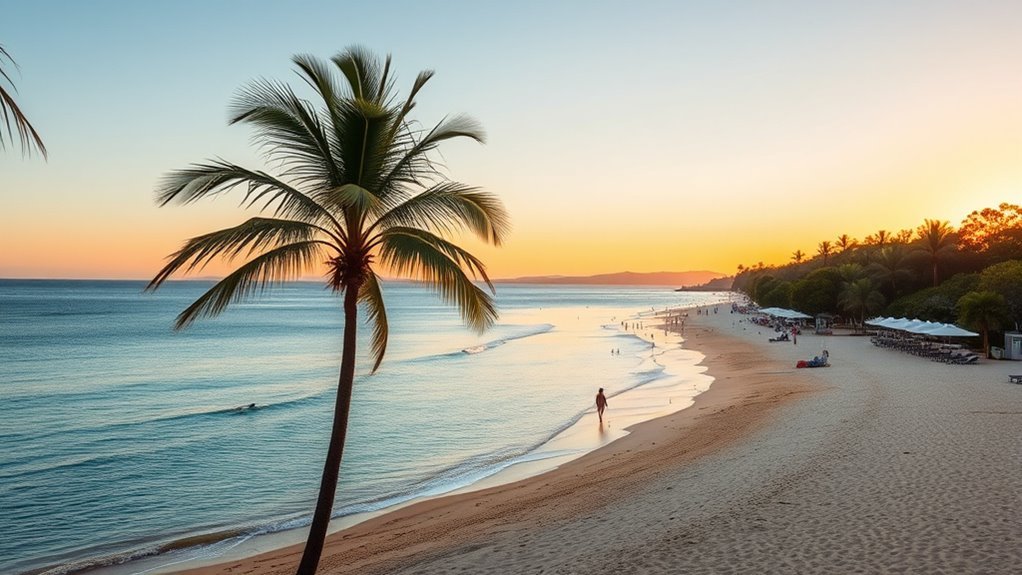
The best time to visit Noosa depends on what you want: expect warm, sunny days and calm seas from late spring through early autumn (October to April), while cooler, drier conditions and fewer crowds arrive in winter (June to August).
Choose your Noosa season: warm, calm seas from Oct–Apr, or cooler, quieter winters in Jun–Aug
If you crave freedom on sunlit beaches, plan for shoulder months—April–May or September—when surf, sand and a softer rhythm let you roam without peak-season churn.
You’ll savor wildicultural cuisine at markets and seaside eateries, tasting local seafood fused with global spice as you reclaim time.
If solitude and crisp air call you, winter mornings give clear walks along the headland and calmer promenades for reflection.
For wildlife spotting, dawn and dusk reveal koalas in the trees and dolphins near the headland; bring binoculars and curiosity.
Noosa rewards whichever liberation you seek: active surf days, lazy lagoon swims, or quiet coastal wanders.
Choose the season that matches your pace, then go and live it.
Noosa Weather by Season : Temperatures, Rain and Sea
Although seasons shift softly along Noosa’s coast, you’ll notice clear patterns in temperature, rainfall and sea conditions that shape how you plan each day.
In summer (Dec–Feb) expect warm, humid air, frequent late-afternoon storms and a lively sea; mornings can be glassy and perfect for sunrise photography before storms roll in.
Autumn cools gradually, drying the air and calming surf; you’ll feel freer to wander estuaries for wildlife spotting as mosquitoes recede.
Winter (Jun–Aug) brings crisp, sunny days, lower humidity and cooler nights — the ocean stays inviting at the surface but is gentler, and kayaks and coastal walks reward you with clear light and birdlife.
Spring revives warmth, occasional showers and thriving coastal flora; breakers pick up a touch, and early mornings glow for both lens and life on the shore.
Best Months in Noosa for Swimming, Surfing and Hiking
If you want warm, swimmable water and sun-soaked beaches, aim for late spring through early autumn (November–March), when sea temperatures peak and mornings are calm before afternoon storms. You’ll find idyllic swimming in sheltered bays, lively surf breaks for every skill level, and coastal trails that invite long, liberating hikes. Visit in late spring for gentler waves and clearer water for marine life encounters; summer brings peak warmth, dramatic surf and thriving wildlife spotting along headlands; early autumn offers lingering warmth with fewer storms.
| Month | Water | Land |
|---|---|---|
| November | Warm, calm | Coastal blooms |
| December | Hot, lively surf | Dense bush scent |
| January | Warmest, humid | Migratory birds |
| February | Tropical storms possible | Lush rainforest |
| March | Still warm, easing surf | Clearer trails |
Plan mornings for swims and wildlife spotting, afternoons for surf or shaded hikes. You’ll leave feeling freer, shaped by salt, sun and open trails.
Noosa Crowds and School‑Holiday Peaks (Impact on Bookings)
Expect Noosa to swell during school holidays, when families flock to the beaches and accommodation fills fast.
You’ll notice higher prices and fewer options, especially for beachfront stays and popular tours.
Book several months ahead for peak periods to secure the spot and rate you want.
Peak School Holiday Demand
When school holidays hit, Noosa swells with families and day-trippers, turning quiet streets into bustling promenades and popular beaches into lively hubs; you’ll notice accommodation fills fast and prices climb as demand spikes. You’ll feel the pulse: cultural festivals spark late‑night energy, while nearby wetlands stage wildlife migration, offering free outdoor theatre. Expect crowded cafés, booked surf lessons, and ferry waits — all signs of collective freedom-seeking. Plan around peak days, pick quieter suburbs, or embrace the buzz and join community events. Below is a quick snapshot to help you decide.
| Crowd Level | Typical Weeks | Experience |
|---|---|---|
| Low | Off-peak school terms | Calm, cheaper |
| Medium | Shoulder weeks | Balanced |
| High | Major school holidays | Busy, lively |
| Peak | Christmas/New Year | Festive, expensive |
Booking Lead Time
Because school holidays send demand soaring, you’ll want to lock in accommodation and activities well ahead of time to avoid disappointment and premium rates.
Plan at least three to six months out for peak windows—book beachfront stays, tours, and any sought‑after local holiday packages early to secure options and better prices.
If you crave freedom, early booking frees you to choose quieter streets, sunrise surf lessons, or a table at a buzzy bistro during local festivals.
Keep flexible dates and refundable options where possible so you can pivot if crowds or weather shift.
Monitor event calendars and sign up for alerts from hosts and operators; that proactive habit protects your itinerary and keeps your trip feeling like chosen liberation, not compromise.
Noosa Travel Costs by Month : Flights, Hotels and Tours
Check monthly flight price trends to pick the cheapest days to fly into Noosa, since fares can swing dramatically between peak school holidays and quieter months.
Expect hotel and tour rates to rise with summer crowds and drop in the shoulder seasons, so you can time stays and activities for better value.
Use this cost rhythm to plan whether you’ll splurge on beachfront stays during high season or save by visiting when prices soften.
Monthly Flight Price Trends
Curious how airfare to Noosa shifts through the year? You’ll use local fare analysis to spot patterns: shoulder seasons bring bargains, peak summer and school holidays spike prices, and off demand volatility can create sudden dips you can exploit. Watch January and December for premium fares; March–May and September–November often reward flexibility.
| Month Range | Typical Trend |
|---|---|
| Jan–Feb | High |
| Mar–May | Moderate/Drop |
| Jun–Aug | Mid-High |
| Sep–Nov | Low-Moderate |
| Dec | Peak |
Track fares weekly, set alerts, and be ready to book when a rare dip appears. Embrace freedom by traveling when prices and crowds align with your desire to roam.
Seasonal Hotel And Tour Rates
Airfare patterns give you a good head start, but accommodation and guided-experience costs tell the rest of the story for planning Noosa trips. You’ll notice peak-season hotel rates spike December–January and school holidays; boutique stays and waterfront suites command freedom-taxing prices. Shoulder months ease costs, letting you choose wild dining experiences without breaking a stride. Eco camps—more affordable in autumn—offer raw nights under stars when rates dip.
- December–January: highest hotel and tour prices, book early
- March–April: wet season discounts, flexible cancellations common
- May–September: steady shoulder-season savings, popular for guided hikes
- October–November: softer crowds, grab boutique deals and local foodie tours
Plan for values that match your appetite for liberation and authentic splendor.
Choose the Best Month to Visit Noosa (Priorities & Budget Trade‑Offs)
Picking the best month to visit Noosa comes down to what you value most—sunny beach days, lower prices, or quieter streets—and which trade‑offs you’re willing to accept.
If you crave sun, aim for September–November when surf’s gentle, skies are clear, and you can savor local cuisine at al fresco cafes; be prepared for moderate crowds.
For liberation from tourist throngs, choose May–August: cooler, calmer, and often cheaper, letting you roam Hastings Street and hinterland trails in peace.
Visit during festival seasons if cultural festivals excite you—February’s and July’s events bring vibrancy but push up hotel rates.
If budget is your priority, shoulder months (April, October) blend value with good weather; book midweek and you’ll save.
Decide whether you want ritual and flavor, solitude, or savings, then pick the month that aligns with that intention.
Your choice shapes the trip’s rhythm—so choose boldly.
Frequently Asked Questions
Are Pets Allowed on Noosa’s Main Beaches and National Park Trails?
Yes — you can bring pets to some Noosa beaches and trails, but rules vary: pet friendly beaches exist seasonally, and trail leash rules require dogs to stay on-lead in national park areas, protecting wildlife and your freedom.
What Wildlife Encounters Should Visitors Expect in Noosa?
You’ll likely encounter dazzling wildlife: koala sightings cling in eucalyptus groves, dolphins breach joyfully offshore, and colorful birds, goannas and turtles frequent beaches and waterways, letting you feel wildly free while exploring Noosa’s natural wonderlands.
How Accessible Is Noosa for Travelers With Mobility Impairments?
You’ll find Noosa increasingly accessible: accessible transport links buses and taxis with ramps, and many beachside wheelchair routes, boardwalks and accommodations are improved so you can confidently explore coastal trails, cafes and national park viewpoints.
Are There Local Festivals or Events Outside Peak Tourist Months?
Yes — you’ll find vibrant off‑season festivals and intimate off‑peak concerts that celebrate local music, food and surf culture; you’ll feel liberated exploring soulful markets, sunset gigs and community arts that reclaim quieter seaside days.
Where Are the Best Family‑Friendly Dining Options in Noosa?
You’ll find family‑friendly cafés along Hastings Street and Sunshine Beach, plus kid‑friendly bistros in Noosa Junction; they serve vibrant plates, relaxed vibes, play corners and outdoor seating so your family can unwind, explore, and feel free.
Conclusion
Want warm, sunny days, calmer seas and fewer crowds without peak summer prices? Visit Noosa in April–May or September–October. You’ll enjoy mild temperatures, vibrant coastal blooms, dawn and dusk wildlife, and reliable surf for all levels, while avoiding summer storms and winter chill. Choose the shoulder months for better value and easier bookings—what’s more inviting than quiet beaches, sparkling water and spectacular walks that feel like they’re just for you?