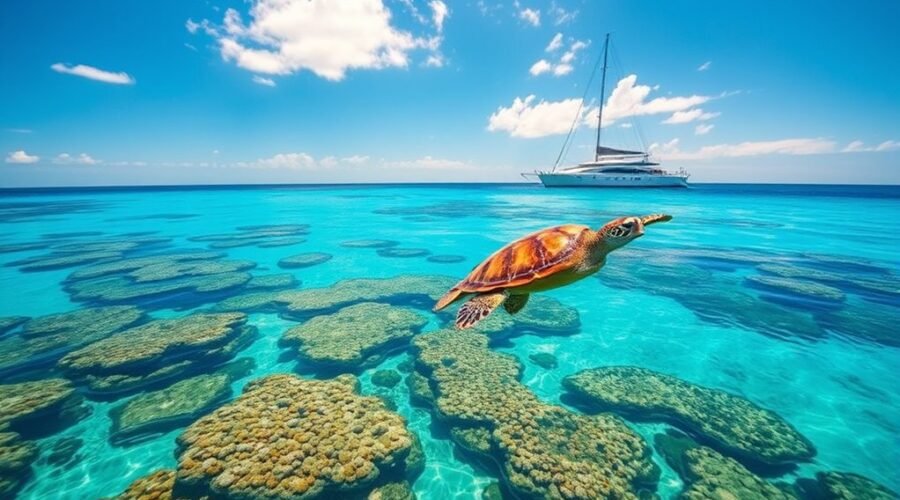
You might not know the clearest water and best visibility on the Great Barrier Reef usually fall in May–October, not the Australian summer. You’ll find warm, dry days (about 23–26 °C), 15–30 m underwater visibility, and fewer crowds than the December school‑holiday crush. If you want quieter, cheaper options, April and November ease prices and tourists while keeping calm seas—so consider timing and booking strategy to get the experience you want.
Key Takeaways
- May–October offers clearest water, calm seas, and best visibility (15–30 m) for snorkeling and diving.
- June–August is peak season with ideal conditions but higher crowds and prices.
- April and November (shoulder months) give fewer crowds, lower costs, and reliable services.
- November–April is warmer with more rain, plankton, and jellyfish risks; pack stinger protection and flexible plans.
- Book 4–6 months ahead for peak season, or 1–3 months for quieter periods; choose midweek departures to save.
Best Months to Visit the Great Barrier Reef
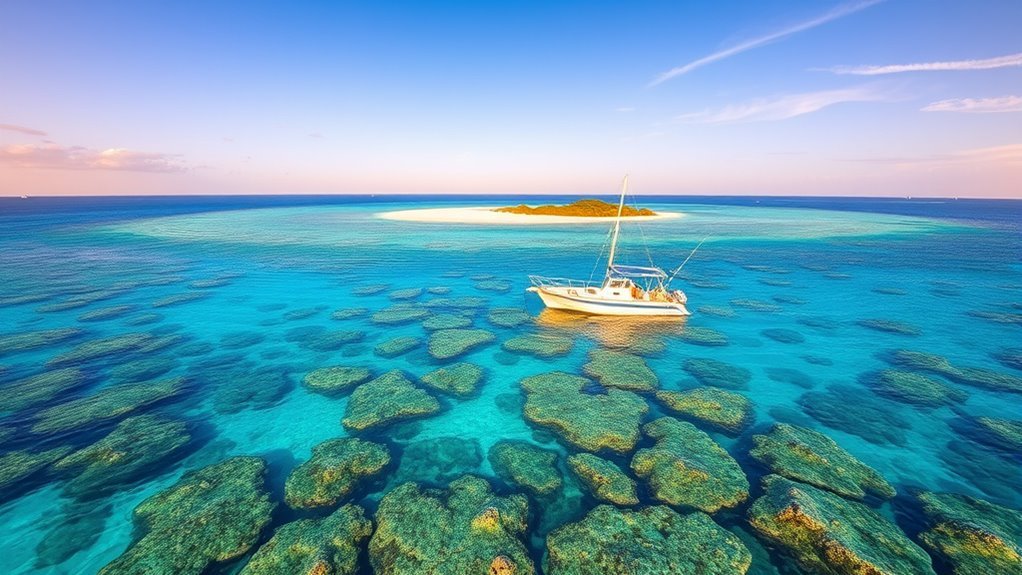
When should you plan your trip? You’ll find the clearest water and calmest seas between May and October, when visibility sharpens and reef life feels immediate.
Visit in June–August if you want peak conditions for snorkeling and diving; crowds rise but experiences deepen, and you can slip into quiet coves before tour boats arrive.
If you crave fewer people and softer prices, aim for shoulder months like April or November, when tours still run and you’ll enjoy more space to breathe.
Time your journey to overlap with regional cultural festivals and sample local cuisine at island markets—those moments connect you to place and free you from packaged travel rhythms.
Avoid the busiest holiday weeks if solitude matters.
Whatever month you pick, choose days that let you move slowly, observe reefs on your own terms, and let the sea’s rhythms recalibrate what you expect from a vacation.
Seasonal Weather: Temps, Rain, Water & Cyclone Risk
Although the Reef feels like a year-round wonder, its seasons change what you’ll see and how you’ll plan: winters (May–October) bring cooler, drier air, calm seas and dazzling underwater visibility, while summers (November–April) deliver hot, humid conditions with higher rainfall, warmer water and increased plankton that can reduce clarity. You’ll notice sea temperature trends across the year — a steady rise into February–March, then a gradual drop — which shapes comfort, coral stress risk, and timing for freediving or snorkeling. Rain alters surface conditions and runoff, while Cyclone formation patterns concentrate risk from late November to April; keep flexible plans and insurance. Embrace your freedom to choose quieter months for clear water or warmer months for balmy swims, but respect safety notices during cyclone season.
| Season | Typical Temps | Risk/Notes |
|---|---|---|
| Winter (May–Oct) | 23–26°C | Best visibility |
| Summer (Nov–Apr) | 26–30°C | Higher rain, cyclone risk |
Great Barrier Reef Marine Life & Visibility Calendar
Plan your trip around the reef’s visibility calendar so you’ll hit the peak visibility months when water is clearest and sightings are best.
You’ll also time encounters with seasonal visitors like manta rays, humpback whales, and turtle nesting, each arriving on predictable schedules.
And don’t miss the narrow nighttime windows for bioluminescence, when plankton light up shallow bays after dark.
Peak Visibility Months
Peak visibility on the Great Barrier Reef generally falls between June and October, when clearer seas, lower rainfall, and calmer winds let sunlight penetrate deeper and reveal vivid coral colors and marine life.
You’ll notice water clarity improving day by day, inviting longer dives and freer breath beneath the surface.
Expect expansive visibility—often 15–30 meters—so coral structures and schooling fish read like open maps.
Timing your visit during this window aligns with ecological rhythms: coral spawning pulses later in the year while whale migration threads the coastline, giving you both reef detail and distant giants.
Plan trips on calm mornings, seek less trafficked reefs, and carry a mindful gaze—you’ll move through scenes that simplify life’s clutter and restore a sense of roaming freedom.
Marine Species Seasons
When you time your visit to the Great Barrier Reef around seasonal rhythms, you’ll see different species—and different behaviors—unfolding like a living calendar.
You’ll witness coral spawning events after full moons in warmer months, a luminous, communal release that signals reef renewal and invites you into nature’s regenerative pulse.
From winter into spring, whale migrations bring humpbacks close to sheltered bays; you can watch mothers and calves move northward, embodying resilience and freedom.
Tropical fish, mola, and reef sharks shift with water temperature and plankton blooms, offering varied visibility and encounters.
Plan dives and snorkels around these windows to maximize sightings while minimizing disturbance—observe respectfully, follow guides, and let the reef’s seasonal choreography shape your journey toward ecological connection.
Nighttime Bioluminescence Windows
The reef’s daily rhythms don’t stop when the sun sinks; they simply shift into a quieter, electric mode that you’ll notice if you’re out on the water after dark.
You’ll watch the Night sky deepen to velvet while tiny organisms ignite, creating Bioluminescent tides that ribbon around your hull and hands.
Timing matters: calm, warm months after a new moon offer the clearest displays, and low wind lets surface glow concentrate.
You’ll feel liberated watching plankton respond to motion, a living map of your passage that reconnects you to elemental freedom.
Respect rules—don’t shine lights or disturb habitats—and choose guided night trips that prioritize conservation.
These windows are brief, unpredictable, and profoundly rewarding when they appear.
Crowd Patterns and School Holidays: Peak vs Shoulder Times
If you plan your trip around school calendars, you’ll notice the reef’s busiest windows align tightly with Queensland and nearby states’ holiday weeks, when families and organised tours flood popular sites and operators add extra trips.
You’ll find vivid mornings with boats clustered at famed snorkeling spots, and evenings where marinas hum with chatter after a long day.
Outside those peaks, shoulder seasons—late autumn and early spring—offer calmer waters and more space to breathe; you can drift between coral bommies with fewer boats on the horizon and attend a small local festival without crowds swallowing the experience.
If you seek freedom from schedules, aim for weekdays in shoulder windows when dive charters thin out and operators still run reliable services.
Even on quieter days, practice respectful reef etiquette and support ethical guides.
For travelers mindful of budgettourism, planning around school holidays means you won’t be pushed into overpriced, packed departures and can curate a more liberating, personal reef encounter.
Cost Calendar: Tours, Accommodation and Flight Price Trends
Because prices swell and dip with seasonal demand, you’ll want to track a simple cost calendar before you lock in dates.
Map high-season spikes—school holidays and summer weekends—when tours and flights jump, and note quieter shoulder months when prices ease and options expand.
Watch accommodation trends: island resorts hike rates for peak weeks, while guesthouses and budget inns drop weekday rates.
Book tours early for best slots, but monitor last-minute operator deals if you crave spontaneous freedom.
Factor in transport logistics: flights to Cairns or Hamilton Island and boat transfers add layers to cost, so chart combined ticketing and ferry surges.
Don’t forget budget insurance—compare coverage costs against cancellation risk during cyclone season or travel shifts.
Create a month-by-month grid showing typical tour prices, average nightly stays, and flight ranges.
Use it to spot liberation-friendly windows when quality meets affordability, letting you plan with confidence rather than constraint.
Which Reef Region to Choose: Cairns, Port Douglas, Whitsundays
While each reef gateway shares coral wonders, you’ll pick a base by matching the experience you want—Cairns for fast, budget-friendly access and city conveniences; Port Douglas for a quieter, upscale feel with closer proximity to the northern reef and Daintree excursions; and the Whitsundays for idyllic island escapes, sailboat charters, and sandy Whitehaven Beach interludes.
Choose Cairns if you want variety: dive shops, budget tours, lively markets, and annual cultural festivals that keep evenings buzzing.
Pick Port Douglas to slow down—boutique stays, tree-lined streets, and easy day trips that pair reef time with Indigenous heritage walks in nearby rainforests.
Opt for the Whitsundays when you crave autonomy: bareboat charters, secluded bays, and the freedom to chase sunrise anchorages.
Each hub offers different rhythms, costs, and crowd levels, so align logistics with the experience you hunger for—social energy, refined calm, or sailing solitude—and you’ll leave feeling unbound and deeply connected to sea and culture.
Seasonal Safety & Reef-Friendly Tips (Jellyfish, Sunscreen, Clothing)
When you plan reef time, consider seasonal hazards and reef-safe practices together so your trip stays safe for you and the corals: stinger season (November–May) brings box jellyfish and Irukandji risks, so wear a full-length stinger suit or rashie, heed local stinger warnings and nets, and avoid swimming at dawn or dusk when jellyfish are most active.
Beyond stingers, check currents and weather briefings before you go; strong tides can push you off reefs quickly.
Check tides and weather before you go—strong currents can quickly carry you off the reef, so plan accordingly.
For freedom on the water, choose lightweight, UV-protective clothing that covers limbs and dries fast — it reduces sunburn and limits sunscreen wash-off.
Use reef friendly sunscreen with non-nano zinc oxide, apply it on land, and reapply sparingly per instructions.
Carry a small first-aid kit for stings and know local emergency numbers.
Respect signage and guides; your choices protect both your body and the reef’s resilience, letting you explore with confidence and responsibility.
Booking Strategy: When to Book, Save Money, Sample Itineraries
Timing your booking can shave costs and shape your experience, so you’ll want to know the sweet spots for shoulder seasons and last-minute deals.
I’ll show practical ways to save on tours, accommodation, and transfers without sacrificing reef access.
Then you’ll get three clear 3-day itineraries—snorkel-focused, mixed sightseeing, and relaxed island time—to match different budgets and seasons.
Best Time To Book
If you want to get the best value and the most choices for the Great Barrier Reef, book early for peak-season travel and look for last-minute deals during shoulder periods.
You’ll secure prime dive slots, preferred accommodation, and room to tailor sample itineraries—day trips, multi-day liveaboards, or kayaking legs—without panic.
Aim to reserve 4–6 months ahead for high season (June–August); 1–3 months can work in quieter times if you’re flexible.
Balance savings with protection: factor in travel insurance and cancellation policies when you commit.
Keep a budgetultural mindset—prioritize experiences that free you rather than possessions.
Check operator reviews, reef permits, and cancellation windows; that clarity lets you plan boldly and change course if liberation calls.
Ways To Save
Curious how to stretch your travel budget without skimping on reef time? You can book off-peak ferries and midweek tours, grab last-minute cabin deals, and choose budget friendly lodging that still feels freeing. Pack light, bring eco friendly gear to avoid pricey rentals, and watch seasonal promos—this keeps costs low and conscience clear. Combine flexible dates with price alerts so you seize discounts the moment they appear.
- Feel the thrill of a bargain when a midweek tour opens up.
- Breathe easier with eco friendly gear packed for reuse.
- Savor solitude by choosing quieter shoulder-season departures.
- Revel in simple comforts at budget friendly lodging near marinas.
- Celebrate freedom when smart planning turns luxury into reach.
Sample 3-Day Itineraries
When should you lock in your trip to balance price and experience? Plan 2–4 months ahead to snag better fares and reef tours without losing flexibility.
Day 1: arrive, settle on Cairns or Port Douglas, stroll markets, join cultural tours in the afternoon to connect with First Nations guides; taste local flavors and scout local festivals calendars.
Day 2: full-day snorkel or dive trip to outer reefs—book midweek departures for smaller crowds and occasional discounts.
Day 3: choose a slower pace—mangrove walks, wildlife boat trips, or a scenic flight at sunset; use this day to negotiate last-minute upgrades.
Book refundable options when possible, travel light, and keep dates open around community events for liberated, authentic experiences.
Frequently Asked Questions
Can I Dive the Reef at Night as a Beginner?
Yes — you can night dive as a beginner with guidance; night dive basics include buddy checks, confined-water practice, and low-stress sites. Bring beginner gear recommendations: reliable torch, backup light, marker, snug mask, and conservative weight setup.
Are There Special Permits for Drone Photography Over the Reef?
Yes — you’ll need permits; Drone regulations restrict flights over marine parks, and permit costs vary. Imagine an activist photographer fined until she secured permits; you’ll follow park and CASA rules, apply, and budget accordingly.
What Vaccinations Are Recommended Before Visiting Queensland?
You should get routine vaccines plus hepatitis A and consider hepatitis B; check for typhoid, tetanus, and influenza. You’ll want travel insurance, bring documentation, and feel empowered protecting your health before exploring Queensland.
Is Wi‑Fi and Mobile Coverage Available on Liveaboards?
Yes — you’ll usually find limited Wi‑Fi availability and variable mobile signal strength on liveaboards; expect spotty connections, occasional full bars near shore, and freedom to unplug while you embrace the reef’s raw, liberating silence and wonder.
How Accessible Is the Reef for Travelers With Limited Mobility?
You’ll find parts of the reef reasonably accessible: accessible accommodations and wheelchair‑friendly tours exist, offering adapted boarding, shallow snorkeling platforms, and supportive crews, so you can confidently explore vibrant coral life with dignity and adventurous freedom.
Conclusion
Visit May–October for the clearest water, warm dry days (23–26°C), and 15–30 m visibility, with fewer crowds than summer. April and November give even quieter, cheaper options. Book 4–6 months ahead for June–August dives; 1–3 months is fine on the shoulder. Note that only about 7% of coral cover remains in some damaged zones, so stick to reef‑friendly sunscreens and guides—your timing and choices help protect what’s left.