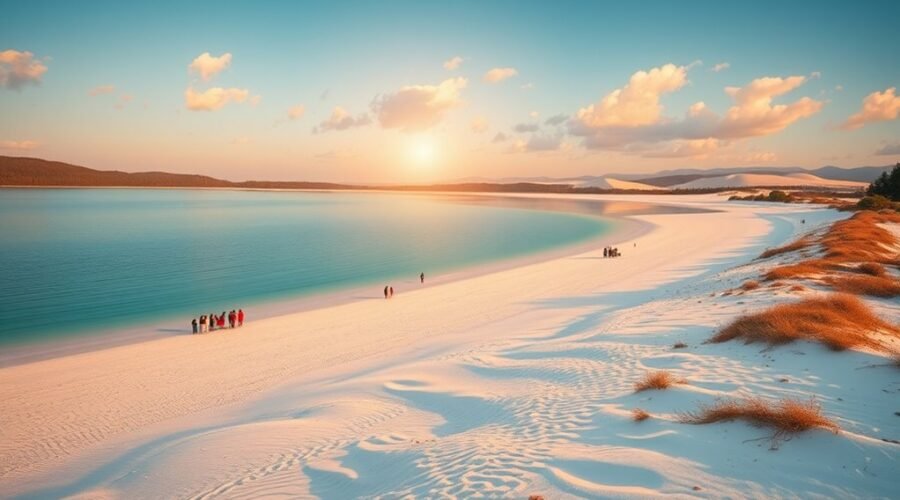
If you’re planning a trip to K’gari, you’ll want to time it for weather, crowds and cost. Think calm seas for 4WD beach drives, crisp mornings for wildlife, and shoulder‑season prices that beat the high season. Some months mean storms and heat; others offer whale watching and wildflowers. I’ll walk you through the best months and what to expect so you can pick the right window for your plans—starting with the top recommendation.
Compare our seasonal guides to Queensland, Australia and Southern Great Barrier Reef, Queensland when choosing other stops in Queensland.
Key Takeaways
- May–October offers the best balance: cool, dry weather, calmer seas, firm sand for 4WDing, and lighter crowds.
- December–February is high season: hot, storm‑prone days, largest crowds, and highest prices.
- March–May brings calm seas, lower humidity, good snorkeling, and shoulder‑season discounts.
- June–August is low season for deals, cooler temperatures, whale watching, and more solitude.
- Book ferries, permits, and campsites early during school holidays and December–January to avoid sold‑out days and price spikes.
Best Months to Visit K’gari : Quick Recommendation
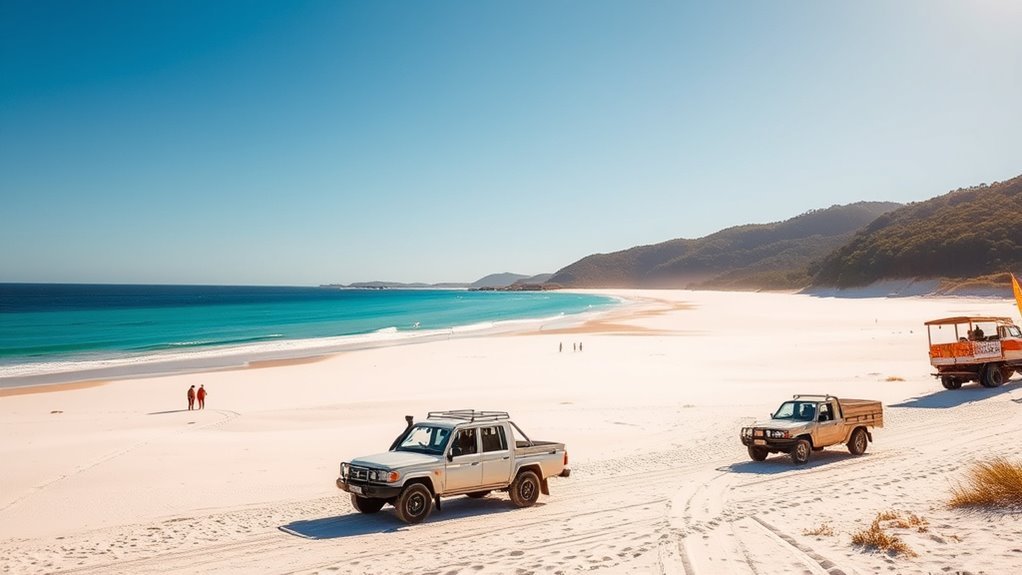
If you want the driest, sunniest days with calmer seas for 4WDing and beach camping, aim for May to October — that’s K’gari’s cooler, low‑rain season when wildflowers linger and the sand stays firm.
Aim for May–October on K’gari for cool, low‑rain days, firmer sand and calmer seas—ideal for 4WDing and beach camping
You’ll find light crowds, long golden afternoons, and clearer horizons that make wildlife photography feel effortless; shy dingoes and perched ospreys appear against vast sky, and tide pools glint with possibilities.
You’ll move freely between lakes and shores, choosing remote campsites without battling storms or sticky humidity.
Travel this season if you want to savor solitude and leave light footprints—your presence can support marine conservation efforts that protect corals and turtles in quieter months.
Pack layers for cool mornings, keep a respectful distance from animals, and plan flexible itineraries so you can follow sunlit trails and surf windows.
This stretch gives you control: calmer conditions, clearer views, and more space to breathe and explore.
Summer (Dec–Feb): Heat, Storms and High Season Tips
Summer on K’gari brings intense heat and sudden storms, so you’ll want smart strategies for staying cool and safe.
Pack lightweight clothing, a wide-brim hat, plenty of water and a high-SPF sunscreen, and plan outdoor activities for early morning or late afternoon when it’s cooler.
Keep an eye on weather alerts, know the nearest shelter routes, and be prepared to change plans quickly when storms roll in.
Heat Management Tips
Feeling the heat? You can keep freedom in your step even when K’gari sizzles—stay deliberate and light. Seek out Hydration stations and bring a refillable bottle so you’re never tethered to bottled water. Lean into cool pauses under natural Shade structures or the canopy; rest becomes rebellion against exhaustion.
- Wear breathable, loose clothing that lets your skin breathe.
- Time walks for early morning or late afternoon to reclaim cooler hours.
- Use a wide-brim hat and UV sunglasses to shield without hiding.
- Pack a small, misting spray and cooling towel for instant relief.
- Choose campsites or picnic spots near coastal breezes and tree cover.
You’ll move with intention, protect your body, and stay wild, clear-headed, and liberated.
Storm Safety Advice
When storms roll in across K’gari, you’ll notice the sky shift from bright blue to brooding in minutes, so treat every darkening horizon as a cue to get prepared and stay put until it passes.
You’ll want to head straight for official storm shelters if you’re near campsites or communities; they’re simple sanctuaries that keep you safe from wind, lightning, and sudden flood.
Keep a compact emergency kits in your pack—water, torch, whistle, basic first-aid, and a charged phone or power bank.
Stay off the beach and away from trees or creek banks; move inland and seek solid ground.
Listen to local warnings, trust your instincts, and embrace the freedom of being prepared so storms don’t steal your adventure.
Autumn (Mar–May): Calm Seas, Lower Humidity and Deals
In autumn you’ll notice the seas calm and the water’s clarity makes snorkeling and whale watching a treat.
The air thins out—humidity drops—so you’ll find coastal walks and camping much more comfortable.
Expect quieter beaches and better deals on tours and accommodation as the high season winds down.
Calm Seas & Clear Visibility
As the summer crowds thin, you’ll find K’gari’s waters flatten into long, glassy swells that make snorkeling, kayaking and scenic boat trips effortlessly rewarding.
You’ll notice visibility sharpen—colors pop, coral edges read like lines on a map, and tastal snorkeling reveals stingray silhouettes and schooling fish.
Calm seas invite you to drift, breathe, and witness marine biodiversity without interruption.
- Paddle quiet channels and feel the island open.
- Slip beneath the surface where clarity feels like freedom.
- Watch turtles trace slow routes under sunlit water.
- Let every undulation of the ocean clear your head.
- Anchor near sheltered bays for unhurried exploring.
You’ll leave with cleaner horizons and a keener appetite for roaming.
Lower Humidity And Deals
Why not savor cooler mornings and clearer evenings while scores of summer visitors thin out?
You’ll breathe easier as humidity drops, feeling unburdened and ready to roam K’gari’s sandy tracks.
Lower moisture sharpens light for sunset photography, rendering dunes and sea in crisp, liberated tones that push you to wander a little farther.
Accommodation and tour operators ease prices, so you can claim better deals without compromising comfort.
Nights grow more comfortable too; armed with a torch, you’ll seek nighttime wildlife—glints of reflective eyes, quiet marsupials, and the slow shuffle of island life—without sweaty discomfort.
This season rewards those who want freedom: fewer crowds, clearer skies, and the chance to explore on your own terms.
Winter (Jun–Aug): Cool Weather, Dingoes and Whale Watching
When you visit K’gari in winter, you’ll find crisp mornings, gentler crowds and a landscape that feels quietly alive — perfect for spotting dingoes on the beach and watching humpback whales pass offshore.
You’ll move at your own pace, join guided Dingo tracking to learn respectful distance and behavior, and stand on windswept sand as Whale migration unfolds on the horizon.
Winter gives clarity: cool air, big skies and intimate encounters that free you from crowds.
- Dawn walks reveal pawprints and silence
- Guided Dingo tracking teaches safe observation
- Whale migration offers steady, impressive sightings
- Cooler temps mean longer hikes without sweat
- Fewer tourists, more room to roam
Pack layers, binoculars and a calm mindset. Respect wildlife, follow local rules and let the island’s quiet strength restore your sense of freedom.
Winter on K’gari is about deliberate motion, connection and the thrill of witnessing life moving along its ancient rhythms.
Spring (Sep–Nov): Warm Water, Wildflowers and Rising Crowds
In spring you’ll find the ocean warming up, so you can slip into clear, inviting swims along K’gari’s beaches.
The dunes and heath burst into colour with peak wildflower displays that make short walks feel like a constant discovery.
Just be prepared for more visitors as the island’s charms draw crowds back to the shore.
Warm Water Swims
If you time your trip for spring, you’ll find K’gari’s ocean warming to a pleasant, swimming-ready temperature that invites long, lazy sessions between headlands and sandy spits.
You’ll slip into clear water that feels like permission to loosen up—float, paddle, or chase small waves toward secluded coves.
Bring a towel for sunset picnics and plan nighttime stargazing after salt dries from your skin; the island rewards those who stay late.
- Wade into calm bays where the water holds heat from the day
- Swim out to sandbar edges and feel the island’s hush
- Follow tidal pools alive with small life you can admire
- Choose mornings for quiet swims, afternoons for playful surf
- Leave the beach cleaner than you found it, free and responsible
Peak Wildflower Display
Although the island’s warm seas still beckon, spring truly announces itself in bursts of color as K’gari’s dunes and heathlands explode with wildflowers—masses of golden wattle, pink boronia, and delicate blue pea‑flower carpet the tracks and roadside verges.
You’ll feel restless in the best way, wanting to follow scent and color along sandy paths.
Photographing these brief miracles is addictive; Wildflower photography perks you up at dawn when light and blooms cooperate.
Join Botanical tours if you want stories about pollinators and plant lore, or slip away solo to claim a quiet patch.
Crowds rise, so plan early or seek lesser‑known tracks.
The island’s floral display invites you to move freely, frame what inspires you, and leave the place richer for your visit.
When Rain and Cyclones Affect K’gari
When storm season rolls in, you’ll notice K’gari’s mood change quickly: skies darken, winds pick up, and the island’s sandy tracks turn to rivers, reshaping access to beaches and campsites almost overnight. You feel both small and free as nature reclaims rhythm; that’s when Cyclone preparedness matters most and you’ll want to move with intention.
- Rain impact is immediate: dunes shift, freshwater lagoons swell, and tracks become challenge courses.
- Watch forecasts daily and choose shelter away from low-lying campsites and exposed beaches.
- Pack waterproof gear, secure loose items, and keep a portable charger and emergency contacts handy.
- Respect park closures; they protect you and the island’s fragile recovery after storms.
- If a cyclone warning comes, follow authorities’ evacuation advice promptly and calmly.
You’ll learn to read weather, embrace cautious freedom, and leave lighter footprints while letting the island heal after each fierce, wet breath.
How School Holidays Affect Ferries, Campsites and Permits
How will school holidays change your K’gari plans? Expect the island to feel louder and busier; ferries pack to capacity and lines form early, so you’ll want to book crossings well ahead.
School breaks trigger permit permit delays at peak booking windows — processing can take longer when rangers handle surges — so lodge your permit application sooner than usual to keep your itinerary free.
School breaks slow permit processing — expect delays during peak windows, so submit applications early to secure your plans.
Campsites sell out faster and you’ll notice campsite price spikes for holiday weeks as private providers and nearby towns adjust rates.
If you crave freedom, aim for shoulder days just before or after official holidays; you’ll dodge the worst crowds and reclaim a wilder, quieter experience.
Pack patience and plan alternatives: flexible dates, a second-choice campsite, or camping gear that lets you move. That way you keep control, minimize stress, and still get the liberating island time you came for without being hostage to holiday chaos.
K’gari Price Calendar: Cheapest and Busiest Months
All that holiday hustle has a direct impact on prices, so it’s worth lining up your dates with the island’s cost rhythms before you book. You’ll notice peak rates during summer and school holidays, when ferries fill and campsites vanish; those months are vibrant with cultural festivals and crowded lookouts for marine wildlife, but they’ll hit your wallet. If you crave freedom, aim for shoulder seasons when you can roam without the tourist tide.
- January–February: high prices, big crowds, festivals; plan early
- March–May: quieter, discounts appear, marine wildlife sightings still good
- June–August: low-season bargains, cool days, more solitude
- September–October: rising rates as spring events return, nicer weather
- November–December: mixed prices, holiday surges, book strategically
Scan ferry and accommodation calendars, watch permit windows, and pick months that match your thirst for liberation — cheaper months buy you space, pricier months buy you spectacle.
Best Times for Swimming, 4WDing, Camping and Fishing
Want to swim in warm, clear water, tackle sandy tracks in a 4WD, camp under star-scattered skies, or cast for the catch of the day? You’ll find summer and early autumn (Dec–Apr) offer warm seas and vibrant marine wildlife for snorkeling and swimming; visibility’s best after calm mornings. For 4WDing, choose late winter to spring (Aug–Oct) when firm sand and fewer tourists let you roam freely along the beach. Camping sings in shoulder seasons (Apr–Jun, Aug–Oct) — cooler nights, more solitude, and memorable stargazing nights. Fishing peaks when water temperatures shift; dawns in autumn bring active bites. Respect tides, local rules, and wildlife distances so your freedom doesn’t harm the island. Below, a simple table to stir the senses and your plans.
| Activity | Best Months | Feeling |
|---|---|---|
| Swimming | Dec–Apr | Liberating warmth |
| 4WDing | Aug–Oct | Rugged freedom |
| Camping | Apr–Jun | Quiet wonder |
| Fishing | Mar–May | Patient reward |
Packing and Booking Checklist for Your Chosen Season
Now that you’ve picked the season that suits your plans, let’s make sure your gear and bookings match the weather and activities ahead. You’ll want freedom from last‑minute hiccups, so check essentials, lock in permits, and leave space for spontaneous detours.
- Confirm ferry, 4WD permit and campsite bookings; note cancellation windows.
- Pack layered clothing, reef‑safe sunscreen, sturdy boots and a compact first‑aid kit.
- Arrange travel insurance that covers remote rescue and activity‑specific risks.
- Do gear maintenance: service your fridge, check tyre pressure, replace worn straps and waterproof seals.
- Download offline maps, charge power banks, and bring a paper copy of permits.
Be deliberate about weight and redundancy; every extra item should earn its place. Respect K’gari’s fragile wildness by choosing low‑impact gear and sticking to designated tracks. With bookings squared away and equipment tuned, you’ll move through the island with the confidence and liberty to roam on your own terms.
Frequently Asked Questions
Are There Alcohol Rules or Bans on K’Gari?
Yes — you’ll encounter alcohol restrictions on K’gari; ban enforcement’s strict in some zones, so respect signs and rangers, pack alternative treats, and revel responsibly in wild freedom while protecting Country and community.
Can I Bring My Pet to K’Gari?
No, you generally can’t bring pets to K’gari; pet restrictions protect wildlife and ecosystems. Check accommodation policies—some private hires might allow pets off-island—but on-island stays, national park zones, and ferries usually prohibit animals.
Is Mobile Phone Reception Available Across the Island?
You won’t get full signal coverage across K’gari; reception’s patchy and unpredictable. You’ll sometimes find strong signal reception near settlements and ferries, but remote beaches and rainforest trails often leave you gloriously offline and free.
Are Drones Allowed on K’Gari Without a Permit?
No, you can’t fly drones on K’gari without a permit; Drone regulations demand Permit requirements be met, so you’ll need approval, respect wildlife zones and cultural sites, and liberate your spirit responsibly while following strict, protective rules.
What Waste Disposal and Recycling Facilities Exist on K’Gari?
Like a lighthouse guiding ships, you’ll find basic waste bins scattered at campsites and beach access points, plus limited recycling stations near village hubs; you’ll need to pack out overflow and respect strict leave-no-trace rules.
Conclusion
Head to K’gari in the shoulder season — late May to early October — for crisp mornings, calmer seas and cost‑conscious camping. You’ll dodge crowds, delight in dazzling wildflowers, and discover dainty dingoes from a distance while enjoying whale watching and worry‑free 4WDing. Plan permits, pack layers, and pick quieter weekdays to secure campsites. Savour serene sunsets, snap striking shots, and soak up sandy solitude with smart, simple planning for a splendid, stress‑free stay.