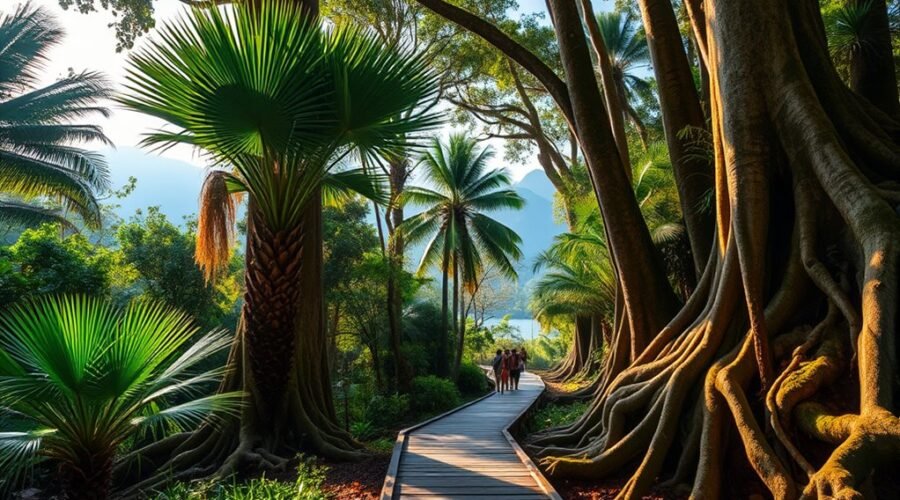
You’ll want to time your Daintree trip for comfort and experience: dry months from May to October give sunny days, firm trails and easier night walks, while shoulder seasons offer stormy skies and dramatic photos; the wet season brings lush life but slippery tracks and higher costs. Think about what matters most—wildlife encounters, hiking ease, or budget—and you’ll start to see which months fit best.
Compare our seasonal guides to Queensland, Australia and Southern Great Barrier Reef, Queensland when choosing other stops in Queensland.
Key Takeaways
- Visit May–October (dry season) for sunny days, firm trails, lower humidity, and easier walking.
- Travel during shoulder months (Mar–May, Sep–Nov) for dramatic weather, balanced conditions, and fewer tourists.
- Expect peak crowds and higher prices in December–January school holidays; book early then.
- Wet season (Nov–Apr) brings heavy rain, high insect activity, and excellent wildlife viewing, especially frogs and fruit bats.
- Midweek stays, guided ranger walks, and early‑morning outings reduce costs and increase solitude.
When to Go to the Daintree : Quick Answer & Checklist
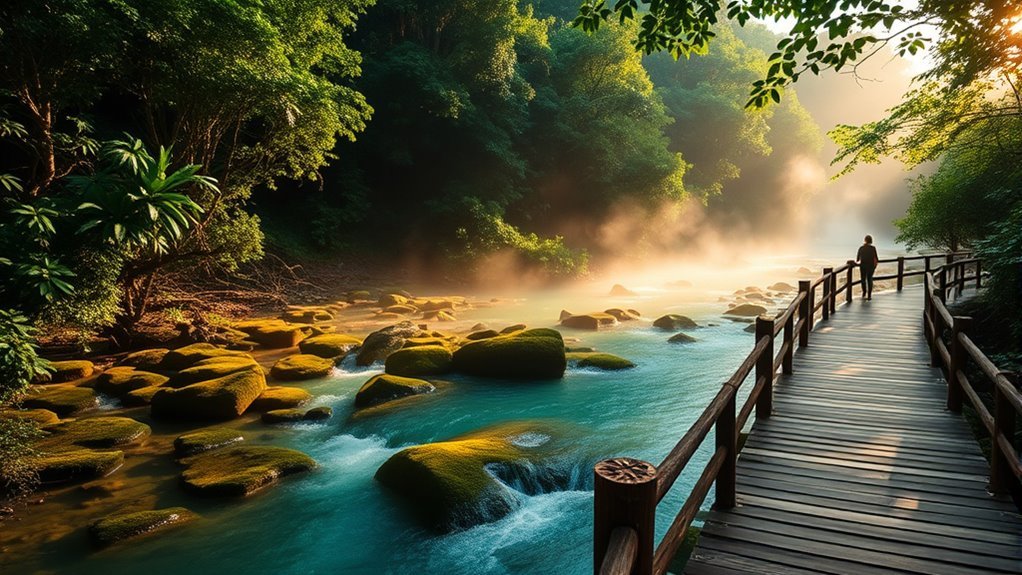
If you want warm, sunny days and easy access to walking tracks, visit the Daintree between May and October when the dry season puts rainforest trails in crisp condition, creeks run clear, and the air smells of eucalyptus and salt from nearby Cape Tribulation.
You’ll feel liberated stepping onto leaf-strewn paths, where sunlight slices through canopy and the soil gives a satisfying crunch underfoot.
Quick checklist: pack breathable layers, sturdy boots, reef-safe sunscreen, and a lightweight rain jacket—storms can still surprise.
Quick checklist: breathable layers, sturdy boots, reef-safe sunscreen, and a lightweight rain jacket—storms still surprise, so be ready.
Book local accommodations tours that pair boutique stays with river cruises so you can slip from hammock to habitat without fuss.
Reserve guided walks with experienced rangers who read birdcalls and point out hidden cycads; they’ll teach you to move quietly and claim the forest’s stillness.
Time your trip midweek to ease crowding and negotiate better rates.
Travel light, stay curious, and let the Daintree reset your pace.
Seasonal Weather in the Daintree: Wet (Nov–Apr) vs Dry (May–Oct)
Because the Daintree’s climate swings between two distinct moods, you’ll feel the rainforest change beneath your feet: from November to April the wet season unfurls heavy, humid afternoons, green so intense it smells almost metallic as rain drums on broad leaves, while May to October brings drier, cooler air, clearer creeks and sunlit trails that reveal lichen, birdlife and leaf litter with crisp definition. You’ll notice flora cycles accelerate in the wet—new shoots, vines and fungal blooms—while river levels swell, turning quiet streams into rushing arteries. In the dry, canopies open, soils firm and paths invite solitary walking that feels like unmooring yourself from routine.
| Wet (Nov–Apr) | Dry (May–Oct) | Impact |
|---|---|---|
| High humidity, heavy rain | Cooler, low humidity | Water shapes access |
| Rivers rise, murky flow | Clearer creeks, lower flow | River levels alter routes |
| Rapid growth spurts | Leaf fall, exposed understory | Flora cycles shift visibility |
Choose the season that frees you.
Best Season per Activity: Wildlife, Walking, Photography
When should you visit the Daintree for the experience you want—thrumming wildlife, quiet walks, or camera-ready scenes?
Visit during the wet season for wildlife: crepuscular frogs, fruit bats and vibrant birds sing after rain; insects hum like a living orchestra and you’ll find crocodiles sunning along swollen banks—perfect if you crave raw, untamed encounters.
For walking, pick the dry season: trails are firm, humidity eases, and you can roam mist-filtered gullies without bogged boots; night walks on cooled paths reveal secretive possums and glowworms under clear skies.
For photography, aim for shoulder months between wet and dry—dramatic storms, saturated greens, and golden low light yield cinematic frames; river kayaking at dawn brings mirrored reflections and solitary compositions.
Wherever you go, move deliberately, breathe wet earth and salt air, and let the Daintree loosen rules; you’ll return altered, eyes open to how wild freedom photographs, walks, and wildlife feel when you choose the season that matches your hunger.
Crowds and Costs in the Daintree : Peak Months & Budget Windows
Although the Daintree feels timeless, its rhythms pulse with tourist seasons you’ll want to match to your budget and tolerance for crowds.
In December–January and school holidays the forest hums: boat tours queue, boardwalks fill, and accommodation rates spike as resorts chase peak-season profit.
You’ll feel the difference in sound — more chatter, more cameras — and in price tags that nudge past mid-range into premium.
If you crave freedom and quieter trails, aim for the shoulder months of March–May or September–November.
Rainfall tapers, wildlife remains vivid, and budget pricing appears in guesthouses and eco-lodges.
Midweek stays and aligning with smaller local festivals can let you sample culture without the crowds or inflated rates.
Plan midweek stays and time visits for small local festivals to enjoy culture minus the crowds and price hikes.
Travel light on expectations: seek early-morning walks, connect with guides who know secret alcoves, and let your timing release both solitude and savings in this ancient, living landscape.
Access, Hazards and Packing Essentials (Roads, Tours, Safety)
If you’re driving up from Cairns or Port Douglas, expect narrow, winding roads that demand attention—rain can turn gravel shoulders slick and wildlife may dart onto the bitumen at dawn and dusk—so slow down, keep headlights on, and plan extra time for ferry crossings at the Daintree River. You’ll feel the forest close in: humid air, green smells, insects at the road edge. Check road access updates before you go; some tracks flood quickly.
| Item | Purpose | Tip |
|---|---|---|
| 4WD/Good Clearance | Muddy tracks | Reduce tyre pressure |
| Insect repellent | Comfort | Reapply hourly |
| Rain jacket | Sudden downpours | Pack light, breathable |
| Water & snacks | Remote stretches | Hydrate often |
| Headlamp & phone powerbank | Night or emergency | Signal for help |
Choose guided tours for river crossings and crocodile briefings, carry a concise gear checklist, respect warnings, and move deliberately—freedom here means responsibility.
Frequently Asked Questions
Are There Guided Night Walks in the Daintree?
Yes — you can join guided tours for nocturnal exploration; you’ll hear frogs chorus, smell wet leaf mulch, feel humid air, and your guide’ll guarantee night safety while you roam liberated, eyes wide for glinting eyes and insects.
Can You Camp Overnight Inside the Rainforest?
Yes — you can’t camp freely inside most Daintree reserves; you’ll need Rainforest permits for designated sites, follow Nighttime safety rules, breathe damp earth and bird-song, and feel liberated under starlit, prehistoric canopy.
Are There Mobile Phone Signals in the Daintree?
Mostly no — signal coverage’s patchy in the Daintree, so you’ll feel gloriously untethered. You’ll catch brief bars near towns or lookouts, but expect roaming fees if you chase service; savor the wild instead.
What Wildlife Is Active During Daytime River Cruises?
Sunlight glitters on water as you spot kingfishers, mangrove snakes, salties, herons and monitor lizards during Daytime river Wildlife spotting; you’ll feel liberated, senses sharp, guided by local expertise to unseen jungle rhythms.
Do Any Local Cultural Tours Operate in the Area?
Yes — you can join local cultural tours where Indigenous storytelling fills the air, sandalwood smoke scents the breeze, and you’ll try Traditional craft workshops, feeling bark, weaving, and ancestral rhythm that liberates your curiosity and spirit.
Conclusion
Go when you want sunshine, not mud—unless you’re after a rainforest that’s aggressively dramatic. Visit May–October for crisp trails, humming birdsong and sweat-free walks, or flirt with the shoulder months for stormy skies that make your photos sing. Avoid November–April unless you love torrential percussion, swollen rivers and very soggy boots. Midweek stays cut crowds and costs. Pack waterproofs, insect repellent and common sense—Daintree rewards those who read the season.