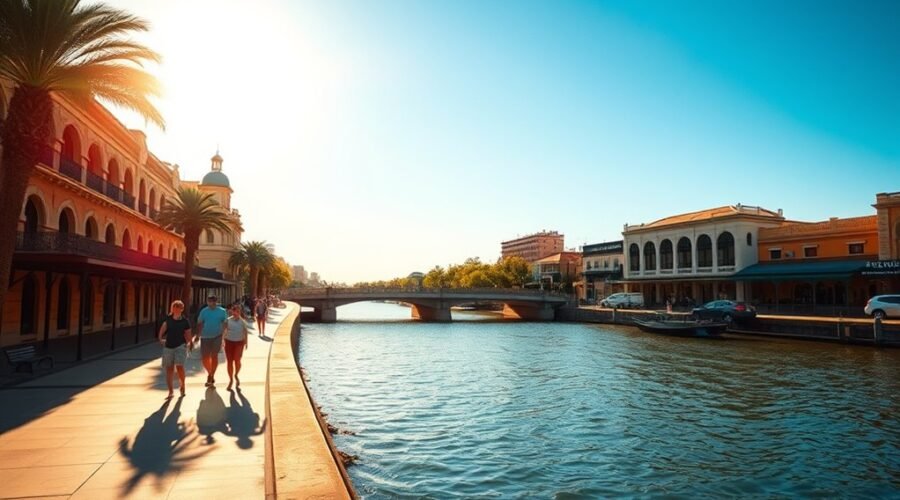
If you’re planning a trip to Rockhampton, aim for the dry season—May to September—when mild days (22–25 °C) and crisp, low‑humidity mornings make outdoor plans easy and wildlife tours along the Fitzroy River more reliable. Rain and cyclone risk drop, crowds thin outside school holidays, and accommodation stays steadier. There are perks to shoulder months too, so keep going to find the best month for your budget and travel style.
Compare our seasonal guides to Queensland, Australia and Southern Great Barrier Reef, Queensland when choosing other stops in Queensland.
Key Takeaways
- May–September (dry season) is best: warm sunny days, lower humidity, and clearer skies for wildlife tours.
- Daytime highs 22–25°C with cool nights, light breezes, and minimal rainfall ensure comfortable outdoor activities.
- Avoid November–March wet season: hot, humid weather, heavy rains, cyclone risk, and possible Fitzroy River flood closures.
- Peak crowds and higher prices occur during school holidays, late June–early July, and festival periods like Beef Australia.
- For lower costs and fewer visitors choose shoulder months (April–May or September) while booking ahead for events.
Best Months to Visit Rockhampton (Quick Answer)

Choosing when to visit Rockhampton means balancing warm, sunny days with lower humidity and fewer storms—so the best months are May through September.
You’ll find days that invite exploration without the oppressive wet-season stickiness, making it easier to savor Local cuisine at open-air markets and riverside cafés.
With clearer skies, you’re freer to join wildlife tours along the Fitzroy River or venture into nearby bushland, spotting birds and reptiles without storms cutting outings short.
Crowds thin compared with peak holiday times, so you’ll move through galleries, eateries, and historic streets with space to breathe and decide your own pace.
Accommodation and tour operators often offer steadier availability and fairer rates, which helps you stretch travel choices toward experiences that matter.
If you want weather that supports adventure, nourishment, and a sense of autonomy, those cooler, drier months give you the confidence to plan and the freedom to roam.
Dry-Season Weather in Rockhampton (Temps & Rainfall)
During the dry season (May–September) you’ll find Rockhampton’s weather noticeably milder and more predictable: daytime highs usually sit between the low to mid 20s°C (mid-70s°F), nights drop into the mid to high teens, and rainfall is sparse compared with the summer months. You’ll appreciate steady soilfall temperatures that stabilise ground warmth for outdoor plans, and humidity trends that fall compared with the wet season, making mornings crisp and afternoons comfortable. Light breezes cut through the tropical stillness, letting you move freely without oppressive stickiness.
| Month | Avg High | Avg Rainfall |
|---|---|---|
| May | 24°C | 20 mm |
| Jul | 22°C | 10 mm |
| Sep | 25°C | 15 mm |
This window frees you to explore riverbanks, markets, and bushland with confidence. Pack layers for cool nights and sunscreen for sunny days—your plans will run smoother when weather is this reliable.
When to Skip Rockhampton (Wet Season, Heat & Cyclone Months)
If you’re planning a trip between November and March, think twice: Rockhampton’s wet season brings hot, humid days, frequent heavy downpours and the occasional cyclone threat that can disrupt travel and outdoor plans.
You’ll find sticky heat that saps energy, sudden storms that wash out hikes and river cruises, and a cyclcyclone risk that means airlines and ferries can cancel with little notice.
Flood alerts are common along the Fitzroy River; roads and low-lying attractions may close, stranding plans and increasing costs.
Flood alerts along the Fitzroy often close roads and low-lying attractions, stranding plans and adding unexpected costs.
If you crave freedom and smooth logistics, avoid this window.
Instead, pick months when weather is predictable and infrastructure runs reliably.
If you must visit in wet months, prepare with flexible tickets, travel insurance, and a plan B for indoor activities—museums, galleries, and cafes that stay open when nature won’t cooperate.
Respect the season; your liberty to explore depends on smart timing and readiness.
Rockhampton Crowds & Events Calendar (Peaks, Festivals, School Holidays)
You’ll notice visitor numbers spike around school holidays and long weekends, so book ahead if you’re planning a trip then.
Major events like the Beef Australia expo and local festivals draw crowds and lively street activity that can change accommodation and dining availability.
Check the events calendar before you go so you can either join the action or pick quieter dates.
Peak Tourist Periods
Because Rockhampton hosts a handful of big events and sits between school holiday windows, you’ll find the city busiest in late June to early July and again around September–October; these spikes coincide with winter school breaks, the Rocky River Festival season, and popular cattle-show and rodeo events that draw locals and visitors alike.
You’ll notice accommodation books quickly and streets hum with activity — plan ahead if you want to move freely. Festival timing often dictates transport and dining availability, so grab tickets and reservations early.
Expect pockets of higher prices and fuller tours, but also a charged atmosphere that celebrates local culture.
Outside those peaks, you’ll enjoy quieter streets, easier access to wildlife migrations along riverbanks, and more personal freedom to explore.
Major Local Events
Those busy spikes tie directly into Rockhampton’s event calendar, so it helps to know what’s on when you visit.
You’ll find freedom in planning around festivals, school holidays and niche gatherings that shape crowds and prices.
Wander local markets for fresh produce, crafts and bold Indigenous art that reconnects you with place.
Peak times—especially rodeos, cultural festivals and Easter—bring energy and higher costs, but also unforgettable experiences.
- Beef Week: feel the pulse of the city, hear stockmen’s pride, taste rich regional food.
- Cultural festivals: celebrate Indigenous art, live music and community resilience.
- School holidays: expect family crowds, busy attractions and limited bargains.
Choose timing that frees you to explore intentionally.
Costs & Accommodation: Price Peaks, Deals, and Saving Tips
When planning a trip to Rockhampton, you’ll find accommodation prices fluctuate with festivals, school holidays and seasonal beef-industry events, so booking early for peak dates can save you both stress and money.
You’ll notice accommodation pricing jumps around the Beef Week and other local draws, while quieter months offer Seasonal discounts and more flexible check-in options.
Look beyond hotels: guesthouses, serviced apartments and eco-lodges often drop rates midweek, and hostels or shared rentals free you from big nightly bills.
Look past hotels — guesthouses, serviced apartments, eco-lodges and hostels often offer cheaper midweek or shared-rental options.
To stretch your budget, sign up for loyalty programs, monitor flash sales, and bundle transport with stays.
Consider refundable rates if your plans shift; they can be worth the slight premium.
When you book, read cancellation terms and check location against the things you want to do—saving on lodging shouldn’t cost extra on transit.
With a bit of planning, you’ll claim freedom in choice and price while experiencing Rockhampton on your terms.
Pick a Month by Travel Style (Outdoor, Budget, Family, Festival)
If you prefer sun-drenched hikes and riverfront picnics, pick months that lean toward dry, mild weather (April–September) for the best outdoor conditions. You’ll feel free to roam: Adventure hiking shines in June–August when trails are firm, skies are clear, and mornings invite long, unhurried walks. For Budget backpacking, aim for shoulder months (April–May, September) when prices dip, crowds thin, and you can stretch your funds without sacrificing warmth.
- April–May: gentle warmth, fewer tourists, cheap stays—perfect for freeing yourself on a tight budget.
- June–August: crisp mornings, ideal for Adventure hiking and extended outdoor days; book early for family rooms.
- September–October: festival energy builds; families find school-holiday windows, and you can celebrate local culture while still catching lower rates.
Choose the month that matches your craving for independence—whether it’s rugged trails, saving smart, family ease, or festival joy—and plan boldly.
Frequently Asked Questions
Are There Guided Tours to Nearby National Parks From Rockhampton?
Yes — you can book guided tours from Rockhampton to nearby national parks; operators run park shuttles, provide expert guides, gear, and flexible itineraries, so you can explore freely, learn deeply, and feel empowered outdoors.
Is Rockhampton Dog-Friendly for Beach and Park Visits?
Like finding wind in your sails, you’ll discover Rockhampton’s mixed pet scene: pet friendly beaches exist nearby, but leash required parks are common; you’ll love exploring free spaces, just check local rules and respect wildlife.
How Accessible Is Public Transport for Tourists Within the City?
You’ll find Rockhampton’s public transport fairly reachable: buses cover key spots, services run regular routes, and ticket pricing stays reasonable. You’ll navigate freely, plan routes easily, and embrace independence while exploring the city.
Can Visitors Take Day Trips to Capricorn Caves Easily?
Absolutely — you can easily enjoy a Capricorn Caves day trip. Scenic, seamless serenity: you’ll find guided cave access, clear paths, and nearby parking fees are reasonable; you’ll feel freed exploring limestone chambers and lush surrounds.
What Wildlife Viewing Opportunities Exist Around Rockhampton?
You’ll find diverse wildlife: birdwatching hotspots along riverine wildlife habitats reveal kingfishers, egrets, jabiru, wallabies and freshwater turtles; you’ll explore mangroves, wetlands and national parks, feeling free to observe and protect vibrant nature.
Conclusion
Plan your trip for the dry season—May to September—when daytime highs hover around 22–25 °C and monthly rain drops to about 10–20 mm, so you’ll get crisp mornings and clear Fitzroy River wildlife days. You’ll avoid humid, cyclone-prone summer months and benefit from steadier accommodation and fairer rates. Fun fact: July averages only ~10 mm of rain—less than a typical rainy weekend—making it one of the driest, most reliable months to visit.