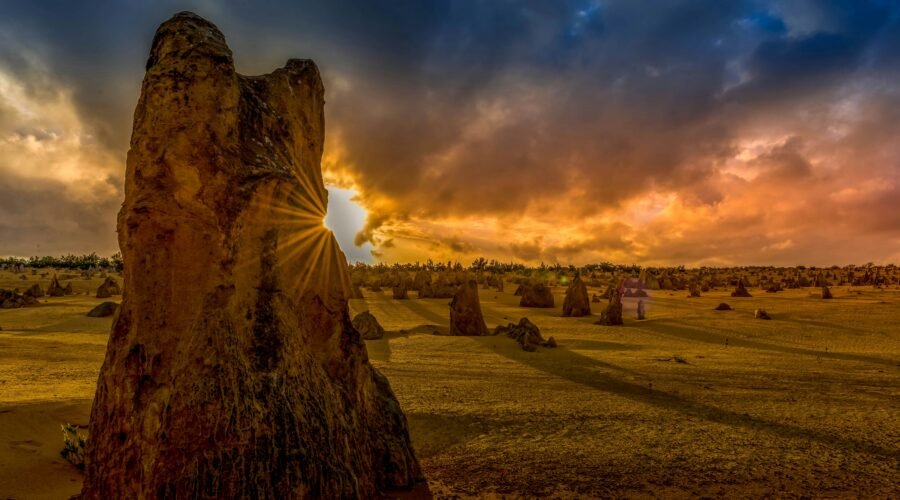
The Pinnacles in Western Australia’s Nambung National Park can be visited year-round, but the experience changes sharply with the season. If you want comfortable walking weather and the region’s famous wildflowers, late winter through spring is especially rewarding. If you prefer warmer, generally drier conditions, autumn is another strong choice. Your ideal month also depends on heat tolerance, rain, crowds, photography plans, and budget.
Quick Answer
For the best mix of mild weather and wildflowers, visit The Pinnacles from August to October. April and May are also comfortable alternatives. Winter is cooler and wetter, while summer can bring very hot days. For softer light and a quieter experience, visit early in the morning or late in the afternoon.
Key Takeaways
- Best for wildflowers: August to October, according to WA Parks and Wildlife information for Nambung National Park.
- Best mild-weather alternative: April and May, when summer heat is easing.
- Current standard vehicle entry: AUD 17 for a vehicle carrying 12 or fewer occupants; valid park passes cover entry.
- From Perth: allow roughly two hours of driving, plus extra time for traffic, breaks, or coastal stops.
- You do not need a 4WD: The Pinnacles is accessible by normal two-wheel-drive vehicles.
Note: Park fees, access conditions, centre hours, road conditions, and temporary wildlife alerts can change. The practical information in this guide was checked against official sources on September 1, 2026, but it is still wise to check the official Nambung National Park page before departure.
Best Time to Visit The Pinnacles by Season
The closest long-running Bureau of Meteorology station is at Jurien Bay, north of The Pinnacles. Its climate data is a useful guide to conditions on this stretch of the Coral Coast, although the temperature at the Pinnacles on your actual travel day may differ.
Nearby Jurien Bay has long-term mean maximum temperatures of about 30.8°C in February and 19.6°C in July, while rainfall is concentrated much more heavily in the cooler months.
Summer (December to February): Hot, Bright and Dry
Summer brings the warmest conditions to The Pinnacles. Long-term mean maximum temperatures at nearby Jurien Bay are about 28.4°C in December, 30.1°C in January, and 30.8°C in February. Those averages do not tell the whole story: hot spells can push daytime temperatures above 35°C, and occasional extreme days can exceed 40°C.
Sunshine and Heat: What to Expect
Long daylight hours can work well for sightseeing and photography, but the middle of the day may feel harsh when there is little shade. Carry plenty of drinking water, wear a broad-brimmed hat, use high-SPF sunscreen, and choose light, breathable clothing.
Warning: Do not underestimate summer heat. If a very hot day is forecast, explore early or late rather than planning a long midday walk. The limestone formations are also fragile, so never climb on the pinnacles.
Insects and Holiday Crowds
Insect activity varies with weather and location, so it is better not to rely on a particular season being bug-free. Carry repellent if you are sensitive to bites. Summer also overlaps with major Australian holiday periods, so popular travel dates can feel busier than ordinary weekdays.
Autumn (March to May): Comfortable Weather Without the Main Summer Heat
Autumn is one of the easier times for walking and sightseeing. Nearby Jurien Bay’s mean maximum temperature falls from about 29.5°C in March to 26.4°C in April and 23.4°C in May.
Mild Temperatures for Exploring
April and May are particularly attractive if you want to avoid both the strongest summer heat and the wetter middle of winter. Evenings become cooler, so a light layer can be useful if you stay for sunset.
What About Wildflowers in Autumn?
Autumn should not be treated as the main Pinnacles wildflower season. The Department of Biodiversity, Conservation and Attractions says Nambung National Park’s flowering vegetation puts on its strongest display from August to October. Autumn is better chosen for temperature and general sightseeing than for peak wildflowers.
Winter (June to August): Coolest and Wettest
Winter is generally the coolest and wettest part of the year. Nearby Jurien Bay’s mean maximum temperature sits around 20°C from June through August, with average rainfall much higher than in summer.
Crisper Air and Dramatic Skies
Cooler weather can make walking much more comfortable if you dislike heat. Cloud, changing light, and damp sand can also give photographers a very different look from the bright, dry summer landscape.
Potential for Rain Showers
June, July, and August are among the wetter months in the local climate record, so carry a waterproof outer layer and keep some flexibility in your schedule. August is also the beginning of the park’s main August-to-October wildflower period.
Spring (September to November): Excellent Weather and Wildflowers
Spring is one of the strongest all-round periods for visiting. Conditions warm gradually, rainfall generally declines from winter levels, and the first two months overlap with the main wildflower display.
Prime Wildflower Conditions
September and October fall directly within Nambung National Park’s official August-to-October flowering period. If colourful heathland and native flowers are a major reason for your trip, this is the period to prioritise.
Pleasant Conditions for Activities
Nearby Jurien Bay’s mean maximum temperatures rise from about 21.4°C in September to 23.4°C in October and 26.0°C in November. That usually provides more comfortable walking conditions than midsummer while still giving you longer, brighter days than winter.
| Representative Month | Mean Maximum | Mean Rainfall | Planning Takeaway |
| January | 30.1°C | 7.3 mm | Hot and usually dry; avoid long walks in peak afternoon heat. |
| April | 26.4°C | 29.1 mm | A comfortable transition month after summer. |
| July | 19.6°C | 112.2 mm | Cool for walking but much wetter. |
| October | 23.4°C | 26.1 mm | One of the strongest combinations of mild weather and wildflowers. |
Climate figures above use the Bureau of Meteorology’s long-term Jurien Bay station data rather than a weather station inside the Pinnacles Desert itself.
If you’re comparing seasonal travel to other destinations, you can also read this guide to the best time to visit Ihlara Valley, Aksaray.
Taming the Crowds: Finding a Quieter Time
The Pinnacles is one of Western Australia’s best-known natural attractions, but there is no dependable official month-by-month crowd dataset that lets you label every month as high, medium, or low. Your best strategy is to think about holidays, weekends, and time of day.
Peak Travel Periods
School holidays, public-holiday weekends, and other popular travel periods can draw more people to the Indian Ocean Drive region. If you have flexible dates, travelling outside these periods can make parking, viewpoints, and walking areas feel less pressured.
School Holiday Rush
Check Western Australia’s current school-holiday calendar when planning. Holiday periods can also affect accommodation availability in Cervantes and nearby coastal towns.
Long Weekends
Long weekends are another time when day-trip traffic from Perth can increase. Book accommodation and organised tours earlier if your trip falls on a major holiday weekend.
Shoulder-Season Serenity
April, May, September, and October are attractive because they generally avoid the strongest summer heat. September and October additionally give you a chance to see the main wildflower display.
A More Relaxed Vibe
Whatever month you choose, arriving outside the busiest middle-of-the-day window can make it easier to photograph individual formations without as many people nearby.
Finding Space in the Landscape
The drive trail has multiple stopping points, while the walking trail lets you see the formations from a different angle. Stay on designated routes and give other visitors room rather than moving into protected areas in search of an empty photo location.
Early Mornings, Late Afternoons, and Weekdays
Early and late light gives the limestone stronger texture and longer shadows. Weekdays outside holiday periods are also a sensible choice when you want a calmer visit, although no time is guaranteed to be empty.
Pro Tip: If photography is important, plan enough time for both the drive trail and a short walk, then stay through the warmer late-afternoon light. If you remain after sunset, carry a torch, watch for wildlife on the road, and follow the current departure rules.
Current Park Access, Hours, Trails, and Rules
Park Entry and Vehicle Access
The Pinnacles is inside Nambung National Park. The attraction is accessible by normal two-wheel-drive vehicles, so a 4WD is not required for a standard visit.
As of September 1, 2026, the standard Nambung National Park entry fee is AUD 17 per private vehicle carrying 12 or fewer occupants. The concession vehicle fee is AUD 10 and motorcycle entry is AUD 10. A valid WA park pass covers normal park entry.
Pinnacles Desert Discovery Centre Hours
The official Pinnacles Desert Discovery facility is open daily from 9:30am to 4:30pm and is closed on Christmas Day. The surrounding Pinnacles experience is not limited to the Discovery Centre’s opening hours.
Regional visitor information says visitors may see The Pinnacles after dark but are expected to have left the park by 9pm. Because access arrangements can change, check current information before planning a sunset or stargazing visit.
Drive and Walking Trails
The official Pinnacles Desert drive is approximately 4.5 km and operates as a one-way route through the formations, with places to stop and explore on foot.
The Desert View Walk is roughly 1.5–1.6 km. The official Discovery Centre information describes an initial 300m Class 1 accessible path leading to a viewing platform, followed by a sandy Class 3 section through the Pinnacles landscape.
Pets, Protection, and Respect for the Landscape
Pets are not permitted in Nambung National Park. The pinnacles themselves are fragile geological formations, and WA Parks specifically asks visitors never to climb on them.
Nambung National Park is Yued Country, and the Department of Biodiversity, Conservation and Attractions recognises Yued people as the Traditional Owners of the area.
Budgeting Your Adventure: Costs to Consider

A Pinnacles visit can be relatively straightforward to budget because the main park-entry charge is fixed, while your largest variable expenses are transport, accommodation, food, and any organised tour.
Entrance Fees and Park Passes
Day Entry Fee
For the typical private vehicle carrying 12 or fewer occupants, current standard entry to Nambung National Park is AUD 17 per vehicle. This is different from the old adult-and-child admission figures sometimes found in outdated guides.
Park Passes for Frequent Explorers
If you plan to visit several Western Australian national parks, compare the current multi-day and annual park-pass options before buying separate entries. Eligible passes provide park entry for their validity period, although separate attraction or camping charges can still apply elsewhere.
Accommodation Options: From Camping to Comfort
Cervantes is the nearest town and is the most convenient base for an overnight Pinnacles trip. Jurien Bay, farther north, provides another useful base if you are exploring more of the Coral Coast.
Cervantes: Closest and Most Convenient
Hotels, motels, holiday accommodation, and caravan-style accommodation are available around Cervantes. Rates are dynamic, so compare the actual dates of your stay rather than relying on a fixed seasonal price quoted in an article.
Caravan Parks and Camping
Caravan and camping-style accommodation around Cervantes and the surrounding region can reduce lodging costs for travellers who already have suitable equipment. Confirm the specific property’s facilities, rules, and availability before travelling.
Self-Catering Savings
If your accommodation includes a kitchen or camp kitchen, preparing some meals yourself can reduce how much you spend on restaurants and cafés.
Getting There: Travel Costs
Driving from Perth
The Pinnacles is roughly 200 km north of Perth via the Indian Ocean Drive corridor. Regional tourism guidance puts normal driving time at approximately two hours, but you should allow longer for traffic, fuel stops, food breaks, or sightseeing.
Your actual cost will depend on fuel consumption, fuel prices, and whether you are using your own car or a rental vehicle.
Tours and Packages
Day tours and sunset or stargazing tours operate from Perth. They can bundle transport, guiding, park entry, and sometimes meals or other attractions into one price. Compare the total package with the cost and flexibility of a self-drive trip rather than assuming one option is always cheaper.
Food and Drink
Food spending depends mostly on whether you self-cater or eat out in Cervantes and other coastal towns.
Groceries and Self-Catering
Bring enough water and food for the time you expect to spend inside the park. Do not rely on finding a full range of food services beside the formations themselves.
Dining Out in Cervantes
Cervantes has cafés, casual dining, and seafood options. If dining out is part of your trip, check current opening hours because small-town restaurant schedules can change seasonally.
Unique Experiences Beyond the Limestone Pillars

The Pinnacles themselves are the main attraction, but the Discovery Centre, drive trail, night sky, beaches, and seasonal vegetation can turn a short stop into a fuller day trip.
Pinnacles Desert Discovery: Understanding the Landscape
The official Pinnacles Desert Discovery Centre provides displays, soundscapes, videos, and objects explaining the geology of the formations as well as the cultural and natural heritage of Nambung National Park.
Geological Insights
The limestone material originated from lime-rich sands containing broken marine-shell material. Wind moved this material inland into dunes, while rainwater, calcium carbonate, soil, vegetation, and erosion all contributed to the limestone landscape seen today. Some pinnacles retain harder calcrete caps, which weather more slowly than the softer limestone beneath them.
Ecological Education
The broader national park contains coastal dunes, low heathland, beaches, wildlife, and flowering plants adapted to the region’s seasonal climate. The Discovery Centre helps place the seemingly bare Pinnacles Desert within that larger ecosystem.
Driving the Scenic Loop
The official one-way drive trail winds for roughly 4.5 km among the limestone structures. Parking bays at various points let you stop and explore selected areas on foot.
Easy Access and Great Views
The Pinnacles attraction is accessible by two-wheel drive, making self-driving practical for most visitors. If you are travelling in an unusually large vehicle or towing, check current vehicle advice before entering the drive trail.
Photography Opportunities
Different stopping points give you changing angles on the formations. Early and late sunlight creates long shadows, while cloudy winter conditions can produce softer and more dramatic skies.
Stargazing: A Celestial Spectacle
The area’s distance from central Perth makes after-dark visits popular with stargazers. Regional tourism information specifically promotes the Pinnacles night sky and Milky Way viewing.
Dark Skies
Conditions vary with the Moon, cloud cover, season, and atmospheric clarity. Check the forecast and lunar phase if astrophotography is one of your main reasons for travelling.
Guided Tours or DIY
You can join a guided sunset or stargazing experience, or visit independently. If you self-drive, carry a torch, stay on designated routes, watch for animals on the road, and remember that current visitor information expects visitors to leave by 9pm.
Exploring Cervantes and the Coastline
Cervantes and the coastal parts of Nambung National Park add beaches, fishing, swimming, and local food to a Pinnacles trip.
Lobster Shack Experience
Cervantes is closely associated with the Western Rock Lobster industry. The Lobster Shack is one local attraction where visitors can learn more about the industry and, depending on current operations, buy seafood or join an experience. Check opening and tour times before making it a fixed part of your itinerary.
Thirsty Point, Kangaroo Point, and Hangover Bay
Thirsty Point provides a coastal stop near Cervantes, while Kangaroo Point and Hangover Bay are within Nambung National Park. Official park information lists swimming and fishing among the activities at Kangaroo Point, while Hangover Bay also offers swimming, snorkelling, surfing, windsurfing, picnic facilities, and toilets.
Wildflower Walks: A Seasonal Delight
If flowers are a priority, concentrate on August through October. Nambung’s low heathland can produce colourful displays during this period, creating a strong contrast with the pale dunes and yellow Pinnacles Desert.
Identifying Local Flora
Observe plants from established paths rather than stepping into vegetation for photographs. The park’s flowering plants form part of a sensitive coastal ecosystem.
Guided Walks or Self-Discovery
You can explore independently on the official walking routes or check local visitor information for any seasonal guided experiences running during your travel dates.
If you’re comparing weather, crowds, and costs for other destinations, this guide to the best time to visit Elbistan offers another seasonal planning example.
Getting Around: Your Options for Reaching The Pinnacles
Self-Driving: The Most Flexible Choice
Driving remains the easiest option for many travellers because it gives you control over arrival time, sunset plans, coastal stops, and how long you spend on the walk and drive trails.
Car Rental
If you rent a vehicle in Perth, check the rental company’s rules for regional travel, kilometres, after-dark driving, and any restrictions that might affect your itinerary.
Your Own Vehicle
From Perth, the usual coastal route follows Wanneroo Road toward Indian Ocean Drive before continuing toward Cervantes and the signed Pinnacles turn-off. Normal two-wheel-drive access is sufficient.
Fuel and Supplies
Start the regional part of your trip with enough fuel, water, and food for your planned stops. Do not wait until you reach the desert itself to organise essential supplies.
Guided Tours: A Stress-Free Alternative
Guided day trips are useful if you do not want to drive, would rather have commentary, or want to combine The Pinnacles with other Indian Ocean Drive attractions.
All-Inclusive Packages
Depending on the operator, packages may include transport, park entry, guiding, meals, sand-dune activities, coastal stops, sunset, or stargazing. Inclusions vary, so compare itineraries carefully.
Convenience for Solo Travellers or Groups
A tour can simplify transport for solo travellers and remove the need for one member of a group to drive several hours in a day.
Public Coach to Cervantes: Possible but Limited
Public transport is possible, but it is much less convenient than driving. Transwa’s N5 coach currently runs between East Perth and Geraldton via Cervantes on a limited timetable.
Planning Is Essential
Check the current Transwa schedule rather than assuming there is a daily service. Public-holiday and school-holiday amendments can also apply.
The Last Mile to The Pinnacles
The Transwa coach stops in Cervantes, not beside the Pinnacles Desert formations. You still need to arrange transport between Cervantes and Nambung National Park, which makes public transport less practical for a simple day trip.
Packing Essentials for a Comfortable Visit
The most useful packing strategy is to prepare for sun, wind, temperature changes, limited shade, and the possibility of rain outside summer.
Clothing: Layers and Protection
Lightweight, Breathable Clothing
In warm weather, light and breathable clothing can help you stay comfortable. Long sleeves can also provide useful sun protection.
Sun Protection
Bring a broad-brimmed hat and sunglasses. Shade is limited among the formations, so personal sun protection matters even when the air temperature feels comfortable.
A Light Jacket or Jumper
Late afternoons, evenings, and winter visits can feel cool, particularly if wind picks up. Carry a layer you can add when needed.
Waterproof Outerwear
A lightweight waterproof shell is especially useful from late autumn through winter and into early spring, when rainfall is more likely.
Footwear: Comfortable for Walking
Sturdy Walking Shoes
Comfortable walking shoes with reasonable grip are more useful than heavy hiking boots for most visitors. The longer portion of the Desert View Walk is sandy, so choose footwear you are happy to use on loose ground.
Sandals or Flip-Flops
Sandals can be useful around accommodation or the beach, but supportive footwear is the better choice for exploring the desert trail.
Hydration and Snacks
Plenty of Water
Bring more drinking water than you expect to use on a hot day. Do not plan your hydration around finding a shop once you are walking among the formations.
Snacks and Light Meals
Fruit, sandwiches, nuts, or other portable food can make a long day trip easier and reduce the need to leave the area simply to find food.
Sunscreen and Insect Repellent
High-SPF Sunscreen
Apply broad-spectrum sunscreen before prolonged outdoor exposure and reapply according to the product directions, particularly after swimming or heavy sweating.
Insect Repellent
Insects are not always a major problem in the Pinnacles Desert itself, but repellent is a useful backup for evenings, wetter conditions, and stops near vegetation or water.
Camera and Accessories
Camera and Extra Power
Charge your phone or camera before leaving town and bring a backup power source if you plan to spend most of the day photographing the landscape.
Tripod
A tripod is optional during daylight but becomes much more useful for sunset, blue-hour, and night-sky photography.
Other Useful Items
- Binoculars: Useful for observing wildlife from a respectful distance.
- Small backpack: Keeps water, sunscreen, snacks, and layers together while you walk.
- Basic first-aid kit: Helpful for minor cuts, blisters, or scrapes.
- Offline park information or map: Useful if mobile reception is weak.
- Torch or headlamp: Essential if you plan to remain after sunset.
- Waterproof layer: Particularly useful during the wetter cooler months.
For most travellers, August through October offers the strongest overall combination of moderate weather, wildflowers, and outdoor comfort. April and May are excellent alternatives if wildflowers are not essential. Whatever month you choose, checking the latest park information, weather forecast, road conditions, and opening details just before departure will make the trip easier.
Frequently Asked Questions
What is the best time to visit The Pinnacles in Western Australia?
August to October is the strongest overall period if you want mild conditions and the main Nambung National Park wildflower display. April and May are also good for comfortable sightseeing without midsummer heat.
What is the weather like at The Pinnacles throughout the year?
Summers are warm to hot and relatively dry, while winters are cooler and much wetter. Nearby Jurien Bay’s long-term mean maximum ranges from around 30–31°C in January and February to about 20°C in June through August. Very hot summer days above 40°C are possible.
When are crowds at The Pinnacles busiest?
There is no official month-by-month crowd dataset, but school holidays, public-holiday weekends, and popular weekend travel periods can be busier. For a quieter experience, try a weekday outside major holidays and visit early or late in the day.
How much does it cost to visit The Pinnacles?
As of September 1, 2026, the standard Nambung National Park entry fee is AUD 17 per private vehicle carrying 12 or fewer occupants. The concession vehicle fee is AUD 10 and motorcycle entry is AUD 10. A valid WA park pass covers normal park entry.
Is the Nambung Country Music Muster still held every year?
No. The official Nambung Station information describes the October 2022 event as the final Nambung Country Music Muster, ending the event’s 2016–2022 run. Check current Cervantes and Coral Coast event listings instead of planning a trip around the former annual Muster.
Do you need a 4WD to visit The Pinnacles?
No. The Pinnacles is accessible by normal two-wheel-drive vehicles. The attraction has a one-way drive trail of roughly 4.5 km through the desert.
Can you visit The Pinnacles after sunset?
Yes. After-dark visits and stargazing are possible. Current regional visitor information says visitors are expected to leave by 9pm. Carry a torch, stay on designated routes, watch for wildlife when driving, and confirm current access information before you go.
When is wildflower season at The Pinnacles?
Nambung National Park’s main wildflower period is August to October. September and October are particularly convenient because they combine spring conditions with the flowering season.
Sources
- Department of Biodiversity, Conservation and Attractions — Nambung National Park — current park fees, wildflower season, pets, Traditional Owners, trails, and visitor information.
- Explore Parks WA — Pinnacles Desert Lookout and Drive — official drive-trail information, stopping points, geological features, and protection guidance.
- Explore Parks WA — Pinnacles Desert Discovery — Discovery Centre hours, accessibility, toilets, and walking-trail information.
- Australian Bureau of Meteorology — Jurien Bay climate statistics — long-term nearby temperature and rainfall averages.
- Transwa — N5 Coach Line — current public coach connection between Perth and Cervantes.
- Australia’s Coral Coast — The Pinnacles — Perth travel time, 2WD access, current vehicle fee, and after-dark visitor guidance.