Planning a trip to Chiang Rai means balancing four things: comfortable weather, clear mountain views, crowd levels, and cost. For most first-time visitors, the coolest and driest part of the year is the easiest choice, but there is one important complication that many travel guides miss: seasonal haze and PM2.5 can affect northern Thailand from late winter into spring. Understanding that pattern is just as important as checking temperature or rainfall.
Quick Answer
For most travelers, the best time to visit Chiang Rai is late November through January: rainfall is low, mornings and evenings are cooler, and outdoor sightseeing is comfortable. Early February can also work, but air quality may begin to worsen. Avoid treating March as an automatic bargain month because seasonal haze and PM2.5 can be severe.
Key Takeaways
- Best overall weather: Late November through January offers the strongest combination of lower rainfall, cooler nights, and comfortable sightseeing.
- Watch February carefully: It remains relatively dry, but temperatures rise and seasonal haze can begin.
- March and April: These are hot months, and PM2.5 can become a serious problem for outdoor sightseeing and mountain views.
- Green-season value: May through October brings more rain, greener scenery, fuller waterfalls, and often less tourism pressure.
- Best compromise: October through November can offer lush landscapes and improving weather without the late-winter smoke risk.
Chiang Rai Weather by Season
Chiang Rai sits in Thailand’s far north, and its climate differs noticeably from the country’s southern beach destinations. The Thai Meteorological Department’s Chiang Rai station is about 388 meters above sea level, and mountain areas around the province can feel considerably cooler than city averages.
Official 1991–2020 climate normals show a strong seasonal pattern: relatively dry conditions from roughly November through February, increasing heat in March and April, and a wetter monsoon-influenced period that becomes established around May and continues into October.
The Cool, Dry Season: November to February
This is generally the most comfortable period for temple visits, markets, countryside drives, tea plantations, and mountain viewpoints. Rainfall is low compared with the middle of the year, while mornings and evenings can feel pleasantly cool.
November: The Transition Into Cooler Weather
November is one of Chiang Rai’s strongest all-around months. Thai Meteorological Department climate normals show an average high of about 29.6°C (85°F), an average low of 17.9°C (64°F), and about 44.8 mm of rain for the month.
The countryside often remains green after the wet season, while rainfall drops sharply. That combination makes November especially attractive if you want scenery without the heavier rain of previous months.
December and January: The Sweet Spot
December and January offer some of Chiang Rai’s most comfortable conditions. According to official climate normals, average daytime highs are about 27.8°C (82°F) in December and 28.6°C (83°F) in January. Average nighttime lows are about 14.7°C (58°F) and 13.8°C (57°F).
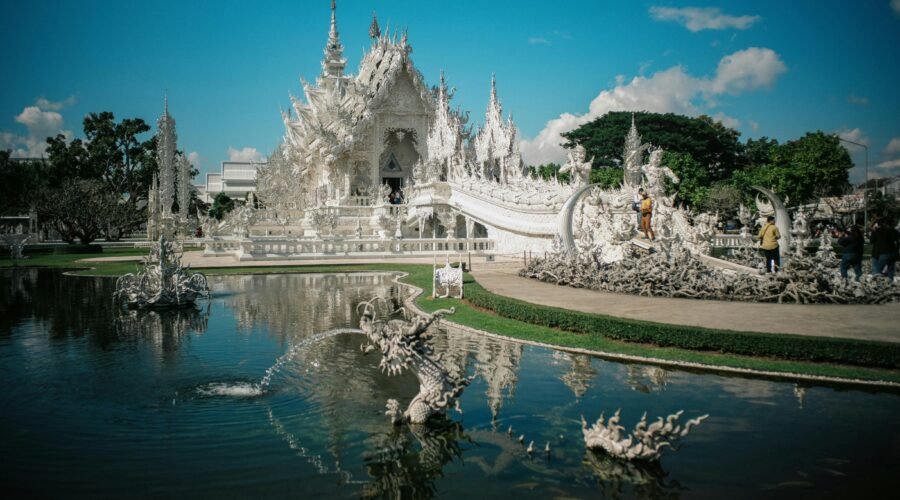
That is comfortable for visiting Wat Rong Khun, commonly called the White Temple; Wat Rong Suea Ten, or the Blue Temple; Baan Dam Museum; tea-growing areas; and mountain attractions around Chiang Rai Province.
Higher elevations can feel much colder around sunrise and after dark, so a light jacket or warm layer is useful even when the city feels mild during the afternoon.
February: Warmer Days and an Air-Quality Caveat
February is still relatively dry, with an average high around 31.3°C (88°F) and an average low around 14.5°C (58°F). The Tourism Authority of Thailand describes February as a transition from the cooler period toward hotter conditions in northern Thailand.
Early February can therefore be a good travel window. Later in the month, however, air quality deserves increasing attention because seasonal haze can develop across northern Thailand.
Warning: Seasonal smoke and PM2.5 can affect Chiang Rai from late winter into spring, with March and April often presenting the greatest concern. Thai Meteorological Department normals record substantially more haze days in February, March, and April than during the wet months, and Thailand’s Pollution Control Department issued unhealthy-air advisories affecting Chiang Rai during March and April 2026. Conditions vary each year, so check Air4Thai before planning long hikes, mountain viewpoints, or strenuous outdoor activities.
The Hot and Hazy Period: March to April
March and April are hot, dry-to-transitional months. The Thai Meteorological Department reports average highs of about 33.7°C (93°F) in March and 34.7°C (94°F) in April. Individual hot days can rise considerably above those averages.
March: Heat Plus Seasonal Haze
March may have fewer leisure travelers than the cool-season peak, but that does not automatically make it a good shoulder-season choice. Official climate records show March has the highest average number of haze days at the Chiang Rai weather station.
If air quality is good during your visit, start outdoor sightseeing early and save indoor attractions, cafés, galleries, and long lunches for the hotter part of the afternoon. If PM2.5 is elevated, reduce prolonged outdoor activity and reconsider mountain-viewpoint trips where haze may also limit visibility.
April: Hottest Weather and Songkran
April is normally one of the hottest months of the year in northern Thailand. The Tourism Authority of Thailand notes that temperatures in parts of northern Thailand can become extremely high during April.
It is also Songkran season. Thailand’s traditional New Year celebrations take place in mid-April, bringing water festivities, holiday travel, and changes in local traffic and demand. If you specifically want Songkran, the cultural experience may outweigh the heat. Otherwise, this is not the easiest month for all-day outdoor touring.
Pro Tip: If your travel dates fall between February and April, check both the weather forecast and PM2.5 readings before booking a full day of trekking or mountain viewpoints. Clear-looking weather forecasts do not necessarily mean good air quality.
The Wet Season: May to October
Chiang Rai’s wetter pattern becomes established around May and continues through October. That does not mean rain falls continuously all day, but frequent showers, thunderstorms, cloud cover, and occasional periods of heavier rain become much more likely.
May and June: Hot-to-Wet Transition
May should not be treated as merely a dry month with a few pre-monsoon showers. Thai Meteorological Department normals show about 226.5 mm of rainfall and roughly 17 rainy days in May. June averages about 186.2 mm and nearly 19 rainy days.
The advantage is that increasing rain begins washing haze out of the atmosphere and restores the green landscape. The tradeoff is greater humidity and less predictable outdoor scheduling.
July to September: The Wettest Stretch
July, August, and September form the core wetter period in the official climate record. Average rainfall is approximately 317.6 mm in July, 372.9 mm in August, and 275.1 mm in September.
Waterfalls and vegetation can be impressive, but mountain trails may be muddy and roads can become slippery. Heavy rain can also cause localized flooding or temporary access problems, so check current conditions before heading into rural or mountainous areas.
October: Rain Eases and the Landscape Stays Green
October remains wet compared with the core dry season, but average rainfall falls to about 123.5 mm. This makes October an interesting transition month for travelers who value green landscapes and fewer peak-season crowds.
You may still encounter showers, but October is generally a stronger compromise than March if you want shoulder-season conditions without the same late-dry-season smoke risk.
Chiang Rai’s 1991–2020 climate normals range from only about 12.7 mm of rain in February to about 372.9 mm in August, showing just how strongly the travel experience changes through the year.
If you’re comparing seasonal travel planning across very different destinations, this related guide on planning a Gulf Shores getaway by weather, crowds, and costs provides another example of how timing changes a trip.
Navigating the Crowds: When to Go for Peace and Quiet
Crowd levels in Chiang Rai generally follow the weather, but holiday periods and individual attractions can create short-term spikes that do not fit neatly into a seasonal label.
Peak Tourist Period: Cooler, Drier Months
November through February is generally Chiang Rai’s most popular leisure-travel period because conditions are easier for sightseeing and mountain trips.
December and January: Highest Demand
Christmas, New Year, and Thailand’s cool-season domestic travel period can make December and January particularly busy. Famous attractions such as Wat Rong Khun and the Golden Triangle may receive tour groups throughout the day.
If you are visiting over year-end holidays, reserving your preferred accommodation earlier gives you more choice.
November and Early February: Popular but Often Easier
November and early February can provide much of the cool-season appeal while sometimes avoiding the strongest year-end demand. They are still popular months, so do not expect major attractions to be empty.
Lower-Demand Periods
Visitor pressure generally eases as weather becomes hotter or wetter. May through much of October can therefore feel calmer than the cool-season peak, although Thai public holidays, festivals, and special events can temporarily increase demand.
June to September: Green and Generally Quieter
If you prioritize space over guaranteed dry weather, these months can work well. The landscape is green, waterfalls are stronger, and you may encounter fewer organized sightseeing groups at some attractions.
The tradeoff is weather flexibility: a mountain trip that looks fine when you wake up may need to change if thunderstorms develop later.
October: A Useful Transition Month
October can provide a useful balance. Rainfall remains possible, but the wettest part of the season is ending and the countryside is still green.
What About March?
March can indeed have fewer tourists than December or January, but crowd level should not be the only deciding factor. Heat, haze, and PM2.5 may substantially reduce the quality of hiking, photography, and mountain-viewpoint trips.
For that reason, March is better described as a lower-demand month with an important environmental tradeoff rather than one of Chiang Rai’s best shoulder-season choices.
Budgeting Your Trip: When Your Wallet Will Thank You

Travel costs change with demand, booking dates, holidays, room type, and where you are flying from. It is therefore safer to think in terms of seasonal tendencies rather than fixed rules.
Cool-Season Costs
Accommodation demand is generally strongest during the cooler months, particularly around Christmas and New Year. Popular hotels and resorts can have less availability, and the cheapest room types may sell out first.
Flights and Accommodation
Flights to Chiang Rai and hotel rooms may cost more around high-demand dates. Chiang Mai is another gateway for northern Thailand, with onward land transport to Chiang Rai, but whether that route is cheaper depends on your exact dates and origin.
Compare the complete trip cost rather than assuming one airport will always be cheaper.
Tours and Activities
Tour prices do not follow one universal seasonal rule. What often changes first is availability. During busy periods, popular private drivers, small-group trips, and well-reviewed guides can book up sooner.
Wet-Season and Hot-Season Savings
May through October often provides more accommodation choice and promotional pricing because demand is generally softer. March and April can also appear inexpensive outside holiday periods, but a lower price should be weighed against heat and possible haze.
Accommodation Deals
This is where off-peak travel can make a noticeable difference. Compare refundable rates whenever possible during the wet season so you retain flexibility if severe weather changes your route.
Tour Flexibility
Some tours may be easier to arrange at short notice outside peak season. Weather-sensitive activities, however, can be altered or postponed after heavy rain.
Best Value for Most Travelers
If you want good value without choosing the hottest or wettest conditions, October and November deserve particular attention. October is greener and quieter but wetter; November is drier and cooler but increasingly popular.
Note: Seasonal price labels are only planning guides. Songkran, New Year, weekends, major festivals, and local events can temporarily raise demand even during a month that is normally considered quieter.
Special Events and Festivals: Timing Your Visit for Unique Experiences

Weather is not the only reason to choose a particular month. Chiang Rai’s festival calendar can add a cultural dimension to your trip, but exact event dates and programs should always be confirmed before booking because schedules change from year to year.
Loi Krathong: Usually Around November
Loi Krathong follows Thailand’s lunar calendar and normally falls around November. Communities gather near waterways to float decorative krathongs in a symbolic expression of gratitude and respect for water.
The Tourism Authority of Thailand has listed Chiang Rai celebrations along the Kok River in recent event calendars. Because the exact date changes annually, check the current Tourism Authority of Thailand schedule rather than relying on a previous year’s date.
Winter Flower and Art Events
Chiang Rai is known for cool-season flower events. Recent editions of the Chiang Rai Flower and Art Festival have run from December into early January, taking advantage of cooler weather and seasonal flowers.
Other winter events and displays around Doi Tung and mountain communities can also coincide with the December–January travel period.
New Year Celebrations
Chiang Rai observes the Western New Year, and late December can bring public celebrations and holiday activity around the city. This is another reason accommodation demand can rise sharply at the end of the year.
Songkran in April
Songkran, Thailand’s traditional New Year, is celebrated in mid-April. Water festivities can make April culturally exciting even though it is one of the hottest times to visit.
If Songkran is the purpose of your trip, reserve accommodation with the holiday period in mind and expect busy roads and water activities in populated areas.
Art, Craft, and Local Cultural Events
Chiang Rai has a strong artistic identity, visible in its temples, galleries, markets, and the work of well-known Thai artists associated with the province. Temporary art markets, craft fairs, temple ceremonies, and community festivals take place throughout the year.
These smaller events are often announced locally, so check current tourism and municipal listings shortly before your visit.
If you enjoy comparing destinations by season, weather, crowds, and price, the site’s existing guide to when to visit Annapolis, Maryland offers another seasonal planning example.
Month-by-Month Chiang Rai Weather and Planning Guide
The temperature and rainfall figures below use Thai Meteorological Department 1991–2020 climate normals for the Chiang Rai station. They are averages, not forecasts for a specific trip.
| Month | Avg. High / Low | Avg. Rainfall | Crowd Tendency | Planning Note |
|---|---|---|---|---|
| January | 28.6°C / 13.8°C | 16.5 mm | High | Excellent weather; cool mornings and busy attractions. |
| February | 31.3°C / 14.5°C | 12.7 mm | Medium–High | Dry but warming; begin checking PM2.5. |
| March | 33.7°C / 17.5°C | 34.5 mm | Lower | Hot with significant seasonal haze risk. |
| April | 34.7°C / 21.1°C | 92.6 mm | Variable | Very hot; haze possible; Songkran can increase demand. |
| May | 33.5°C / 23.0°C | 226.5 mm | Low | Wet-season transition; greener scenery and frequent rain. |
| June | 32.5°C / 24.0°C | 186.2 mm | Low | Humid with regular showers; flexible itineraries work best. |
| July | 31.3°C / 23.9°C | 317.6 mm | Low | Very green, but heavy rain and muddy trails are possible. |
| August | 30.9°C / 23.7°C | 372.9 mm | Low–Medium | Wettest normal month; monitor road and weather conditions. |
| September | 31.4°C / 23.1°C | 275.1 mm | Low | Still very wet with lush landscapes and fuller waterfalls. |
| October | 30.9°C / 21.5°C | 123.5 mm | Low–Medium | Rain easing; good green-season compromise. |
| November | 29.6°C / 17.9°C | 44.8 mm | Medium | Excellent balance of green scenery, lower rain and cooler nights. |
| December | 27.8°C / 14.7°C | 20.6 mm | High | Some of the best weather; year-end dates book up faster. |
Planning Your Activities: How the Season Affects What You Can Do
The best month also depends on what you want to do. Temple visits are relatively flexible, while trekking, waterfalls, mountain viewpoints, and scenic drives are much more sensitive to rain, heat, and air quality.
Outdoor Adventures: Trekking, Biking, and Mountain Trips
November to January: Best Overall Conditions
This is usually the easiest period for trekking, cycling, rural drives, and mountain viewpoints. Cooler temperatures make strenuous activities more comfortable, while lower rainfall generally means firmer trails.
Doi Tung, Mae Fah Luang Garden, Doi Pha Tang, tea-growing areas, and other mountain destinations are particularly appealing during this period. Doi Tung is a mountain and development-project area rather than a national park.
February to April: Check Heat and Air Quality First
Outdoor activities remain possible, but your planning should depend on both temperature and PM2.5. Early starts help with heat, but they do not solve unhealthy air pollution.
If PM2.5 readings are poor, move strenuous activities indoors or postpone them rather than assuming early morning will automatically be safe or clear.
May to October: Waterfalls and Green Scenery
The wet season can be spectacular for greenery and waterfalls. However, muddy trails, thunderstorms, slippery roads, swollen streams, and localized flooding are real possibilities.
Do not approach fast-moving water simply because a waterfall looks more dramatic after rain. Check current local conditions before heading to remote trails or mountain roads.
Cultural Immersion: Temples, Markets, and Communities
Temple Visits
Major cultural attractions such as Wat Rong Khun, Wat Rong Suea Ten, Baan Dam Museum, and Wat Phra Kaew are less season-dependent than trekking. Always check current opening hours before making a special journey.
The cool season is most comfortable for walking around outdoor temple grounds, while hot-season visits are easier early in the morning.
Market Exploration
Chiang Rai’s markets and Night Bazaar are useful evening activities in any season. Outdoor sections are more comfortable during dry, cool evenings, while wet-season visitors should carry a compact umbrella or light rain jacket.
Ethnic-Community Visits
Chiang Rai Province is home to diverse ethnic communities. Access to rural villages can become more difficult after heavy rain, so road and trail conditions matter during the wetter months.
Choose community-based or responsible operators that present local people and culture respectfully rather than treating residents simply as photo attractions.
Relaxation and Leisure: Cafés, Restaurants, and the Kok River
Cafés and Restaurants
Indoor cafés and restaurants are useful year-round and are especially welcome during hot afternoons or wet-season showers.
Riverside Activities
The Kok River changes character through the seasons. It can be fuller and more dramatic after heavy rain, but river conditions and nearby access should be treated cautiously during severe weather.
If you’re exploring how timing affects very different heritage destinations, you can also compare the site’s guide to the best time to visit Göbekli Tepe in Şanlıurfa.
Making Your Choice: Finding Your Perfect Chiang Rai Window
For the Best Overall Weather: Late November to January
This is the strongest recommendation for most first-time visitors. Rainfall is low, nights are cooler, and conditions are well suited to temples, markets, tea plantations, countryside drives, and mountain viewpoints.
For Cooler Weather With Slightly More Flexibility: Early February
Early February can still be attractive, especially if you want dry conditions without the Christmas and New Year period. Check air-quality forecasts as your trip approaches because haze risk generally increases later in the dry season.
For Budget Travel and Green Scenery: May to October
If lower demand, lush vegetation, and waterfalls matter more than guaranteed dry weather, the wetter months can offer excellent value. Pack for rain and keep mountain days flexible.
For Fewer Crowds With a Weather Compromise: October
October is one of the more interesting compromise months. Rainfall is declining, the province remains green, and peak cool-season tourism has not fully arrived.
Think Carefully Before Choosing March Only for Savings
March may offer lower prices or thinner crowds on some dates, but heat and seasonal haze can significantly reduce visibility and outdoor comfort. It should not be described as Chiang Rai’s default value sweet spot without considering current air quality.
Ultimately, Chiang Rai offers worthwhile experiences throughout the year. Your best month depends on whether you prioritize dry weather, green landscapes, lower demand, festivals, or budget. For most travelers who want the simplest combination of comfortable temperatures and outdoor access, late November through January remains the safest overall choice.
Frequently Asked Questions
What is the best time to visit Chiang Rai for good weather?
Late November through January is the strongest overall period for most visitors. Rainfall is relatively low, daytime temperatures are comfortable, and mornings and evenings are cooler. Early February can also be good, but begin checking air quality because seasonal haze may develop.
When is Chiang Rai busiest?
The cooler, drier period from November through February generally attracts the most leisure travelers. December and January can be especially busy around Christmas, New Year, and Thailand’s domestic cool-season travel period.
When is the rainy season in Chiang Rai?
Rain increases sharply around May and remains significant through October. July, August, and September are particularly wet in the Thai Meteorological Department’s 1991–2020 climate normals, with August recording the highest average monthly rainfall.
When is the best time to visit Chiang Rai to avoid crowds?
May through much of October generally has less tourist pressure than the cool-season peak. October is particularly attractive if you want fewer crowds while rainfall is beginning to ease. Holiday weekends and festivals can still create temporary spikes.
When is Chiang Rai’s burning or haze season?
Haze can occur during the dry season, with February through April requiring the most attention and March often particularly problematic. Conditions vary each year. Check current PM2.5 readings through Thailand’s Air4Thai service before planning strenuous outdoor activities.
Is Chiang Rai cheaper during the rainy season?
Accommodation can be easier to find at lower-demand rates during wetter months, but there is no fixed rule. Exact prices depend on your dates, booking lead time, hotel category, Thai holidays, and local events.
What should I pack for Chiang Rai?
Bring light clothing for daytime sightseeing, modest clothing suitable for temple visits, comfortable walking shoes, sun protection, and a reusable water bottle. From November through February, add a light jacket for cool mornings and mountain trips. During the wet season, pack a compact umbrella or breathable rain jacket.
Sources
- Thai Meteorological Department — Climatological Data of Thailand, 1991–2020 — official Chiang Rai temperature, rainfall, rainy-day, haze, and climate normals.
- Pollution Control Department — Upper Northern Thailand PM2.5 advisory, April 2026 — official evidence of unhealthy seasonal PM2.5 affecting Chiang Rai and nearby northern provinces.
- Tourism Authority of Thailand — Chiang Rai — official destination information covering Chiang Rai’s temples, mountain attractions, Doi Tung area, and cultural sites.
- Tourism Authority of Thailand — Thailand in April — supports northern Thailand heat and Songkran-season planning.
- Tourism Authority of Thailand — Festival and Event Updates — official source for Chiang Rai festival scheduling, including Loi Krathong-related events.