
You rely on portable power stations to keep devices running, protect food and medicine, and stay comfortable when the grid goes down or when you head off-grid. Choosing the right unit saves you time, money, and frustration by matching capacity, output and portability to your real needs. This guide highlights standout options across sizes and budgets so you can pick a unit that gives you reliable backup, fast recharge, or ultra-portability depending on how and where you plan to use it.
Top Picks
|
Category |
Product |
Score |
|---|---|---|
|
🏆 Best Overall |
96/100 |
|
|
⛺ Best for Camping |
90/100 |
|
|
🎯 Best Compact |
88/100 |
|
|
⚡ Best Fast Charge |
87/100 |
|
|
🚐 Best for RVs |
92/100 |
|
|
💰 Best Value Backup |
89/100 |
|
|
☀️ Best Solar Panel |
85/100 |
|
|
🧳 Best Transport Accessory |
80/100 |
Selection Criteria
You want a power station that fits how you live and travel, so we evaluated each unit on capacity, continuous and peak output, recharge speed and methods, port variety, weight and footprint, battery chemistry and cycle life, and real-world reliability. We prioritized LiFePO4 chemistry for long lifespan where available, considered UPS and 120/240V options for home backup, and weighted portability and price differently for compact units versus heavy-duty systems.
Anker C1000
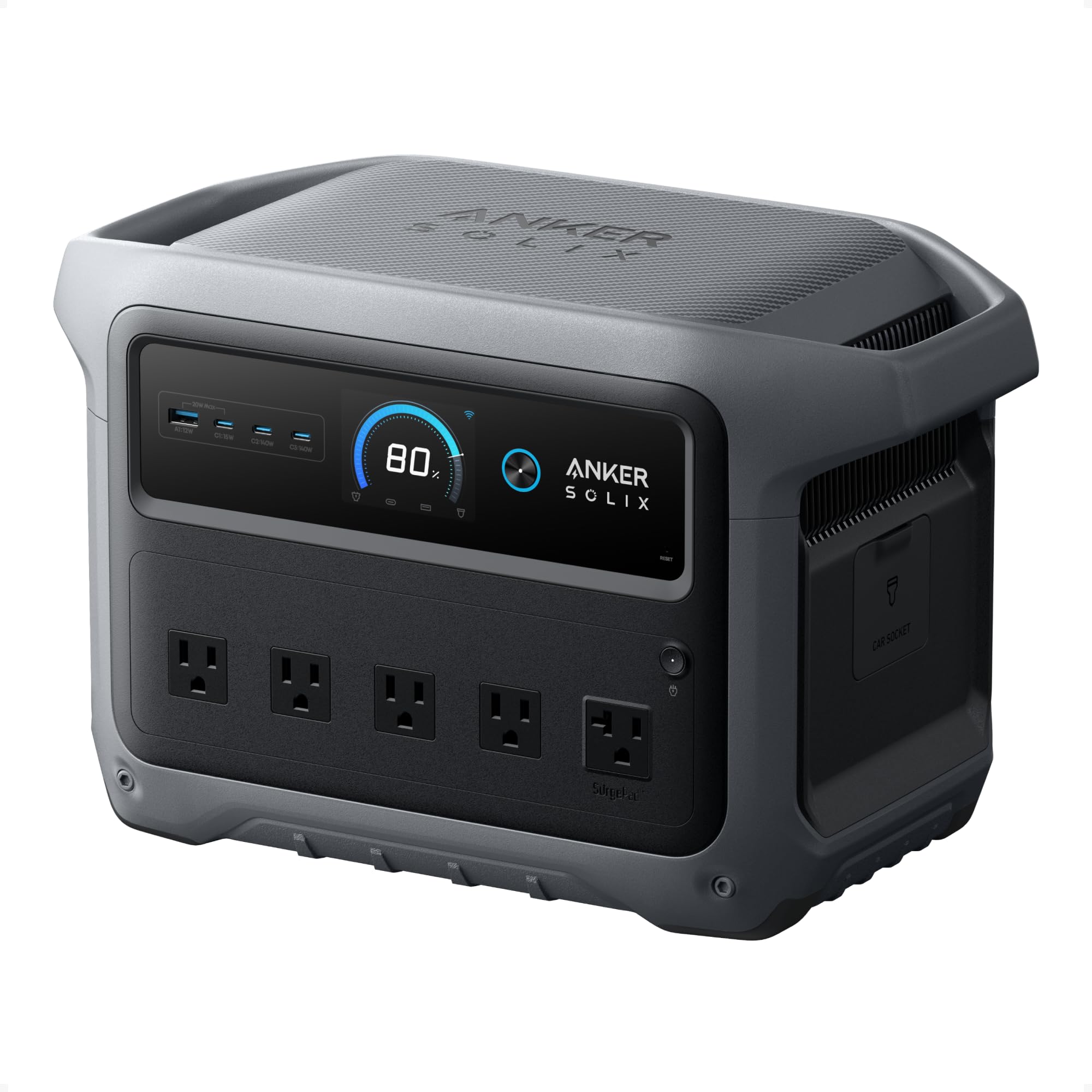
You get a compact but capable LiFePO4 power station that balances usable capacity with high output. The 1,024Wh pack and 2,000W inverter let you run laptops, multiple USB devices, lights and many small appliances while camping or during short outages, and the peak 3,000W capacity helps with startup loads. Anker built fast recharge into the unit, so you can top the battery quickly from AC or solar when conditions allow.
It’s not the lightest option, but at about 11.3 kg it’s easy to move by car and it’s solidly made for frequent use. If you want reliable backup for weekend trips, occasional overlanding or a compact home UPS, this is a practical pick that keeps things simple and dependable.
What People Say
People often praise the C1000 for feeling well built, delivering solid power for camping and short home outages, and charging much faster than typical stations. Reviewers note the reassuring capacity for devices and the high output for tools or fridges, while a minority report early unit issues or miss the expandability offered by some earlier models.
Overall Sentiment: Positive

Situations
|
Situation |
How It Helps |
|---|---|
|
Weekend Camping |
You can run lights, charge phones and power a small cooler for multiple nights without dragging a full generator along. |
|
Emergency Home Backup |
It keeps routers, medical devices and essential small appliances running during short outages and offers UPS-style protection for sensitive gear. |
|
Overlanding and Road Trips |
Its relatively compact size and fast recharge let you top up from solar or vehicle power between stops so your gadgets stay charged. |
Versatility
The unit handles a mix of AC and DC loads and offers multiple outlets so you can charge phones, run a laptop, power a small kitchen appliance, or support a CPAP. You won’t need separate adapters for most devices, and the high peak power covers short startup draws.
Energy
LiFePO4 chemistry and a well-matched inverter mean efficient energy use and more usable cycles over years. The fast-charge feature also makes better use of available generation time from panels or shore power.
Travel
At about 11.3 kg the C1000 is easy to lift into a car and maneuver around camp but it’s not a backpack item. You’ll appreciate the handle and compact footprint for vehicle-based travel and RV use.
Use Cases
You can use it indoors with minimal noise and no fumes, so it’s convenient for apartments and houses. Outdoors it handles a range of weather conditions when sheltered, and the inverter offers clean power for sensitive electronics.
Longevity
LiFePO4 cells give long calendar and cycle life, and Anker supports the unit with a multi-year warranty. For storage keep the battery partially charged and top it up every few months to preserve longevity.
Key Benefits
- Fast recharge capability reduces downtime
- LiFePO4 chemistry for long cycle life and reliability
- High peak output for starting motors and appliances
- Multiple outlets for mixed device charging
Rating: 4.7 (total: 1505+)
Jackery 300
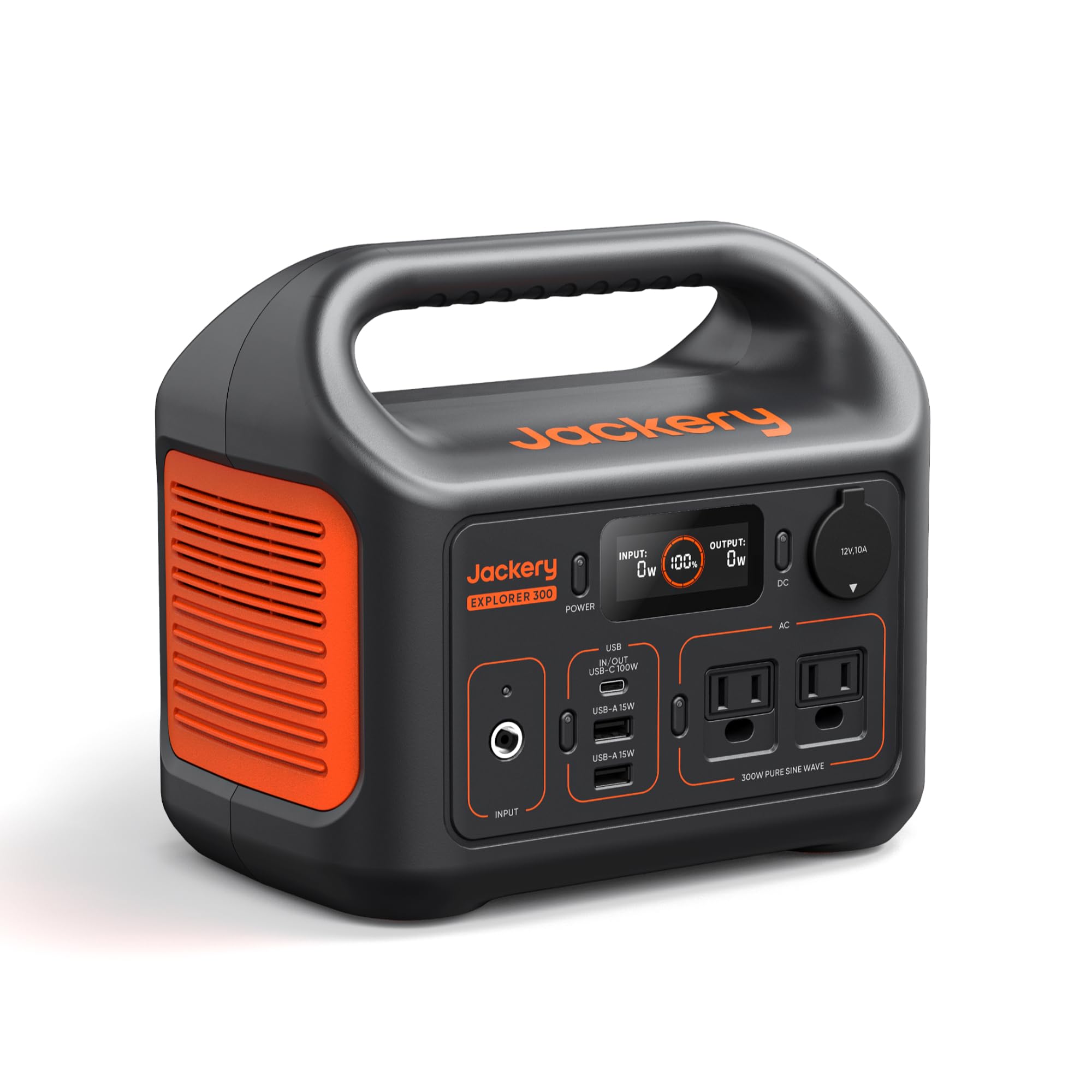
You’ll find the Jackery Explorer 300 is a friendly, no-fuss power station that does a few things really well. Its compact 293Wh capacity and 300W inverter are ideal for charging phones, laptops, cameras and running small appliances for short stretches. It recharges in roughly four hours on AC and pairs easily with a 100W solar panel when you want off-grid top-ups.
Because it’s lightweight and simple to use, it’s a great daily grab-bag for weekend trips, tailgates, and situations where you want reliable power without extra complication.
What People Say
Customers frequently call out the Explorer 300’s portability and reliability, saying it consistently charges phones, laptops and small devices. Many owners appreciate how well it pairs with a 100W solar panel and how simple it is to operate.
A common caveat is that it isn’t meant to run full-size fridges or air conditioners, so planning around its 300W continuous output is important.
Overall Sentiment: Positive

Situations
|
Situation |
How It Helps |
|---|---|
|
Weekend Camping |
You can keep lights, phones, a small fridge and cameras powered for a couple of nights without hauling heavy gear. |
|
Daily Errands & Remote Work |
It serves as a mobile charger for laptops and devices so you can work from a campsite, café or park with fewer worries. |
|
Short Power Outages |
It preserves connectivity for routers, phones and essential small appliances until grid power returns. |
Versatility
The Jackery 300 covers USB-A, USB-C and AC needs, so you can mix device charging and run small AC gear. It’s not a heavy-duty solution but handles most everyday electronics and light appliances comfortably.
Energy
As a lithium-ion unit it’s efficient for short-term use and charges reasonably fast. It won’t match LiFePO4 cycle life, so expect fewer long-term cycles, but it’s efficient for regular weekend and emergency use.
Travel
Weighing about 7.1 pounds and with a compact footprint, you can toss it in a car or carry it to camp without strain. It’s designed for vehicle-based travel rather than backpacking.
Use Cases
Quiet and fume-free indoors, making it suitable for apartments and RVs. Outdoors it’s best used in a sheltered spot out of direct rain, and it pairs well with portable solar panels for daytime recharging.
Longevity
Lithium-ion chemistry means moderate shelf life; store partially charged and top up every few months to preserve capacity and extend usable life.
Key Benefits
- Lightweight and very portable for its capacity
- Straightforward interface—easy to use on the go
- Good charging speed from AC and solar options
- Reliable for charging multiple small devices overnight
Rating: 4.6 (total: 11189+)
Anker C300

You’ll like the C300 if you want a truly portable power solution that still covers most device needs. It pairs fast USB-C charging with multiple ports so you can top up phones, tablets, laptops and small USB devices without fuss.
The 288Wh capacity won’t run heavy appliances for long, but it’s ideal for weekend trips, powering a Starlink terminal, or keeping essentials alive during short outages. Anker’s quick recharge and compact footprint make it a practical grab-and-go unit when you need reliable, easy-to-manage power.
What People Say
Customers commonly praise the C300’s portability and fast charging, noting it handles phones, tablets and laptops reliably. People appreciate the mix of ports and the compact design that fits easily in a car.
A few mentions caution that accessories aren’t included and that it’s not meant for heavy appliances, so plan expectations accordingly.
Overall Sentiment: Positive

Situations
|
Situation |
How It Helps |
|---|---|
|
Day Trips |
You can keep cameras, phones and a laptop charged all day without hauling bulky gear. |
|
Remote Work |
It powers a laptop and hotspot so you can work from a campsite or outdoor spot with steady uptime. |
|
Short Outages |
It preserves connectivity for routers and phones and runs small essentials until power returns. |
Versatility
The C300 covers AC, USB-A and USB-C charging so you can mix modern devices and small AC gear. It’s not a multi-day fridge solution, but it fits most daily needs and short trips.
Energy
Efficient for its size with quick charge cycles, though the lithium chemistry offers fewer long-term cycles than LiFePO4 units. Good for frequent short-use scenarios.
Travel
At around 2.8 kg it’s easy to lift and stow in a car or RV, making it one of the more travel-friendly options for families and tech-heavy campers.
Use Cases
Quiet and safe indoors for apartments or RVs, and handy outdoors when kept sheltered from rain. The compact form factor makes it simple to position near devices.
Longevity
Typical lithium-ion storage guidance applies: store partially charged and top up periodically. Good for regular use but expect fewer cycles than LiFePO4 alternatives.
Key Benefits
- Very portable and lightweight for vehicle-based travel
- Fast USB-C charging and multiple ports for mixed devices
- Quick recharge times compared with similar capacity units
- Simple controls and useful carrying handle
Rating: 4.5 (total: 1743+)
Anker 767

You’re looking at a heavy-duty portable station built for longer outages, RV living and powering larger appliances. The Anker 767 pairs a sizable 2,048Wh LiFePO4 pack with a 2,400W inverter so you can run multiple devices and even handle motor-start loads.
Wheels and a telescoping handle make moving the 30.5 kg unit manageable around a driveway or campsite, and the app and clear display help you monitor input, output and charge status. It’s quieter and cleaner than a gas generator, and its mix of ports and robust cycle life make it more of a long-term backup solution than a weekend toy.
If you need serious capacity and reliable multi-device support, this is worth considering.
What People Say
Owners frequently praise the 767 for its build quality, quiet operation and the convenience of wheels and app monitoring. Many note it handles multiple devices and appliances well and appreciate the long battery chemistry. A minority report early defects or battery-hold concerns, but the included warranty and customer support are commonly mentioned as helpful.
Overall Sentiment: Positive

Situations
|
Situation |
How It Helps |
|---|---|
|
Home Outages |
You can keep refrigerators, lights, routers and medical devices running for extended periods without relying on noisy gas generators. |
|
RV & Off-Grid Travel |
It provides steady power for appliances, rooftop electronics and charging needs while being easy to roll into position at campsites. |
|
Jobsite Power |
The high continuous and peak output lets you run tools and chargers where AC power isn’t available, while remaining quieter than a traditional generator. |
Versatility
This unit handles AC, DC and USB loads across a wide range of devices, from laptops and routers to small kitchen appliances and power tools. It’s a multi-role station aimed at people who need serious, flexible power rather than ultra-light portability.
Energy
LiFePO4 chemistry delivers efficient charge/discharge cycles and better long-term capacity retention. For best results, top off the battery periodically and use solar or AC inputs to minimize waste during extended use.
Travel
At roughly 30.5 kg this isn’t a backpack option, but wheels and a compact footprint mean you can move it by vehicle. It’s travel-friendly for RVers and overlanders who expect to drive to their sites.
Use Cases
Quiet, fume-free operation makes it safe and convenient indoors, and it pairs well with solar outdoors when protected from rain. Position it on a stable, dry surface and you’ll get reliable performance in both settings.
Longevity
LiFePO4 batteries offer strong calendar and cycle life; store partially charged and refresh every few months to preserve capacity. The product is backed by a multi-year warranty that helps protect your investment.
Key Benefits
- High usable capacity and strong continuous output for appliances
- LiFePO4 battery chemistry for long cycle life and durability
- Multiple outlets and ports to run several devices at once
- Wheeled chassis and display/app monitoring for easier handling
Rating: 4.4 (total: 568+)
Anker F3800

You’re looking at a heavyweight in the portable power world that’s built for long outages, jobsite work and serious off-grid setups. The F3800 combines a large 3,840Wh pack with high continuous and surge outputs so you can run power tools, refrigerators and multiple appliances without constant juggling. It supports solar and AC inputs and can be expanded for much more capacity, and the app and clear display make monitoring straightforward. It’s not a grab-and-go day bag, but if you need dependable, quiet power in place of a gas generator or for extended RV stays, this model gives you the muscle and flexibility to get the job done.
What People Say
Owners commonly praise the F3800’s capacity, quiet operation and the convenience of app monitoring. Reviewers note it handles multiple appliances and heavier loads reliably, and many appreciate the expansion options and AC/solar charging flexibility. Some buyers call out variability in solar input performance and occasional early defects, but the unit’s capability and support are frequent positives.
Overall Sentiment: Positive

Situations
|
Situation |
How It Helps |
|---|---|
|
Extended Power Outages |
You can keep refrigerators, medical devices, lights and communications running for days without switching to a gas generator. |
|
RV Full-Time Living |
It supplies steady power for air conditioning, appliances and charging while remaining quieter and cleaner than a fuel generator. |
|
Jobsite Power |
High continuous and surge output lets you run tools and charging stations where grid power isn’t available, with less noise and maintenance than combustion generators. |
Versatility
This station covers AC, DC and USB needs and supports expansion and multiple charging inputs, so you can tailor it for home backup, mobile workshops or extended overland trips. It’s a multi-role system best for users who need substantial, flexible power rather than ultra-light portability.
Energy
LiFePO4 chemistry offers efficient charge/discharge cycles and strong long-term capacity retention. Using solar or timed AC charging helps you minimize energy waste during prolonged use.
Travel
At over 130 pounds this isn’t a backpack item, but wheels and handles make it manageable for vehicle transport and placement at campsites or driveways. It’s travel-friendly for RVers and site-based use rather than hikers.
Use Cases
Quiet and fume-free operation makes it suitable indoors for garages, workshops and home backup, and it pairs well with solar outdoors when protected from weather. Place it on a stable, dry surface and monitor via the app for best results.
Longevity
LiFePO4 cells deliver strong cycle and calendar life; store partially charged and recharge every few months to maintain capacity. The multi-year warranty also provides added protection for long-term ownership.
Key Benefits
- Very large usable capacity suitable for extended outages
- High continuous and surge output for appliances and tools
- Expandable storage and multiple input methods including solar
- App monitoring and user-friendly display for real-time control
Rating: 4.4 (total: 316+)
Jackery HomePower 1000
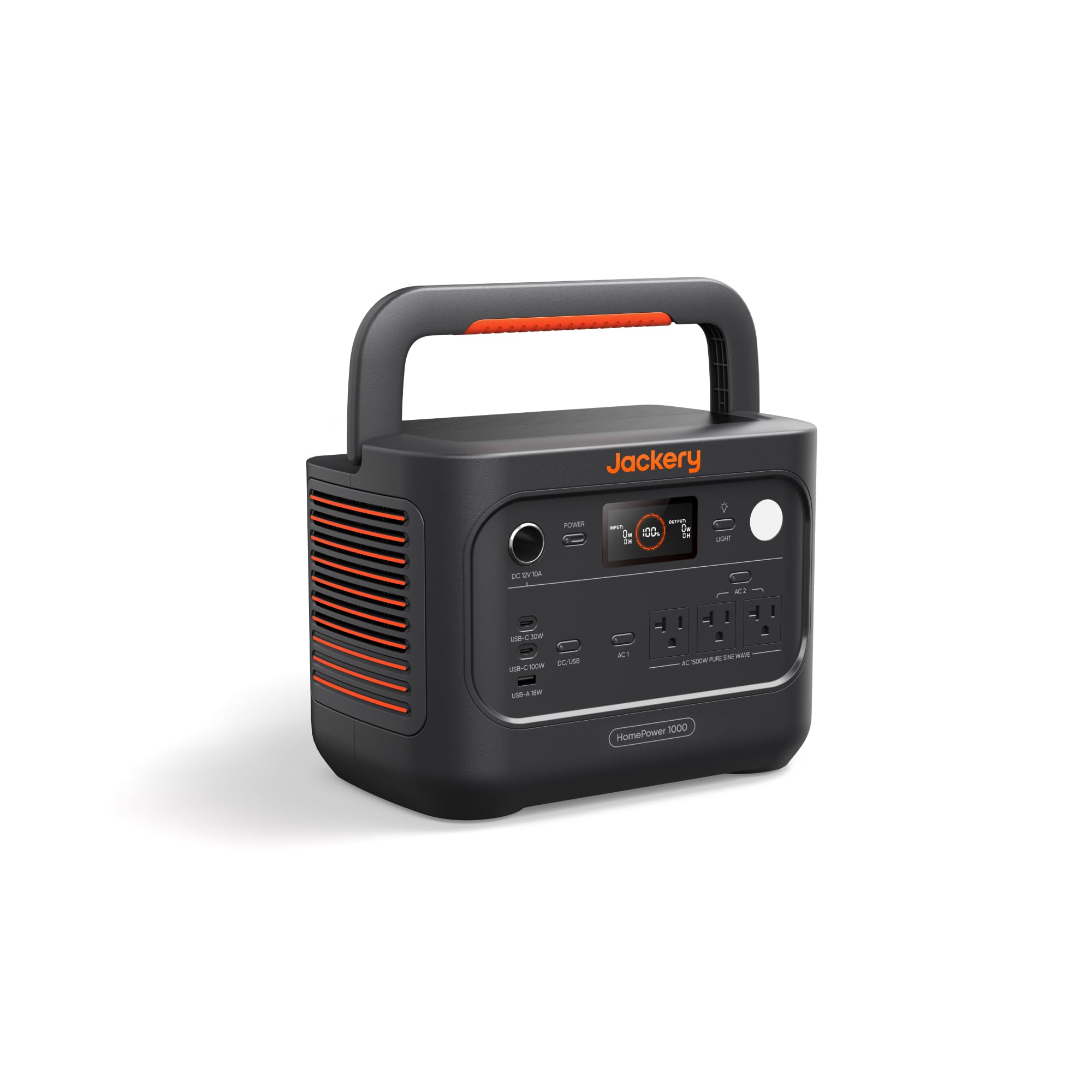
You get a home-focused LiFePO4 station that blends substantial usable capacity with a UPS-ready response and fast recharge. The 1,024Wh battery and 1,500W continuous output cover refrigerators, routers, medical devices and everyday essentials for short-to-medium outages, while the 10ms switch-over protects sensitive electronics.
The unit’s built for mounted or garage use and is compact enough to move when needed; if you want a balance between home backup muscle and manageable size, this model is a sensible pick.
What People Say
Owners frequently highlight the unit’s reliability as a home backup and praise the UPS capability that keeps routers and medical devices online. Many mention the long-life LiFePO4 battery and appreciate the fast recharge times, while a few note that the unit’s weight makes it more of a fixed or vehicle-stowed solution than a daily carry item.
Overall Sentiment: Positive

Situations
|
Situation |
How It Helps |
|---|---|
|
Home Backup |
You can keep refrigeration, internet gear and medical devices running during outages without switching to noisy generators. |
|
RV & Road Trips |
It powers appliances and charging needs at campsites, and the fast recharge means less downtime between drives and stops. |
|
Remote Work During Outages |
It maintains power for a laptop, hotspot and lights so you can stay productive when grid power fails. |
Versatility
The HomePower 1000 handles AC, DC and USB loads and doubles as a UPS, so it fits both emergency home setups and mobile RV use. It’s best for people who need consistent, multi-device support rather than ultralight portability.
Energy
LiFePO4 cells offer efficient charge/discharge behavior and long cycle life, and the unit’s fast-charge capability helps you recover capacity quickly when you have limited input time from solar or shore power.
Travel
Weighing around 23.4 pounds, it’s portable enough to move between a vehicle and a campsite but not something you’ll want to tote by hand for long distances. It’s a good fit for car-based travel and RVs.
Use Cases
Quiet, fume-free operation makes it suitable indoors for garages and homes, and it works outdoors when kept sheltered. The UPS and AC outputs make it easy to integrate into a household or mobile setup.
Longevity
With LiFePO4 chemistry and manufacturer guidance, expect long calendar and cycle life; store partially charged and refresh periodically. The product is backed by a multi-year warranty for added peace of mind.
Key Benefits
- UPS support for sensitive electronics
- LiFePO4 chemistry for long cycle life
- Fast recharge minimizes downtime
- Strong continuous output for home essentials
Rating: 4.5 (total: 132+)
Nicesolar 100W

You get a compact, rigid foldable panel that’s built for campsite charging, festivals and emergency top-ups. The solid ETFE surface and single-piece construction mean it cleans easily and resists the warping you see on fabric-backed panels. It pairs with most portable stations thanks to the included adapters and lets you chain panels when you need more input.
If you want a lightweight, durable way to keep your batteries topped off during day-use or multi-day events, this panel is a practical, low-fuss choice.
What People Say
Users commonly praise the panel’s solid build and simple setup, noting the lack of seams makes maintenance easier. Many appreciate the variety of adapters and the compact case for travel, while a few mention the kickstand design and short cable as minor annoyances that are easy to work around.
Overall Sentiment: Positive

Situations
|
Situation |
How It Helps |
|---|---|
|
Festival & Events |
You can keep phones, cameras and power banks topped up across a long day without hauling a generator. |
|
Car Camping & Overlanding |
It fits neatly in a vehicle, provides steady midday charging and lets you extend battery life on multi-day trips. |
|
Emergency Top-Up |
When grid power falters, a daytime charge can give you enough runtime to maintain communication and essentials until AC power returns. |
Versatility
The panel works with a wide range of portable power stations through included adapters and supports chaining multiple panels, so it fits casual campers and more serious off-grid users alike.
Energy
High-efficiency PERC monocrystalline cells and a bifacial layout yield good real-world output, especially in bright conditions or when reflections are available.
Travel
At roughly 3 kg and with a folding design plus a travel bag, it’s easy to stow and move by car, making it a smart pick for vehicle-based trips.
Use Cases
Designed for outdoor use, it stands up to regular field use and cleans easily; keep it dry and angled toward the sun for best performance and avoid prolonged exposure in storage.
Longevity
Solar panels have long service lives; the ETFE surface helps with durability, and storing it folded in a dry case will preserve performance over years.
Key Benefits
- Rigid ETFE construction for durability and easy cleaning
- Multiple adapters for broad compatibility with power stations
- Foldable, compact design with travel bag for easy transport
- Bifacial/high-efficiency cells that improve real-world output
Rating: 4.3 (total: 68+)
BougeRV Cart

If you don’t want to wrestle a heavy power station into a vehicle or around camp, this folding BougeRV cart makes the job easier. The metal frame and four-wheel layout give stable support for up to 50 kg (about 110 lb), and the fold-flat design means it stows in a trunk or garage without taking much room.
It’s a straightforward, budget-friendly alternative to pricier branded carts, though some users wish for a locking hinge feature for safer stair work. For moving battery packs, cases and other bulky equipment around a campsite or driveway, it simplifies the whole process.
What People Say
Buyers generally appreciate the value and practicality, noting it’s a capable, lower-cost alternative to expensive branded carts. Common praise centers on sturdiness and easy storage, while a couple of users mention a missing locking hinge or minor fit issues with certain power station footprints.
Overall Sentiment: Positive

Situations
|
Situation |
How It Helps |
|---|---|
|
Power Station Transport |
You can roll heavy units between vehicle and campsite without lifting, reducing strain and the chance of dropping equipment. |
|
Garage & Storage |
Fold it flat to tuck into a trunk or shelf, freeing space and keeping the cart ready for occasional use. |
|
Event Setup |
Moves boxes and gear quickly across pavement or campground grounds, speeding setup and teardown for festivals or tailgates. |
Versatility
The simple platform accepts a range of boxy stations and cases, making it useful beyond just power gear; check dimensions and mounting points to ensure a secure fit.
Energy
Not applicable to electrical efficiency; the cart improves workflow efficiency by cutting the time and effort needed to move heavy items.
Travel
Lightweight and foldable, it slips into a car or RV storage area easily, so it’s well suited to vehicle-based travel and overlanding.
Use Cases
Works well on firm indoor and outdoor surfaces; avoid rough, uneven terrain and take care on stairs. Keep it dry to maintain the metal finish.
Longevity
Sturdy metal parts should last with normal use; store dry and inspect hinges periodically for wear or looseness to keep performance reliable.
Key Benefits
- Makes moving heavy power stations and gear far less strenuous
- Folds compactly for easy storage in vehicles or sheds
- Durable metal construction suited to regular use
- Four-wheel design improves stability on flat surfaces
Rating: 4.6 (total: 2+)
BLUETTI AC200L

You’re looking at a highly capable, expandable station that sits between portable units and whole-house solutions. The AC200L pairs a roomy 2,048Wh LiFePO4 pack with fast recharge and a broad array of ports so you can run refrigerators, power tools, multiple devices and even support a 30A RV plug.
App and local controls make monitoring straightforward, and expandability lets you add battery modules when you need much more runtime. If you want a reliable, quiet alternative to a gas generator for extended trips or home backup, this unit gives you flexibility without a lot of complexity.
What People Say
Customers commonly praise the AC200L for its mix of capacity, expandability and quiet operation, noting it handles appliances and multiple devices with ease. Many owners like the app and fast charging, and several point out how straightforward it is to link expansion batteries.
A few buyers raise concerns about setup preferences like Wi‑Fi or account choices, but overall people appreciate the station’s reliability and flexibility.
Overall Sentiment: Positive

Situations
|
Situation |
How It Helps |
|---|---|
|
Extended Home Outages |
You can sustain refrigerators, lights, routers and medical devices for days when paired with panels or additional batteries, avoiding noisy gas alternatives. |
|
RV & Overland Use |
The 30A RV output and multiple AC/USB ports keep appliances and onboard systems running while remaining far quieter than a generator. |
|
Jobsite and Workshops |
High continuous and surge output powers tools and chargers where grid power isn’t available, with less maintenance and cleaner operation than combustion generators. |
Versatility
The AC200L covers AC, DC and USB needs and supports battery expansion and multiple recharge methods, so it fits use cases from home backup to mobile workshops and RV life. You can tailor capacity and inputs to match how you use power.
Energy
LiFePO4 chemistry delivers efficient cycles and strong long-term capacity retention, and the unit supports high-rate AC and solar inputs to recover charge quickly when sunlight or shore power is available.
Travel
At roughly 61.4 pounds this isn’t a backpack item, but it’s a practical vehicle-loaded solution for RVers and overlanders who need substantial power without hauling a gas generator.
Use Cases
Quiet, fume-free operation makes it suitable indoors for garages and homes, and it pairs well with solar outdoors when sheltered. Keep it on a stable surface and monitor via the app for best performance.
Longevity
LiFePO4 cells offer strong cycle and calendar life; store partially charged and refresh every few months to maintain health. Manufacturer support and expansion options also help protect your investment long term.
Key Benefits
- Expandable LiFePO4 capacity for longer runtimes
- Wide port selection including 30A RV output
- Fast recharge and UPS-ready switching for sensitive gear
- App monitoring and robust build quality
Rating: 4.8 (total: 515+)
FAQ
How Do I Choose Capacity And Output?
Start by matching what you need to run to the station’s continuous and peak watt ratings; the continuous wattage determines what will run long term while the peak handles startup draws from motors. Estimate total watt-hours by listing devices and hours of use, and prefer units with a higher usable Wh than your calculation to allow a safety margin.
Consider port variety, UPS capability if you need instant switchover, and battery chemistry—LiFePO4 delivers longer cycle life than standard lithium‑ion. Finally weigh portability versus power: larger, higher-output stations are heavier but better for home, RV or jobsite use while compact units suit day trips and light charging.
Can I Use A Power Station With Solar And Indoors?
Yes, many stations support AC, car and solar inputs but you must confirm compatibility with panel voltage, connector type and MPPT specs before connecting. Outdoors you can charge during daylight with panels sized to your station’s input limit and chain panels if needed; keep panels angled, shaded-free and ventilated for best output.
Indoors the units are safe for charging and powering devices as long as you keep them on a stable, ventilated surface and away from water; avoid running high-draw appliances that exceed the continuous rating and follow the manufacturer’s guidance on ventilation and placement.
How Should I Maintain And Store A Power Station?
For long life store the battery partially charged (about 40–60%) and top it up every few months; avoid leaving it at 0% or 100% for extended periods and keep it in a cool, dry place away from extremes. Run firmware and app updates when available, test the unit periodically under load so you know it works when you need it, and inspect cables and ports for damage.
Follow the manual for battery-specific maintenance, register the warranty if offered, and treat the station like other electronics—protect it from moisture, impacts and prolonged direct sunlight.
Buyer Preferences
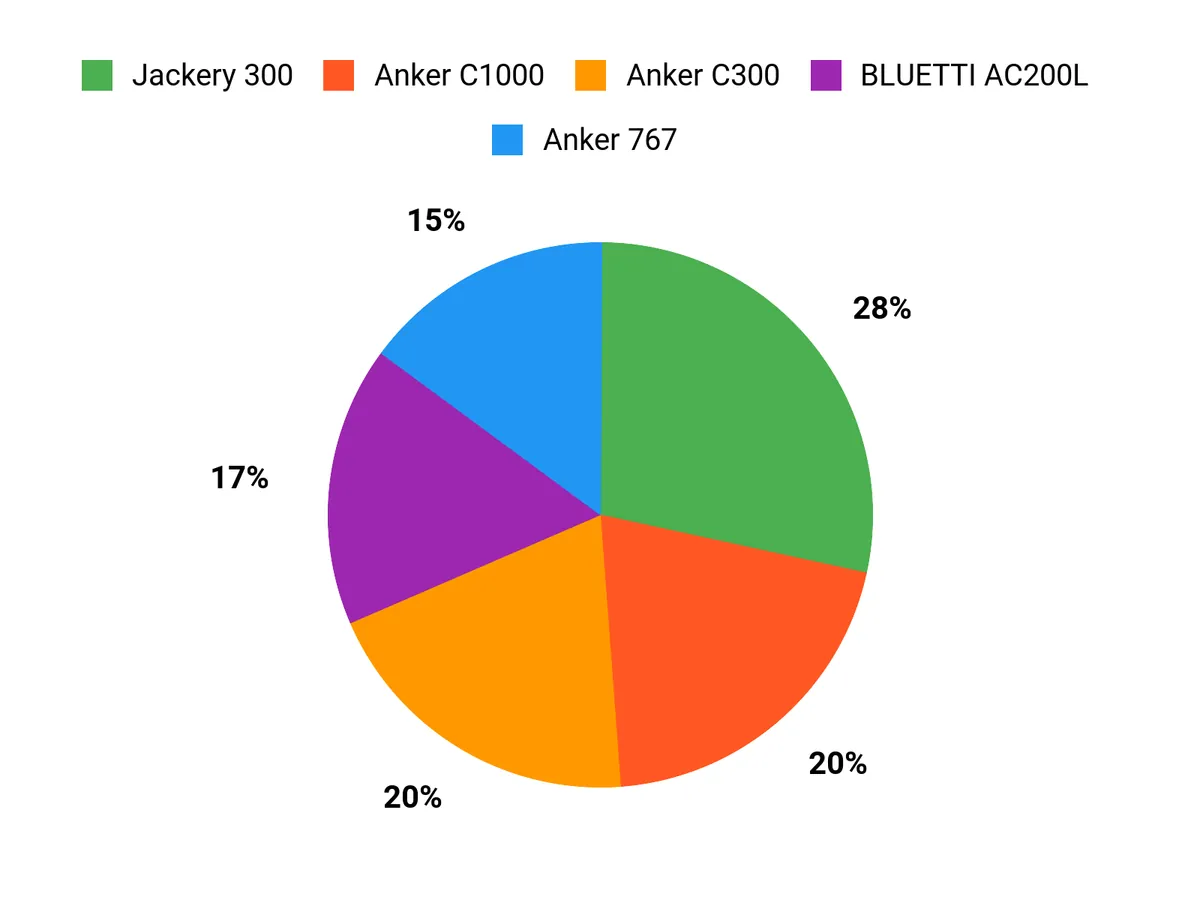
You typically weigh capacity and output against portability: you pick the Anker C1000 when you need higher wattage and LiFePO4 longevity, the Jackery 300 when light weight and simple daily charging matter most, and the Anker C300 when you want a compact unit with faster USB-C recharge and more ports. You also look at recharge options, UPS features and how you’ll transport and deploy the unit, since battery chemistry, port variety and recharge speed determine how the station fits your camping, travel, or home-backup routine.
Wrapping Up
Match the station to your priorities: choose high-capacity, high-output systems for RVs or extended outages, select compact fast-charging units for travel and daily carry, and add a compatible solar panel for long trips. Look at continuous wattage for appliances, peak wattage for motors, and recharge options so you can top up from solar, AC or a vehicle when needed.
With the right pick you gain dependable power and fewer compromises when you camp, travel or face an outage.
| Product Name | Image | Rating | Battery Capacity | Output Wattage | Weight |
|---|---|---|---|---|---|
| Anker SOLIX C1000 Gen 2 Portable Power Station |
|
4.7/5 (1,505 reviews) | 1,024Wh | 2,000W | 11.3 kg |
| Jackery Explorer 300 Portable Power Station |
|
4.6/5 (11,189 reviews) | 292Wh | 300W | 3.2 kg |
| Anker SOLIX C300 DC Portable Power Station |
|
4.5/5 (1,743 reviews) | 288Wh | 300W | 2.8 kg |
| Anker SOLIX F2000 Portable Power Station |
|
4.4/5 (568 reviews) | 2,048Wh | 2,400W | 30.5 kg |
| Anker SOLIX F3800 Portable Power Station |
|
4.4/5 (316 reviews) | 3,840Wh | 6,000W | 132.3 pounds |
| Jackery HomePower 1000 v2 Portable Power Station |
|
4.5/5 (132 reviews) | 1,024Wh | 1,500W | 10.5 kg |
This Roundup is reader-supported. When you click through links we may earn a referral commission on qualifying purchases.