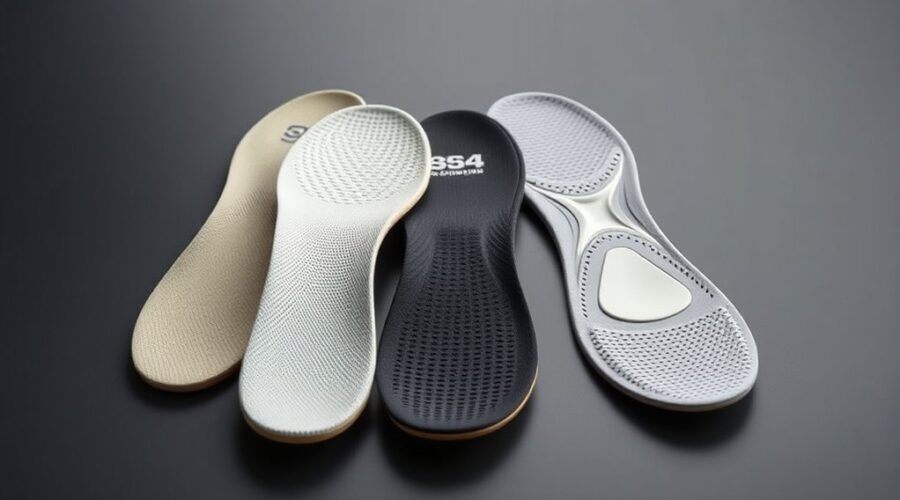
Running comfort in 2027 may depend as much on the insole as on the shoe itself. The SOLE Performance Medium, CURREX RunPro, and Superfeet Run Support each bring a different balance of fit, arch control, and support. Some favor moldable shaping, while others rely on structured stability and lighter construction. The differences are subtle, but they can change every mile.
SOLE Performance Medium Insoles – Custom Moldable, Mens 10/Womens 12
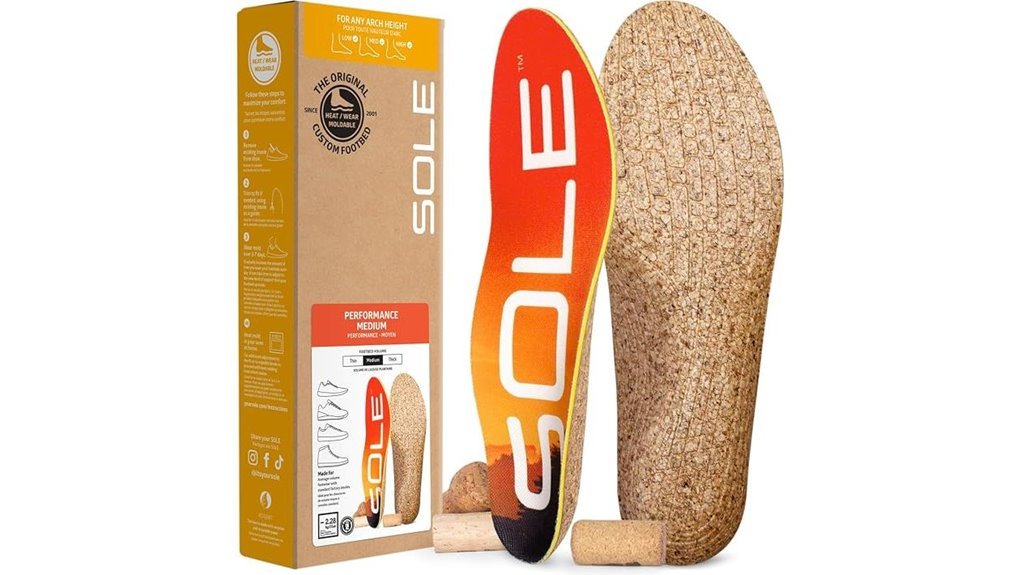
The SOLE Performance Medium Insoles stand out as a strong choice for runners who need firm support and customizable fit, especially in men’s size 10 and women’s size 12. Their cork-base orthotic design includes a supportive arch, deep heel cup, and zero-drop platform to encourage neutral alignment. That structure can help reduce strain from overpronation, flat feet, and heel pain. The 3.2mm profile, with 1.6mm cushioning, balances impact absorption and responsiveness. Trim-to-fit edges and heat-moldable construction improve compatibility with running, athletic, and casual shoes while supporting plantar fasciitis and Achilles discomfort.
Best For: Runners and active adults who want firm, customizable arch support in a medium-profile insole for overpronation, plantar fasciitis, and all-day wear.
Pros:
- Supportive cork-base orthotic design with arch support, deep heel cup, and zero-drop platform
- Heat-moldable and trim-to-fit for a more customized fit across different shoe types
- Medium 3.2mm profile offers a good balance of cushioning and responsiveness
Cons:
- Firm support may feel too rigid for users who prefer a softer insole
- Requires trimming and/or heat molding to get the best fit
- Medium thickness may not suit those who want the thinnest option or maximum cushioning
CURREX RunPro Insoles for Running Shoes (High Arch)
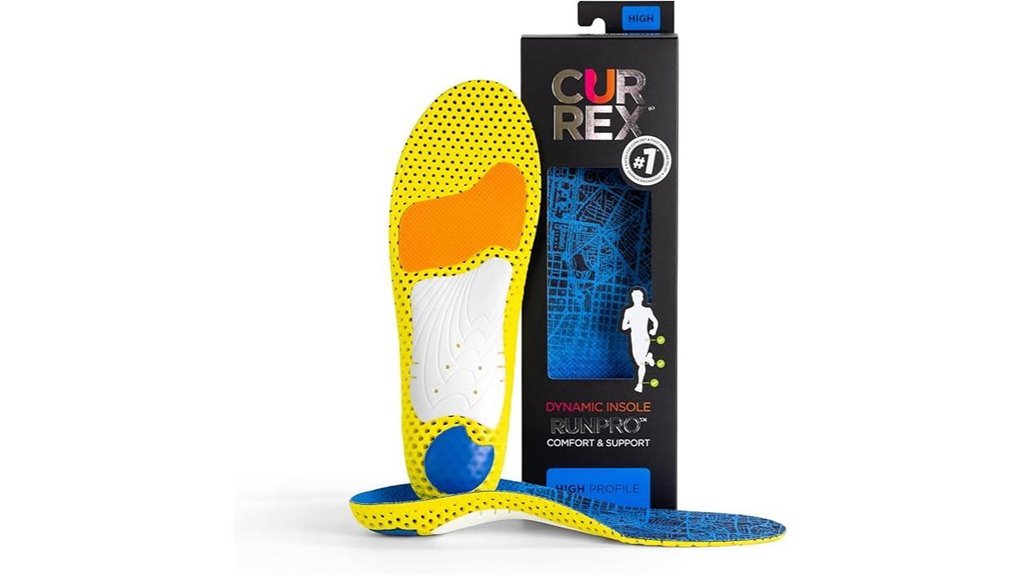
CURREX RunPro Insoles suit runners seeking high-arch support with responsive cushioning. Their 3D Dynamic Arch Technology offers multiprofile support, while the deep decoupled heel cup adds stability and lowers pressure. Rebound cushioning and controlled power transmission help reduce fatigue and support quicker regeneration and propulsion. A zero heel drop promotes natural motion, and the trim-to-fit design suits many running shoes. The top mesh layer and PORON foam assist moisture control, helping feet stay dry and shoes fresher. Built for performance, they are typically replaced after 500 miles or 12 months.
Best For: Runners with high arches who want responsive cushioning, stable support, and moisture control in a trim-to-fit insole for running shoes.
Pros:
- 3D Dynamic Arch Technology provides multiprofile support for high arches, helping improve comfort and fit.
- Rebound cushioning and a deep decoupled heel cup add stability, reduce fatigue, and support smoother propulsion.
- Moisture-managing mesh and PORON foam help keep feet drier and shoes fresher during runs.
Cons:
- Best suited for running shoes, so it may not be ideal for other types of footwear.
- Trim-to-fit design may require careful adjustment to achieve the right fit.
- Replacement is recommended after 500+ miles or 12 months, which may be inconvenient for frequent runners.
Superfeet Run Support Medium Arch Insoles
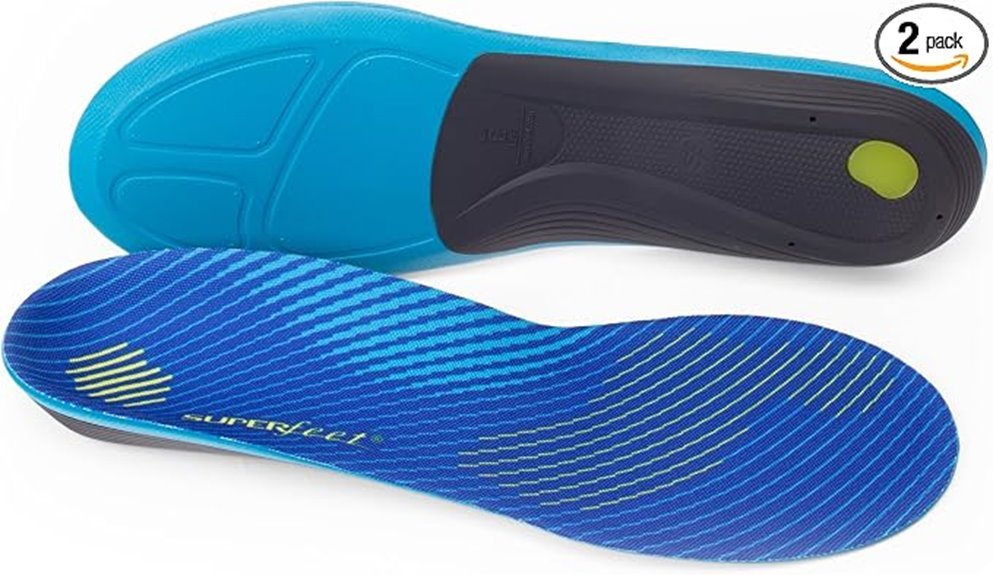
Superfeet Run Support Medium Arch Insoles suit runners needing medium arch support and a trim-to-fit design. They fit men’s sizes 5.5-7 and women’s sizes 6.5-8, with sizing guidance to choose up if between sizes. Designed for moderate to tight-fitting shoes, they provide orthotic stabilization through a lightweight EVOLyte stabilizer cap that compresses responsively. A thin cushioning layer supports running and walking, while the Moisturewick top cover helps control odor and keep feet fresher. Formerly called Superfeet RUN Comfort Slim, the insole retains the same trusted performance under a new name.
Best For: Runners with medium arches who want a trim-to-fit insole with lightweight support for moderate to tight-fitting shoes.
Pros:
- Medium arch orthotic support helps stabilize the foot during running and walking.
- Trim-to-fit design makes it easy to customize for a better shoe fit.
- Moisturewick top cover helps reduce odor and keep feet fresher.
Cons:
- Only suitable for a limited size range.
- May require careful trimming to achieve the right fit.
- Best suited for moderate to tight-fitting shoes, so not ideal for all footwear.
Factors to Consider When Choosing Running Insoles 2026: Top Picks for Comfort and Support
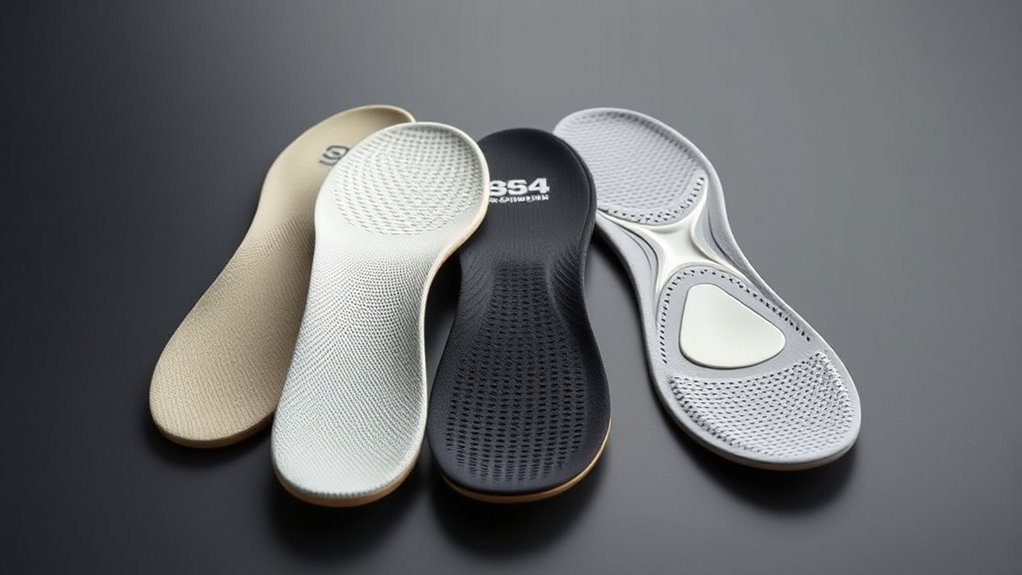
Choosing running insoles in 2026 starts with matching arch support to the runner’s foot shape and gait needs. Cushioning, responsiveness, fit, trimability, moisture control, and breathability all shape how well an insole performs over long runs. Activity-specific design also matters, since the best choice for daily training may differ from a model made for speed work or trail use.
Arch Support Needs
Arch support plays a key role in how well a running insole performs, helping stabilize the foot, reduce strain, and lower the risk of injury. The right level depends on foot shape and running mechanics. High arches generally need firmer support to distribute pressure more evenly, while flat feet and overpronation often benefit from medium to low arch designs that guide alignment without forcing the foot. Poorly matched support can cause discomfort and contribute to issues such as plantar fasciitis or Achilles tendonitis. Many modern insoles include customizable arch systems that can be molded for a closer fit. A deep heel cup can further improve stability, reinforcing arch support and helping the foot stay aligned through each stride.
Cushioning And Responsiveness
Cushioning and responsiveness shape how a running insole feels and performs with every stride. Effective designs use shock-absorbing materials to soften impact and reduce fatigue over repeated miles. A balanced level of cushioning preserves comfort without dulling energy return, allowing each step to feel efficient rather than sluggish. Rebound cushioning can add noticeable propulsion, supporting quicker regeneration and smoother stride mechanics. Thickness also matters, since it influences alignment, comfort, and the overall load felt by the foot, which can affect injury risk. Moisture management further supports performance by keeping feet dry, helping cushioning stay effective and limiting blister formation during longer runs.
Fit And Trimability
Fit and trimability play a major role in how well a running insole performs inside a shoe. A trim-to-fit design lets the user match the insole to a specific shoe type and size, which improves comfort and reduces empty space. When the insole sits snugly, it is less likely to shift, helping prevent slippage and improving stability during runs. Many models include clear cutting guides, making adjustment straightforward. If a runner falls between sizes, choosing the larger option and trimming it down often produces a better result. Adaptable insoles can also accommodate different foot shapes and arch heights, supporting alignment and lowering injury risk. For runners needing specific support, trimability guarantees the insole conforms to the foot rather than forcing the foot to adapt.
Moisture And Breathability
Once an insole is properly sized and seated in the shoe, moisture control becomes the next key factor in comfort. In running insoles, effective moisture management helps keep feet dry, which lowers the chance of blisters and irritation during long efforts. Breathable materials, including mesh layers and moisture-wicking top covers, support air circulation and improve overall foot comfort. Some designs use premium foam that cushions impact while also helping disperse moisture through the insole structure. This combination can reduce odor and bacterial buildup, which in turn may help extend shoe life. Because these properties decline with wear, regular replacement is advisable after about 500 miles or 12 months to preserve performance and hygiene.
Activity-Specific Design
Activity-specific design matters because running insoles must do more than add padding; they need to match the demands of repetitive impact, forward motion, and long-distance strain. For runners, that means targeted arch support and shock absorption that suit the sport’s constant ground contact and forward propulsion. Features such as dynamic arch support and deep heel cups can improve stability, distribute pressure more evenly, and help limit strain during high-impact miles. Trim-to-fit construction also matters, since a precise fit to shoe shape and foot anatomy supports better alignment and comfort. Breathable, moisture-wicking materials add another benefit by keeping feet drier during extended sessions. Many running insoles further aim to enhance motion efficiency and energy return, which may reduce fatigue and aid recovery over distance.
Frequently Asked Questions
How Often Should Running Insoles Be Replaced?
Running insoles should typically be replaced every 300 to 500 miles, or sooner if cushioning flattens, support weakens, or pain appears. Wear patterns, body weight, and training intensity can shorten lifespan considerably.
Can Running Insoles Prevent Shin Splints?
Yes, running insoles may help reduce shin splint strain by improving support and shock absorption, but they cannot guarantee prevention. Proper footwear, gradual mileage increases, and strength training remain essential safeguards.
Are Running Insoles Machine Washable?
Running insoles are usually not machine washable, because heat and agitation can damage cushioning and adhesives. They are typically cleaned by hand with mild soap and air-dried, preserving shape and support longer.
Do Insoles Affect Running Shoe Size Fit?
Like a key in a lock, insoles can change running shoe fit by adding volume and lifting the foot. They may make shoes feel tighter, so sizing up or trimming may be necessary.
Can I Use Running Insoles for Walking Too?
Yes, running insoles can be used for walking too. They often provide added cushioning and support, though comfort depends on fit, arch shape, and walking style. A gradual break-in helps prevent discomfort or irritation.
Conclusion
Overall, the SOLE Performance Medium Insoles, CURREX RunPro Insoles, and Superfeet Run Support Medium Arch Insoles each bring a distinct strength to runners seeking better comfort and support. With options for moldability, high-arch stability, and lightweight structure, they address a wide range of foot needs. Notably, studies often suggest that nearly 70% of runners experience some foot-related discomfort, making the right insole a valuable upgrade for performance and injury prevention alike.