The best time to visit the Dolomites depends on what you want to experience. Visit in July for open mountain trails, October for golden forests, or winter for skiing beneath towering limestone peaks. But weather, crowds, accommodation costs, and lift schedules can change your plans dramatically. Choosing the right month helps you enjoy the scenery without spending more than necessary. Knowing the best time to visit Dolomites helps you plan around weather, crowds, and budget.
Quick Answer
The best time to visit the Dolomites is late June through September for hiking, especially September for fewer crowds. Choose October for golden larch forests, December through March for skiing, or May and November for quieter, potentially cheaper trips. High-altitude trails and mountain lifts may close outside the summer season.
Also compare: Cumayeri, Düzce · Truro · Princes' Islands, İstanbul.
Last checked: November 11, 2026. Dates and figures were verified against official sources.
Key Takeaways
- March to May: Expect lingering snow, changing weather, and limited high-altitude hiking. Early spring can still offer skiing.
- June to August: Enjoy wildflowers, longer days, and the widest choice of mountain activities. July and August bring the biggest summer crowds.
- September to November: September is excellent for hiking, while October brings autumn foliage. Many mountain services close later in the season.
- December to February: Ski resorts become the main attraction. Christmas and New Year are especially busy.
- Budget planning: Compare accommodation, lift passes, parking, rentals, and transport together rather than focusing on hotel prices alone.
Best Time to Visit the Dolomites: Season Comparison
Each season offers a different experience in the Dolomites. Summer is best for mountain hiking, autumn for photography, winter for skiing, and spring for travelers who prefer quieter valleys.
The temperature ranges below use monthly averages from the Dobbiaco weather station, at approximately 1,222 meters above sea level. They come from the Japan Meteorological Agency’s Dobbiaco climate normals. Higher mountain areas are colder, and these averages are not forecasts.
| Season | Average Monthly Temperature | Crowds and Access | Best For |
|---|---|---|---|
| Spring March–May |
2.4–11.0°C | Generally quieter outside ski events; mountain trails may remain snow-covered | Valley walks, spring scenery, late-season skiing |
| Summer June–August |
15.2–16.8°C | High demand in July and August; widest mountain-service access | Hiking, cycling, via ferrata, alpine meadows |
| Autumn September–November |
1.7–12.0°C | Usually quieter after summer; lift and hut closures increase | September hiking, October foliage, photography |
| Winter December–February |
-3.8 to -2.0°C | Busy ski resorts, especially during holidays | Skiing, snowboarding, winter scenery, Christmas markets |
For events, the official Val Gardena calendar lists major attractions for winter 2026/27, including the FIS Ski World Cup on December 18–19, 2026, and Südtirol Gardenissima on April 3–4, 2027.
These are regional planning guides, not guarantees of good weather. Your exact route and elevation matter just as much as the month.
How the Dolomites’ Geography Shapes the Best Time to Visit
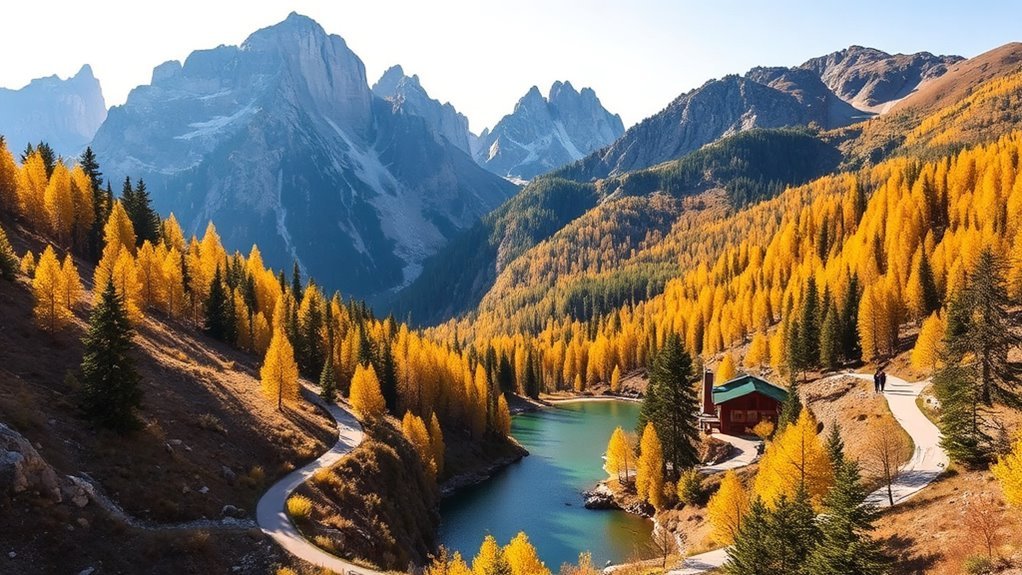
The Dolomites stretch across northeastern Italy, where steep limestone peaks rise above valleys, forests, and alpine meadows. Their changing elevation creates major differences in weather and trail conditions.
The UNESCO World Heritage Dolomites include nine protected mountain areas covering 141,903 hectares. Eighteen peaks rise above 3,000 meters.
These dramatic formations developed from ancient marine carbonate platforms and were later shaped by geological uplift and erosion.
But the geography does more than create beautiful scenery. It directly affects when you can safely explore the mountains.
Valleys and lower south-facing slopes often warm earlier in spring. Shaded northern slopes and high passes can retain snow much longer.
This creates several important seasonal differences:
- Spring: Snowmelt, muddy paths, and lingering snow can limit hiking access.
- Summer: High trails become more accessible, but thunderstorms can form during warm afternoons.
- Autumn: Cooler temperatures bring clear views and fall colors, alongside shorter days and possible early snowfall.
- Winter: Snow changes the landscape completely, bringing ski opportunities and avalanche hazards beyond managed areas.
A sunny day in Ortisei does not guarantee safe conditions on the ridges above Seceda. Likewise, mild weather in Cortina d’Ampezzo does not mean the trails around Tre Cime di Lavaredo are free of snow.
Plan according to your destination’s elevation rather than treating the Dolomites as one climate zone.
Spring in the Dolomites: Lingering Snow, Low Prices, Limited Access
Spring, from March through May, is best for travelers who want quiet villages, changing landscapes, and lower-elevation activities. It is not the most reliable season for high-altitude hiking.
March can still feel like winter in the mountains. April marks the transition between skiing and the warmer season, while May brings greener valleys and more opportunities for walking.
For late-season skiing, Val Gardena’s scheduled 2026/27 operations extend through April 4, 2027, subject to conditions. After the ski season ends, many mountain facilities temporarily close before their summer schedules begin.
Spring Weather and Snowmelt
Spring weather in the Dolomites is unpredictable because snow and warmer temperatures often arrive together. You may find blooming meadows in the valleys while nearby mountain passes remain covered in snow.
In Dobbiaco, average monthly temperatures rise from 2.4°C in March to 11.0°C in May. These are monthly averages, so individual days can feel considerably warmer or colder.
Melting snow can create muddy trails, wet rocks, and streams across walking paths. Higher routes may still require winter equipment or remain unsuitable for ordinary hikers.
Lower-elevation walks around Val Gardena, Val di Funes, and other inhabited valleys are often more practical choices.
Spring also brings chances to see wildlife such as deer, chamois, and marmots. Sightings depend on location, season, and luck, so observe wildlife from a distance.
Pack waterproof footwear, warm layers, and a waterproof jacket. A flexible itinerary helps when snow or rain changes your plans.
Budget-Friendly Spring Accommodations
Spring can offer cheaper accommodation between the winter ski season and summer tourism. Guesthouses, apartments, and family-run farm stays may offer attractive rates during this quieter period.
Some accommodation estimates suggest savings of 30–50% compared with peak season, although this is not a verified region-wide discount. Actual prices depend on location, property type, and travel dates.
Consider staying in Ortisei or Corvara if you want restaurants and village facilities nearby. Confirm that your chosen accommodation remains open during the seasonal transition.
Smaller properties may offer better direct-booking conditions, including breakfast or room upgrades, but these benefits are not guaranteed.
One important detail is that different mountain lifts open on different dates. The official Val Gardena summer lift schedule shows, for example, that the Ortisei–Alpe di Siusi gondola operated from May 1 to November 2 in 2026, while the Seceda lifts began their summer season on May 22.
That difference matters when choosing a spring hotel or planning a mountain excursion.
Note: Early spring hiking should not be treated like summer hiking. Snow-covered paths can hide ice, steep drops, and unstable surfaces. Choose a suitable lower-level route or seek advice from a qualified mountain guide before entering unfamiliar alpine terrain.
Summer in the Dolomites: Peak Crowds, Peak Costs, Peak Views
Summer offers the widest choice of outdoor activities in the Dolomites. From late June through August, most popular hiking areas are accessible when snow conditions allow.
This is the season for walking through alpine meadows, tackling via ferrata routes, mountain biking, and enjoying long daylight hours.
June often brings wildflowers and slightly lighter crowds. July and August are the busiest summer months, especially around famous viewpoints and popular mountain huts.
The most visited destinations include:
- Tre Cime di Lavaredo: Famous limestone towers and panoramic hiking routes.
- Seceda: Dramatic ridgelines reached by mountain lifts from Ortisei.
- Alpe di Siusi: Wide alpine meadows with walking and cycling routes.
- Lago di Braies: A scenic mountain lake that attracts large numbers of visitors.
- Passo Gardena: A mountain pass with access to hiking routes and striking views.
Summer also offers the best opportunities for multi-day hiking on routes such as Alta Via 1 and Alta Via 2. However, individual mountain huts, known locally as rifugios, have their own opening seasons.
For 2026, the official Dolomiti Supersummer lift program ran from May 14 to November 8, although individual lifts followed shorter schedules.
The 2026 adult Supersummer lift-pass prices were:
- One-day pass: €67.
- Three days within four consecutive days: €145.
- Five days within seven consecutive days: €185.
These passes do not cover every lift. In particular, the Ortisei–Furnes and Furnes–Seceda lifts are excluded from the Dolomiti Supersummer pass.
Summer also brings major cycling events. The Maratona dles Dolomites is scheduled for July 4, 2027, in Alta Badia. The event involves road closures, so travelers driving through the mountain passes should account for those restrictions.
If you prefer hiking without large groups, choose a weekday in late June or September. Stay in smaller villages when practical, and reserve popular accommodation and mountain huts well ahead of your trip.
Pro Tip: Start popular summer hikes early in the morning. An early departure can reduce crowd exposure and give you more time to finish before afternoon thunderstorms develop. Allow enough time for the return journey rather than planning around the last available lift.
Autumn in the Dolomites: Larches, Low Prices, Fewer Crowds
Autumn is an excellent time to visit the Dolomites for photography, peaceful scenery, and cooler weather. September is generally better for high-altitude hiking, while October offers some of the most beautiful forest colors.
Summer crowds begin to ease as schools reopen and the busiest holiday period ends. However, autumn is not completely empty, especially at famous photography locations.
In September, hiking routes may remain accessible and many lifts are still operating. By October, shorter daylight hours and changing weather make careful route selection more important.
Golden Larch Season Timing
The golden larch season typically becomes most striking during October, although the exact timing varies by elevation and weather. Higher or colder areas may begin changing earlier, while some valleys retain their colors into early November.
The official South Tyrol autumn guide highlights September hiking, October foliage, seasonal food traditions, and the dramatic evening light on the Dolomites.
Unlike evergreen conifers, European larches change color and lose their needles in autumn. Their golden branches stand out against gray rock faces and darker forests.
Some of the best places to enjoy autumn scenery include:
- Val di Funes: Golden forests beneath the Odle mountain peaks, with attractive village and meadow views.
- Alpe di Siusi: Open landscapes with mountain backdrops and scattered larch trees.
- Lago di Braies: Autumn reflections and golden trees around the lake.
- Val Gardena: Forest trails and viewpoints overlooking the limestone mountains.
For photography, use morning or late-afternoon light to bring out the contrast between the trees and mountains.
Autumn also produces the famous Enrosadira, when sunset light makes the pale Dolomite cliffs glow pink, orange, and red.
The display depends on cloud cover and the direction of the sunlight. You do not need to reach a high summit to enjoy it, as many valley viewpoints offer clear views of the surrounding peaks.
Wind and early snow can shorten the foliage season, so avoid building an entire trip around one specific day of peak color.
Autumn Budget Travel Tips
Autumn can be cheaper than summer, particularly after the busiest hiking weeks end. It is especially attractive for travelers who prefer village accommodation and independent day trips.
Some accommodation estimates suggest prices can fall by 30–50% after mid-October. Treat that as a possible saving rather than an expected discount at every hotel.
Midweek stays may offer more flexibility than weekends, particularly in places such as Cortina d’Ampezzo and Ortisei.
You can also enjoy seasonal activities beyond hiking. In South Tyrol, October is associated with Törggelen, a traditional autumn experience involving walks, local inns, roasted chestnuts, and regional food.
Mountain activities become more limited as autumn progresses. Many rifugios close, some cable cars stop running, and higher trails may receive early snow.
Via ferrata and exposed ridge hiking should never be assumed safe merely because the calendar still says October.
For a lower-cost autumn trip, combine accessible valley walks, mountain viewpoints, local dining, and accommodation that does not depend on seasonal lifts.
Winter in the Dolomites: What Ski Season Actually Costs
Winter is the best time to visit the Dolomites for skiing and snowboarding. The main ski season typically runs from December into spring, although opening dates differ between resorts.
For winter 2026/27, Val Gardena and the Sellaronda ski circuit are scheduled to operate from December 4, 2026, through April 4, 2027, subject to weather and operating conditions.
The Dolomiti Superski network connects major ski areas, including Alta Badia, Val Gardena, Cortina d’Ampezzo, and other destinations.
It offers slopes for different ability levels. Beginners and families can find gentler terrain around Alpe di Siusi and Alta Badia, while experienced skiers can explore more demanding runs.
Dolomiti Superski Pass Prices for Winter 2026/27
The official Dolomiti Superski 2026/27 price list gives the following adult prices for the full ski network.
| Adult Ski Pass | Regular Season | High Season |
|---|---|---|
| 1 day | €80 | €89 |
| 3 consecutive days | €231 | €257 |
| 6 consecutive days | €407 | €453 |
For 2026/27, the high-season periods are December 20, 2026, through January 9, 2027, and January 31 through March 20, 2027.
Buying eligible daily or multi-day passes online at least two days before use can provide a 5% discount when reusing the appropriate My Dolomiti Card.
Equipment Rental, Lessons, and Other Winter Expenses
Ski passes are only part of your winter budget. You also need to consider equipment rentals, lessons, accommodation, meals, and transportation.
Equipment rentals commonly add costs of around €30–€50 per day for standard options, although complete packages and premium equipment may cost more.
For a concrete rental example, an adult beginner ski set in Canazei was listed at €38 for one day in the 2026/27 Rent and Go pricing comparison. The example included skis, boots, and a helmet.
Private lessons can be a significant extra expense. The Ski School Saslong price schedule lists private lessons starting at €66 per hour during regular-season afternoons and €89 per hour during high-season mornings for winter 2026/27.
Group lessons may be cheaper per person, particularly when booked as a multi-day course. Their prices depend on the school, age group, and lesson duration.
Dining also varies widely. A casual mountain hut meal may cost around €15–€25 for a main course, while upscale restaurants and après-ski venues can cost substantially more.
A week-long ski holiday may reach €1,500–€2,500 per person, excluding flights, depending on accommodation and other choices. This is an indicative budget, not a verified package price.
For additional activities, consider guided skiing around the Sellaronda circuit, snowshoeing, or winter walks on designated routes.
Winter events add another reason to visit. Val Gardena’s Christmas markets run during the 2026/27 holiday period, with the Ortisei market scheduled from November 28, 2026, through January 6, 2027.
Choose early December or late-season skiing if you want to avoid some of the Christmas and New Year demand. Snow conditions and lift availability still determine which slopes you can use.
The Cheapest Time to Visit the Dolomites
November and parts of spring are often among the cheapest times to visit the Dolomites. These quieter periods fall between the major summer hiking and winter skiing seasons.
However, lower accommodation prices come with an important trade-off: fewer mountain services may be operating.
November is particularly suitable for travelers who enjoy peaceful villages, scenic drives when roads are open, cultural attractions, and low-elevation walking.
April can offer good value after ski resorts begin closing, while May brings greener valleys and increasing access to summer activities.
Early December may also be more affordable than Christmas and New Year in ski destinations where lifts are already operating.
For a practical budget comparison, consider these periods:
| Travel Period | Budget Outlook | Main Trade-Off |
|---|---|---|
| April–May | Potentially lower accommodation costs | Snow, closures, and limited high-altitude hiking |
| Late June | Better value than peak summer in some areas | Some high trails may retain snow |
| July–August | Usually expensive in popular resorts | High accommodation demand and crowded trails |
| September | Good balance of access and value | Cooler conditions and shorter daylight |
| November | Often one of the cheaper periods | Many lifts, huts, and seasonal businesses close |
Accommodation location matters too. Staying in smaller villages may reduce your hotel bill, but longer journeys to trailheads can add transport costs.
Free activities include many village walks, public viewpoints, and hiking trails. Paid expenses can include parking, cable cars, guided tours, and special shuttle services.
If your priority is saving money rather than reaching the highest trails, choose a well-connected village and focus on attractions that remain accessible during the quieter months.
Best Time to Visit the Dolomites for Hiking
The best time to visit the Dolomites for hiking is usually late June through September. July and August provide the broadest access, while September combines pleasant hiking conditions with fewer summer visitors.
Late June is especially appealing if you enjoy green meadows and wildflowers. However, snow can remain on some high passes after a cold or snowy spring.
July and August are ideal for planning multi-day trekking trips, provided conditions are suitable. Popular routes such as Alta Via 1 and Alta Via 2 are most active during this period.
September offers a different experience. The air is cooler, the landscapes begin to change, and famous trails may feel less crowded than during peak summer.
For beginners, consider marked meadow and valley walks around Alpe di Siusi or Val Gardena. Experienced hikers may prefer more demanding mountain routes.
Some of the most famous hiking destinations include Tre Cime di Lavaredo, Seceda, the Odle mountains, and routes around Passo Sella.
Tre Cime is particularly popular because its walking circuit offers views of the three famous limestone towers. The standard circuit takes several hours and requires appropriate footwear, weather awareness, and reasonable fitness.
Not every hike is safe in every season. Snow, ice, loose rocks, and exposed terrain can change the difficulty of an otherwise familiar route.
Warning: Afternoon thunderstorms are a serious hazard on exposed ridges and via ferrata routes. A via ferrata is a protected climbing route with fixed cables, ladders, or metal steps. Never begin one when thunderstorms are forecast. Use proper safety equipment and follow the Alpenverein South Tyrol via ferrata safety guidance.
For high mountain routes, carry a weatherproof layer, suitable footwear, navigation information, water, and emergency supplies.
September is generally the strongest choice if you want good hiking opportunities without the busiest summer atmosphere. Choose July or August if maximum seasonal access matters more than solitude.
Month-by-Month Dolomites Breakdown: Which Season Fits Your Trip
The Dolomites change dramatically throughout the year. The monthly guide below combines typical weather with seasonal activities and access limitations.
Temperature figures are average monthly temperatures for Dobbiaco, not daytime highs or temperatures on mountain summits.
| Month | Average Temperature | What to Expect |
|---|---|---|
| January | -3.8°C | Skiing, snowy scenery, busy New Year travel |
| February | -2.0°C | Winter sports, family ski holidays, cold mountain weather |
| March | 2.4°C | Spring skiing, longer days, snow at higher elevations |
| April | 6.4°C | End of many ski operations, thawing valleys, limited high trails |
| May | 11.0°C | Spring flowers, valley walks, gradual reopening of lifts |
| June | 15.2°C | Wildflowers, increasing hiking access, possible lingering snow |
| July | 16.8°C | Peak hiking conditions, active mountain huts, busy trails |
| August | 16.5°C | Heavy summer tourism, active hiking season, higher accommodation demand |
| September | 12.0°C | Excellent hiking potential, cooler air, fewer summer crowds |
| October | 7.2°C | Golden larches, autumn photography, increasing lift closures |
| November | 1.7°C | Quiet villages, limited mountain services, possible early snow |
| December | -3.1°C | Ski season openings, Christmas markets, holiday crowds |
July has the highest average monthly temperature in this Dobbiaco dataset, at 16.8°C. It also has substantial precipitation, which helps explain why summer visitors should prepare for rain despite warmer conditions.
For most first-time summer visitors, late June through September offers the best combination of scenery and access. If autumn photography is your priority, October is usually the more rewarding choice.
How to Plan Your Dolomites Trip Around Lifts, Parking, and Transport
Choosing the right month is only the first step. You also need to understand how seasonal transport affects access to popular destinations.
Some mountain areas can be reached by public bus, while others require a cable car, paid parking, or a special shuttle.
Tre Cime di Lavaredo Parking and Access
Tre Cime di Lavaredo is one of the most popular hiking destinations in the Dolomites. Its main summer access road leads from near Lake Antorno to Rifugio Auronzo.
For 2026, the official Auronzo parking system required advance online reservations for vehicle access.
The published 2026 parking rates included:
- Cars: €40.
- Motorcycles: €26.
- Campervans and motorhomes: €60.
Car reservations include a specified entry time and a parking permit valid for 12 hours. Leaving the parking area ends the permit, even if the full period has not passed.
The access road generally operates from late spring into autumn, depending on snow and road conditions.
If you prefer not to drive, the Tre Cime shuttle service offers an alternative from Dobbiaco to Rifugio Auronzo during its scheduled summer operating period. Advance booking is required for the seasonal shuttle.
Can You Travel Around the Dolomites Without a Car?
Yes, you can explore several Dolomites regions without renting a car. Public buses and regional trains serve many major towns, and seasonal shuttles connect some trailheads.
South Tyrol has an especially useful public transport network. The Südtirol Guest Pass is provided by participating accommodation providers and includes eligible regional buses and trains.
The pass is not sold separately. Some special mountain shuttles, long-distance trains, and tourist cable cars are excluded.
For a car-free trip, choosing a base in Ortisei, Dobbiaco, or another well-connected village can make daily travel easier.
A rental car offers more flexibility for remote destinations, but parking restrictions and seasonal road access can reduce that advantage.
Pro Tip: Before booking accommodation, compare the actual transport options to your main destinations. A cheaper hotel far from public transport may cost more overall once parking, shuttle tickets, or car rental expenses are included.
Best Time To Visit Dolomites: Frequently Asked Questions
Do I Need a Visa to Visit the Dolomites From Outside Europe?
You may need a Schengen visa, depending on your nationality. Italy belongs to the Schengen Area, where short visits are generally limited to 90 days within any 180-day period. Some nationalities qualify for visa-free travel, while others must apply in advance. Review the European Commission visa policy before traveling.
What Language Is Spoken in the Dolomites Region of Italy?
Italian, German, and Ladin are spoken in different parts of the Dolomites. German is especially common in South Tyrol, while Ladin is a distinct regional language used in several valleys. English is also widely understood in major tourist areas, hotels, and mountain resorts.
Are There Age Restrictions for Certain Dolomites Cable Cars or Lifts?
Most standard passenger cable cars do not have a universal minimum age requirement. However, individual operators may have specific rules for children, unaccompanied passengers, or certain types of lifts. Young children may need an accompanying adult, so confirm the operator’s rules before traveling with your family.
Can I Visit the Dolomites Without a Car Using Public Transport?
Yes, you can visit many Dolomites destinations using buses, regional trains, and mountain shuttles. Towns such as Ortisei and Dobbiaco provide useful transport connections. Some remote trailheads require special services or additional travel time, so a well-connected accommodation base makes a car-free visit easier.
Is Travel Insurance Recommended When Visiting the Dolomites Mountains?
Yes, travel insurance is strongly recommended for a Dolomites trip, especially if you plan to hike, ski, or climb. Look for emergency medical coverage, mountain rescue protection, and suitable activity coverage. Some policies exclude skiing or via ferrata unless you purchase additional protection, so read the policy conditions carefully.
Conclusion
The Dolomites are worth visiting in every season, but timing shapes the experience. Choose September for hiking, October for golden larches, or December through March for skiing. Summer offers the widest outdoor access, while spring and late autumn can help you avoid crowds and reduce expenses.
Before booking, match your travel dates with your main activities, mountain transport availability, and accommodation budget. That simple preparation can make your Dolomites trip more enjoyable, affordable, and practical.
Sources
- Japan Meteorological Agency, Dobbiaco Climate Normals: Monthly average temperatures and precipitation data.
- UNESCO World Heritage Centre, The Dolomites: Geography, geology, and protected heritage information.
- Val Gardena Tourism, Events and Highlights: Official seasonal events and dates.
- Val Gardena Tourism, Summer Lifts: Summer 2026 lift opening and closing dates.
- Dolomiti Superski, Summer Lift Passes: Official 2026 Supersummer prices and operating periods.
- Maratona dles Dolomites, 2027 Conditions of Entry: July 4, 2027, cycling event date and event information.
- South Tyrol Official Tourism, Autumn Guide: Autumn hiking, foliage, and regional traditions.
- Dolomiti Superski, Official Winter 2026/27 Price List: Adult ski-pass rates and seasonal price periods.
- Ski School Saslong, Private Lessons: Winter 2026/27 private ski lesson pricing.
- Auronzo Tourism, Tre Cime Parking: Official parking charges, access rules, and reservations.
- Three Peaks Official Transport Information: Seasonal shuttle services and mountain access.
- Südtirol Guest Pass: Eligible public transport services and exclusions.
- European Commission, Schengen Visa Policy: Entry requirements and short-stay rules.
- Alpenverein South Tyrol, Via Ferrata Safety: Mountain safety recommendations and climbing precautions.