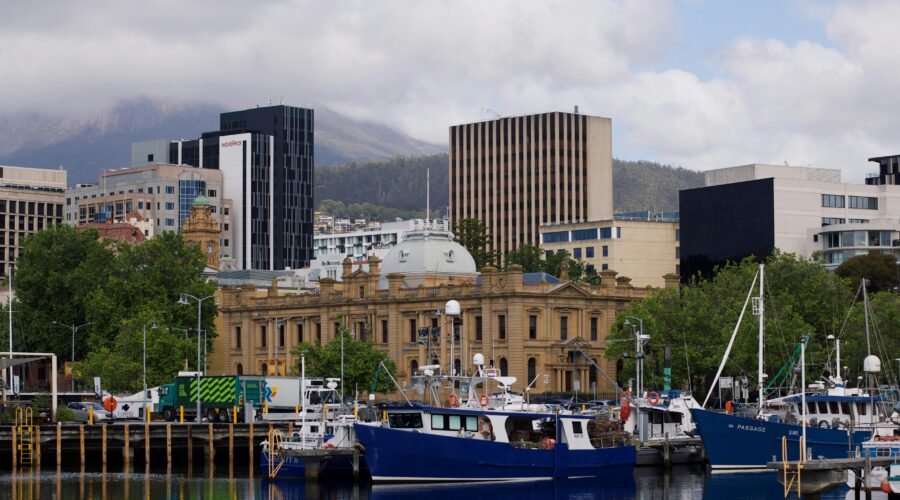
For most travelers, the best time to visit Hobart is during the shoulder seasons, when you can enjoy mild weather without the heaviest summer booking pressure. March and November are especially strong all-around choices, while April works well if you prefer cooler days and a quieter feel. Hobart is still worth visiting year-round, but each season has different trade-offs.
Quick Answer
For the best balance of mild weather, lighter crowds, and better-value accommodation, visit Hobart in March or November; April is another good quieter option if you do not mind cooler evenings. Choose January-February for the warmest weather, June for Dark Mofo, and mid-winter for a quieter city break outside festival periods.
Key Takeaways
- Best overall balance: March and November combine comfortable weather with less peak-season pressure.
- Warmest weather: January and February have long-term mean maximum temperatures of about 21.8°C (71°F).
- Quietest feel: Winter is generally calmer outside major event dates, although Dark Mofo makes part of June much busier.
- Best for outdoor sightseeing: Late spring, summer, and early autumn give you more daylight and generally milder conditions.
- Pack layers year-round: Hobart weather can change quickly, and kunanyi / Mount Wellington can be much colder than the waterfront.
Hobart has four distinct seasons, but daily conditions can shift quickly. According to the Australian Bureau of Meteorology’s long-term Hobart climate statistics, mean maximum temperatures range from about 11.8°C (53°F) in July to 21.8°C (71°F) in January and February. Rain falls throughout the year rather than being confined to one clearly defined wet season.
Hobart’s long-term mean maximum temperature is about 21.8°C in January and February, compared with 11.8°C in July.
Hobart Weather, Crowds, and Costs by Season
| Season | Typical Mean Max | Typical Mean Min | Crowd Pattern | Best For |
| Summer Dec-Feb |
20.4-21.8°C | 10.9-12.1°C | Highest demand, especially late Dec-Jan | Warm weather, long days, festivals |
| Autumn Mar-May |
14.6-20.3°C | 7.0-11.0°C | Moderate, with holiday spikes | Walking, food, scenery, balanced trips |
| Winter Jun-Aug |
11.8-13.2°C | 4.6-5.3°C | Usually quieter except event periods | Museums, food, winter atmosphere, Dark Mofo |
| Spring Sep-Nov |
15.2-18.8°C | 6.5-9.4°C | Low to moderate, rising in November | Flowers, hiking, road trips, shoulder-season value |
Summer (December – February)
Summer brings Hobart’s longest days, mild-to-warm afternoons, outdoor dining, festivals, and the year’s strongest visitor demand. It is the easiest season for travelers who want to spend most of their trip outdoors.
Weather in Summer
At Hobart’s Ellerslie Road weather station, the long-term mean maximum is about 20.4°C (69°F) in December and 21.8°C (71°F) in January and February. Mean minimum temperatures sit around 10.9-12.1°C (52-54°F). Hot days above 30°C do occur, but they are not the everyday norm.
Even in summer, carry a light layer or windproof jacket. Conditions near the Derwent River can feel cooler than the air temperature suggests, while kunanyi / Mount Wellington can be dramatically colder and windier than central Hobart.
Crowds in Summer
Late December and January bring some of Hobart’s strongest booking pressure because Australian summer holidays overlap with major waterfront events. Popular accommodation, rental cars, restaurants, ferries, and tours may have less last-minute availability.
Costs in Summer
Summer does not guarantee the year’s highest price on every hotel or flight, but strong demand means you are more likely to encounter higher rates and fewer discounted options, particularly from Christmas through January. Booking earlier gives you a wider choice.
Summer Activities & Vibe
Summer works well for walking, day trips to the Tasman Peninsula, Bruny Island excursions, waterfront dining, MONA visits, gardens, and beaches. Tasmanian sea temperatures remain cool compared with many mainland Australian beach destinations, so swimming is not the main reason most people choose Hobart.
Autumn (March – May)
Autumn is one of Hobart’s strongest all-around seasons. March still feels relatively mild, while April and May gradually turn cooler. Visitor pressure usually eases after the main summer holiday period, although Easter and school-holiday dates can temporarily increase demand.
Weather in Autumn
March’s long-term mean maximum is about 20.3°C (69°F), with a mean minimum of 11.0°C (52°F). April averages around 17.4°C (63°F) by day and 9.0°C (48°F) overnight, while May averages about 14.6°C (58°F) and 7.0°C (45°F).
This gradual cooling makes March especially attractive for travelers who want comfortable outdoor weather without the peak summer atmosphere. April can also be excellent if you are happy to wear an extra layer in the evening.
Crowds in Autumn
Outside Easter and school-holiday periods, crowds are generally easier to manage than during late December and January. Reservations are still sensible for popular restaurants, tours, and weekend stays.
Costs in Autumn
Autumn can offer better value than peak summer dates, but prices still depend on weekends, public holidays, events, and how early you book. March can remain fairly popular, while May often feels noticeably quieter.
Autumn Activities & Vibe
Cooler conditions suit city walks, vineyard visits, scenic drives, markets, and day hikes. Deciduous trees in parts of southern Tasmania add autumn color, and Hobart’s restaurants, bakeries, wineries, and distilleries remain active throughout the season.
Winter (June – August)
Winter gives Hobart a very different character: shorter days, cold mornings, mountain snow, quiet sightseeing periods, cosy restaurants, and one of Australia’s best-known winter festivals.
Weather in Winter
Long-term mean maximum temperatures are about 12.1°C (54°F) in June, 11.8°C (53°F) in July, and 13.2°C (56°F) in August. Mean minimums sit near 5.2°C (41°F), 4.6°C (40°F), and 5.3°C (42°F) respectively.
Frost is possible, and snow is much more common on kunanyi / Mount Wellington than in central Hobart. Rainfall is spread through the year, so winter should not be treated as a guaranteed washout; however, cold wind and rapidly changing mountain conditions can make outdoor plans harder.
Warning: Do not treat kunanyi / Mount Wellington like an ordinary city viewpoint in snow or poor weather. Wellington Park’s official safety guidance warns that temperatures and visibility can change quickly, snow and ice can make tracks slippery, and Pinnacle Road may close. Check conditions before leaving and turn back if the weather deteriorates.
Crowds in Winter
Much of winter feels quieter than summer, but June is the major exception. Dark Mofo can create strong demand for central accommodation, restaurants, and event tickets.
Costs in Winter
You can often find lower-demand dates during winter, particularly away from festivals, public holidays, and school breaks. Do not assume every June stay will be cheap: major event dates can behave more like peak season.
Winter Activities & Vibe
Winter suits MONA, museums, galleries, distilleries, wineries, long lunches, markets, and scenic drives. Experienced and properly equipped walkers may also enjoy winter landscapes, but mountain conditions should determine whether you hike—not the calendar alone.
Spring (September – November)
Spring is another excellent shoulder season. September can still feel chilly, October becomes noticeably milder, and November offers a strong balance of improving weather and lower booking pressure than the main summer holiday period.
Weather in Spring
September has a long-term mean maximum of about 15.2°C (59°F) and minimum of 6.5°C (44°F). October rises to about 17.0°C (63°F) and 7.8°C (46°F), while November averages around 18.8°C (66°F) and 9.4°C (49°F).
Spring weather can change quickly, so a sunny forecast does not remove the need for layers and rain protection, particularly if you plan to leave the city or head into higher elevations.
Crowds in Spring
September and October are generally calmer than summer, although school holidays can create short demand spikes. November becomes busier as daylight increases and travelers begin arriving ahead of peak summer.
Costs in Spring
Spring can offer good value, particularly outside school holidays and major weekends. Rates often become less forgiving as December approaches, so November travelers benefit from comparing dates rather than assuming every week has shoulder-season pricing.
Spring Activities & Vibe
Spring suits gardens, wildflowers, wildlife viewing, day hikes, scenic drives, markets, and food-focused road trips. November is especially appealing if you want longer days without committing to the busiest part of summer.
Hobart Month-by-Month: When Each Month Works Best
- January: One of the warmest and busiest months. Best for long days, waterfront energy, and outdoor sightseeing.
- February: Warm weather continues, while some of the Christmas-New Year rush has eased. Good for food, walking, and day trips.
- March: One of the best overall months. Mean maximum temperatures remain around 20.3°C, but peak summer pressure starts to decline.
- April: Cooler but comfortable for exploring. Easter and school-holiday periods can temporarily increase demand.
- May: A quieter transition into winter. Good for travelers who prefer restaurants, museums, and relaxed sightseeing over warm evenings.
- June: Cold, atmospheric, and festival-focused. Dark Mofo can make parts of the month much busier than a typical winter period.
- July: Hobart’s coldest month by long-term mean maximum temperature. Good for a quieter city break if you pack properly.
- August: Still wintery, with increasing signs of spring later in the month. Mountain weather remains a major consideration.
- September: Cool early spring weather and fresh landscapes. School-holiday timing can affect availability.
- October: Milder weather, green scenery, and a useful balance between winter quiet and summer demand.
- November: One of the best shoulder-season months, with longer days and a mean maximum of about 18.8°C.
- December: Mild early in the month, then increasingly busy around Christmas, the yacht race, and New Year events.
Key Considerations for Your Trip
Season matters, but the exact week you choose can make just as much difference. A quiet winter weekday and a Dark Mofo weekend can have completely different accommodation availability, just as early December can feel much calmer than the Christmas-New Year period.
School Holidays & Public Holidays
Australian school holidays are one of the biggest drivers of domestic travel demand. Exact dates change every year, so use the Tasmanian Department for Education’s official term-date calendar when comparing accommodation and rental-car prices.
In 2026, Tasmanian state-school holiday periods included 18 April-3 May, 11-26 July, and 3-18 October, with the long summer break beginning after Term 4 finished on 18 December. Public holidays and long weekends can add another short-term demand spike.
Pro Tip: Compare the same hotel or rental car across two nearby date ranges. Moving a Hobart trip by even a few days can take you outside a school-holiday weekend, festival, or major waterfront event.
Major Events and Festivals
Events are part of Hobart’s appeal, but they can completely change normal seasonal crowd patterns. If an event is one of your main reasons for traveling, book around it deliberately rather than relying only on a general “summer” or “winter” recommendation.
Dark Mofo (June)
Dark Mofo transforms Hobart with art, music, food, performances, and winter rituals. The 2026 festival ran from 11-22 June. June can therefore be both a low-season month and a high-demand festival period, depending on your exact dates.
Sydney to Hobart Yacht Race Finish (Late December/Early January)
The Rolex Sydney Hobart Yacht Race begins on 26 December, with boats reaching Hobart in the following days according to race conditions. The waterfront becomes especially lively around Constitution Dock, and accommodation demand overlaps with the Christmas-New Year holiday period.
Taste of Summer (Late December/Early January)
The Taste of Summer brings Tasmanian food, drink, and entertainment to Hobart’s waterfront. The 2026/27 event runs from 27 December 2026 through 3 January 2027, reinforcing late December and New Year as one of the city’s liveliest periods.
Festivale (Late January/Early February – Launceston)
Festivale is not in Hobart, but it matters if your itinerary includes northern Tasmania. It is normally held in late January or early February in Launceston. The 2026 festival ran from 30 January-1 February, while the 2027 event is scheduled for 29-31 January.
Salamanca Market (Most Saturdays)
Salamanca Market normally runs every Saturday from 8:30 am to 3 pm throughout the year. The official schedule notes exceptions when Christmas Day or Anzac Day falls on a Saturday.
Your Travel Style and Priorities
The “best” time changes depending on what you want from Hobart:
- Best overall balance? Choose March or November.
- Want the warmest weather? January and February.
- Budget-conscious traveler? Look at May, July, August, September, or other lower-demand periods, but compare specific dates rather than assuming winter is always cheapest.
- Outdoor enthusiast? Late spring through early autumn offers longer daylight and milder temperatures, but mountain weather should always be checked separately.
- Food and culture lover? Hobart works year-round. Summer brings outdoor events; winter brings a strong indoor dining scene and Dark Mofo.
- Avoiding crowds? Aim for ordinary winter weeks or the quieter edges of spring and autumn, avoiding festivals and school holidays.
- Festival traveler? Late December-New Year and June are the standout periods.
- Beach lover? Summer is your best option, although Tasmanian coastal water remains cool.
Flexibility
If your dates are flexible, moving a trip by even a week can affect accommodation choices, rental-car availability, restaurant reservations, and crowd levels. This matters most around Christmas-New Year, Dark Mofo, Easter, school holidays, and long weekends.
If you’re also comparing seasonal travel patterns in other destinations, the existing guides to the best time to visit Rhode Island and the best time to visit Cambasi Plateau remain available. For a Hobart trip, however, base your final timing decision on Hobart’s local climate, school-holiday calendar, and event schedule.
So, When’s the Absolute Best?

If I had to choose the strongest all-around periods, I would pick March and November, with April close behind for travelers who prefer cooler conditions.
- November: Days are getting longer, the landscape is green, average temperatures are milder than early spring, and the main Christmas-New Year rush has not yet arrived.
- March: Temperatures remain pleasantly mild, summer holiday pressure has eased, and outdoor sightseeing is still comfortable.
- April: Cooler than March, but often a good choice for walking, food, scenery, and a more relaxed pace outside Easter and school-holiday dates.
If your priority is simply the warmest weather, choose January or February instead. If you want winter atmosphere and major cultural events, June is more appealing. Hobart works throughout the year—the best month is the one that matches the experience you actually want rather than a single universal definition of “perfect” weather.

Frequently Asked Questions
What is the best time to visit Hobart for good weather?
January and February are the warmest months, but March and November usually offer a better overall balance of mild weather and lower booking pressure. March has a long-term mean maximum of about 20.3°C, while November averages about 18.8°C.
When is peak tourist season in Hobart?
Late December through January usually brings the strongest visitor demand because summer holidays overlap with the Sydney to Hobart Yacht Race finish, Taste of Summer, Christmas, and New Year. February remains popular but often feels less intense than the holiday period.
What is Hobart’s shoulder season?
Spring and autumn are Hobart’s main shoulder seasons. March, April, October, and November are especially useful for travelers who want milder weather without committing to the busiest part of summer.
When is the quietest time to visit Hobart?
Ordinary winter weeks are often among the quietest, particularly in July and August. June is less predictable because Dark Mofo can create heavy demand during festival dates, while school holidays can also make part of July busier.
Is Hobart expensive during summer?
Summer often brings stronger accommodation, flight, and rental-car demand, especially around Christmas and New Year, so good-value options can disappear quickly. Prices vary by property and date, so compare specific weeks rather than assuming every summer stay costs the same.
How cold does Hobart get in winter?
July has a long-term mean maximum of about 11.8°C and mean minimum of about 4.6°C at Hobart’s Ellerslie Road station. Central Hobart rarely experiences the same conditions as kunanyi / Mount Wellington, where snow, ice, strong winds, and below-freezing conditions are much more likely.
What should I pack for Hobart?
Pack layers in every season. A light waterproof or wind-resistant outer layer is useful even in summer, while winter requires warmer clothing. Bring extra protection if you plan to visit kunanyi / Mount Wellington because summit conditions can be far colder and windier than the city.
Sources
- Australian Bureau of Meteorology — Hobart climate statistics — long-term temperatures, rainfall, and climate averages.
- Tasmanian Department for Education, Children and Young People — School terms and holidays — official Tasmanian school-holiday dates.
- Wellington Park Management Trust — Park safety — weather, snow, road-access, and mountain-safety guidance.
- Dark Mofo — Official festival information — festival timing and visitor information.
- Taste of Summer — Official event site — current Hobart waterfront festival dates.
- Salamanca Market — Official market dates — weekly hours and calendar exceptions.