The best time to visit the National Arboretum Canberra is during autumn (March to May) for vibrant foliage and stable weather, or spring (September to November) for flowering landscapes and major regional festivals. These shoulder seasons deliver comfortable daytime temperatures between 15°C and 23°C (59°F–73°F), avoiding the blistering heat of mid-summer and the sub-zero morning frosts of winter.
Quick Answer
Visit the National Arboretum Canberra in April or October for optimal conditions. April showcases breathtaking red and gold foliage in the Birch and Maple forests, while October offers lush spring blooms and mild walking weather. Weekday mornings between 9:00 AM and 11:30 AM offer the lowest crowd levels.
Key Takeaways
- Peak Seasons: Autumn (March–May) and Spring (September–November) provide the best walking weather and outdoor scenery.
- Budget Friendly: General admission to the 250-hectare grounds and the National Bonsai and Penjing Collection is 100% free.
- Crowd Avoidance: Arrive before 10:00 AM on weekdays or visit during the late afternoon golden hour.
- Hours & Access: Grounds are open daily from 6:00 AM to 8:30 PM (Daylight Saving Time) and 6:00 AM to 5:30 PM (Eastern Standard Time); the Village Centre opens from 9:00 AM to 4:00 PM.
Perched across 250 hectares on the western edge of Lake Burley Griffin, the National Arboretum Canberra features 94 forests of rare, endangered, and symbolic trees from around the world. Because Canberra experiences four distinct inland seasons, timing your visit determines whether you will walk through vibrant golden deciduous canopies, panoramic wildflower hills, crisp winter vistas, or sun-drenched valleys.
Seasonal Breakdown: Weather, Crowds, and Costs
Planning around Canberra’s distinct climate ensures comfortable walking conditions and allows you to catch seasonal arboretum highlights at their peak.
Autumn (March to May) – Best Overall Season
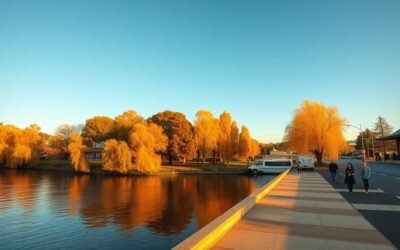
Autumn is widely considered the premier time to experience the Arboretum. As temperatures cool across the Australian Capital Territory, the deciduous forests—particularly the European Birch, Japanese Maple, and Chinese Larch—transform into vibrant hues of orange, amber, and gold.
Weather: Expect daytime highs ranging from 16°C to 24°C (61°F–75°F) with minimal rainfall, clear blue skies, and light winds. Nights cool down quickly, dropping to 3°C–8°C (37°F–46°F), so carrying an extra layer for late afternoon visits is recommended.
Crowds & Timing: Visitor numbers peak during weekends in April and during the two-week ACT school holiday period. Surrounding events like the Canberra Balloon Spectacular and Enlighten Festival in March also draw significant numbers. Arrive on weekday mornings or after 3:30 PM to enjoy uninterrupted photo opportunities.
Costs: Ground admission remains completely free. Citywide accommodation rates can rise during March and April festival weekends, making advance lodging reservations advisable.
Pro Tip: Head directly to the Forest of Golden Sunburst (Forest 42) and Dairy Farmers Hill Lookout in late April for panoramic 360-degree views of Canberra framed by peak autumn foliage.
Spring (September to November) – Best for Blossoms and Active Walks
Spring revitalizes the amphitheatre and forests with fresh canopy growth, flowering native shrubs, and extended daylight hours. It is an ideal window for hiking the longer arboretum trails, including the Himalayan Cedar Forest circuit.
Weather: Spring brings gradual warming, with daytime temperatures averaging 16°C to 23°C (61°F–73°F). However, Canberra’s spring can be gusty, and occasional southern cold fronts can cause sudden 10-degree drops in temperature. Light rain showers occur intermittently across October and November.
Crowds & Timing: Spring is exceptionally busy due to Canberra’s flagship flower festival, Floriade (mid-September to mid-October). The Village Centre, Pod Playground, and central car parks see heavy family traffic between 10:00 AM and 2:00 PM on weekends.
Costs: Entry is free. Citywide accommodation is at its annual peak pricing during Floriade; travelers planning overnight stays should secure bookings months in advance.
Summer (December to February) – Best for Early Mornings and Events
Canberra summers bring long daylight hours, open-air kite flying, and outdoor amphitheater gatherings. However, summer temperatures can be demanding for long uphill hikes.
Weather: Average daytime temperatures range from 27°C to 30°C (81°F–86°F), with frequent heatwaves pushing temperatures past 38°C (100°F). UV ratings are consistently extreme, and humidity is low. The open, young forests offer limited canopy shade along several exterior trails.
Crowds & Timing: School holidays running from late December through January bring heavy midday use of the shaded Pod Playground and air-conditioned Village Centre. Outdoor trails remain quiet during the heat of the day.
Costs: Arboretum costs remain unchanged. Flights and accommodation across Canberra are often competitively priced outside of major sporting events and parliamentary sitting weeks.
Warning: During periods of Extreme or Catastrophic fire danger, the National Arboretum Canberra closes its grounds entirely to protect public safety. Always check the ACT Emergency Services Agency (ESA) alerts before visiting on high-temperature summer days.
Winter (June to August) – Best for Quiet Solitude and Clear Vistas
Winter at the Arboretum offers stark, sculptural tree lines, snow-dusted views of the distant Brindabella Ranges, and peaceful walking tracks free from crowds.
Weather: Crisp, cold, and dry conditions prevail. Daily maximums average 11°C to 13°C (52°F–55°F), while overnight and early morning temperatures frequently dip below 0°C (32°F), creating heavy ground frosts. Days are typically sunny with deep blue skies and gentle breezes.
Crowds & Timing: Winter sees the lowest visitor traffic of the entire year. You will often have entire forest trails completely to yourself, particularly during weekday mornings.
Costs: Winter is off-peak for general Canberra tourism. Hotel rates are lower, making this the most budget-friendly season for interstate travelers.
Month-by-Month Guide: National Arboretum Canberra
Use this comprehensive 12-month guide to balance seasonal climate conditions, foliage stages, and expected visitor density across the site.
| Month | Avg Temp (°C / °F) | Crowd Level | Seasonal Highlight |
|---|---|---|---|
| January | 14°C–29°C (57°F–84°F) | High (Playground/Holidays) | Early morning hill walks, kite flying on the amphitheatre lawn |
| February | 13°C–28°C (55°F–82°F) | Moderate | Warm twilight picnics, panoramic sunset photography |
| March | 11°C–25°C (52°F–77°F) | Moderate to High | Early foliage turning, Canberra Balloon Spectacular mornings |
| April | 7°C–20°C (45°F–68°F) | High (Peak Foliage) | Vibrant autumn foliage across the birch and maple groves |
| May | 3°C–16°C (37°F–61°F) | Moderate | Late golden canopies, crisp morning walks, warm indoor cafe views |
| June | 1°C–12°C (34°F–54°F) | Low | Tranquil trails, bare architectural tree shapes, Bonsai Pavilion |
| July | 0°C–11°C (32°F–52°F) | Lowest | Frosted morning valley landscapes, snow-capped Brindabella peaks |
| August | 1°C–13°C (34°F–55°F) | Low | Early budding magnolias, crisp sunny afternoons |
| September | 4°C–17°C (39°F–63°F) | Moderate to High | Flowering wattles, start of Floriade tourism season |
| October | 7°C–20°C (45°F–68°F) | High (Spring Peak) | Fresh emerald canopies, mild hiking weather, blossom displays |
| November | 10°C–23°C (50°F–73°F) | Moderate | Lush grass valleys, active birdwatching, outdoor guided walks |
| December | 12°C–27°C (54°F–81°F) | Moderate to High | Summer twilight events, early morning forest trail runs |
“With 94 living forests cultivated across 250 hectares, the National Arboretum Canberra offers one of the most biodiverse conservation collections in the Southern Hemisphere.”
Optimizing Your Visit for Crowds
Because the Arboretum is an expansive outdoor park, it rarely feels congested across the outer forests. However, hubs like the Village Centre, Pod Playground, and main car parks experience distinct rush hours.
Weekday Mornings (9:00 AM to 11:30 AM)
Weekday mornings outside of school holidays are the optimal window for peaceful exploration. Arriving right as the Village Centre opens allows you to browse the National Bonsai and Penjing Collection in near silence and secure premium parking spaces without queuing.
Late Afternoons and Golden Hour
Visiting two hours before sunset provides exceptional lighting conditions for landscape photography. The sun dips behind the Brindabella Mountain Range, casting golden light across the Western amphitheater and Central Valley. Day-trip bus tours and school groups depart by 3:00 PM, leaving the tracks quiet.
Weekends, Public Holidays, and Major Events
If visiting on a weekend or public holiday, head directly to the outer edges of the park. The Himalayan Cedar Forest (Forest 11), Cork Oak Forest (Forest 1), and Dairy Farmers Hill remain peaceful even when the central Pod Playground operates at maximum capacity.
Managing Your Budget and Parking Fees
A visit to the National Arboretum Canberra is one of the most cost-effective sightseeing experiences in the capital.
Entry Fees and Free Exhibits
General entry to the National Arboretum Canberra is 100% free. Visitors can access all 94 forests, walking and cycling trails, picnic areas, the Pod Playground, and the world-class National Bonsai and Penjing Collection without purchasing an admission ticket.
Parking Costs
Paid parking applies at the main Village Centre car park and the Dairy Farmers Hill car park between 9:00 AM and 4:00 PM daily. Rates are calculated as follows:
- Hourly Rate: Approximately $3.40 per hour.
- Daily Maximum: Approximately $14.00 for all-day parking.
- Payment Methods: Automated ticket machines accept credit/debit cards, and mobile payments can be completed through the EasyPark app. Free overflow parking is designated during special events.
Food and Dining Options
Visitors can choose between on-site dining and scenic self-catered picnics:
- Sprout Cafe: Located in the Village Centre, serving specialty barista coffee, artisan sandwiches, pastries, and casual takeaway lunch items.
- The Ginger Catering Conservatory Restaurant: Offers seated formal dining featuring seasonal, locally sourced produce from the Canberra cool-climate wine region.
- Self-Catered Picnics: Picnicking is encouraged throughout the grounds. Free electric barbecues and picnic tables are located at the Margaret Whitlam Pavilion precinct and the Himalayan Cedar picnic area.
The Curatoreum Gift Shop
Located inside the Village Centre, The Curatoreum offers an extensive collection of botanical literature, bespoke jewelry, local cool-climate pantry goods, and artisanal homewares for those seeking high-quality Australian souvenirs.
Must-Do Highlights in Any Season
Regardless of what month you visit, several permanent features make the Arboretum a standout destination year-round.
1. Explore the 100 Forests
Wander through forests of rare, threatened, and culturally symbolic trees. Standout forest walks include:
- Himalayan Cedar Forest (Forest 11): The oldest forest on site, planted in 1917, featuring towering mature conifers and shaded timber boardwalks.
- Cork Oak Forest (Forest 1): Planted between 1917 and 1920 with acorns sourced from Spain, offering a tranquil woodland path.
- Southern Tablelands Ecosystems Park (STEP): A dedicated conservation space showcasing regional native eucalypts, shrubs, and wildflowers.
2. The Pod Playground
Consistently recognized as one of Australia’s most imaginative children’s play spaces, the Pod Playground features giant acorn-shaped timber cubbies linked by elevated rope tunnels, spiral slides, and dedicated toddler play bays.
3. National Bonsai and Penjing Collection
Housed in an open-air pavilion adjoining the Village Centre, this world-class living art gallery showcases over 100 meticulously styled miniature trees, including native Australian species like Banksias and Paperbarks alongside traditional Japanese Maples and Pines.
4. Dairy Farmers Hill Lookout
Providing one of the highest vantage points in Canberra, Dairy Farmers Hill offers unobstructed 360-degree panoramic views of Lake Burley Griffin, Parliament House, Black Mountain Tower, and the rolling Brindabella Ranges. It is home to the iconic bronze *Nest III* eagle sculpture.
5. Guided Walks and Coach Tours
Volunteer guides lead daily walks and scenic shuttle bus tours exploring the history, landscape design, and botanical importance of the site. Bookings can be made at the Village Centre information desk for a nominal fee.
Practical Visitor Tips
Keep these practical tips in mind to maximize your comfort during your visit:
- Footwear: Wear sturdy, enclosed walking shoes. While main thoroughfares around the Village Centre are paved and wheelchair accessible, forest tracks consist of gravel, packed dirt, and uneven grass.
- Layered Clothing: Canberra’s elevation (approx. 600m above sea level) means mornings and late afternoons are significantly cooler than midday. Bring a windproof jacket or fleece.
- Sun Protection: The open amphitheater and young forest tracks have limited canopy shade. Carry SPF 50+ sunscreen, sunglasses, and a broad-brimmed hat year-round.
- Hydration: Free water bottle refill stations are located in the Village Centre and at the Himalayan Cedar picnic area. Carry a reusable bottle on extended hikes.
- Check Operating Hours: Confirm daily operational notices on the official website before traveling, as severe weather or private events can occasionally alter venue opening hours.
Note: Dogs on leashes are permitted on all outdoor forest tracks and paved pathways, but they are not permitted inside the Village Centre, Pod Playground, or Bonsai Collection.
Frequently Asked Questions
What is the best time of year to visit the National Arboretum Canberra for weather?
Autumn (March to May) and spring (September to November) offer the most pleasant weather conditions, with average daytime temperatures between 16°C and 24°C (61°F–75°F), low rainfall, and clear skies ideal for outdoor walking.
When is the National Arboretum Canberra least crowded?
The Arboretum is quietest on weekday mornings between 9:00 AM and 11:30 AM outside of school holidays. Seasonally, the winter months of June, July, and August see the fewest visitors.
When is the National Arboretum Canberra most crowded?
The Arboretum experiences peak crowd levels on weekends and public holidays during autumn (April foliage) and spring (September–October during the Floriade festival), as well as summer school holidays at the Pod Playground.
Are there admission fees to enter the National Arboretum Canberra?
General admission to the Arboretum grounds, forests, and the National Bonsai and Penjing Collection is free. Paid parking applies at the Village Centre and Dairy Farmers Hill car parks ($3.40/hr or $14/day max).
What are the peak blooming and foliage seasons at the Arboretum?
Autumn (April to early May) is the peak season for vibrant golden and red leaf displays in the deciduous forests. Spring (late September through October) is the peak blooming season for native Australian wattles, wildflowers, and flowering magnolias.
Sources
- National Arboretum Canberra Official Site — Operating hours, forest collections, and visitor guidelines.
- Bureau of Meteorology (BOM) Canberra Climate Statistics — Historical climate data, monthly averages, and seasonal rainfall records.
- VisitCanberra Tourism Authority — Seasonal event schedules, Floriade details, and regional travel planning.
- ACT Emergency Services Agency — Fire danger ratings, Total Fire Ban regulations, and park closure protocols.