The best time to visit the Netherlands depends on whether you want tulip fields, warm canal evenings, or a quieter city break. Spring flowers draw big crowds, while autumn often offers better value. This guide compares the seasons using official climate averages, confirmed event dates, and practical booking advice. Knowing the best time to visit Netherlands helps you plan around weather, crowds, and budget.
Quick Answer
May, June, and September are excellent months to visit the Netherlands for mild weather and a mix of sightseeing and outdoor activities. Choose mid-April for tulips, July or August for major festivals, October for cultural events, and January or February for a generally quieter, cheaper city break. Expect some rain in every season.
Last checked: November 15, 2026. Dates and figures were verified against official sources.
Key Takeaways
- Keukenhof opens March 18–May 9, 2027, but outdoor tulip fields usually look their best around mid-April.
- The April 17 flower parade, April 27 King’s Day, and April 24–May 2 school holiday make late April especially busy.
- July and August bring summer festivals, warmer weather, and school-holiday demand. Book popular stays and attractions early.
- September is a strong alternative to summer, although October events can still fill local hotels.
- Winter offers museums and atmospheric markets, but outdoor ice skating depends on conditions.
The Netherlands Weather at a Glance
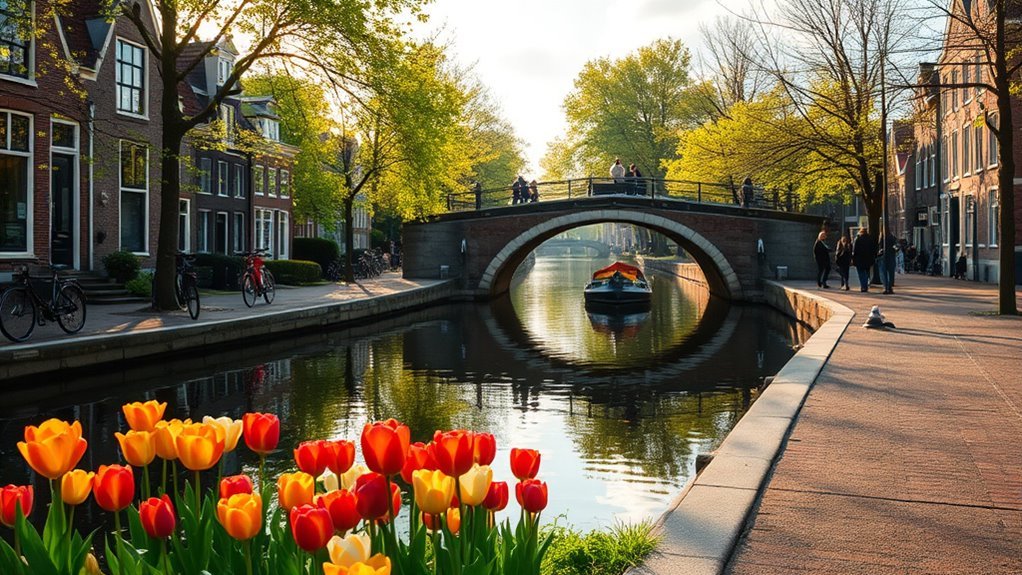
The Netherlands has a temperate maritime climate. The North Sea helps moderate temperatures, but rain, wind, and cloud cover are possible throughout the year. Spring brings flowers, summer brings long evenings, autumn brings colorful canals, and winter brings short, often damp days.
The monthly figures below are 1991–2020 mean temperatures for De Bilt, the Dutch national weather service KNMI’s reference station. They are averages across day and night, not predicted daytime highs. Coastal cities and individual travel dates can feel different. Data: KNMI monthly climate records.
| Month | Mean °C at De Bilt | Main appeal | Typical visitor demand |
|---|---|---|---|
| January | 3.6 | Quieter museums | Generally low |
| February | 3.9 | Low-season city breaks | Generally low |
| March | 6.5 | Early bulbs, longer days | Low to moderate |
| April | 9.9 | Tulips and King’s Day | Very high around events |
| May | 13.4 | Late spring gardens, cycling | Moderate; busy on holidays |
| June | 16.1 | Canals, terraces, cycling | Moderate to high |
| July | 18.2 | Beach days, festivals | High |
| August | 17.8 | Pride, festivals, coast | High |
| September | 14.7 | Museums and cycling | Moderate |
| October | 10.9 | Autumn color and design | Moderate; event spikes |
| November | 7.0 | Museums, late-autumn cafés | Generally low |
| December | 4.2 | Festive markets, light art | Mixed; holiday spikes |
Visitor demand is a planning guide, not a measured national crowd index. Amsterdam’s busy weekends, school breaks, and local festivals can make a typically quiet month feel crowded. Pack a waterproof layer even in summer; for cycling, wind can matter as much as temperature.
Spring in the Netherlands: Tulips, Crowds, and Keukenhof Timing
Mid-April is usually the best bet for outdoor tulip fields. March can offer crocuses, daffodils, and hyacinths, while early May can still bring late flowers. The peak shifts with weather, so no single week is guaranteed.
For 2027, Keukenhof in Lisse opens from March 18 to May 9. Its displays are planted for a longer season than many commercial fields. Visit for tulips, spring cycling, and King’s Day celebrations, but expect substantial demand around major events.
When Is Peak Tulip Season?
The familiar stripes of tulip fields tend to be brightest around mid-April. The timing varies by variety and spring temperatures, so the gardens and open fields do not always peak together.
- Late March to early April: Crocuses, daffodils, hyacinths, and some early tulips.
- Mid-April: Usually the strongest window for tulip-field photography in the Bollenstreek bulb region.
- Late April to early May: Later tulips may remain, although growers can remove flower heads as part of bulb cultivation.
You can see flowers around Lisse, Noordwijk, the Kop van Noord-Holland, and Flevoland. The Netherlands tourism board’s tulip guide explains the different growing regions and seasonal patterns.
The Bollenstreek Flower Parade is April 17, 2027, traveling from Noordwijk toward Haarlem. The organizers describe a 42-kilometer procession; roadside viewing is free along much of the route, while grandstand seating is paid. The illuminated parade takes place on April 16. See the official 2027 flower parade program.
How to Visit Keukenhof Without the Worst Crowds
Keukenhof is a paid 32-hectare (about 79-acre) spring garden at Stationsweg 166A, Lisse. Around seven million bulbs are planted there each year. In 2027, it opens daily from 8 a.m. to 7 p.m., with last admission at 6:15 p.m. Its own advice identifies before 10:30 a.m. and after 4 p.m. as relatively quiet times, especially on Mondays through Wednesdays.
Buy timed tickets through the official Keukenhof website. Consider a bus-and-entry combination ticket if you are not driving. The outdoor gardens reward a slow walk, comfortable shoes, and a little flexibility if rain arrives.
| Time Slot | Crowd Level | Best Use of Time |
|---|---|---|
| 8–10 AM | Usually quieter | Tulip photos in soft morning light |
| 11 AM–2 PM | Often busiest | Indoor flower pavilions and a meal break |
| 3–5 PM | Often easing after 4 PM | Garden paths and late-afternoon photos |
Flowers do not change by time of day, so plan around light and visitor flow rather than expecting certain varieties at certain hours. Early and late visitors may find it easier to photograph beds without large groups.
How Can You Avoid Spring Crowds?
Spring crowding is highest around tulip weekends, major holidays, and Amsterdam events. Weekday flower trips and smaller towns can offer more space without giving up the scenery.
- Cycle the Bollenstreek flower route or explore tulip-growing areas in Flevoland and Noord-Holland away from the busiest gates.
- Plan busy Amsterdam attractions for prebooked time slots rather than turning up without a ticket.
- Remember that King’s Day is Tuesday, April 27, 2027. The nationwide May school holiday runs April 24–May 2 that year, so hotels and trains may be busy across that period.
Warning: Do not step into commercial tulip fields for photos. The fields are private working farmland, and walking among bulbs can damage crops or spread disease. Photograph them from public paths or use farms that welcome visitors.
If you prefer a calmer flower trip, consider an early weekday in April rather than the parade weekend or King’s Day itself.
Summer in the Netherlands: Crowds, Costs, and Canal Weather
June through August brings the warmest weather, long daylight hours, and outdoor café life. It is an excellent season for canal cruises, cycling, coastal beaches, and music festivals. However, July and August often bring higher hotel demand and long attraction queues.
The KNMI monthly means for De Bilt are 16.1°C in June, 18.2°C in July, and 17.8°C in August. Daytime temperatures are often higher, but rain and windy spells remain possible. June offers especially long evenings, with daylight stretching toward 10 p.m.
Named summer events worth considering include:
- Vierdaagsefeesten, Nijmegen: July 17–23, 2027. Its street festival is largely free to attend, although some activities require tickets. See the festival’s 2027 schedule.
- Pride Amsterdam: July 31–August 8, 2027, with the Canal Parade on August 7. The official Pride Amsterdam program provides the dates and event details.
- Coastal and city days: Try beaches near The Hague, cycling around Haarlem, or canal-side evenings in Utrecht and Leiden.
For 2027, Dutch school summer holidays start on different dates by region, beginning as early as July 10 and ending as late as September 5. This creates a long stretch of family travel. If Amsterdam accommodation is expensive, compare Haarlem, Leiden, or Utrecht as possible bases, including the train cost and travel time.
Fall in the Netherlands: Shoulder-Season Perks and What to Expect
September and October are strong choices for travelers who want culture without summer’s peak demand. The canals look beautiful with autumn leaves, and museums, markets, and cafés remain lively. November is cooler, darker, and often quieter.
Hotel prices can improve after summer, but major event weeks still create local spikes. Autumn is not one uniform low season: September is often mild, October hosts cultural events, and November shifts toward indoor sightseeing.
What Is Fall Weather Like?
At De Bilt, the monthly means fall from 14.7°C in September to 10.9°C in October and 7.0°C in November. Expect an increasing chance of cold wind, rain, and shorter daylight hours as autumn progresses.
- September: A good mix of cycling, canal walks, and cultural sightseeing.
- October: Autumn foliage, moody skies, and events such as Dutch Design Week in Eindhoven, October 23–31, 2027, according to Dutch Design Week.
- November: A quieter period for museums, bookshops, and cozy cafés; pack layers for damp weather.
Are Museums and Attractions Quieter in Fall?
Many busy attractions feel more relaxed after the summer rush, especially on weekdays. You can spend more time in the Rijksmuseum, wander Leiden’s bookshop-lined streets, or visit Gouda and the windmills at Kinderdijk without building the whole day around peak-season crowds.
But fewer visitors do not mean that every museum accepts walk-ins. The Anne Frank House sells only timed online tickets, released on Tuesdays for visits six weeks later. Reserve it regardless of when you travel.
How Much Can You Save in Fall?
September and October can offer better hotel value than midsummer, especially outside festival weekends. There is no dependable nationwide percentage discount, though: rates vary by city, property, and date.
- Accommodation: Compare the same hotel and room type across weekdays and weekends. Check Eindhoven dates separately during Dutch Design Week.
- Attractions: Museum admission is generally not cheaper just because it is autumn. Free walks, markets, and public parks can lower your daily spend.
- Transportation: Do not assume train fares drop with the season. Look for advance or off-peak offers that apply to your route and time.
Autumn is especially appealing if you want a slower trip built around museums, local food, markets, and easy day trips rather than flower-field photos.
Is Winter a Good Time to Visit the Netherlands?
Yes, especially for city breaks, museums, and cozy cafés. Winter lasts from December through February and is often quieter outside the Christmas and New Year period. It is less suitable if your main goal is long days of cycling or flower fields.
At De Bilt, mean temperatures are 4.2°C in December, 3.6°C in January, and 3.9°C in February. Strong winds can make it feel colder. Snow may occur, but frozen canals and natural ice skating are not reliable travel plans.
| Aspect | Winter Reality |
|---|---|
| Temperatures | Mean 3.6–4.2°C at De Bilt, December–February |
| Crowds & Cost | Often quieter and cheaper, except around major holidays |
| Winter Activities | Museums, holiday markets, indoor or temporary ice rinks |
One highlight is Amsterdam Light Festival. Its 2026–27 edition runs November 26, 2026–January 17, 2027, with light artworks along the canals. See the official festival dates and hours for the walking route and cruises. Some street displays can be viewed from public spaces, while official guided experiences and cruises are paid.
Festive markets and lights add atmosphere in December. Still, the holiday weeks are an exception to winter’s usual low-season feel, so book popular hotels and activities early for those dates.
Best Time to Visit the Netherlands by Trip Type
Different trips call for different dates. Choose the season that fits your main activity, not simply the warmest average temperature.
- Tulip photography and flower gardens: Mid-April for open fields; late March through early May for Keukenhof’s wider bloom season.
- First trip, couples, and family city breaks: May, June, or September for a useful balance of weather and activities.
- Cycling, beaches, and solo adventure: June through August for longer days, with July and August busier.
- Art, museums, and food: September or October for city sightseeing and autumn events.
- Low-budget cultural travel: January or February, when demand often falls outside major events.
For a romantic canal walk, Haarlem and Leiden can feel more relaxed than central Amsterdam. For families, pick fewer stops each day and leave room for weather changes. For a summer festival trip, book the event city first rather than assuming nearby rooms will remain affordable.
When Are the Netherlands Most Crowded?
The busiest travel windows are usually mid-to-late April and July–August, though crowding differs by destination. Amsterdam has year-round demand, while flower-growing towns become especially busy during the tulip season.
The most relevant confirmed dates for planning around 2027 are April 17 (flower parade), April 27 (King’s Day), April 24–May 2 (national May school holiday), and the July–August event period. The Dutch government’s 2027 public holiday list also places Liberation Day on May 5 and Ascension Day on May 6.
The 2026–27 school holiday calendar shows different summer dates for the north, central, and south regions. The April–May school break overlaps King’s Day and the end of Keukenhof’s season, while summer holidays extend into early September in the south.
For a quieter visit, consider March before the main tulip rush, a June weekday, or September after the busiest summer weeks. Early morning and late-afternoon museum slots can also help, but book entry rather than relying on a short queue.
The Cheapest Time to Visit the Netherlands
January and February are often the cheapest months for hotel stays and flights, especially for midweek city breaks. November and early December can also offer value, but festive events and holiday dates may raise prices.
Lower demand does not guarantee a fixed 30–50% discount. Compare total costs, including flights, accommodation, transport, and tickets, before deciding which dates are truly cheapest for you.
- Accommodation: Search outside major events and holiday weekends; try a weekday stay.
- Flights: Compare departures across several days instead of locking onto a weekend.
- Sightseeing: Spend more time in museums and free public spaces, and plan rainy afternoons around indoor options.
If you can handle short, gray days, winter can be a rewarding time to see Dutch cities at a slower pace. If outdoor activities matter more, September may justify a higher travel budget.
So When Is the Best Time to Visit the Netherlands?
For most first-time visitors, May, June, and September offer the best overall balance. April wins for tulips and King’s Day, while summer is strongest for festivals and the coast. Autumn suits museum lovers, and winter suits quieter cultural trips.
One common mistake is assuming April must be cheaper because it is cooler than July. The tulip season and public holidays can make spring accommodation expensive. Another is expecting every October weekend to be quiet; major cultural events can attract crowds.
Pick your main reason for visiting first. Then check whether your travel dates overlap the named events above and choose a base that makes your priority easy to reach.
Best Time To Visit Netherlands: Frequently Asked Questions
Do I Need a Visa to Visit the Netherlands?
It depends on your nationality and travel documents. The Netherlands is part of the Schengen Area; some visitors are visa-exempt, while others need a short-stay visa. A typical short visit is limited to 90 days within a 180-day period. Check your circumstances before booking through the Dutch government’s visa guidance.
What Currency Is Used in the Netherlands?
The Netherlands uses the euro (€). Cards are common in Dutch cities, but carrying a small amount of cash can be useful at markets or smaller businesses. Check your card’s foreign transaction fees and the exchange rate before traveling.
Is English Widely Spoken in the Netherlands?
Yes. English is widely spoken in major Dutch cities, tourist areas, museums, and hotels. You can usually handle ordinary travel tasks in English, although a few Dutch words can be helpful in smaller towns and local shops.
What Vaccinations Do I Need Before Visiting the Netherlands?
Make sure your routine vaccines are current before visiting the Netherlands. The CDC recommends reviewing vaccines such as measles, tetanus, influenza, and hepatitis vaccines based on your age and circumstances. No yellow fever vaccination is required for entry. See the CDC Netherlands travel health guidance. A travel health professional can review your medical history and itinerary.
Can I Drink Tap Water Safely in the Netherlands?
Yes. Public tap water in the Netherlands is generally safe to drink. Amsterdam’s water supplier confirms that its tap water meets strict quality requirements. Bring a reusable bottle to save money and reduce plastic waste.
When Do Tulips Bloom in the Netherlands?
Tulips generally bloom from late March into early May, with many open fields at their best around mid-April. The precise peak depends on weather, and flower farms may remove the blooms before the season ends. Keukenhof’s 2027 opening dates are March 18 through May 9.
Does It Snow in the Netherlands?
Yes, snow is possible in winter, but it is not dependable. Dutch winters are often damp and windy rather than continuously snowy. If you want to ice skate, look for a maintained indoor or temporary rink instead of planning around frozen canals.
Is September a Good Time to Visit the Netherlands?
Yes. September is one of the most flexible months for sightseeing, cycling, and canal walks. The mean temperature at De Bilt is 14.7°C, and the busiest summer weeks have usually passed. Weekend prices and crowds can still vary by city and event.
Conclusion
The best season is the one that matches what you want to do. Book mid-April for tulips, May or September for a balanced first visit, and winter for quieter museums. Once you choose a season, plan around the events and school breaks that can change local prices and crowds.
Sources
- KNMI monthly climate records: 1991–2020 mean temperatures for De Bilt and seasonal conditions
- Netherlands Board of Tourism: Tulip timing and bulb-growing regions
- Bloemencorso Bollenstreek: 2027 flower parade dates, route and viewing
- Keukenhof: 2027 opening season, hours and visitor advice
- Vierdaagsefeesten: Nijmegen festival dates and free entry
- Pride Amsterdam: 2027 festival and canal parade dates
- Dutch Design Week: 2027 Eindhoven festival dates
- Anne Frank House: Required online time-slot tickets and release schedule
- Amsterdam Light Festival: 2026–27 winter event dates, lights and routes
- Government of the Netherlands: 2027 official public holiday dates
- Government of the Netherlands school holidays: 2026–27 school holidays by region
- NetherlandsWorldwide: Nationality-based entry and visa requirements
- CDC Travelers’ Health: Vaccine recommendations and yellow fever entry policy
- Waternet: Dutch drinking-water safety