Wondering about the best time to visit Utah? For most travelers, late spring (April–May) and early fall (September–October) offer a great balance of comfortable weather and outdoor activities. These months are especially appealing if you want to explore Utah’s national parks without the intense summer heat. However, the ideal time depends on whether you’re planning to hike through red-rock canyons, enjoy fall colors, spend time on Lake Powell, or hit the ski slopes.
Quick Answer
The best time to visit Utah is generally April–May or September–October. These months offer favorable hiking conditions across southern Utah’s national parks. Visit from December through March for skiing, late September through October for fall foliage, or summer for mountain activities and Lake Powell. Weather, crowds, and prices vary considerably by destination.
Key Takeaways
- Best overall: April, May, September, and October offer favorable conditions for many Utah activities.
- Best for national parks: Spring and fall provide more comfortable hiking temperatures, although popular parks can still be crowded.
- Best for skiing: December through March, depending on snowfall and resort operations.
- Best for fall colors: Late September through October, with timing varying by elevation.
- Best for summer escapes: Higher-elevation destinations offer relief from southern Utah’s extreme desert heat.
- Important for 2026: Arches does not require advance timed-entry reservations, and national park pass prices differ for U.S. residents and nonresidents.
1. Utah’s Seasons: Weather, Crowds, and Costs
Utah experiences four distinct seasons, but its weather varies dramatically between southern desert landscapes and northern mountain destinations.
For example, Zion National Park can have warm hiking weather while Bryce Canyon, at a much higher elevation, still has snow and freezing nights. Salt Lake City and the Wasatch Mountains also follow different seasonal patterns from Moab and Lake Powell.
Here is what you can generally expect throughout the year.
1.1 Spring (March–May)
Spring is one of the most popular times to explore southern Utah. March can still feel like winter, especially at higher elevations, but April and May bring warmer temperatures and longer days.
- Weather: Southern desert parks often experience comfortable daytime temperatures, although nights can remain cold. Higher elevations may still receive significant snowfall.
- Crowds: Moderate to high in popular hiking destinations. Spring break, Easter, and holiday weekends can be particularly busy.
- Costs: Variable. Flights and accommodations may be less expensive than during some peak travel periods, but popular gateway towns can charge premium rates during spring.
- Best activities: Desert hiking, scenic drives, wildflower viewing, photography, and national park exploration.
Wildflowers begin appearing in some lower-elevation areas during spring, although bloom timing depends on rainfall, temperature, and elevation.
April and May are particularly appealing for Zion, Arches, Canyonlands, and Capitol Reef. Bryce Canyon may still require winter clothing and extra care on icy trails.
Note: Spring is not automatically the best time for every Zion hike. Snowmelt can raise water levels in The Narrows and temporarily close the route. Always check current river conditions before planning a river hike.
1.2 Summer (June–August)
Summer brings long daylight hours and excellent opportunities for mountain recreation, but it can also produce dangerous heat in Utah’s southern desert parks.
- Weather: Southern Utah frequently experiences temperatures in the 90s°F, with some areas exceeding 100°F. Mountain destinations are generally cooler.
- Crowds: High at many national parks, lakes, and family vacation destinations.
- Costs: Often high around popular vacation destinations, especially Lake Powell and major summer recreation areas.
- Best activities: Mountain hiking, camping, boating, scenic drives, and water sports.
July and August also bring increased thunderstorm activity to many parts of Utah. These storms can cause flash floods in narrow canyons and dry washes.
For desert sightseeing, start early in the morning and schedule indoor activities or rest during the hottest part of the day.
Warning: Summer heat can make strenuous desert hiking dangerous. According to the National Park Service, temperatures at Arches often exceed 100°F in July and August. Carry adequate water, wear sun protection, and avoid strenuous hikes during peak afternoon heat. Check the official Arches safety guidance before visiting.
1.3 Fall (September–November)
Fall is another excellent season for Utah travel. As temperatures decrease, desert hiking becomes more comfortable and the state’s forests begin displaying autumn colors.
- Weather: September may remain hot in southern Utah. October generally brings cooler days and increasingly cold nights.
- Crowds: Popular hiking areas can remain busy throughout September and October. Visitation typically decreases as November approaches.
- Costs: Often moderate, although popular fall destinations and holiday weekends may have expensive accommodations.
- Best activities: National park hiking, scenic photography, fall foliage drives, and outdoor sightseeing.
Fall colors usually begin appearing at higher elevations before spreading into lower valleys. Late September and early October are popular periods for the Wasatch Mountains, the Alpine Loop, and the Uinta Mountains.
By November, snow and ice may affect mountain roads and hiking trails.
Pro Tip: If you want to combine autumn colors with southern Utah’s red-rock scenery, consider traveling in late September or early October. Plan mountain drives earlier in the trip and leave flexibility for changing weather conditions.
1.4 Winter (December–February)
Winter transforms Utah into a major skiing and snowboarding destination.
Mountain resorts can receive substantial snowfall, while southern national parks become quieter and offer a different kind of scenery.
- Weather: Cold and snowy in the mountains. Southern desert areas are generally milder during the day, but freezing nights, snow, and ice remain possible.
- Crowds: High at popular ski resorts during holidays and busy weekends. Many southern park areas experience lighter visitation.
- Costs: Often high at ski resorts, particularly during holiday periods. Some southern Utah accommodations may offer better value.
- Best activities: Skiing, snowboarding, snowshoeing, winter photography, and quieter national park sightseeing.
Park City, Alta, Snowbird, Solitude, Brighton, and Brian Head are among Utah’s well-known winter recreation destinations.
Winter can also be a beautiful time to see snow covering the hoodoos at Bryce Canyon or contrasting with the red cliffs at Zion.
However, shorter daylight hours and icy roads require more careful trip planning.
2. Best Time to Visit Utah by Activity
If you have a specific activity in mind, choosing your travel dates becomes much easier.
| Activity | Recommended Time |
|---|---|
| National park sightseeing | April–May and September–October |
| Desert hiking | Spring and fall |
| Mountain hiking | June–September, depending on snow conditions |
| Skiing and snowboarding | December–March, depending on resort operations |
| Fall foliage | Late September–October |
| Lake Powell boating | Late spring–early fall, with summer popular for water sports |
| Desert photography | Year-round; spring and fall offer comfortable outdoor conditions |
| Quieter southern park visits | November–February, outside major holidays |
The best month for one activity may be unsuitable for another. For example, May is often appealing for desert hiking, but snow can still limit access to some high mountain trails.
3. National Parks: When to Explore Utah’s Mighty 5
Utah’s Mighty 5 national parks—Zion, Bryce Canyon, Arches, Canyonlands, and Capitol Reef—are major reasons travelers visit the state.
Although spring and fall generally provide favorable hiking weather, each park has different elevations, weather patterns, and access requirements.
3.1 Zion National Park
Best overall time: Late March–early May and late September–October.
Zion’s dramatic sandstone cliffs and canyon trails are particularly appealing in spring and fall, when temperatures are usually more comfortable than during peak summer heat.
- Spring: Pleasant hiking conditions at lower elevations, although snowmelt can affect river activities.
- Summer: Very hot, with busy shuttle stops and popular trails. Afternoon thunderstorms can create dangerous flash-flood conditions.
- Fall: Comfortable hiking weather and changing foliage, with popular trails remaining busy.
- Winter: Quieter conditions, occasional snow, icy trails, and shorter daylight hours.
Zion Shuttle and Hiking Permits
During the operating season, Zion’s shuttle system provides access to the Zion Canyon Scenic Drive. Private vehicles generally cannot use that road while the shuttle system is operating.
No advance reservation is required to ride the park shuttle or enter Zion, although regular park entrance fees apply.
The shuttle schedule changes seasonally, and service may also operate during selected winter holiday periods. Review the official Zion shuttle information before your trip.
Angels Landing: A permit is required for the permitted section of the hike, including the famous chain section. Walking to Scout Lookout does not require an Angels Landing permit.
Check the official Angels Landing permit information before choosing your travel dates.
When Is the Best Time to Hike The Narrows?
The best season for general Zion hiking is not necessarily the best season for hiking The Narrows.
Summer and early fall often provide more favorable river temperatures and lower water levels, but flash flooding remains possible.
Spring snowmelt can make the river too deep or fast for safe hiking. Winter water temperatures can also be dangerously cold.
The National Park Service closes The Narrows when the Virgin River exceeds 150 cubic feet per second or when a Flash Flood Warning is issued.
Check the official Narrows conditions and hiking guidance before entering the river.
The standard bottom-up day hike from the Temple of Sinawava does not require a wilderness permit. Other routes may have separate permit requirements.
3.2 Bryce Canyon National Park
Best overall time: Late April–early June and September–early October, depending on snow conditions.
Bryce Canyon sits at a much higher elevation than Zion and many other southern Utah destinations. As a result, it experiences cooler summers and more winter weather.
- Spring: Cool conditions, possible snowfall, and freezing nights.
- Summer: Pleasant daytime temperatures compared with lower desert parks, although thunderstorms and crowds are common.
- Fall: Comfortable hiking conditions early in the season, with increasingly cold nights.
- Winter: Snow-covered hoodoos create striking scenery, but icy trails and seasonal road restrictions can affect access.
According to the National Park Service weather guidance, Bryce Canyon can experience snowstorms during spring and fall. From October through May, temperatures commonly fall below freezing at night.
Winter visitors can enjoy activities such as snowshoeing and cross-country skiing when conditions permit.
Check trail and road conditions before traveling, especially after a snowstorm.
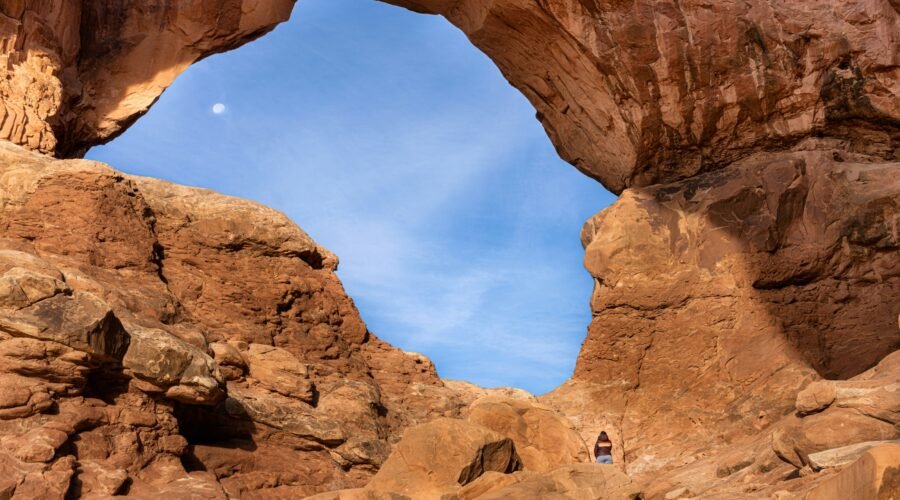
3.3 Arches and Canyonlands National Parks
Best overall time: Late March–early May and mid-September–October.
Arches and Canyonlands are located near Moab and experience similar high-desert conditions.
Spring and fall generally provide the most comfortable temperatures for exploring exposed trails, viewpoints, and sandstone landscapes.
- Spring: Popular hiking weather, with busy weekends and spring break periods.
- Summer: Extreme heat can make longer hikes dangerous. Early morning and evening activities are preferable.
- Fall: Comfortable hiking conditions, although popular trails and accommodations can remain busy.
- Winter: Fewer visitors, cold temperatures, and occasional snow or ice.
Popular destinations such as Delicate Arch can become crowded even outside summer. Start early, bring sufficient water, and plan alternative activities when parking areas are full.
Arches Timed Entry: What Changed in 2026?
Arches National Park announced on February 18, 2026, that advance timed-entry reservations would not be required during 2026.
Visitors may enter without an advance timed-entry reservation, although temporary entrance restrictions and parking limitations may occur during busy periods.
Separate reservations remain necessary for Devils Garden Campground and Fiery Furnace activities.
Review the official Arches trip-planning page for current requirements.
Canyonlands does not require a general timed-entry reservation, but some backcountry activities have separate permit requirements.
If you have limited time, the Island in the Sky district provides relatively accessible scenic overlooks. The Needles district requires additional driving, while the Maze is a remote area requiring substantially more preparation.
3.4 Capitol Reef National Park
Best overall time: April–May and September–October.
Capitol Reef offers colorful cliffs, scenic drives, historic orchards, and excellent hiking opportunities.
- Spring: Comfortable hiking conditions and fruit tree blossoms.
- Summer: Hot weather, exposed hiking routes, and increased flash-flood concerns.
- Fall: Cooler temperatures and seasonal orchard harvesting.
- Winter: Quieter conditions, cold nights, and occasional snow.
Capitol Reef’s Fruita orchards add a special reason to visit during spring and fall.
According to the National Park Service, apricot blossoms can appear from early March through mid-April, while apple blossoms commonly appear in April and early May.
Harvest seasons vary by fruit. Apricots generally ripen in early summer, while apples may be available from mid-August into October.
Fruit picking is permitted only when an orchard is officially open for harvesting. Check the official Fruita orchard information for seasonal details.
Spring and fall are popular times at Capitol Reef, so do not assume that these months guarantee empty trails or inexpensive lodging.
4. Beyond the National Parks: Other Popular Utah Destinations

Utah offers much more than its five national parks. Its cities, mountain ranges, lakes, and recreation areas provide opportunities throughout the year.
4.1 Salt Lake City and Northern Utah
Best overall time: Late April–June and September–October for sightseeing; winter for skiing.
Salt Lake City offers urban attractions, museums, dining, and convenient access to the Wasatch Mountains.
- Spring: Comfortable city sightseeing, although higher mountain trails may remain snowy.
- Summer: Warm to hot city conditions, with cooler temperatures at higher elevations.
- Fall: Comfortable sightseeing and colorful mountain foliage.
- Winter: Cold weather and access to major ski resorts.
Nearby winter destinations include Alta, Snowbird, Brighton, Solitude, and Park City.
Visitors interested in fall foliage can explore the Alpine Loop and other scenic mountain routes when roads remain open.
4.2 Lake Powell and Glen Canyon
Best overall time: May–early June and mid-September–October for travelers seeking relatively comfortable sightseeing and boating weather.
Lake Powell is especially popular during summer because of houseboating, swimming, and water sports.
- Spring: Increasingly warm weather, with cooler water temperatures early in the season.
- Summer: Hot weather and popular boating conditions, often with higher accommodation and rental demand.
- Fall: Cooler air temperatures and continued opportunities for water recreation.
- Winter: Quiet conditions, colder water, and fewer visitors interested in swimming.
Lake Powell Water Levels and Access
Lake Powell’s changing water levels can affect boat ramps, marinas, and navigation routes.
In its September 15, 2026 update, the National Park Service confirmed that the lake remained open for water-based recreation while access improvements and adjustments continued.
Before renting a houseboat or launching a vessel, check the official Lake Powell water-level and access information.
Do not assume that a boat ramp used on a previous trip will remain available under current conditions.
5. Considerations for Planning Your Utah Trip

Once you’ve chosen your travel season, a few practical steps can make your Utah trip more comfortable, affordable, and enjoyable.
5.1 Weather Preparedness
- Dress in layers: Desert and mountain climates can produce large temperature changes between day and night.
- Carry enough water: Desert hiking often requires more water than visitors expect. Follow park-specific recommendations for your route and conditions.
- Use sun protection: Bring sunscreen, sunglasses, and a wide-brimmed hat.
- Check forecasts: Review the weather for your specific destination rather than relying on a statewide forecast.
- Prepare for winter roads: Snow and ice can affect mountain passes, high-elevation park roads, and scenic routes.
- Download maps: Cell service can be limited in remote parts of Utah.
5.2 Flash Flood Awareness
Flash floods are particularly dangerous in slot canyons, narrow river corridors, and desert washes.
July through September is an important period for monsoon-related storms in southern Utah, but dangerous flooding can happen outside these months.
Rain falling upstream may create a flash flood even when the sky directly above you appears clear.
Warning: Never enter a narrow canyon when flash flooding is possible. Watch for rising water, muddy currents, floating debris, thunder, or a sudden increase in water noise. If conditions deteriorate, move to higher ground immediately. Never attempt to cross moving floodwater.
Review the National Park Service flash-flood safety guidance before canyon hiking.
5.3 Managing Crowds
- Arrive early: Popular trailheads and parking areas often become busy during peak travel periods.
- Visit on weekdays: Weekdays may be quieter than weekends and major holidays.
- Consider alternative destinations: Goblin Valley State Park, Kodachrome Basin State Park, and Snow Canyon State Park offer additional scenery and outdoor recreation.
- Book accommodation early: Popular gateway towns can fill up during spring, fall, and holiday periods.
- Check permits: Entrance reservations, campground reservations, and individual activity permits are different requirements.
For Zion, verify shuttle operations and any required hiking permits.
For Arches, remember that general advance timed entry is not required in 2026, although separate activity reservations may still apply.
5.4 Cost-Saving Tips
Traveling during spring or fall does not automatically guarantee lower prices. Popular hiking destinations often experience strong demand during these months.
Instead, compare your total trip cost across different dates and nearby towns.
- Compare accommodations: Look at options in Springdale, Moab, Torrey, and surrounding communities.
- Check driving costs: A cheaper room farther from a park may add considerable driving time and fuel expense.
- Prepare some meals: Accommodations with kitchen facilities can help reduce restaurant expenses.
- Travel outside major holidays: Ski resorts and popular national park gateway towns can be expensive during holiday periods.
- Compare park passes: If visiting multiple federal recreation areas, calculate whether an annual pass is more economical than individual entrance fees.
2026 National Park Pass Prices
Beginning January 1, 2026, the National Park Service introduced different America the Beautiful annual pass prices for eligible U.S. residents and nonresidents.
| Pass Type | 2026 Price |
|---|---|
| Resident Annual Pass | $80 |
| Nonresident Annual Pass | $250 |
Non-U.S. residents aged 16 and older may also face a $100 per-person nonresident fee at selected parks, including Zion and Bryce Canyon, unless the fee is covered by an applicable pass.
The nonresident annual pass can cover the passholder and passengers in a private vehicle under the applicable pass rules.
Check the official National Park Service nonresident fee guidance for eligibility, coverage, and fee details.
5.5 Transportation and Driving Considerations
A rental car is useful for travelers exploring several Utah destinations, especially the Mighty 5 national parks.
However, driving distances can be substantial, and remote roads may have limited services.
- Allow enough time between national parks rather than planning every day around long drives.
- Check fuel availability before traveling through remote areas.
- Use official road-condition information during winter and after storms.
- Do not assume an unpaved road is suitable for a standard rental vehicle.
- Carry water, snacks, suitable clothing, and an offline map.
- Check whether your accommodation includes parking and how you will reach park entrances.
For winter trips, review Utah Department of Transportation road conditions before driving through mountain areas.
If your itinerary includes both northern Utah and the southern parks, plan enough time for the significant distances between them.
For information about this website and its publishing policies, visit our About Us page. You can also read our affiliate disclosure for information about commercial relationships and recommendations.
6. Month-by-Month Utah Travel Snapshot
The following table provides general planning guidance. Actual conditions vary by elevation, destination, weather, and local events.
| Month | Weather | Crowds | Cost Pattern |
|---|---|---|---|
| January | Cold; mountain snow | Busy ski resorts; quieter desert parks | High at ski resorts |
| February | Winter conditions continue | Ski demand; lighter desert visitation | Destination-dependent |
| March | Variable; warming deserts | Increasing around spring break | Moderate to high in popular areas |
| April | Pleasant deserts; possible mountain snow | Popular hiking season | Variable; gateway towns may be expensive |
| May | Warm deserts; improving mountain conditions | Busy at popular parks | Moderate to high in popular destinations |
| June | Hot deserts; pleasant mountains | Summer travel increases | Often high in vacation areas |
| July | Extreme desert heat; thunderstorms | Busy summer destinations | Often high |
| August | Hot; monsoon storms possible | Busy vacation areas | Variable to high |
| September | Cooling weather; early mountain colors | Popular hiking and foliage season | Variable; popular areas may be costly |
| October | Cooler days; cold mountain nights | Popular fall destinations | Moderate to high in gateway towns |
| November | Cold nights; possible snow | Generally lighter outside holidays | Often more flexible outside resort areas |
| December | Cold; mountain snow | Holiday ski crowds; quieter desert areas | High at popular ski resorts |
January–February: Winter Recreation
These months are especially appealing for skiing and snowboarding. Southern national parks can provide quieter sightseeing opportunities, although ice and snow may affect trails.
March: A Transitional Month
March can bring comfortable desert afternoons, spring break crowds, and continued winter conditions at higher elevations.
April: Popular Desert Hiking Weather
April is an excellent month to consider Zion, Arches, Canyonlands, and Capitol Reef. However, spring weather can remain unpredictable, particularly at Bryce Canyon.
May: Warm Days and Longer Adventures
May offers favorable conditions for many southern Utah activities. Popular parks and gateway towns can already be busy before the traditional summer vacation period.
June: Transition to Summer
Southern deserts become increasingly hot, while higher-elevation destinations offer more comfortable hiking opportunities as snow conditions improve.
July–August: Summer Heat and Water Recreation
These months are popular for mountain activities, family vacations, and Lake Powell. Plan desert activities around extreme heat and possible thunderstorms.
September: Hiking and Early Fall Colors
September brings increasingly comfortable weather in many areas. Higher-elevation forests may begin changing color while southern Utah remains warm.
October: Cooler Hiking and Autumn Scenery
October is especially appealing for combining southern national parks with fall foliage. Check mountain road and trail conditions as temperatures decrease.
November: Quieter Travel
November often brings lighter visitation to southern parks, but cold weather and shorter days require more careful planning.
December: Ski Season and Winter Landscapes
December is popular for skiing and holiday travel. Desert parks can offer quieter sightseeing, while mountain destinations become increasingly winter-focused.
Ultimately, the best time for your Utah trip depends on whether you’re chasing snow, wildflowers, solitude, fall colors, or comfortable hiking weather. Choose your destination first, then match your travel dates to its seasonal conditions. With a little planning, Utah offers memorable experiences throughout the year.
Frequently Asked Questions
1. What is the best time to visit Utah in terms of weather?
April–May and September–October generally offer favorable conditions for exploring southern Utah’s national parks. June through September can be more suitable for many high-elevation activities, while winter is ideal for skiing. Weather varies significantly by location and elevation.
2. When is the peak tourist season in Utah?
Summer is a major travel season for Utah’s national parks, lakes, and mountain destinations. Spring and fall are also popular at southern desert parks because of comfortable hiking weather. Ski resorts experience high demand during winter, particularly around holidays.
3. What is the most cost-effective time to visit Utah?
The least expensive period depends on your destination. November through February may offer lower accommodation prices near some southern national parks, while winter ski destinations can be expensive. Compare weekday rates, avoid major holidays, and check total transportation and lodging costs before booking.
4. What are the average temperatures in Utah throughout the year?
Utah does not have one useful statewide temperature range. Southern desert parks can exceed 100°F in summer, while Bryce Canyon and northern mountain destinations remain much cooler. Winter temperatures frequently drop below freezing in the mountains, and spring and fall can bring significant day-to-night temperature changes.
5. Are there specific events or festivals worth considering when planning a Utah trip?
Utah hosts cultural events throughout the year, including the Utah Arts Festival and Utah State Fair. Check official event calendars for current dates. The Sundance Film Festival held its final Utah edition in 2026 and moved to Boulder, Colorado, beginning in 2027. Major events can increase local accommodation demand and affect transportation.
6. Do I need a reservation to enter Arches National Park in 2026?
No advance timed-entry reservation is required for general admission to Arches National Park in 2026. However, congestion can cause temporary entrance restrictions, and separate reservations are required for certain activities and campground stays.
7. Is spring the best time to hike The Narrows in Zion?
Not necessarily. Spring snowmelt can create high, cold river flows and temporary closures. Summer and early fall often provide more favorable river conditions, but flash floods remain possible. Check official river flow, forecasts, and trail status before hiking.
8. Can you visit Utah’s national parks in winter?
Yes. Utah’s national parks offer year-round sightseeing opportunities, although individual roads, trails, visitor facilities, and activities may be restricted by snow, ice, weather, or seasonal operations. Bryce Canyon receives substantial winter snow, while lower-elevation parks such as Zion and Arches often have relatively milder daytime conditions.
Sources
- National Park Service — Arches National Park Planning Guide — 2026 timed-entry requirements, reservations, and visitor planning.
- National Park Service — Zion Canyon Shuttle System — shuttle operations, entrance access, and reservation requirements.
- National Park Service — The Narrows — seasonal river conditions, closures, and hiking safety.
- National Park Service — Nonresident Fees — 2026 annual pass prices, eligibility, and additional entrance fees.
- National Park Service — Bryce Canyon Weather — seasonal temperatures, snow, and high-elevation conditions.
- Sundance Institute — 2027 Festival Announcement — confirmation of the festival’s relocation from Utah to Boulder, Colorado.