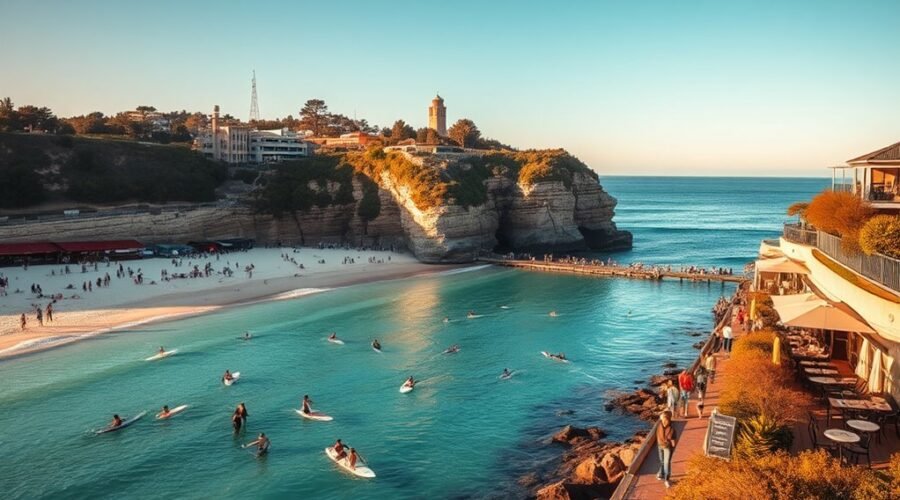
New South Wales changes dramatically from the subtropical North Coast to Sydney, the inland plains and the alpine high country, so there is no single perfect month for every trip. For the widest mix of comfortable sightseeing weather, manageable crowds and outdoor activities, spring and autumn are usually the easiest seasons to plan around.
Quick Answer
For most travellers, the best time to visit New South Wales is during autumn from March to May or spring from September to November. These seasons generally offer comfortable sightseeing weather and fewer peak-summer crowds. Choose December–February for beach trips, May–November for whale watching, and July–August for the strongest chance of good ski conditions.
Key Takeaways
- March–May and September–November: the easiest all-round periods for sightseeing, walking, food-and-wine trips and comfortable city breaks.
- December–February: prime beach-holiday season in much of NSW, but also a high-demand period for coastal accommodation.
- May–November: the main humpback migration window along the NSW coast, with northbound whales earlier and the southbound return later in the season.
- July–August: usually the strongest part of the alpine ski season, although snowfall and resort conditions vary each year.
- School holidays and long weekends: can increase demand for accommodation, attractions, roads and transport, so check the NSW calendar before booking.
Best Time to Visit NSW: Quick Picks
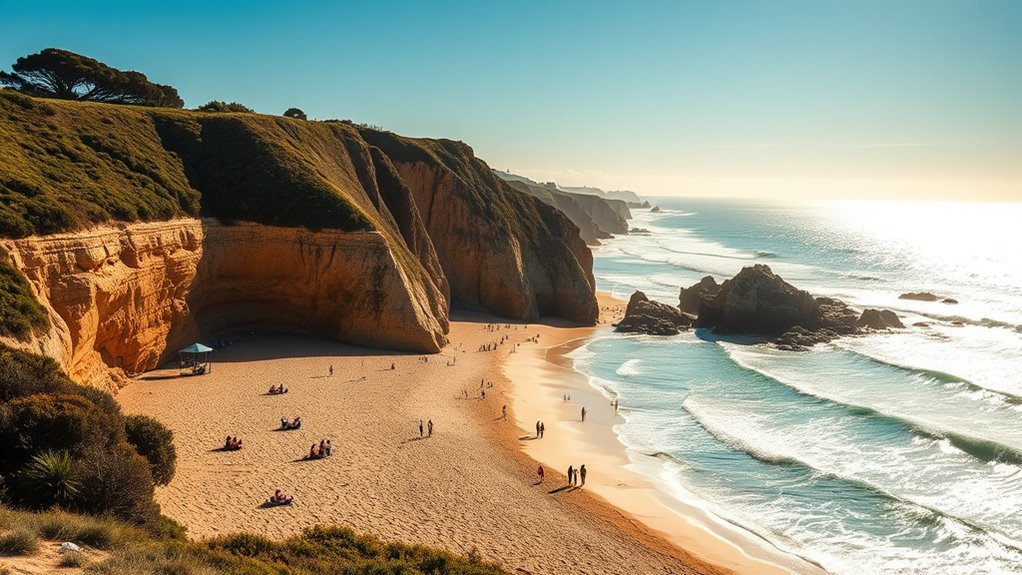
If your priority is sunshine, swimming and lively coastal towns, aim for late spring through summer, especially November to February. Autumn and spring are usually better if you want comfortable walking weather, wine regions, city sightseeing and fewer peak-season crowds.
Summer brings the strongest beach-holiday atmosphere, with surf, seafood, markets and long evenings. It is also one of the busiest periods in popular coastal destinations, particularly during the Christmas and January school holidays.
Autumn is especially attractive for food-and-wine regions, country drives and bushwalks. Cooler mornings and evenings make longer days outdoors more comfortable than during periods of midsummer heat.
Winter can be excellent for clear-day coastal walks, city breaks, inland touring and alpine trips. However, winter is not automatically the cheapest season everywhere: accommodation in Snowy Mountains resorts can be expensive when ski demand is high.
Your best month therefore depends on your main activity. Choose summer for beach energy, autumn or spring for balanced conditions, and winter for snow or cool-weather touring.
Pack layers even outside winter. NSW covers a large area, and weather can change significantly between the coast, tablelands, inland regions and alpine country.
Pro Tip: Before choosing dates, check both the NSW school-holiday calendar and major local-event calendars. Moving the same trip to a weekday or to the week immediately before or after a holiday period can improve availability without changing the season.
How NSW Climate Zones Affect Timing
NSW is too large to treat as one climate. The NSW Government identifies several distinct climate types, including arid and semi-arid inland areas, humid subtropical conditions in the north-east, temperate coastal areas around Sydney and the Central Coast, cooler south-eastern regions and alpine areas at higher elevations. You can review the state’s climate regions through AdaptNSW.
On the North Coast, spring and autumn can provide warm weather without the intensity of the busiest summer holiday weeks. Around Sydney and the Central Coast, autumn and spring are convenient for walking, sightseeing and outdoor dining.
Moving inland can bring larger temperature swings between day and night. Western NSW can also become very hot during summer, so shoulder seasons are often easier for road trips and outdoor sightseeing.
The tablelands and Blue Mountains are cooler than nearby low-elevation coastal areas. Nights can feel chilly even when Sydney remains mild, so layers are useful.
The Snowy Mountains are different again. Winter brings alpine conditions and snow sports, while warmer months open more high-country walking opportunities. Mountain weather can change quickly at any time of year.
Rather than choosing dates only from a statewide calendar, match the season to the specific region you plan to visit and check a current Bureau of Meteorology forecast immediately before outdoor activities or long drives.
Peak Periods: Crowds and School Holidays
NSW school holidays can noticeably increase demand at beaches, caravan parks, ski areas, national parks, family attractions and regional accommodation. Long weekends can create shorter but concentrated surges on major roads and in popular weekend destinations.
For 2026, the official NSW school-holiday periods include autumn holidays from 7–17 April, winter holidays from 6–17 July, spring holidays from 28 September–9 October, and summer holidays beginning 18 December 2026. Eastern and Western Division dates differ at the beginning of the summer school year, so confirm your dates on the NSW Government school-holiday calendar.
If your dates are flexible, travelling on ordinary weekdays outside these periods can make parking, accommodation searches and attraction bookings easier.
School Holiday Peaks
School holidays are among the most predictable high-demand periods in NSW. Coastal towns are especially popular during the summer break, while the July holidays can be extremely busy in and around the Snowy Mountains.
| 2026 period | Likely travel effect | Planning tip |
|---|---|---|
| 7–17 April | Higher family-travel demand around Easter and autumn breaks | Reserve popular stays and tours well ahead |
| 6–17 July | Busy ski areas and family attractions | Expect alpine traffic and limited peak-date availability |
| 28 September–9 October | Higher spring demand for regional trips and attractions | Compare weekdays with weekend dates |
| From 18 December | One of the busiest periods for many coastal destinations | Book high-demand coastal accommodation early |
You can still find quieter experiences during busy periods by starting walks early, visiting lesser-known beaches, using regional markets outside their busiest hours and staying a short distance from the most popular resort centres.
Long Weekend Surges
Long weekends can quickly increase road traffic, park visitation and accommodation demand. Coastal routes, national parks and towns within a few hours of Sydney are particularly popular for short breaks.
Parking may become difficult at well-known beaches and trailheads, while ferries, cafés and attractions can develop longer queues. Major festivals can add another layer of demand.
If you enjoy the atmosphere, these weekends can be a good time for markets, community events and nightlife. If you prefer quiet, choose a normal midweek period instead.
Arriving early, checking parking arrangements, reserving ticketed activities and allowing extra road time can make a busy weekend easier to manage.
Price Patterns: Flights, Hotels & Tours
Travel prices in NSW respond to demand rather than following one fixed statewide seasonal rule. Airfares, accommodation and tours may rise around school holidays, major festivals, summer coastal periods and peak ski dates.
Conversely, some destinations offer better availability during quieter weeks. The exact saving depends on the destination, day of week, event calendar, how far ahead you book and the cancellation conditions attached to the rate.
Instead of assuming that every “off-season” date will be cheap, compare several nearby dates before committing.
Peak vs. Off-Peak Fares
Flights and accommodation can become more expensive when many travellers compete for the same seats and rooms. School holidays, major sporting events, concerts and festival weekends are common examples.
Midweek departures and stays can sometimes cost less than Friday or Saturday equivalents, while shifting a trip just outside a school-holiday period may improve both price and availability.
Use flexible-date searches where available and compare the total trip cost rather than only the headline nightly rate. Parking, resort fees, transport, breakfast and cancellation conditions can change which option represents better value.
Tours also respond to demand. Booking direct with a reputable operator can make it easier to understand inclusions, weather policies and cancellation terms.
Seasonal Hotel Rates
Hotel demand varies by region. Coastal properties may be busiest during warm-weather school holidays, while ski accommodation can peak during winter.
Shoulder-season travel can improve choice in many destinations, but a major event can make an otherwise quiet month expensive.
Check the local event calendar before booking, compare weekday and weekend rates, review loyalty or direct-booking benefits, and choose cancellation terms that match the uncertainty of your plans.
- Compare the same property across several nearby dates.
- Check event and school-holiday calendars before paying.
- Compare refundable and non-refundable rates carefully.
- Look at neighbouring towns when a major centre is expensive.
- Calculate transport and parking costs before assuming an out-of-town stay is cheaper.
Month-by-Month Planner: January to December
Each month suits a different style of NSW trip. Conditions vary by region and year, but the following planner gives you a practical starting point.
January: Excellent for beach holidays, swimming and long summer evenings. Expect strong holiday demand, busy coastal towns and potentially very hot conditions inland.
For the easiest all-round NSW trip, look first at autumn or spring; for beaches choose summer, and for snow choose mid-winter.
February: Still warm across much of the state and often good for coastal swimming after the main January holiday rush, although hot weather remains possible.
March: A useful transition month for food-and-wine trips, Sydney sightseeing, coastal travel and longer outdoor days as extreme summer heat becomes less persistent.
April: Comfortable for many walking and regional trips, with cooler evenings. Easter and the autumn school holidays can create busy periods.
May: One of the most versatile months for inland touring, wine regions, coastal walks and mild-weather sightseeing. The northbound humpback migration also begins along the coast.
June: Cooler conditions spread across the state. Alpine snow activity begins around this period, while whale watching remains strong on the coast.
July: A key month for skiing and snowboarding. It is also the NSW winter school-holiday period, so Snowy Mountains accommodation, roads and resort facilities can be busy.
August: Still a strong alpine month, with winter conditions at elevation and the first signs of spring in warmer regions.
September: Spring walking, gardens and wildflowers become more appealing. Southbound whales begin returning along the coast, often with calves later in the season.
October: Mild-to-warm weather suits city breaks, coastal trips and hiking, although spring school holidays and the October long weekend can increase demand.
November: Warm weather returns without the full Christmas holiday rush. It is also one of the later months of the southbound whale migration.
December: Excellent for beach trips and outdoor dining, but demand rises rapidly as the summer school holidays and Christmas period begin.
Regional Timing: Sydney, Coast, Mountains & Inland
NSW regions do not reach their best conditions at the same time, so your destination matters as much as the month.
- Sydney: March–May and September–November are particularly convenient for walking, harbour sightseeing and outdoor dining without relying on midsummer weather.
- North Coast: Spring and autumn combine warm conditions with good opportunities for beaches, rainforest and road trips. Summer can be hot, humid and busy.
- Central and South Coast: Summer suits swimming and beach holidays; autumn and spring are excellent for coastal walks and touring.
- Blue Mountains and tablelands: Autumn is known for cool walking weather and seasonal colour, while spring brings milder conditions. Nights can be much colder than Sydney.
- Snowy Mountains: July–August are the main ski months; warmer months are better for high-country hiking and scenic drives.
- Inland and Outback NSW: Autumn through spring generally avoids the most intense summer heat and is usually more comfortable for long road trips and outdoor sightseeing.
Sydney remains active year-round, while the coast shifts from busy summer beach culture to quieter walking and touring seasons. In the mountains, winter creates an entirely different travel environment, with snow, icy roads and rapidly changing alpine weather.
Match your dates to the region and activity rather than assuming that a month described as “best for NSW” will be best everywhere in the state.
Seasonal Activities & When to Do Them
Two of the clearest seasonal reasons to time a NSW trip are whale watching and snow sports.
Humpback whales migrate along the NSW coast from roughly May to November. Alpine ski trips concentrate around winter, with July and August usually offering the strongest combination of snow cover and resort operations.
Whale Watching Season
NSW’s whale season generally runs from May to November. Humpbacks travel north along the coast between about May and July before returning south toward Antarctica from around September to November. You can check current migration guidance through NSW National Parks.
Headlands can provide excellent land-based viewing without the motion or cost of a boat trip. Well-known whale-watching areas include the Byron Bay region, Sydney coastal headlands, Port Stephens, Jervis Bay and the Eden area.
- May–July: mainly northbound migration.
- September–November: mainly southbound migration, often including mothers with calves.
- Bring binoculars and wind-resistant layers for exposed headlands.
- Stay behind barriers and away from unstable cliff edges.
- Choose operators that follow NSW marine-mammal approach rules.
General NSW rules limit how close vessels can approach whales. Standard vessel approach distances include 100 metres from a whale and 300 metres when a calf is present. Check the current NSW whale and dolphin approach-distance rules before going onto the water.
Note: For the 2026 breeding season, NSW issued a special order requiring vessels to remain at least 500 metres from Southern Right Whales and swimmers at least 100 metres away until 30 November 2026. This is stricter than the normal whale rules, so check current NSW Environment guidance before approaching any Southern Right Whale.
Snow Sports Timing
The NSW ski season generally begins around the June long weekend and may continue into October when conditions allow. July and August usually provide the strongest snow-sport window, but snowfall, terrain openings and lift operations vary every year.
Early season can offer lighter crowds but less terrain. Mid-winter usually brings the fullest resort operations, while later-season snow may soften as temperatures rise.
Book lessons, equipment hire and accommodation ahead for July school holidays and popular weekends. Check resort conditions before travelling rather than assuming every run will be open.
Warning: Snow driving has legal requirements. NSW states that 2WD vehicles entering relevant Kosciuszko National Park roads during the winter period must carry suitable snow chains, and chains must be fitted when signs or authorised officers require them. Check the current NSW snow-driving rules, road conditions and weather before entering the alpine area.
How to Score Low-Season Deals
Lower-demand periods can provide better accommodation choice and occasionally better prices, but there is no single “cheap season” for all of NSW. A winter beach town and a winter ski resort can have completely different demand patterns.
- Compare midweek and weekend rates rather than assuming they will be similar.
- Check school holidays and major events before deciding a month is off-peak.
- Use flexible-date searches for flights and accommodation.
- Compare nearby towns when the main destination is heavily booked.
- Ask operators about shoulder-season promotions or longer-stay rates.
- Choose booking conditions that allow reasonable changes when weather affects outdoor plans.
Do not rely on the idea that rain “clears quickly” or that a low-season trip will automatically be quiet. NSW weather and visitor demand can change rapidly. Build flexibility into the itinerary and check forecasts, park alerts and transport conditions close to departure.
Weather, Bushfire & Seasonal Safety
Weather should influence your NSW itinerary even after you choose the right season. Summer heat can be severe inland, coastal systems can bring heavy rain and dangerous surf, and alpine weather can deteriorate quickly.
If you are travelling through bush or grassland, check the fire danger rating and current incidents before leaving. The NSW Rural Fire Service travel guidance warns that fire and smoke can cross roads, reduce visibility and cause closures with little notice.
Use official weather, road, park and emergency alerts rather than relying only on a normal forecast app. Downloading offline maps is also sensible for remote areas where mobile coverage may fail.
Packing & Booking Checklist by Season
NSW seasons affect everything from beach clothing to alpine road equipment, so pack for the region rather than the state as a whole.
Summer: Pack lightweight clothing, a hat, broad-spectrum SPF 50+ sunscreen, refillable water and comfortable footwear. Reserve high-demand coastal stays early when travelling during the Christmas and January holiday period.
Autumn: Bring light layers and a wind-resistant outer layer. Book wineries, food experiences and major events ahead where reservations are required.
Winter: Pack warm layers and a waterproof outer shell for southern, tableland and alpine trips. If driving into Kosciuszko National Park, check snow-chain requirements, road closures and your vehicle manufacturer’s instructions before departure.
Spring: Use breathable layers that can handle cool mornings and warmer afternoons. Hiking shoes and rain protection are useful for variable spring conditions.
Across all seasons, keep digital copies of important documents, carry a compact first-aid kit, download offline maps for remote journeys and check cancellation terms before booking weather-dependent activities.
Quick Decision Checklist: Pick Your Month
The best month depends on what you want to do, which part of NSW you will visit and how much heat, cold or crowding you are willing to accept.
- Beach holiday: December–February for the warmest summer atmosphere, with higher holiday demand.
- City sightseeing and food trips: March–May or September–November.
- Long walks and cooler touring: April–May or September–October in many regions.
- Whale watching: May–July for northbound whales and September–November for the southbound return.
- Skiing and snowboarding: July–August for the strongest typical mid-winter window.
- Wildflowers and spring landscapes: September–October, depending on region and seasonal conditions.
- Inland road trips: autumn through spring to reduce exposure to the most intense summer heat.
- Lower crowds: ordinary weekdays outside school holidays and major events.
Once you have chosen a month, check the exact region’s weather, park alerts, road conditions, event calendar and cancellation policies before locking in the full itinerary.
Frequently Asked Questions
Are there health risks such as jellyfish or bushfire smoke to consider?
Yes. Beach conditions and marine stingers can vary, so swim at patrolled beaches where possible and follow lifeguard warnings. If a jellyfish sting occurs, treatment depends on the species; Healthdirect provides current Australian first-aid guidance. During fire or smoke events, follow NSW RFS warnings, check air-quality advice and reduce exposure to smoky air.
Can I rent and drive a car with an overseas licence in NSW?
Many visitors can drive on a valid overseas licence, but the time limit depends on their status. Service NSW states that temporary overseas visitors who arrived in NSW after 1 July 2023 can generally drive on their existing overseas licence for up to six months. A Transport for NSW-approved English translation is required when the licence is not in English. Check the current Service NSW overseas-licence rules and your rental company’s document requirements.
How reliable is public transport between regional NSW towns?
Main regional corridors are served by trains and coaches, but frequency is lower than in Sydney and some routes require reservations. NSW TrainLink serves more than 365 destinations across NSW and neighbouring states. Check the Transport for NSW regional network before building an itinerary around public transport, especially for smaller towns.
Are credit cards widely accepted in remote or coastal areas?
Cards are common in cities and established tourism towns, but payment options are not guaranteed everywhere. Some regional transport and small businesses may still use cash or have limited contactless facilities. Carry a second payment method and a modest amount of cash when travelling through remote areas.
Do mobile data and cell coverage work well in the mountains?
Coverage can be good in towns and resort areas but unreliable in remote valleys, national parks and alpine terrain. Do not make mobile service your only safety plan. Download offline maps, tell someone your route for remote walks and carry suitable emergency equipment for the activity.
What is the best month to visit NSW with fewer crowds?
May and parts of September or November can work well in many destinations, but there is no guaranteed quiet month statewide. Check school holidays, major events and the destination’s own peak season before choosing dates.
Do I need snow chains when driving to the NSW snowfields?
If you are driving a 2WD vehicle on designated roads in Kosciuszko National Park during the winter period, you must carry suitable snow chains. You must fit them when instructed by signs or authorised officers. Chains are also recommended for other vehicles in severe conditions, so check current NSW road and national-park advice before travelling.
Conclusion
For the best overall balance of sightseeing weather, outdoor activities and manageable demand, consider NSW in March–May or September–November. Choose summer for beach holidays, May–November for whale watching and July–August for the strongest typical ski-season conditions. Because climate and demand vary sharply across the state, check your specific region, school holidays, road conditions and weather before booking.
Sources
- NSW Government — School holidays — official 2026 NSW school-holiday dates.
- AdaptNSW — NSW climate regions — differences between coastal, inland, subtropical and alpine climates.
- NSW National Parks — Whale watching — migration timing and responsible viewing.
- NSW Government — Driving in snow — snow-chain and alpine-driving requirements.
- Service NSW — Overseas driver licences — current temporary-visitor licence rules and translation requirements.
- NSW Rural Fire Service — Travelling in bushfire areas — fire-danger, smoke, road and emergency-planning guidance.